 注: 建议图片大小150px*50px
丨
注: 建议图片大小150px*50px Views: 0 Author: Site Editor Publish Time: 2026-08-11 Origin: Site


If you are a playground contractor, sports surfacing installer, or municipal buyer, you have likely asked: Are EPDM colored rubber granules safe and environmentally friendly? This is one of the most critical questions in modern safety surfacing procurement. With increasing regulatory scrutiny and growing public concern about materials used near children and athletes, understanding the environmental and health profile of EPDM granules is essential.
The short answer is yes—high-quality virgin EPDM colored rubber granules are safe and eco-friendly. However, not all EPDM granules are created equal. This guide will help you distinguish between genuine virgin EPDM and inferior alternatives, understand key safety certifications, and make informed purchasing decisions that protect both end-users and your project reputation.

What Are EPDM Colored Rubber Granules?
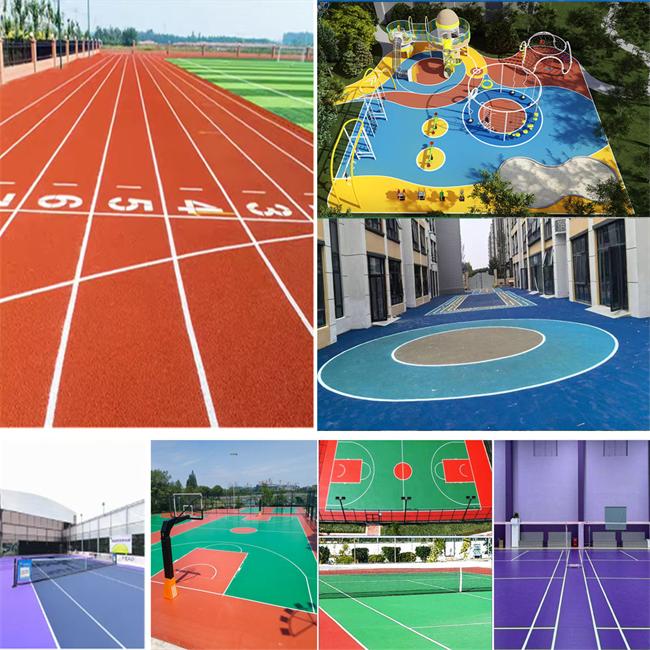
EPDM (Ethylene Propylene Diene Monomer) is a synthetic rubber known for exceptional durability, weather resistance, and UV stability. Colored EPDM rubber granules are manufactured through a precise compounding process that combines EPDM rubber with pigments, softening oils, and mineral fillers. The result is a vibrant, resilient granule used extensively as a top-layer safety surface in playgrounds, running tracks, and sports facilities.
Virgin EPDM vs. Recycled Rubber Crumb
This distinction is critical. The safety concerns often associated with rubber surfacing typically stem from recycled tire crumb (SBR) , not virgin EPDM. According to official documentation from playground safety authorities, specified EPDM top-layer materials are made from 100% virgin (non-recycled) rubber , are clean, odorless, and meet stringent safety regulations. Unlike recycled tire crumb, virgin EPDM granules are fully encapsulated within a polyurethane binder system, eliminating loose granules and off-gassing after curing.

Key Applications of EPDM Rubber Granules
Understanding where EPDM granules are used helps contextualize their safety requirements:
- Wet Pour Playground Surfacing – Critical fall protection meeting EN 1177 standards
- Poured-in-Place (PIP) Rubber Systems – Seamless, accessible surfaces
- Running Tracks and Athletic Surfaces – High-performance sport surfaces
- Splash Pads and Water Play Areas – Non-slip, UV-resistant surfaces
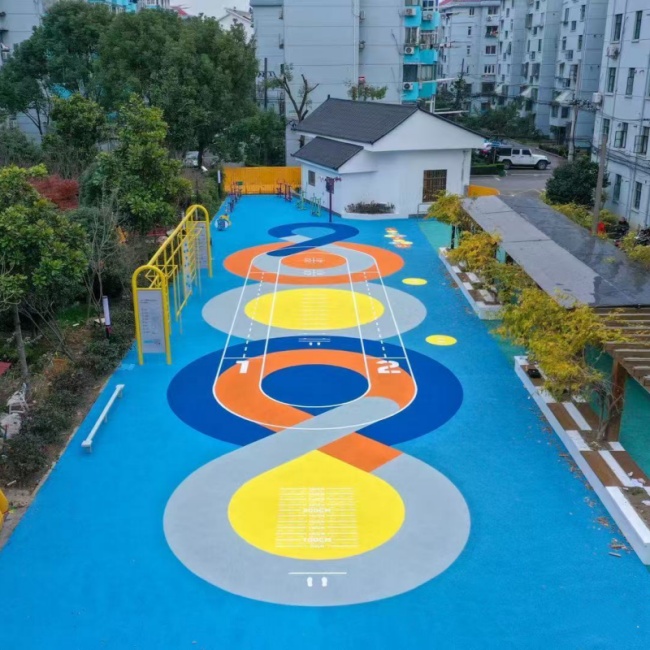
- Parks, Schools, and Kindergarten Play Areas – Child-safe recreational zones
- Walking Paths and Municipal Projects – Durable, attractive public infrastructure
Safety surfacing serves a dual purpose: impact absorption to prevent injury and a hygienic, accessible surface. As industry experts note, when a child falls on unsafe surfacing, impact energy can transfer back into the body, increasing break and fracture risks.
Why the "Eco-Friendly" Question Matters
Your clients—whether school boards, municipal governments, or facility owners—are increasingly demanding proof of environmental responsibility and human safety. This is not just about regulatory compliance; it is about public trust and project viability.
Key Environmental and Safety Concerns Addressed
High-quality virgin EPDM addresses multiple safety concerns simultaneously. Premium EPDM contains PAH (Polycyclic Aromatic Hydrocarbons) at very low levels, significantly lower than recycled rubber alternatives. Heavy metal content is strictly controlled, with soluble lead below 10mg/kg, cadmium below 5mg/kg, and mercury below 1mg/kg. Phthalates are carefully managed, and quality manufacturers verify these levels through independent testing. Premium virgin EPDM is odorless with no VOCs or off-gassing after curing. While EPDM resists weathering, some substances like fluoranthene require environmental monitoring, which responsible suppliers conduct regularly.
> Critical Note: ECHA (European Chemicals Agency) assessments confirm that EPDM granules contain PAHs, but at levels considerably lower than recycled ELT rubber. This underscores the importance of sourcing high-quality virgin EPDM from reputable manufacturers.
How to Verify EPDM Granule Safety and Quality
As a procurement professional, you need practical verification methods:
1. Check Certifications
Legitimate manufacturers provide:
- TDS (Technical Data Sheet) – Detailed physical and chemical properties
- MSDS (Material Safety Data Sheet) – Safety and handling information
- Environmental Product Certifications – Look for documented compliance with standards like GB 36246-2018, which sets strict limits on PAHs and heavy metals
- Third-party Test Reports – Independent lab verification of PAH, heavy metal, and VOC content
2. Understand What "No Sulfur" Technology Means
Traditional rubber manufacturing often uses sulfur as a vulcanizing agent. Advanced EPDM production employs peroxide or sulfur-free curing systems. The benefits are substantial:
- No odor – Without sulfur, no sulfuric acid decomposition under UV/heat exposure
- Superior stability – More stable molecular structure extends service life by 3x or more
- Enhanced elasticity – Tensile strength and elasticity improve by 2-3x, typically reaching 4 to 7 megapascals
- Better color retention – Significantly improved UV resistance; color stability 5x better than sulfur-cured products
- Food-grade safety standards – Meets stringent hygiene requirements
3. Compare Physical Properties
Quality indicators for EPDM granules include tensile strength of at least 3.5 megapascals, with premium products achieving 4 to 7 megapascals. Density should be below 1.60 kilograms per cubic decimeter, with lower density indicating better quality. Elongation at break should be at least 450 percent. Ash content typically measures around 62 percent plus or minus 1 percent.
4. Conduct a Visual Inspection
Quality EPDM granules have:
- Vibrant, consistent color – No fading or uneven pigmentation
- Distinct angular shape – Better interlocking and binder adhesion
- Clean, dust-free surface – Minimal fines or processing residue

Common Challenges and How to Avoid Them
Color Fading and UV Degradation
Inferior EPDM granules often fade within months of installation. This occurs when manufacturers use low-grade pigments or sulfur-based curing systems. Premium sulfur-free EPDM with high-quality pigments maintains color vibrancy for years, even under intense sunlight.
Inconsistent Color Between Batches
This is a common complaint among contractors. Reliable manufacturers implement strict quality control protocols, testing each batch for color consistency against retained standards. When ordering, ask about their batch-to-batch color matching procedures.
Poor Binder Compatibility
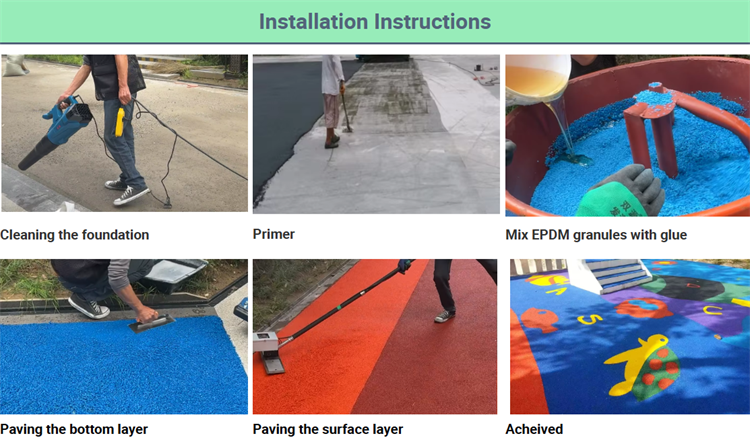
Not all EPDM granules work well with all polyurethane binders. Some granules have surface treatments that interfere with adhesion. Experienced manufacturers provide specific binder recommendations based on their granule formulation.
Hidden Recycled Content
Some suppliers mix recycled rubber with virgin EPDM to reduce costs. This compromises safety, durability, and appearance. Always request a material composition certificate and consider third-party testing for verification.
How to Choose the Right EPDM Granules for Your Project
Assess Your Application Requirements
Different projects demand different specifications. Playground surfacing requires maximum impact attenuation and color appeal. Running tracks prioritize resilience and consistent performance. Splash pads need exceptional water resistance and slip resistance. Understanding your specific needs guides material selection.
Evaluate Technical Specifications
Request and review the TDS thoroughly. Pay attention to tensile strength, elongation, density, and abrasion resistance. Higher tensile strength and elongation indicate better durability. Lower density suggests higher rubber content and better quality.
Verify Safety Compliance
Confirm that the material meets applicable standards for your region:
- Europe – EN 1177 for impact attenuation, REACH compliance
- North America – ASTM F1292 for playground surfacing, CPSIA compliance
- Australia – AS 4685 playground standards
- Middle East – Local municipal requirements often reference international standards
Consider Color Customization Needs
If your project requires specific colors for branding, thematic design, or municipal requirements, ensure your supplier offers:
- RAL color matching
- Pantone color matching
- Custom sample matching
Experienced manufacturers can match virtually any color specification with precision.
Evaluate Supplier Reliability
Beyond product quality, consider:
- Production capacity – Can they handle your project volume?
- Lead times – Do they offer fast turnaround for urgent projects?
- Logistics capability – Can they manage full container or LCL shipping?
- Communication – Do they provide technical support and documentation?
- Consistency – Have they demonstrated reliable quality over years of operation?
Technical Specifications Worth Understanding
Quality EPDM granules typically exhibit tensile strength ranging from 3.5 to 7 megapascals depending on the formulation. Elongation at break commonly exceeds 450 percent, indicating excellent flexibility. Density generally falls between 1.50 and 1.60 kilograms per cubic decimeter, with lower values reflecting higher rubber content. Abrasion loss should be minimal, typically below 0.2 cubic centimeters per meter of travel in standard tests.
The granule size distribution matters significantly for installation. Common size ranges include 0.5 to 1.5 millimeters for fine top coats, 1 to 3 millimeters for versatile all-purpose use, and 2 to 4 millimeters for standard running tracks and base layers. Each application benefits from specific size ranges to achieve optimal compaction and surface finish.
Color stability is quantified through accelerated weathering tests. Premium EPDM should maintain at least 80 percent of original color intensity after 2000 hours of accelerated UV exposure. This translates to years of real-world color retention under normal outdoor conditions.

Why Global Buyers Choose Premium EPDM Granules
International buyers—from Europe, North America, Australia, and the Middle East—choose high-quality virgin EPDM granules for several compelling reasons:
Performance That Lasts
Quality EPDM granules offer exceptional UV stability, with colors remaining vibrant for five times longer than standard products. Superior weather resistance ensures consistent performance across diverse climates from desert heat to freezing winters. Outstanding elasticity maintains shock absorption properties over extended service life. The seamless surfaces require minimal maintenance and never require material replacement.
Safety and Compliance
Premium EPDM achieves food-grade safety standards, making it safe for the most sensitive applications. There is no toxic off-gassing or leaching into surrounding soil or water. The material meets international standards including EN 1177, ASTM, and other global safety norms.
Supply Chain Reliability
Experienced manufacturers offer flexible MOQ options, supporting both large-scale commercial projects and small-batch specialty applications. Customizable packaging includes bulk bags, 25-kilogram bags, or private-label packaging to meet specific project requirements. Global shipping expertise covers full container and less-than-container-load options. Consistent quality is ensured through advanced production lines with rigorous quality control at every stage.

Manufacturer Insights: Expert Advice on EPDM Selection
As a dedicated EPDM rubber granules manufacturer with over 25 years of industry experience, we offer these practical guidelines:
Selecting the Right granule Size
Different applications require specific granule sizes. For fine finishes, top coats, and decorative patterns, 0.5 to 1.5 millimeter granules provide the smoothest surface. For most playground and general safety surfacing applications, 1 to 3 millimeter granules offer versatility and performance. Running tracks and athletic surfaces typically perform best with 1 to 4 millimeter or 2 to 4 millimeter granules that provide optimal traction and resilience.
When to Customize Colors
Custom color matching becomes essential for brand identity projects where corporate or school colors must be precisely replicated. Themed playgrounds benefit from engaging color schemes that create stimulating environments for children. Municipal projects often require alignment with city aesthetic guidelines and color palettes. OEM and private-label buyers differentiate their product offerings through unique colors that cannot be replicated by competitors.
Our production supports full RAL and Pantone color matching, as well as customer-supplied color samples for precise replication. This ensures your project achieves the exact aesthetic vision without compromising safety or performance.
Key Parameters to Verify
Always confirm these technical parameters with your supplier. First, ask about polymer content—higher EPDM content means better durability and performance. Second, request UV stability testing data, specifically accelerated weathering test results that demonstrate long-term color retention. Third, confirm PAH content is below applicable regulatory limits for your region. Fourth, verify binder compatibility by asking for specific recommendations based on your chosen polyurethane binder system. Finally, inquire about batch-to-batch consistency procedures to ensure every shipment matches the original sample.
Common Mistakes to Avoid
Contractors and buyers often make several costly errors. Choosing the cheapest product without verifying composition can lead to premature failure and safety risks. Ignoring UV stability requirements results in rapid fading and unsightly surfaces. Overlooking binder compatibility creates adhesion problems and surface delamination. Failing to request certifications leaves projects vulnerable to non-compliance issues. Neglecting to order samples for testing in actual site conditions leads to unexpected performance problems.
Cost Management Strategies
While premium EPDM costs more upfront, it delivers significant long-term savings. Extended service life reduces replacement frequency. Better color retention eliminates expensive resurfacing. Superior durability minimizes maintenance costs. Consistent quality reduces installation waste and rework. Working with a direct manufacturer eliminates middleman markups and ensures competitive pricing.

Frequently Asked Questions
Q1: Are EPDM rubber granules safe for children?
A: Yes, high-quality virgin EPDM granules are safe. They are non-toxic, odorless, and fully encapsulated in a polyurethane binder system. Unlike recycled rubber crumb, they do not release harmful substances and meet strict safety standards like California Proposition 65 and EU regulations.
Q2: Can EPDM granules fade in sunlight?
A: Premium EPDM granules have excellent UV stability and resist fading significantly better than sulfur-cured alternatives. However, the specific pigment quality and manufacturing process determine actual UV resistance. Always ask for UV stability test data from your supplier.
Q3: What size EPDM granules should I choose?
A: For top coats and decorative finishes, 0.5 to 1.5 millimeter granules are recommended. For most playground and track applications, 1 to 3 millimeter or 2 to 4 millimeter granules work well. The choice depends on your specific application and aesthetic requirements.
Q4: How much PU binder do I need?
A: Binder ratio depends on the specific product and application. Generally, top coats require a ratio of approximately one part binder to three parts granule by weight, while base layers use approximately one part binder to five parts granule. Your supplier should provide specific recommendations based on your chosen granule size and application.
Q5: How long do EPDM surfaces last?
A: Premium EPDM surfaces can last 10 to 15 years or more with proper installation and maintenance. Sulfur-free EPDM products offer significantly extended service life, up to three times longer than traditional sulfur-cured alternatives.
Q6: Can you customize EPDM colors?
A: Yes, experienced manufacturers offer extensive customization including RAL color matching, Pantone color matching, and customer-supplied sample matching. This enables brand alignment, thematic designs, and aesthetic flexibility for any project.
Q7: What is the minimum order quantity (MOQ)?
A: Premium manufacturers offer flexible MOQ options, supporting both large-scale commercial projects and smaller specialty applications. This flexibility is especially valuable for contractors and distributors managing diverse project portfolios.
Q8: How can I avoid buying inferior or recycled material?
A: Request a detailed TDS specifying EPDM content, density, tensile strength, and elongation. Ask for third-party test results. Be wary of prices significantly below market rates, and always request material samples for physical inspection before committing to large orders.

The question "Are EPDM colored rubber granules safe and eco-friendly?" has a clear answer when you understand the critical distinction: virgin EPDM granules are significantly safer and more environmentally sound than recycled alternatives. By choosing high-quality EPDM from a reputable manufacturer, you ensure safety through non-toxic, odorless materials fully tested against international standards. You achieve durability with long service life and exceptional UV and weather resistance. You gain aesthetic flexibility with vibrant, color-stable surfaces that maintain their appeal over years of use. And you ensure project success through reliable supply, technical support, and consistent quality.
As a dedicated EPDM colored rubber granules manufacturer and exporter, we specialize in delivering premium-quality materials backed by decades of expertise. Our sulfur-free technology ensures superior performance, safety, and longevity across global climates. Whether you need standard specifications or fully customized solutions—including RAL and Pantone color matching, specific granule sizes, or private-label packaging—we are equipped to support your project requirements with competitive MOQ terms and reliable global logistics.

WOW(LYG) New Material Co Ltd is a manufacturer specializing in the production of EPDM rubber granules. We use sulfur-free vulcanization technology, it increases the service life by more than 3 times than traditional EPDM granules, and enhances the performance, including anti-aging, high-temperature resistance, and colorfastness.
We have over 25 years of production experience and offer customization for colors and granule sizes. NO MOQ.


