 注: 建议图片大小150px*50px
丨
注: 建议图片大小150px*50px Views: 0 Author: Site Editor Publish Time: 2026-08-31 Origin: Site


Yes, EPDM granules are suitable for running tracks and are widely used in athletic tracks, jogging paths, school sports courts, and multi-use outdoor running surfaces. Their flexibility, shock absorption, weather resistance, color stability, and ability to form a seamless surface make them a practical choice for running areas where safety, durability, and long-term appearance matter.
However, not every EPDM granule specification is automatically suitable for every running track. The right choice depends on particle size, binder compatibility, layer design, intended use, climate, maintenance conditions, and the performance requirements of the project.

Why EPDM Granules Work Well for Running Tracks
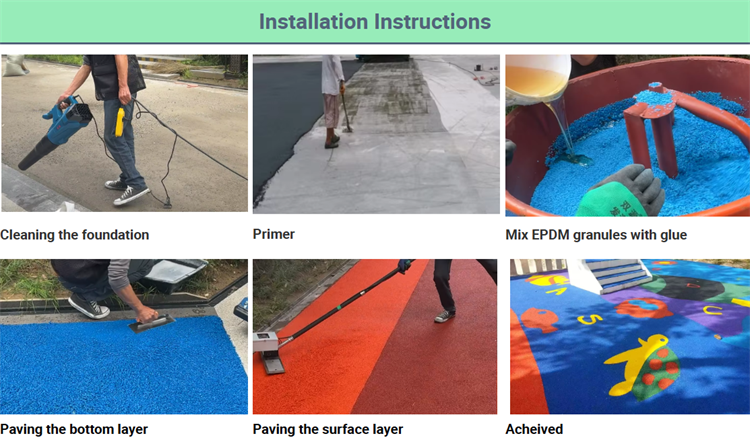
EPDM rubber granules are commonly used in running tracks because they can be combined with a polyurethane or resin binder to create a resilient, seamless sports surface. This type of system is often associated with wet pour rubber flooring, poured-in-place rubber surfaces, and bonded rubber running tracks.
For running applications, the surface needs to balance several performance factors:
Shock absorption to reduce impact on joints during running
Elasticity to support comfortable foot strike and movement
Slip resistance for safer use in dry and wet conditions
Durability to withstand repeated foot traffic and outdoor exposure
UV and weather resistance to maintain appearance and performance over time
Color stability to keep the track visually clear and well-defined
EPDM granules can support these requirements when the correct material, particle size, and installation system are selected.

Key Factors That Affect Suitability
Particle Size and Surface Texture
Particle size affects surface texture, drainage, shock absorption, and appearance. Running tracks usually require a surface that is smooth enough for comfortable running but still provides adequate grip.
Smaller granules can help create a finer, more even surface finish
Larger granules may improve cushioning and drainage in some systems
Mixed particle sizes are sometimes used to balance performance and surface uniformity
The best particle size depends on the track system, binder type, and whether the surface is intended for professional training, school use, or public jogging.
Color Stability and Line Marking
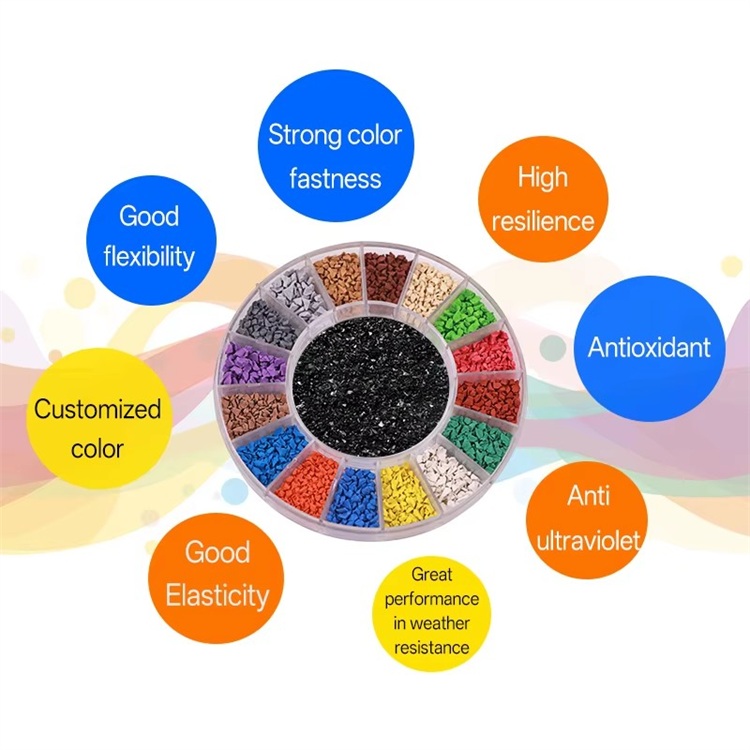
Running tracks often use different colors to separate lanes, mark boundaries, or create visual contrast. EPDM granules are valued for their color stability, especially in outdoor environments with strong sunlight and frequent weather exposure.
Stable color helps maintain:
Clear lane markings
Long-term visual appearance
Safer identification of running zones
A more professional finish for schools, parks, and sports facilities
For projects where appearance matters, color consistency across batches is especially important.
Weather and UV Exposure
Running tracks are usually installed outdoors, so the material must resist sunlight, rain, temperature changes, and repeated use. EPDM rubber is generally known for good UV resistance and weather resistance, which makes it suitable for long-term outdoor sports flooring.
In hot or high-sunlight climates, UV stability and heat resistance become more important. In colder or wet climates, drainage, flexibility, and resistance to temperature cycling should be considered during system design.
Shock Absorption and Comfort
A running track should not be too hard, as this can increase impact stress on the body. EPDM-based running surfaces can provide cushioning and elasticity, helping to create a more comfortable running experience.
The actual shock absorption performance depends on:
Particle size and density
Binder type and mixing ratio
Layer thickness
Base preparation
Installation method
This means EPDM granules are suitable for running tracks, but the final performance is determined by the complete system, not the granules alone.
Safety and Slip Resistance
Safety is a major concern for running tracks used by students, athletes, elderly users, or the general public. A well-designed EPDM running surface should provide grip without being overly abrasive.
Proper installation helps ensure:
Consistent surface texture
Adequate drainage
Reduced risk of slipping when wet
Fewer uneven areas or loose spots
Better long-term usability
Where EPDM Granules Are Commonly Used in Running Applications
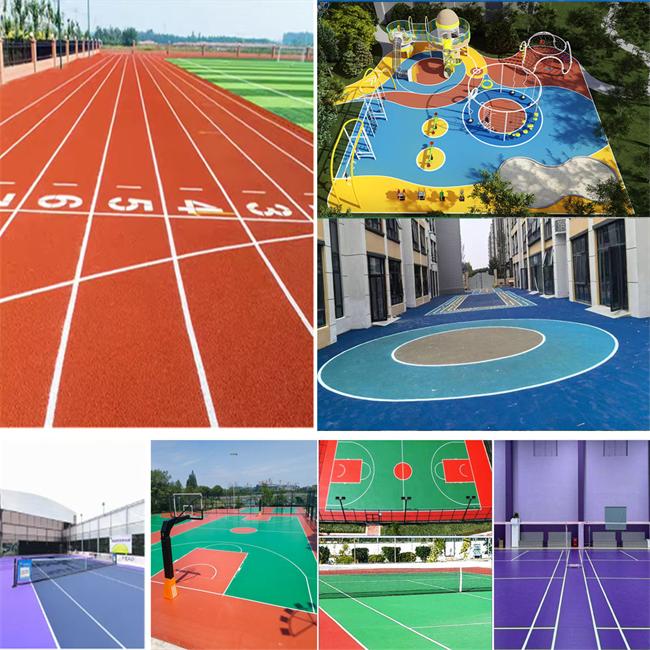
EPDM granules are suitable for a range of running and sports surfaces, including:
School running tracks
Park jogging paths
Community sports courts
Fitness trails
Playground and multi-use activity areas
Outdoor athletic tracks
Warm-up areas around sports facilities
They are especially useful where a seamless, colorful, and shock-absorbing surface is needed. However, professional competition tracks may have stricter performance standards, so the specification should be confirmed before installation.
Practical Considerations for Engineers, Contractors, and Buyers
When evaluating EPDM granules for a running track, focus on practical project requirements rather than general product claims. Here are the key points to check before making a decision:
Application type — Confirm whether the track is for schools, parks, training facilities, or public recreational use. Different usage levels place different demands on the surface.
Particle size — Choose a size that supports the required surface texture, drainage, and performance. Smaller granules generally produce a smoother finish, while larger granules may offer more cushioning.
Color selection — Select colors that meet the design requirements and verify batch-to-batch color consistency, especially for lane markings and boundary lines.
Durability expectations — Consider the local climate, including UV exposure, rainfall, temperature range, and how frequently the track will be used.
Installation system compatibility — Ensure the granules are compatible with the chosen binder, mixing ratio, and track construction method.
Maintenance planning — Plan for routine cleaning, drainage inspection, and surface repair to extend the service life of the track.
For contractors and project teams, it is important to confirm the recommended mixing ratio, layer thickness, curing conditions, and base preparation with the installer or system designer. EPDM granules perform best when the entire track system is properly specified.
How to Choose EPDM Granules for a Running Track
Choose Particle Size Based on Surface Finish
If the running track needs a smoother finish, smaller or carefully graded granules may be more suitable. If cushioning and drainage are higher priorities, larger granules or mixed gradations may be considered.
Choose Color Based on Design and Visibility
Running tracks often use red, blue, green, gray, or custom colors for lanes and safety markings. For long-term appearance, color stability and UV resistance are important, especially for outdoor tracks.
Check Material Consistency
Consistent granule size, shape, and color help produce a more uniform surface. Irregular particles or inconsistent batches can affect appearance, mixing quality, and installation efficiency.
Match Granules to the Binder System
EPDM granules must be compatible with the chosen binder and installation method. Different binders, climates, and track thicknesses may require different specifications.
Confirm Performance Expectations Early
If the running track will be used heavily, exposed to strong sunlight, or installed in a region with large temperature changes, these conditions should be discussed before material selection.

FAQ
Are EPDM granules safe for outdoor running tracks?
Yes, EPDM granules are commonly used for outdoor running tracks. Their weather resistance, flexibility, and color stability make them suitable for outdoor sports surfaces. The final safety performance depends on correct installation, surface texture, drainage, and maintenance.
Can EPDM granules be used for school running tracks?
Yes, EPDM granules are suitable for school running tracks, jogging paths, and multi-use sports areas. They can provide a seamless, colorful, and shock-absorbing surface. For school projects, durability, slip resistance, and long-term appearance are especially important.
Do EPDM running tracks absorb shock?
EPDM-based running surfaces can provide shock absorption and cushioning, which helps reduce impact during running. The actual level of shock absorption depends on granule size, layer thickness, binder system, and base preparation.
How long do EPDM running tracks last?
Lifespan varies depending on climate, usage frequency, installation quality, base condition, and maintenance. EPDM granules are valued for their durability and weather resistance, but there is no single fixed lifespan that applies to all projects.
Are EPDM granules UV resistant?
EPDM rubber is generally known for good UV resistance, which helps the surface maintain its appearance after long-term outdoor exposure. For projects in high-sunlight areas, UV stability and color retention should be confirmed with the supplier.
Can EPDM granules be used for wet pour running tracks?
Yes, EPDM granules are commonly used in wet pour rubber systems for running tracks, playgrounds, and sports flooring. The granules are mixed with a binder and applied to form a seamless surface. Compatibility with the binder and installation method should be confirmed.
What is the best particle size for a running track?
There is no single best particle size for every running track. Smaller granules may give a smoother finish, while larger granules may support cushioning and drainage. The right size depends on the track system, binder, performance requirements, and project design.
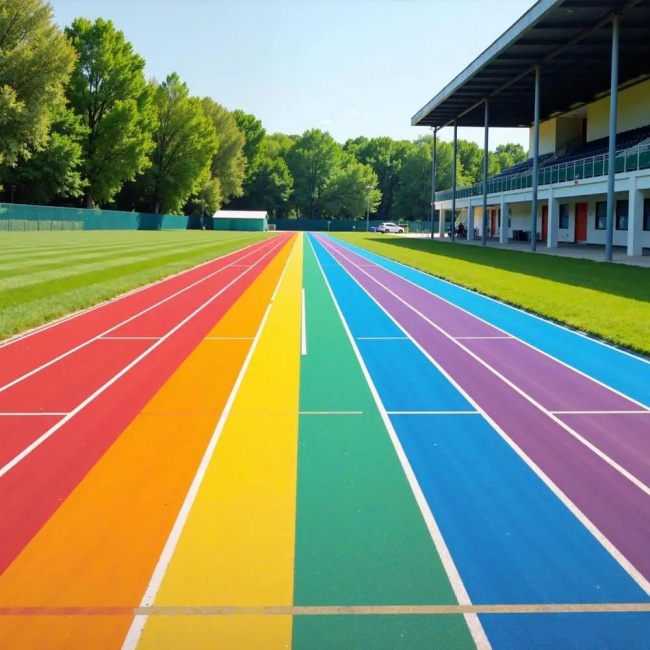
EPDM granules are suitable for running tracks when the correct particle size, color, binder system, and installation method are selected. They offer a practical combination of shock absorption, elasticity, weather resistance, color stability, and seamless surface performance, making them a common choice for schools, parks, jogging paths, and outdoor sports facilities.
For running track projects, the most important step is to match the EPDM granule specification to the actual use, climate, and performance requirements. If you are planning a running track project and need guidance on particle size, color options, or material specifications, feel free to reach out — we can help you find the right EPDM rubber granules for your application.

WOW(LYG) New Material Co Ltd is a manufacturer specializing in the production of EPDM rubber granules. We use sulfur-free vulcanization technology, it increases the service life by more than 3 times than traditional EPDM granules, and enhances the performance, including anti-aging, high-temperature resistance, and colorfastness.
We have over 25 years of production experience and offer customization for colors and granule sizes. NO MOQ.


