 注: 建议图片大小150px*50px
丨
注: 建议图片大小150px*50px Views: 0 Author: Site Editor Publish Time: 2026-08-31 Origin: Site


Yes, EPDM granules are suitable for sports surfacing. They are widely used in running tracks, playgrounds, multi-use games areas, wet pour rubber surfaces, and other outdoor sports surfacing systems. Their flexibility, shock absorption, UV resistance, and color stability make them a practical choice for surfaces that need to remain safe, durable, and visually consistent over time.
However, suitability depends on more than just the material name. The right EPDM rubber granules should match the intended sport, installation system, particle size, color requirement, performance expectation, and site conditions.

Why EPDM Granules Work Well for Sports Surfacing
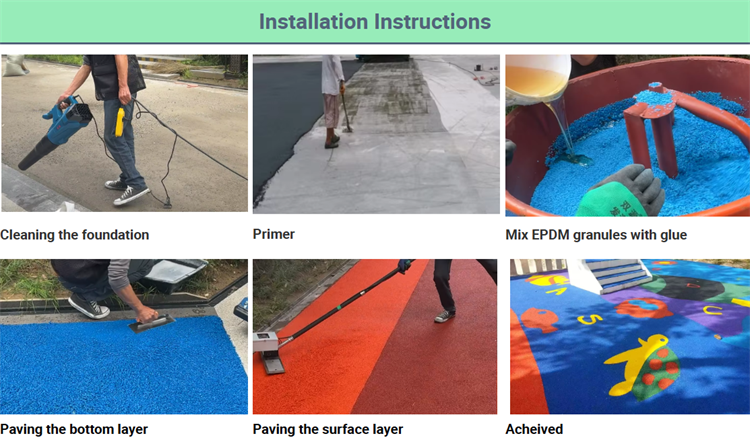
EPDM rubber granules are commonly used in sports and recreational surfacing because they combine elasticity, weather resistance, and design flexibility. In wet pour rubber surfacing, EPDM granules are typically mixed with a binder and installed as a seamless, impact-absorbing layer.
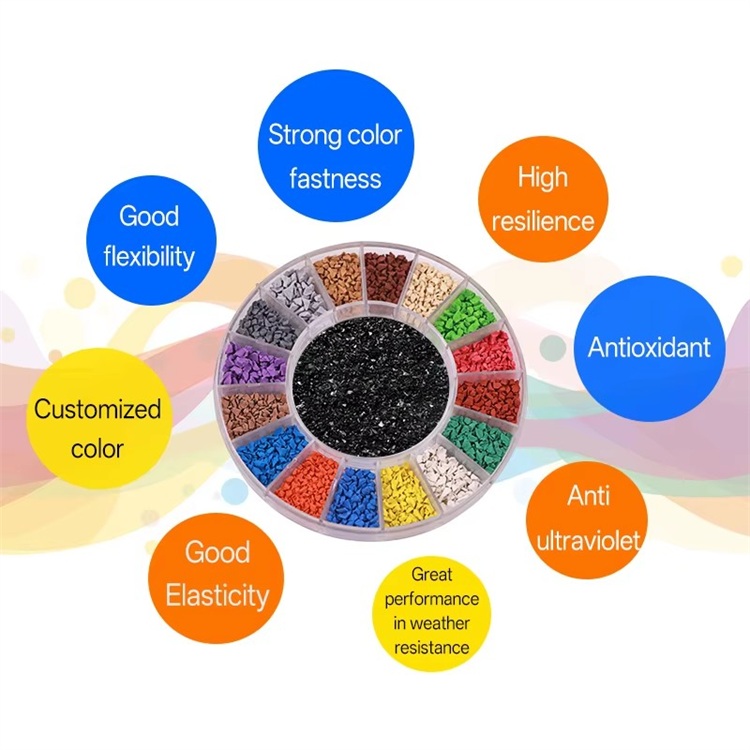
For sports surfaces, the main advantages include:
Shock absorption, which can help reduce impact during running, jumping, and play
Elasticity, supporting comfort and movement on activity areas
UV resistance, helping colors stay stable under sunlight
Weather resistance, making them suitable for outdoor environments
Seamless installation, reducing trip hazards and surface irregularities
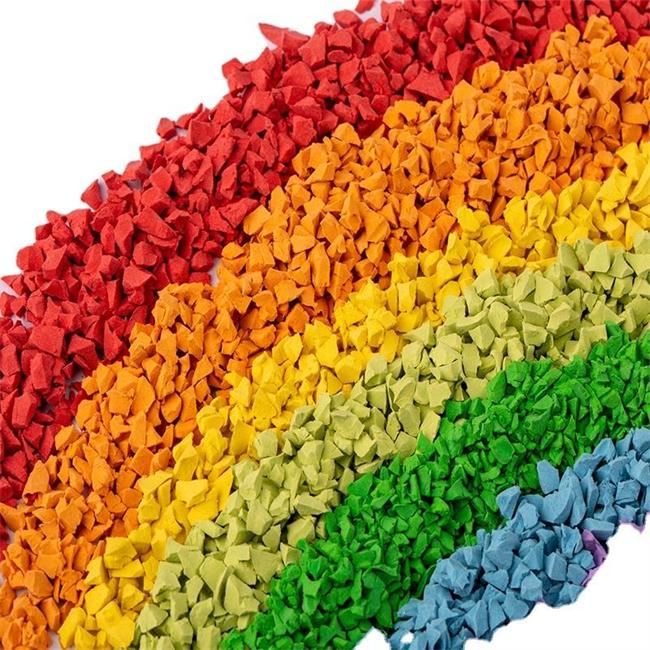
Color flexibility, allowing zoning, markings, and decorative designs
Durability under regular use, especially when the correct granule size and specification are selected
EPDM granules are not just decorative. In sports and playground surfacing, they form part of a performance system where particle size, density, binder compatibility, and installation quality all affect the final result.
Where EPDM Rubber Granules Are Commonly Used
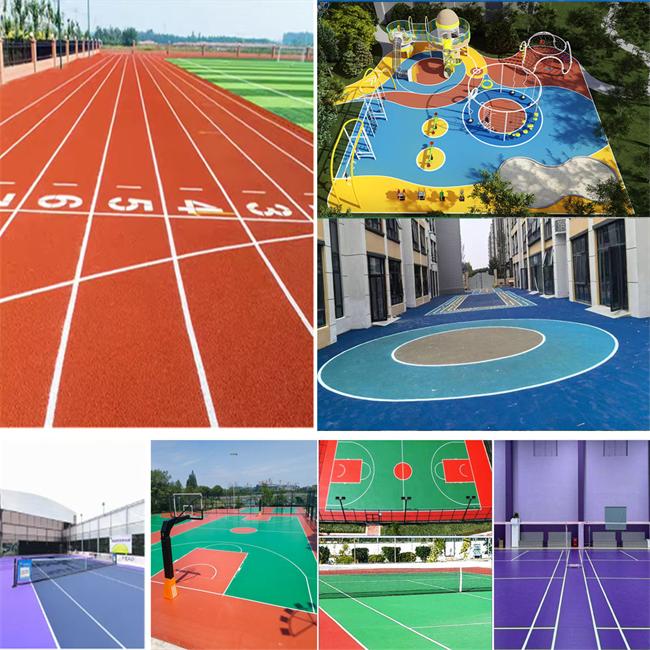
EPDM granules are suitable for a range of sports and recreational surfaces:
Running tracks — Shock absorption, elasticity, and durable surface performance make EPDM granules a common choice for athletic tracks and training surfaces.
Playgrounds — Impact-friendly surfacing with color zoning and design options, suitable for areas where children play and fall risks need to be managed.
Multi-use games areas — Flexible use for different sports and activities, where the surface must handle varied movement patterns and foot traffic.
Wet pour rubber surfaces — Seamless, bonded rubber surfacing with consistent texture, where EPDM granules are mixed with binder on-site and poured into place.
Fitness and outdoor gym areas — Comfort underfoot and resistance to regular foot traffic, supporting exercise equipment zones and training spaces.
School and community sports areas — Practical performance for children, students, and public use, where safety, durability, and visual appeal all matter.
For running tracks and multi-use courts, performance requirements are usually higher than for general decorative surfacing. That means granule size, material consistency, and installation method become more important.
Key Factors That Affect Suitability
Not every EPDM granule is identical. When evaluating whether EPDM granules are suitable for a specific sports surface, several factors should be considered.
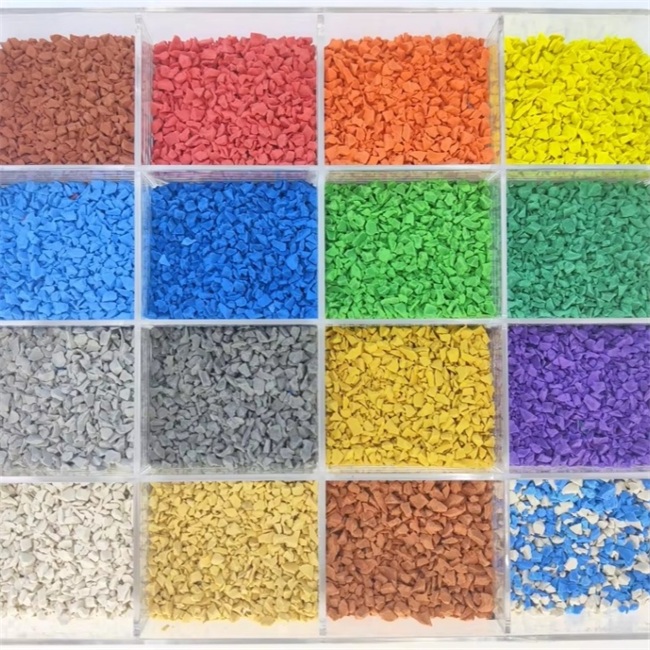
Particle Size
Particle size affects surface texture, binder consumption, compaction, and finish. Smaller granules may create a smoother surface, while larger granules can influence drainage, texture, and material usage. The best size depends on the surface layer, installation system, and performance requirement.
Color Stability
Sports surfaces often use multiple colors for lanes, zones, logos, or safety markings. EPDM granules with good color stability help the surface maintain a consistent appearance after prolonged sun exposure.
Elasticity and Shock Absorption
For sports and playground areas, elasticity matters. A surface that is too rigid may reduce comfort, while a surface with appropriate shock absorption can improve safety and usability.
Weather and UV Exposure
Outdoor sports surfaces face sunlight, rain, temperature changes, and regular use. EPDM rubber granules are generally valued for their weather resistance, but long-term performance also depends on binder selection, installation quality, and maintenance.
Surface Safety
For playgrounds and school sports areas, surface safety is a key concern. EPDM wet pour surfacing can provide a seamless finish with fewer sharp edges or loose particles, but compliance with local safety standards should always be checked before installation.
Installation System
EPDM granules are usually part of a wet pour or bonded rubber system. The granules must be compatible with the binder, base preparation, layer thickness, and finishing method. Poor installation can affect performance even if the granules themselves are suitable.
Practical Considerations for Engineers, Contractors, and Buyers
If you are specifying or purchasing EPDM granules for sports surfacing, focus on practical project requirements rather than choosing by color or price alone.
For engineers and specifiers:
Confirm the required particle size range, layer thickness, shock absorption needs, drainage requirements, and whether the surface must meet local sports or playground safety standards.
For contractors:
Check granule consistency, particle shape, dust content, and compatibility with your binder system. Uniform granules usually support more consistent mixing, laying, and finishing.
For buyers and project teams:
Ask for clear specifications, including particle size, color, density, application suitability, and batch consistency. For large projects, consistent supply and stable color across batches are especially important.
For maintenance planning:
Even durable sports surfaces need routine cleaning, inspection, and repair where necessary. Surface longevity depends on installation quality, usage intensity, climate, and ongoing maintenance.
How to Choose EPDM Granules for Sports Surfacing
When selecting EPDM rubber granules, match the product to the application instead of treating all EPDM granules as interchangeable.
For running tracks and sports courts: prioritize elasticity, consistent particle size, color stability, and compatibility with the chosen installation system.
For playgrounds: focus on shock absorption, safety requirements, color zoning, and long-term weather resistance.
For wet pour systems: confirm granule size, binder compatibility, and surface finish requirements.
For outdoor projects with strong sunlight: color stability and UV resistance become more important.
For projects with branding or lane markings: choose granules with stable, consistent colors to maintain visual clarity over time.
If the project has specific performance or aesthetic requirements, it is worth discussing granule size, color, density, and specification with the supplier before ordering.
FAQ
Are EPDM granules safe for playgrounds and sports areas?
EPDM rubber granules are commonly used in playgrounds, wet pour surfacing, and sports areas because they can form a seamless, shock-absorbing surface. However, safety depends on the full system, including granule specification, binder, layer thickness, installation quality, and local safety standards.
Can EPDM granules be used for running tracks?
Yes, EPDM granules are widely used in running tracks and athletic surfaces. The final performance depends on particle size, elasticity, binder compatibility, surface thickness, and installation method.
Do EPDM granules fade in sunlight?
EPDM granules are generally valued for their UV resistance and color stability. However, the degree of color retention can vary depending on pigment, formulation, sunlight exposure, climate, and maintenance.
What particle size is best for sports surfacing?
There is no single best particle size. Smaller granules may give a finer finish, while larger granules may affect texture and binder use. The right size depends on the surface layer, installation system, and performance requirement.
Are EPDM granules suitable for wet pour rubber surfacing?
Yes. EPDM granules are commonly used in wet pour rubber surfacing, where they are mixed with a binder and applied as a seamless, flexible sports or playground surface.
How long do EPDM sports surfaces last?
Lifespan varies based on usage, climate, installation quality, maintenance, and material specification. EPDM granules with good UV and weather resistance can help support long-term performance, but they should be evaluated as part of the complete surfacing system.
Can EPDM granules be customized by color and size?
Many EPDM granule suppliers offer customization for color and particle size, especially for projects with branding, zoning, or specific design requirements. For consistent results, confirm color matching, batch stability, and minimum order requirements before ordering.

EPDM granules are a suitable and widely used material for sports surfacing, especially in running tracks, playgrounds, wet pour rubber surfaces, multi-use games areas, and outdoor fitness zones. Their main strengths are shock absorption, elasticity, weather resistance, color flexibility, and seamless installation.
The key is to choose the right EPDM granules for the specific application. Particle size, color stability, elasticity, installation method, and project requirements all influence whether the final surface performs well over time.

If you are planning a sports surface and need EPDM rubber granules in a specific particle size, color, or specification, feel free to reach out — we can help you match the right granule to your project requirements.
WOW(LYG) New Material Co Ltd is a manufacturer specializing in the production of EPDM granules. We use sulfur-free vulcanization technology, it increases the service life by more than 3 times than traditional EPDM granules, and enhances the performance, including anti-aging, high-temperature resistance, and colorfastness.
We have over 25 years of production experience and offer customization for colors and granule sizes. NO MOQ.


