 注: 建议图片大小150px*50px
丨
注: 建议图片大小150px*50px 


Blue EPDM granules have become a preferred choice for playgrounds, running tracks, and sports surfacing worldwide due to their visual appeal and proven performance benefits. However, selecting the right blue EPDM rubber granules for wet pour playground surfacing, poured-in-place rubber systems, or safety surfacing projects involves more than just choosing a pleasing color. For playground contractors, sports flooring specialists, and purchasing managers, the real challenge is ensuring color stability, UV resistance, and long-term durability while controlling costs and minimizing procurement risks.
This guide provides practical, manufacturer-backed insights to help you make informed decisions when sourcing and specifying blue EPDM granules for your next project. We will examine material properties, common pitfalls, selection criteria, and supplier evaluation factors so that you can specify with confidence and avoid costly mistakes.
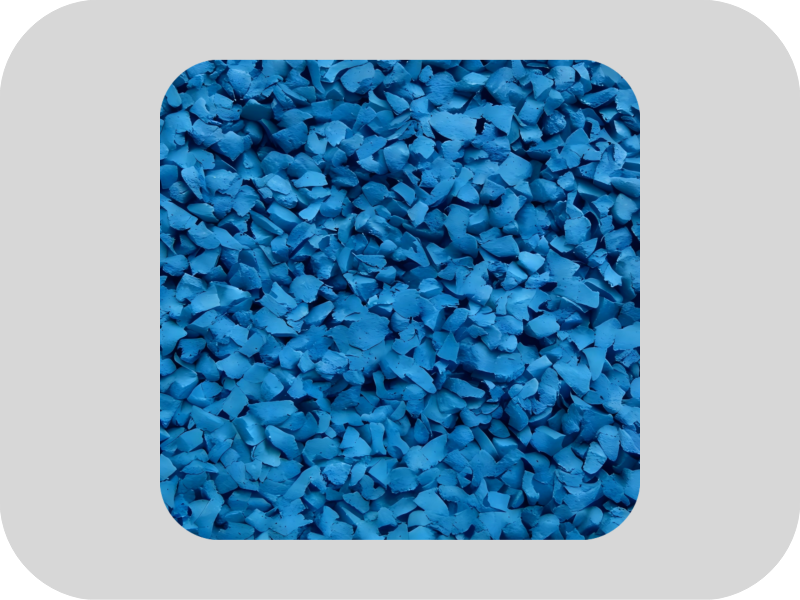
What Are Blue EPDM Granules?
EPDM (Ethylene Propylene Diene Monomer) is a synthetic rubber known for its exceptional resistance to weathering, UV radiation, and temperature extremes. Blue EPDM granules are manufactured by compounding EPDM polymer with pigments, fillers, and stabilizers, then vulcanizing and cryogenically grinding the material into angular granules.
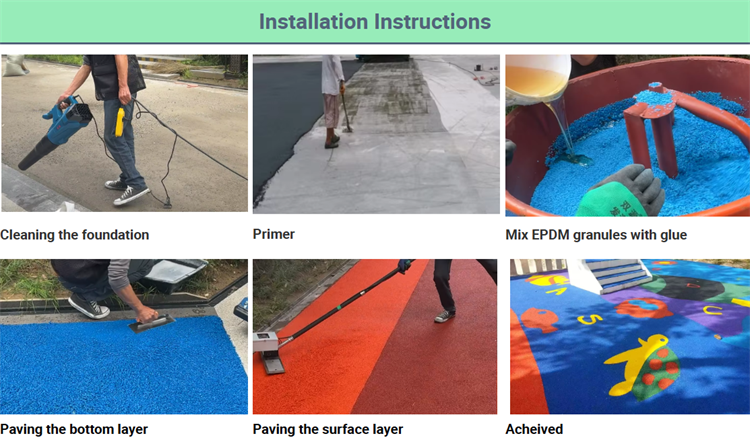
In wet pour and poured-in-place applications, these granules are mixed with a polyurethane binder on-site and troweled into a seamless, shock-absorbing surface. The resulting surface is permeable, slip-resistant, and capable of meeting critical fall height requirements for playground safety.
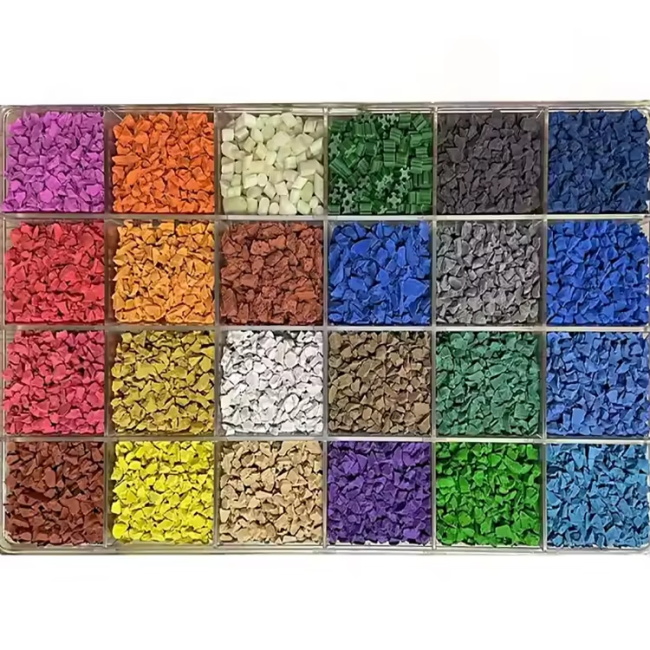
The blue color options range from light sky blues and bright cyan tones to deep navy shades, with each offering different functional and aesthetic characteristics. The choice between these shades significantly impacts long-term color retention and maintenance considerations.
Applications of Blue EPDM Granules
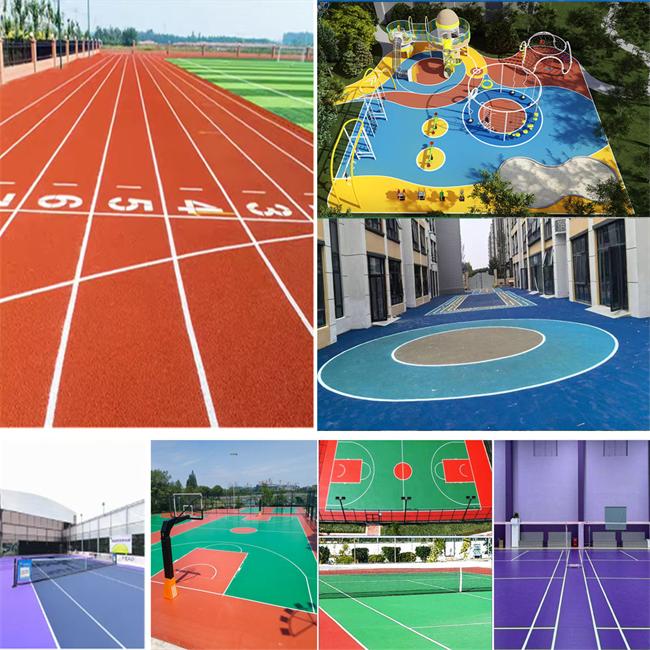
Blue EPDM granules serve diverse applications across multiple market segments:
- Playgrounds and kindergartens: Safety surfacing that cushions falls while creating visually engaging play environments
- Running tracks and multi-sport surfaces: Both professional athletic tracks and community recreational facilities
- Splash pads and pool surrounds: Blue surfaces stay cooler under sunlight due to light reflection properties
- Walking paths and recreational areas: Durable, low-maintenance surfacing for parks and public spaces
- Commercial and municipal projects: Schools, public facilities, and commercial developments requiring both safety and aesthetics
Benefits of Blue EPDM Surfacing
Visual Appeal and Design Versatility
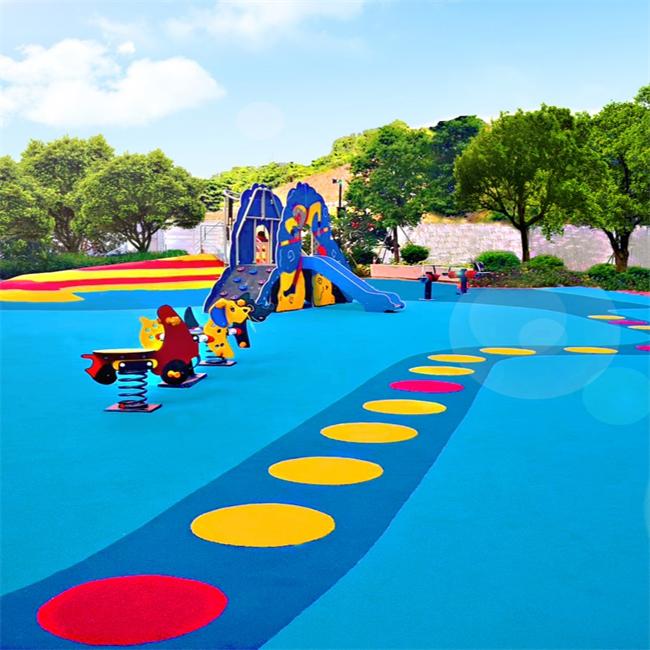
Blue creates a clean, inviting, and professional appearance that works equally well for children's playgrounds, elite athletic facilities, and recreational spaces. The color can be combined with other colors to create patterns, games, logos, and zones within a single installation.
Thermal Performance
Light blue and bright blue surfaces absorb significantly less heat than darker colors. Field data suggests that light blue surfaces can be 8–10°C cooler than black surfaces under direct sunlight, reducing burn risks and improving user comfort.
Safety and Impact Absorption
When properly installed with an appropriate EPDM sub-base, blue EPDM wet pour surfacing can achieve critical fall heights exceeding 1.4 meters, providing proven protection against fall-related injuries.
Low Maintenance Requirements
EPDM surfaces are permeable, allowing water to drain naturally. They are easy to clean with soap and water and resist staining, making them cost-effective over their lifecycle.
Technical Specifications: What to Look For
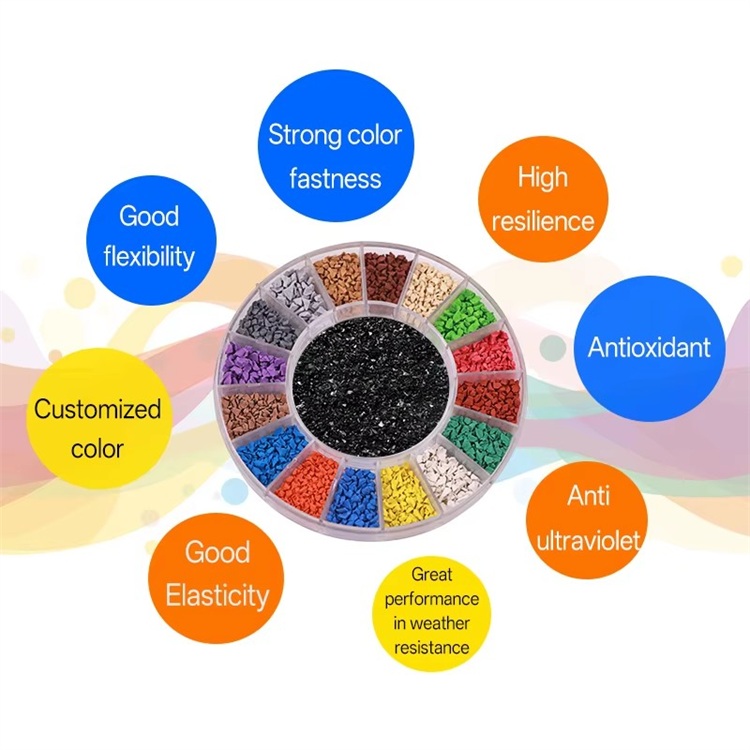
When evaluating blue EPDM granules, focus on these key parameters:
Tensile Strength and Elongation
High-quality EPDM granules typically exhibit tensile strength exceeding 3.5 MPa and elongation at break above 450–550%. Higher values indicate better elasticity and resilience, contributing to surface durability under traffic and temperature fluctuations.
Hardness (Shore A)
The standard hardness range for EPDM granules is approximately 55–65 Shore A. This balance provides sufficient cushioning while maintaining structural integrity.
Bulk Density
Quality blue EPDM granules generally have a bulk density of 630–750 g/l. Lower bulk density indicates higher polymer content and better material efficiency.
Polymer Content
The EPDM polymer content should be at least 20%. Higher polymer content generally correlates with superior performance, including better elasticity, UV resistance, and lifespan.
UV Stability and Color Fastness
This is particularly critical for blue EPDM granules. Bright blue shades are more susceptible to visual change from UV exposure than darker blues. Look for products that meet the gray scale rating of ≥3 after extended UVA exposure. Premium formulations can maintain color stability for over 5,000 hours of accelerated weathering.

Common Challenges with Blue EPDM Projects
Fading and Yellowing
The most significant risk with blue EPDM granules is color degradation. Light blue and bright blue shades are particularly vulnerable to yellowing effects when paired with the wrong binder or exposed to intense UV radiation. Many contractors have experienced the frustration of a beautiful blue surface developing an unsightly yellow cast within months of installation.
Resin/Binder Compatibility
Aromatic (non-UV-stable) polyurethane binders yellow when exposed to sunlight, altering the perceived color of blue EPDM granules. For bright blue and light blue shades, aliphatic (UV-stable) binders are essential to prevent this discoloration. Using an aromatic binder with light blue EPDM granules is a common but costly mistake.
Batch-to-Batch Color Variation
Natural variations in raw materials can cause slight color differences between production batches. Without proper quality management, this can result in visible color patches across a surface.
Raw Material Quality Issues
Low-quality blue EPDM granules may contain recycled rubber content or inferior pigments. The resulting surface may fade quickly, become brittle, or develop an unpleasant odor, especially under high temperatures and UV exposure.
How to Choose Blue EPDM Granules
Select the Right Shade for Your Project
- Light blue (RAL 5012) and bright blue create a clean, contemporary aesthetic but require aliphatic binders and high UV-stable pigments to retain their appearance.
- Dark blue (RAL 5010) offers better hiding power and is more forgiving with binder selection. It may tolerate aromatic binders with less visible yellowing.
- Turquoise blue (RAL 5018) creates a distinctive, vibrant finish but demands the highest UV stability standards.
Choose the Appropriate Binder
Your binder choice must match your blue shade. For light and bright blues, insist on aliphatic (UV-stable) binders to prevent yellowing. Darker blues can sometimes be used with aromatic binders, but an aliphatic binder is always recommended for premium projects.
Verify UV Stability Claims
Request UV stability test data. A quality blue EPDM product should demonstrate gray scale rating ≥3 after 4,896 kJ (approximately 2,550 hours) UVA exposure. Some premium products now achieve this rating after 9,600 kJ (5,000 hours) of exposure.
Inspect Physical Properties
Request the manufacturer's technical data sheet and verify:
- Tensile strength: ≥3.5 MPa
- Elongation at break: ≥450%
- Polymer content: ≥20%
- Bulk density: ≤750 g/l
Consider Customization Capabilities
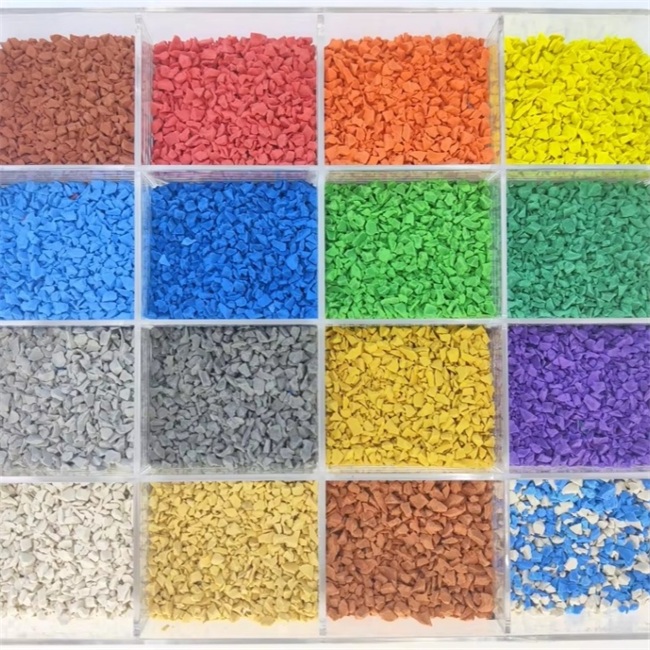
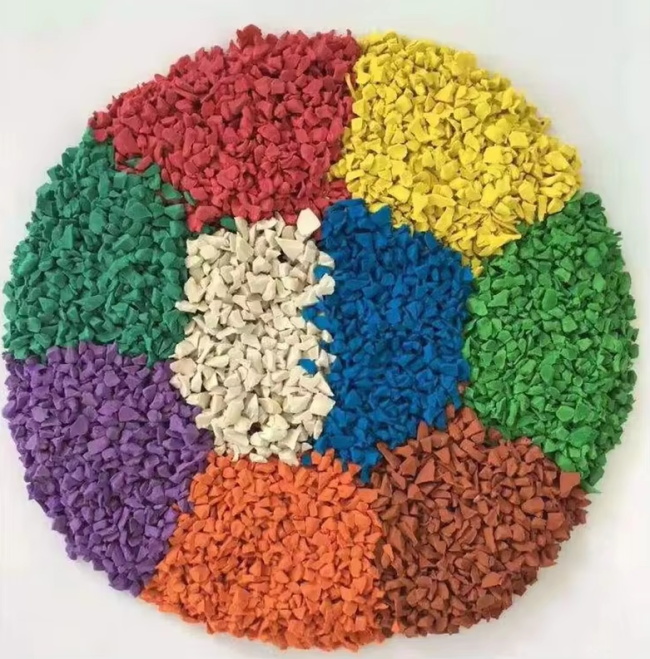
If your project requires a specific blue shade not available in standard ranges—such as a corporate color or architectural match—choose a manufacturer with proven color-matching and RAL/Pantone customization capabilities. This allows you to achieve a unique, brand-aligned aesthetic without compromising material quality.
Manufacturer Insights: How to Select a Reliable Supplier
Drawing on our experience as a specialized EPDM manufacturer, here are key considerations for evaluating potential suppliers:
1. Assess Manufacturing Capability
Look for manufacturers who produce EPDM granules as their primary business, rather than traders or generalist rubber processors. Specialized producers invest more deeply in formulation development and quality control.
2. Request Detailed Technical Documentation
A credible supplier should readily provide:
- Technical Data Sheet (TDS)
- Material Safety Data Sheet (MSDS)
- Certificates for EN 71-3, REACH, RoHS, and PAH compliance
- UV stability test reports
3. Check Customization Flexibility
Can the manufacturer match your required shade? Do they offer different granule sizes (0.5–1.5mm, 1–3mm, 2–4mm, etc.)? Flexibility in color matching and sizing indicates manufacturing expertise.
4. Evaluate Supply Chain Stability
Ask about production capacity, typical lead times, and minimum order quantities (MOQ). Reliable suppliers should be able to discuss their capacity and shipping processes transparently.
5. Verify Global Export Experience
Established exporters understand international shipping logistics, customs documentation, and packaging requirements for various markets. This expertise reduces the risk of shipping delays and ensures safe delivery.
6. Request Physical Samples
Before ordering, request samples for physical inspection and test mixing. Evaluate color consistency, granule shape, and odor. High-quality EPDM granules should have minimal odor and a clean, sharp appearance.
Why Global Buyers Choose Our Blue EPDM Granules
As a dedicated EPDM colored rubber granules manufacturer, we focus exclusively on producing premium EPDM granules for export markets. Our manufacturing depth allows us to control every aspect of production, from raw material selection to final packaging.
Our blue EPDM granules are formulated using our proprietary sulfur-free technology, which eliminates the characteristic rubber odor associated with sulfur-cured products. This technology delivers superior thermal stability and UV resistance compared to conventional formulations, enabling the granules to maintain their color integrity and structural performance for extended periods.
Key technical benefits of our product include:
- No odor, even under high temperatures and UV exposure
- Significantly extended lifespan compared to sulfur-cured alternatives
- Tensile strength reaching 4–7 MPa
- Superior color stability and UV resistance
- Compliance with food-grade safety standards
- Low bulk density with strong angular granule shape for optimal binder coverage
We support OEM, ODM, and private label projects, offering customization of:
- Colors: RAL, Pantone, or customer-supplied samples
- granule sizes: 0.5–1.5mm, 1–3mm, 1–4mm, 2–4mm, and special specifications
- Packaging: Custom bagging and labeling options
With over 25 years of industry experience and advanced production lines, we deliver reliable quality and flexible order fulfillment—no minimum order quantity (MOQ) restrictions—for customers across Europe, North America, Australia, the Middle East, and beyond.

Frequently Asked Questions(FAQ)
What granule size should I choose for blue EPDM granules?
The choice depends on your application. For wet pour playground surfacing, 1–3mm or 1–4mm granules are standard for the wearing surface course. For detailed patterns and thinner overlays, 0.5–1.5mm or 1–3mm granules provide a finer finish. For running tracks, 2–4mm is commonly used in the base layer. Always check your local specifications and binder manufacturer recommendations.
Does blue EPDM fade over time?
Yes, all colored EPDM granules can fade to some degree. The extent depends on pigment quality, UV stabilizer formulation, and binder choice. High-quality granules can withstand thousands of hours of UV exposure with minimal color change. Using the correct UV-stable (aliphatic) binder is equally critical—using an aromatic binder with blue granules will likely cause yellowing.
What binder is recommended for blue EPDM granules?
For light blue, bright blue, and turquoise shades, you must use an aliphatic (UV-stable) binder to prevent yellowing. Darker blue shades are more tolerant but will also benefit from an aliphatic binder for optimal long-term appearance.
How much PU binder is required for installation?
The binder-to-granule ratio is typically specified by the binder manufacturer and is usually around 5–8% by weight of granules for standard wet pour applications. Always follow the binder manufacturer’s guidelines and conduct a trial mix before full-scale application.
How long do blue EPDM surfaces last?
A well-installed blue EPDM surface with quality granules and proper binder can last 8–15 years or more, depending on traffic levels and environmental conditions. Our sulfur-free technology is designed to provide an extended lifespan compared to conventional sulfur-cured products.
Can you customize the blue color to match my requirements?
Yes. We offer color matching to RAL, Pantone, and customer-supplied samples. We can produce both standard and custom blue shades for OEM, ODM, and private-label projects.
Is the EPDM material odor-free?
Our sulfur-free EPDM formulation ensures the granules have minimal odor, which remains stable under high temperatures and UV exposure. This is a significant advantage for indoor applications and projects where odor is a concern.
What is your minimum order quantity?
We have no minimum order quantity (MOQ) for standard products. We support both full-container and consolidation (LCL) shipments to accommodate projects of all sizes.
Selecting the right blue EPDM granules for your project requires careful attention to material properties, UV stability, binder compatibility, and supplier qualifications. By understanding the technical specifications and common pitfalls outlined in this guide, you can specify a durable, visually appealing surface that will perform as expected for years to come.
The most critical decision is to partner with a manufacturer who can provide consistent quality, certified documentation, and technical support throughout your project. We invite you to contact us for product samples, technical data sheets, or to discuss your specific project requirements.

WOW(LYG) New Material Co Ltd is a manufacturer specializing in the production of EPDM rubber granules. We use sulfur-free vulcanization technology, it increases the service life by more than 3 times than traditional EPDM granules, and enhances the performance, including anti-aging, high-temperature resistance, and colorfastness.
We have over 25 years of production experience and offer customization for colors and granule sizes. NO MOQ.


