 注: 建议图片大小150px*50px
丨
注: 建议图片大小150px*50px 


In the playground and sports surfacing industry, the aesthetic trend has shifted decisively toward natural, earthy tones that blend harmoniously with outdoor environments. Brown EPDM granules have emerged as the preferred choice for contractors, architects, and specifiers seeking to create visually appealing surfaces that complement parks, school grounds, and municipal spaces without the artificial brightness of primary colors.
But choosing the right brown EPDM granules involves more than selecting a color from a swatch. As an EPDM manufacturer with over two decades of experience serving global markets, we understand the technical considerations, procurement pitfalls, and quality markers that separate a successful installation from a costly failure. This guide provides engineers, contractors, and purchasing managers with the practical knowledge needed to specify, procure, and install brown EPDM granules that deliver lasting performance.
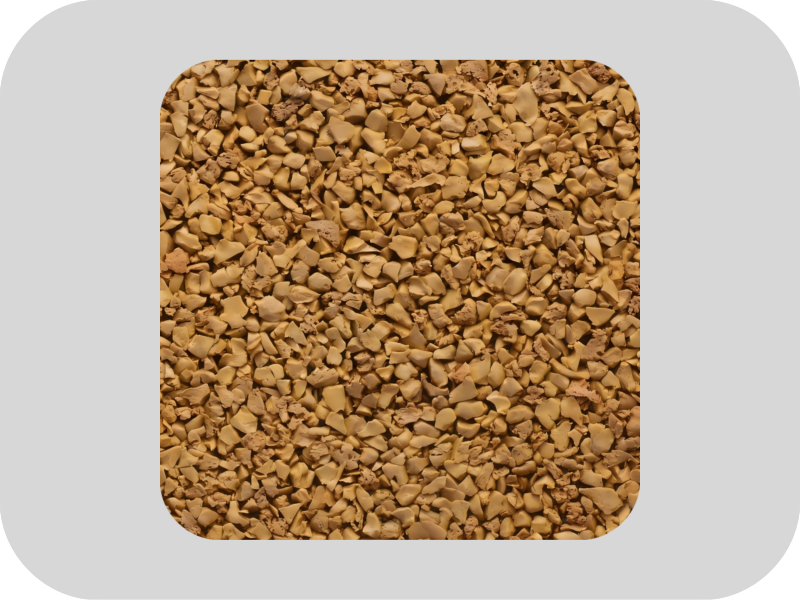
What Are Brown EPDM Granules?
Brown EPDM granules are vulcanized rubber granules manufactured from Ethylene Propylene Diene Monomer elastomer, pigmented with UV-stable colorants to achieve various earth-tone shades. Unlike SBR (Styrene Butadiene Rubber) made from recycled tires, premium EPDM granules are manufactured from virgin polymers, offering superior weather resistance, color stability, and elastic memory.
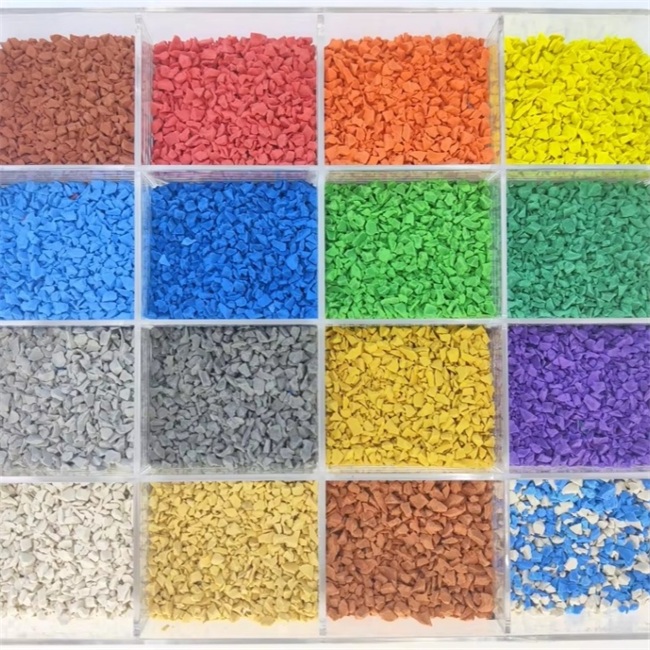
The "brown" category encompasses a spectrum of natural shades—from warm bark tones and pale brown (similar to RAL 8025) to wood-mulch browns and forest-floor blends. These colors are achieved through through-dyed pigmentation, where the color permeates the entire granule rather than being applied as a surface coating. This ensures color remains consistent even as the surface experiences wear.

Key Applications for Brown EPDM Granules
Brown EPDM granules are specified for projects requiring aesthetic integration with natural surroundings:
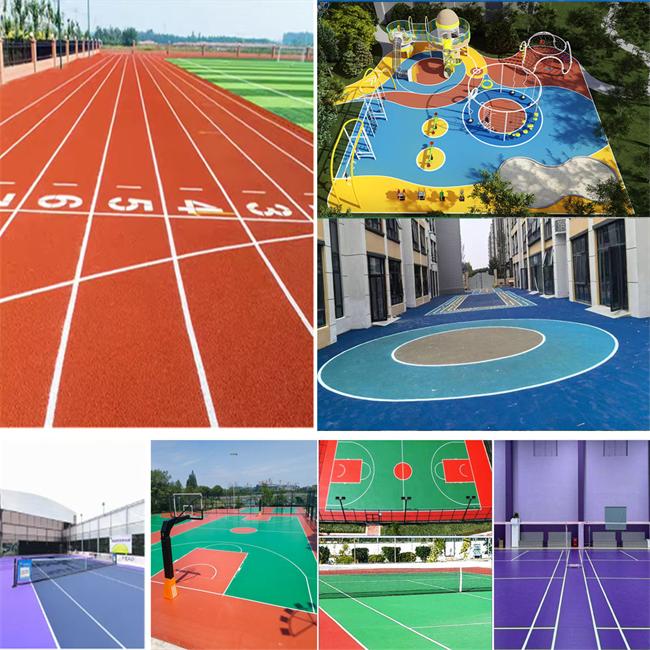
Playground Surfacing: Wet pour (poured-in-place) systems using brown EPDM as the wearing course create safe, impact-absorbing surfaces that mimic natural woodland floors. These systems can achieve critical fall height ratings of up to 3.23 meters, making them suitable for children's play areas in schools, parks, and kindergartens.
Walking and Nature Trails: Brown granules are ideal for pathways through parks and conservation areas where synthetic surfaces must remain visually unobtrusive. The natural appearance helps these trails blend seamlessly into landscapes while providing the durability and slip resistance required for public access.
Splash Pads and Water Play Areas: EPDM's water permeability and resistance to chlorinated water make it suitable for aquatic environments. Brown tones in these settings create a natural, earthy contrast with water features.
Sports and Multi-Use Games Areas: Running tracks and sports surfacing benefit from EPDM's elasticity and durability while natural tones reduce visual impact in scenic locations. This is particularly relevant for projects within national parks, golf courses, or residential communities where visual harmony is prioritized.
Tree Root Protection Areas: EPDM surfaces provide a permeable, stable walking surface while protecting tree roots, mimicking organic mulch appearance without the maintenance issues of loose fill materials such as wood chips or bark.
Benefits of Premium Brown EPDM Granules
Superior Color Stability
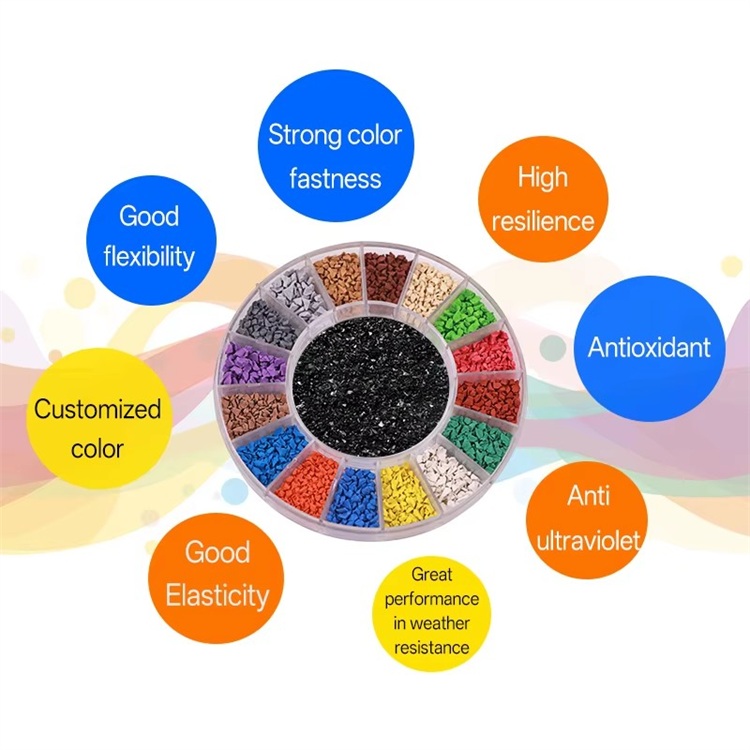
Color fading is one of the most common complaints with low-quality EPDM. Premium brown granules incorporate high-performance pigments and UV stabilizers that prevent degradation. When using through-dyed granules processed with advanced sulfur-free curing technology, color integrity is maintained even under intense UV exposure. This is particularly critical for brown shades, which can turn gray or develop an unnatural chalky appearance when UV-stabilizers are inadequate.
Extended Service Life
The service life of an EPDM surface depends primarily on the polymer's resistance to ozone, UV radiation, and thermal degradation. Advanced sulfur-free curing technologies crosslink the polymer chains more effectively, enhancing resistance to aging by a factor of three or more compared to conventional sulfur-cured products. Properly specified EPDM wearing courses can provide 10 to 15 years of service before requiring replacement.
Consistent Granule Size Distribution
Performance specifications often call for specific granule sizes—1 to 3 millimeters for fine finishes, 1 to 4 millimeters for standard playground surfaces, or 2 to 4 millimeters for heavy-duty applications. Consistent size distribution ensures proper compaction, reduced void content, and a smooth, visually uniform surface. This consistency also helps contractors achieve more predictable binder consumption rates and application thicknesses.
Low Odor and Safety
Sulfur-free EPDM formulations eliminate the characteristic rubber odor associated with sulfur vulcanization. This makes installations suitable for schools, kindergartens, and other sensitive environments. High-quality EPDM can meet stringent environmental standards, including food-grade hygiene requirements, making it safe for children's play areas. The absence of sulfur also means that under high temperatures and strong UV exposure, no sulfuric acid decomposition products are released, ensuring a truly odor-free experience throughout the product's lifetime.
Common Challenges with Brown EPDM Installations
Color Inconsistency
When granules are sourced from multiple batches or from manufacturers without rigorous color control, visible color variations appear upon installation. This is particularly problematic with natural tones, where subtle shade differences become immediately apparent. Always request batch samples to verify color consistency before production runs.
Fading and Chalking
Low-quality granules often use surface coatings rather than through-dyed pigmentation. Over time, the coating wears away, revealing the underlying base color—typically gray or black—resulting in patchy, faded appearance. Some lower-grade products also develop a chalky surface deposit as the polymer degrades. These products often use sulfur in their curing process, which accelerates oxidative breakdown and leads to premature surface deterioration.
Dust and Contamination
Inferior EPDM granules contain excess dust and fine granules from poor processing. This dust interferes with binder adhesion, increasing binder consumption and weakening the final surface. Dust-free granules achieve better compaction and stronger binder bonding, resulting in a more durable installation.
Binder Compatibility and Consumption
The polyurethane binder consumption rate depends on granule shape, density, and surface characteristics. Irregular, angular granules with higher surface area require more binder to achieve the required strength. Inefficient binder consumption directly increases project costs. Premium granules with optimized surface characteristics and lower bulk density can achieve stronger bonds with less binder.
How to Choose the Right Brown EPDM Granules
Granule Size Selection
For projects requiring a fine, smooth finish such as decorative playground surfaces or splash pads, 0.5 to 1.5 millimeter granules are the ideal choice. These smaller granules create a dense, tight surface that is comfortable underfoot and easy to detail around equipment.
For standard playground wet pour systems and most recreational surfacing applications, 1 to 3 millimeter granules offer the best balance of impact absorption, durability, and visual appeal. This size range is the most commonly specified for general-purpose safety surfacing.
Running tracks and sports surfaces benefit from 1 to 4 millimeter granules, which provide the resilience and traction needed for athletic performance while maintaining a professional appearance.
For heavy-duty applications such as high-traffic walkways, municipal projects, or areas subjected to frequent maintenance equipment use, 2 to 4 millimeter granules deliver superior wear resistance and structural integrity.

Key Quality Indicators
Polymer Content: Premium EPDM granules contain 20 to 25 percent high-quality EPDM polymer. Lower polymer content indicates higher filler loading, resulting in reduced elasticity and shorter service life. This is one of the most important specifications to verify when evaluating suppliers.
Tensile Strength: High-performance granules achieve tensile strengths of 4 to 7 megapascals. Weaker granules produce less durable surfaces that crack and deteriorate prematurely under normal use conditions.
Elongation at Break: Quality EPDM should achieve 400 to 550 percent elongation, indicating the elasticity needed to accommodate thermal expansion and substrate movement without cracking.
Hardness (Shore A): Optimal hardness for playground applications is 55 to 67 Shore A, balancing impact absorption with durability. Softer granules may compress too readily, while harder granules may not provide adequate fall protection.
Dust Content: Low-dust granules require less binder—typically around 20 percent by weight—and produce stronger, more uniform surfaces. High dust content indicates poor processing and can compromise both installation quality and long-term performance.
Technical Specifications Reference
When specifying brown EPDM granules, understanding the key technical parameters helps ensure you select the right product for your application.
Premium brown EPDM granules are manufactured from virgin EPDM rubber with through-dyed pigmentation that ensures color integrity throughout the granule. The material presents an irregular, angular granule shape that interlocks effectively during installation, creating a stable surface structure.
The color range encompasses earthy brown tones that can be precisely matched to RAL or Pantone references, ensuring consistency with project design specifications. Available granule sizes include 0.5 to 1.5 millimeters for fine finishes, 1 to 3 millimeters for standard applications, 1 to 4 millimeters for sports surfaces, and 2 to 4 millimeters for heavy-duty installations.
Mechanical properties of quality EPDM granules include tensile strength of 4 to 7 megapascals and elongation at break of 400 to 550 percent, providing the elasticity and strength needed for demanding applications. Hardness typically ranges from 55 to 67 Shore A, balancing comfort with durability.
Bulk density for premium sulfur-free EPDM granules is less than 680 kilograms per cubic meter, which is lower than conventional products due to the optimized polymer structure. This lower density contributes to better binder efficiency and reduced transportation costs.
Binder requirement is approximately 20 percent by weight, though this can vary based on the specific binder formulation and granule surface characteristics. UV stability is excellent when using through-dyed pigmentation and sulfur-free curing technology, with no significant fading or chalking expected under normal exposure conditions.
Certification options include ISO 9001 quality management and compliance with EN 1177 impact absorption standards, providing assurance of product quality and safety for international projects.

Why Global Buyers Choose Our Brown EPDM Granules
As a dedicated EPDM granules manufacturer, we focus exclusively on producing the highest quality raw material—not on installing finished surfaces. This singular focus allows us to invest entirely in material science, quality control, and production innovation.
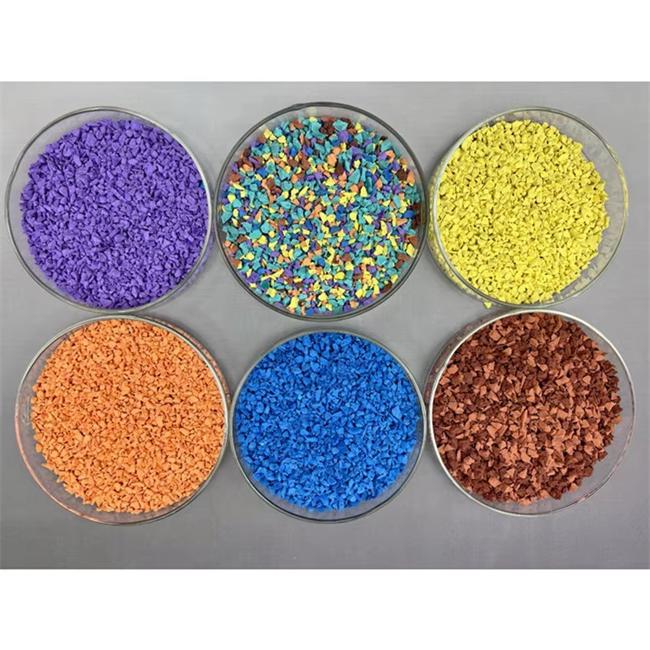
We deliver consistent color through our through-dyed pigmentation process, combined with precision color matching to RAL or Pantone references. This ensures perfect batch-to-batch consistency. Our brown granules maintain their color throughout the product lifecycle, eliminating the risk of patchy fading that plagues lower-quality alternatives.
We provide custom solutions for every project. We support OEM and private-label requirements, offering custom granule sizes, custom color blends, and specialized packaging. Our production flexibility accommodates projects of any scale, from small playground renovations to large municipal installations.
Our sulfur-free formulation technology is a key differentiator. It eliminates odors, improves UV resistance, and extends service life by three times or more compared to sulfur-cured products. Granules exhibit superior elasticity with tensile strengths of 4 to 7 megapascals, and they maintain performance characteristics over time. The absence of sulfur also prevents the formation of sulfuric acid degradation products, protecting both the surface integrity and the surrounding environment.
With export experience spanning Europe, North America, Australia, and the Middle East, we understand international specification requirements. We provide comprehensive technical documentation—including TDS and MSDS—to support your project approval processes.
Whether ordering full containers or consolidating shipments, we provide reliable delivery and consistent supply for ongoing projects. Our flexible minimum order quantities mean you can source exactly what you need without excessive inventory commitments.
Manufacturer Insights: Expert Advice for Buyers
Choose Through-Dyed over Coated Granules: The difference becomes apparent after 12 to 18 months of UV exposure. Coated granules fade; through-dyed granules maintain their color integrity. This single specification choice prevents the most common warranty claim issue and ensures your installation looks professional for years.
Verify UV Stability Through Testing: Ask suppliers for accelerated UV aging test data. Genuine sulfur-free EPDM should show minimal delta-E color change even after extended exposure. We recommend requesting this data before making a final specification decision.
Match granule Size to Application: Using 1 to 3 millimeter granules for a running track designed for 2 to 4 millimeter material may compromise wear resistance. When in doubt, consult your supplier for specific recommendations based on your project's traffic volume and performance requirements.
Request a Physical Sample: Never rely solely on digital swatches. Order physical samples to verify color, size distribution, and dust content. Compare the sample against your binder system before ordering full quantities. This small step can prevent significant issues during installation.
Consider Total Cost of Ownership: The lowest price per ton does not guarantee the lowest installed cost. Higher-quality granules consume less binder, require less labor to install, and last longer—reducing long-term costs. Evaluate suppliers based on total project cost rather than material price alone.
Understand the Supplier's Manufacturing Focus: Suppliers who produce only granules, rather than also installing finished surfaces, often have deeper expertise in material science and quality control. They have no competing interests and are entirely focused on delivering the best raw material to their customers.
Frequently Asked Questions
What size brown EPDM granules should I choose for my playground project?
For standard playground wet pour systems, 1 to 4 millimeter granules are the most common specification. For finer finishes or detail work, 0.5 to 1.5 millimeter or 1 to 3 millimeter granules may be appropriate. The selection depends on your desired surface texture and fall-height requirements. Consult with your supplier to determine the optimal size for your specific application.
Can brown EPDM granules fade over time?
Yes, but fading depends on pigmentation quality and UV stabilization. Through-dyed granules with high-grade pigments and UV stabilizers resist fading for many years. Coated granules or low-pigment products may fade within 12 to 18 months. Always verify the pigmentation method used by your supplier.
How much polyurethane binder do I need with brown EPDM granules?
Typical binder consumption is approximately 20 percent by weight of the EPDM granules, though the exact ratio depends on granule surface characteristics and the specific binder formulation. Higher-quality granules with consistent granule size and low dust content generally achieve optimal bonding with less binder.
How long does an EPDM surface installed with your granules last?
With proper specification and installation, EPDM wearing courses can last 10 to 15 years or longer. The key factors are granule quality—particularly polymer content and curing chemistry—binder quality, substrate preparation, and regular maintenance. Sulfur-free EPDM formulations offer extended service life compared to conventional products.
Can you customize the brown color to match a specific reference?
Yes, we support custom color matching to RAL, Pantone, or customer-supplied samples. We provide physical color samples for approval before production begins, ensuring the final product matches your design specifications exactly.
What is the minimum order quantity?
We offer flexible minimum order quantities and support both full-container and consolidation shipments to accommodate projects of all sizes. We understand that projects vary in scale, and our logistics capabilities are designed to meet your specific requirements.
Can I receive a sample before placing an order?
Yes, samples are available for physical inspection. We recommend that all buyers request a sample to verify color, granule size, and quality before finalizing specifications. This ensures complete confidence in your material selection.
How do I distinguish your sulfur-free EPDM from sulfur-cured products?
Sulfur-free products have no characteristic rubber odor, even at elevated temperatures. They also demonstrate superior color retention and flexibility under UV exposure. Upon request, we can provide test data demonstrating the performance differences and helping you make an informed decision.

Specifying brown EPDM granules requires careful attention to quality markers that differentiate durable, color-stable products from short-lived alternatives. Through-dyed pigmentation, sulfur-free curing technology, consistent granule size distribution, and high polymer content distinguish premium granules that deliver long service life and project success.
As a specialized EPDM granules manufacturer and exporter with global experience, we support contractors, engineers, and procurement professionals in selecting the right product for their specific project requirements. Whether you need custom colors, specific granule sizes, or production quantities for a large-scale installation, our team provides the technical expertise, quality assurance, and reliable supply needed to complete your project on time and to specification.

Contact us to discuss your project requirements, request samples. Our team is ready to help you achieve the perfect balance of aesthetics, safety, and durability for your next installation.
WOW(LYG) New Material Co Ltd is a manufacturer specializing in the production of EPDM rubber granules. We use sulfur-free vulcanization technology, it increases the service life by more than 3 times than traditional EPDM granules, and enhances the performance, including anti-aging, high-temperature resistance, and colorfastness.
We have over 25 years of production experience and offer customization for colors and granule sizes. NO MOQ.


