 注: 建议图片大小150px*50px
丨
注: 建议图片大小150px*50px Views: 0 Author: Site Editor Publish Time: 2026-08-15 Origin: Site


Selecting the right custom color EPDM granules for a playground, running track, or safety surfacing project goes far beyond choosing an appealing color palette. For contractors, engineers, and procurement managers, the decision involves navigating technical specifications, assessing supplier capabilities, and mitigating long-term performance risks.
This guide draws on decades of manufacturing expertise to provide a practical, technically grounded approach to specifying and sourcing custom color EPDM rubber granules. It addresses the real-world questions that arise during project planning and procurement — from color stability and granule sizing to supplier evaluation and quality verification — so you can make informed decisions that ensure project success.
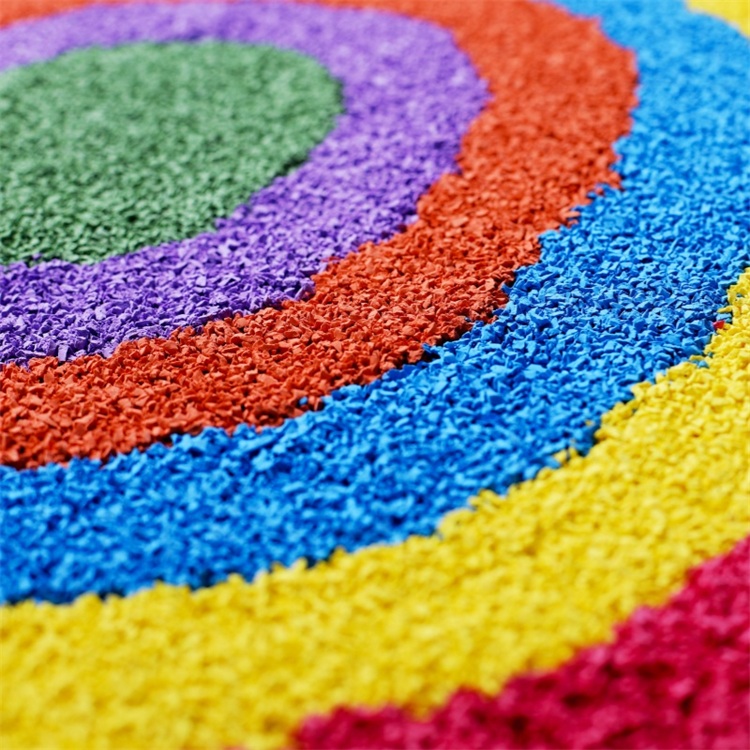
What Are Custom Color EPDM Granules?
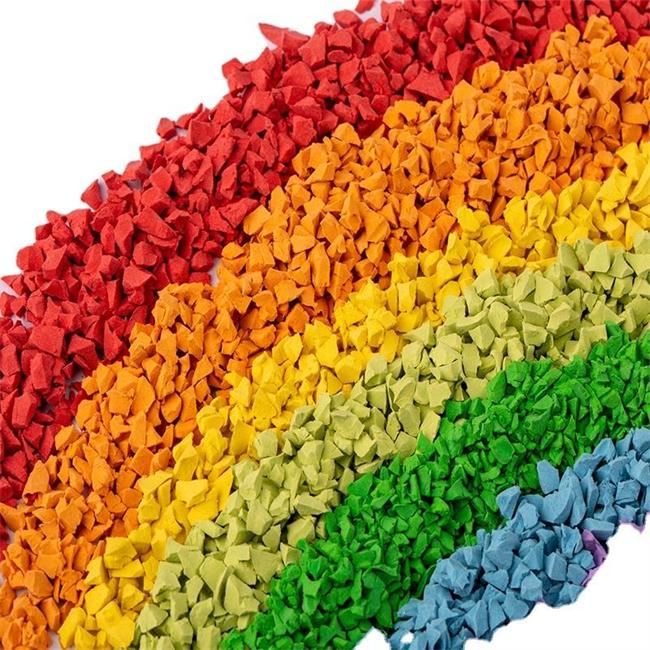
EPDM (Ethylene Propylene Diene Monomer) is a high-performance synthetic rubber renowned for its exceptional weather resistance, UV stability, and elasticity. Custom color EPDM granules are produced by compounding EPDM rubber with pigments to achieve specific colors — either from standard systems like RAL or Pantone — and then granulating the material to precise sizes for use in bound rubber surfacing systems such as wet-pour playgrounds and sports tracks.
Unlike general-purpose colored rubber granules, premium EPDM granules are engineered specifically for outdoor applications, offering resistance to ozone, oxidation, and UV degradation over a service life typically ranging from 8 to 12 years, depending on the EPDM content and environmental conditions .

Key Applications: Where Custom Color EPDM Granules Deliver Value
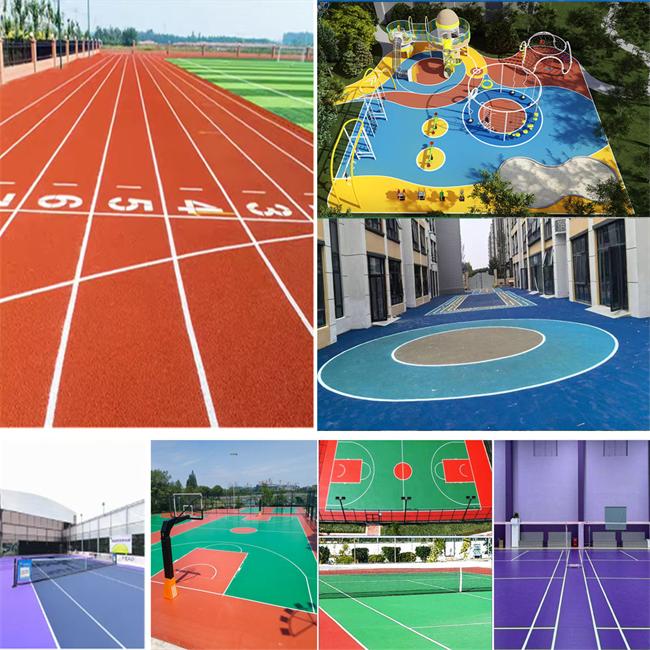
Custom color EPDM granules serve a diverse range of projects, each with specific performance requirements. Poured-in-place rubber (PIP) surfacing is a common application, particularly for playgrounds, where the material’s shock-absorbing properties are critical for safety. For running tracks and sports surfaces, the primary considerations are elasticity and grip. In recreational areas like parks, walking paths, and splash pads, aesthetics, durability, and safety all come into play. The ability to match a project’s branding or design vision, from schools and kindergartens to large commercial and municipal projects, is a key driver for choosing custom colors.
Benefits of Choosing High-Quality Custom Color EPDM Granules
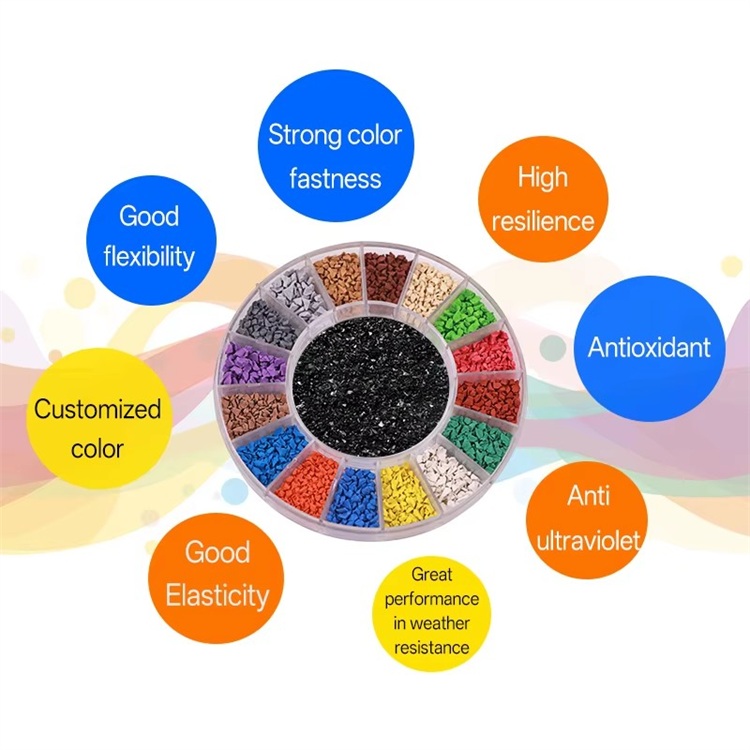
Durability & Weather Resistance: Premium EPDM excels in harsh environments, resisting ozone, oxidation, and UV radiation. This ensures long-term performance without cracking, hardening, or significant color fading. A sulfur-free manufacturing process not only eliminates the odor associated with sulfur-based systems but also enhances the material’s molecular stability, significantly extending its lifespan .
Color Consistency & Aesthetic Appeal: The use of high-quality, lightfast pigments ensures that the color is uniform throughout the granule, not just a surface coating. This guarantees that the finished surface maintains its vibrant appearance over many years. Color matching to RAL, Pantone, or custom samples is a critical capability for achieving design intent .
Safety & Environmental Compliance: High-quality EPDM granules are non-toxic and can meet stringent safety standards. Many are certified to international standards such as REACH, SGS, and EN71, confirming they are safe for use in environments like schools and playgrounds .
Flexibility & Customization: A key advantage is the ability to tailor the product to a project’s exact needs, including color, granule size, and packaging. This ensures the material is a perfect fit for the intended application and logistical requirements, regardless of order size.
Common Challenges & How to Overcome Them
Procurement and installation of EPDM surfacing can present challenges that impact quality, cost, and timeline.
Color Fading & Yellowing: One of the most common concerns is premature color fading. This is often due to low-quality pigments or the use of an incorrect polyurethane binder. Aromatic binders are not UV-stable and tend to yellow, especially when used with certain EPDM colors. Aliphatic binders are UV-stable and are often recommended for light or bright colors to maintain visual integrity .
Inconsistent Quality & Performance: The market contains low-grade granules, including recycled or "black" rubber that is simply colored on the surface. These products fail to meet the performance standards of virgin EPDM, leading to problems like crumbling, loss of elasticity, and rapid color degradation . It is crucial to verify that the granules contain a high percentage of virgin EPDM rubber.
Supplier Reliability & Procurement Risk: For global buyers, selecting an unknown supplier introduces risks related to quality consistency, shipping delays, and communication breakdowns. Evaluating a supplier’s operational stability, verification status, and response time is essential before placing a large order .
How to Choose the Right EPDM Granules for Your Project
Selecting the correct EPDM granule specification involves matching material properties to the project’s functional requirements.
Granule Size
- 0.5–1.5mm: For the finest, smoothest surfaces, often used for detailed logos, intricate designs, or indoor applications.
- 1–3mm: The most common size for general-purpose poured-in-place playgrounds, providing a good balance of texture and safety. It is also used for "sandwich" layer systems.
- 2–4mm: The preferred size for high-traffic outdoor areas like running tracks, public parks, and sports surfacing, offering superior texture and slip resistance .
PU Binder Ratio
A standard polyurethane binder ratio of 20–22% (by weight) is a good starting point for most outdoor applications, balancing elasticity and durability. Increasing the binder content (e.g., 25%+) can enhance durability in very high-traffic zones, while a lower ratio may be specified for temporary or low-impact areas .
System Thickness (for PIP)
The total thickness of a poured-in-place system dictates its impact absorption. For critical safety zones like playgrounds, a thickness of 10–15mm is typically recommended. Walkways or less critical areas may use 8–10mm. The thickness is designed in layers: a base layer of black or standard EPDM for cushioning, topped with a wear layer of custom color granules for aesthetics and color .

Technical Specifications for Custom Color EPDM Granules
When sourcing EPDM granules, there are several key technical parameters that procurement professionals and engineers should verify to ensure material quality and project suitability. The EPDM polymer content is a critical metric, typically ranging from 20 to 33 percent of the total formulation, and it directly influences the granule's elasticity, resilience, and overall lifespan. A higher polymer content generally correlates with superior long-term performance. Granule size grading, defined by a sieve analysis, ensures a consistent granule size distribution — for example, 1 to 3 millimeters or 2 to 4 millimeters — which is essential for achieving a uniform surface texture and optimizing binder consumption during installation.
Apparent density, typically falling between 500 and 680 kilograms per cubic meter, affects coverage yield and material cost per square meter. A lower density may indicate a more porous granule structure, which could require additional binder to achieve the same mechanical strength. Hardness, measured on the Shore A scale and usually in the range of 55 to 65, influences the finished surface's tactile feel and its capacity to absorb impact. Tensile strength and elongation at break are equally important indicators of material strength and flexibility; reputable manufacturers will provide test data showing values exceeding 3.5 megapascals and 400 percent respectively. Together, these technical specifications form the basis of a reliable Technical Data Sheet (TDS) and should be requested and reviewed before any purchasing decision is made.

Manufacturer Insights: Proven Advice from the Production Surface
> With over 25 years of dedicated EPDM manufacturing experience, we offer this practical advice to help you avoid common pitfalls:
> For Color Matching: To ensure a perfect visual match, always confirm the color system (RAL, Pantone, or custom) and request a sample of the production batch for approval before manufacturing. For bright or pastel colors in outdoor applications, specifically ask about UV stability testing and binder compatibility .
> For Granule Size Selection: Match the size to the application: 1–3mm for general playgrounds and detailed logos, and 2–4mm for high-traffic running tracks and recreational areas. This ensures optimal surface texture and longevity .
> To Control Costs Without Sacrificing Quality: Focus on the "per square meter" cost, not just the price per ton. A higher-quality granule will often cover more area (lower density) and require less binder to achieve the same strength, leading to a more durable and cost-effective finished surface over its lifetime.
> For Long-Term Durability: Consider the environmental conditions. In high-UV climates, ensure both the pigment and the proposed polyurethane binder are UV-stable to prevent yellowing . For cold climates, choose a granule that retains its flexibility and impact resistance at low temperatures.
> For Evaluating Supplier Quality: Insist on reviewing the Technical Data Sheet (TDS) and test reports for polymer content, tensile strength, and elongation. Do not accept material without these .

Why Global Buyers Choose Us for Their Custom Color EPDM Granules
As a focused manufacturer and exporter of EPDM granules, our capabilities are built to address the critical needs of global buyers.
- Technical Expertise & Quality Focus: Our sulfur-free production technology results in a product with no odor, enhanced molecular stability, and a lifespan significantly longer than conventional EPDM granules. This ensures surfaces maintain their performance and color for longer .
- Comprehensive Customization: Our manufacturing flexibility allows for precise color matching via RAL, Pantone, or physical samples, granule sizing from 0.5–1.5mm to 2–4mm and beyond, and custom packaging. This ensures the product fits your project specifications exactly.
- Reliable Supply & Flexible MOQ: With over two decades of industry experience and full-scale production, we offer stable supply chains and on-time delivery. We support orders of all sizes, including small trial batches and large-scale projects, with flexible logistics for both full and mixed container loads.
- Global Export Experience: We possess deep knowledge of international shipping, documentation, and compliance, making procurement straightforward for clients across Europe, North America, Australia, the Middle East, and other markets .
Frequently Asked Questions
What EPDM granule size should I choose for a kindergarten playground, and why?
For a kindergarten playground, 1–3mm granules are recommended . This size provides a smooth, safe, and non-abrasive surface that is gentle on children's skin, while still offering good slip resistance and impact absorption.
What causes color fading and yellowing in EPDM surfaces, and how can I prevent it?
Color fading is typically caused by low-quality pigments or insufficient UV protection in the granule. Yellowing is often caused by using a non-UV-stable aromatic polyurethane binder . To prevent this, specify UV-stable pigments, ensure a high-quality EPDM compound, and use an aliphatic (UV-stable) binder, especially with bright, light, or pastel colors.
What is the minimum order quantity (MOQ) for custom color EPDM granules?
We offer no minimum order quantity (No MOQ) for standard products and can accommodate small trial orders to validate specifications. For custom color matching (RAL/Pantone), we can produce from 1 ton. This flexibility is designed to support both pilot projects and large-scale procurement.
How do I know if the EPDM granules are high-quality and not recycled?
Request a Technical Data Sheet (TDS) and test reports. Key indicators of quality include EPDM polymer content (ideally >20%), tensile strength, and elongation figures. A reputable manufacturer will provide this data and be transparent about their compound formulations .
What international certifications should a reliable EPDM supplier have?
Key certifications to look for include REACH, SGS (e.g., EN71-3 for toy safety), and RoHS. These confirm the material’s safety and environmental compliance, which is critical for public-use projects like playgrounds and schools .
What's the typical lifespan of a high-quality EPDM playground or track surface?
Under normal conditions and with proper installation, a high-quality EPDM surface can last 8 to 12 years. The lifespan is influenced by the EPDM polymer content, UV intensity at the site, and the maintenance routine . A sulfur-free, high-polymer-content granule will significantly outperform lower-grade materials.
How much PU binder is generally required for a 2-4mm EPDM top layer?
For a 2-4mm EPDM top layer, a binder ratio of 20–22% (by weight of the granules) is typically recommended to achieve an optimal balance of elasticity, durability, and strength . Always follow the binder manufacturer's specific guidelines.
Can you match a specific color that is not in your standard range?
Yes. We offer full color-matching services. You can provide a RAL number, Pantone code, or a physical sample, and we will formulate a custom color to match your exact requirements.

Selecting the right custom color EPDM granules is a critical decision that impacts the safety, aesthetics, and longevity of a project. By understanding key factors—from granule size and polymer content to the importance of UV-stable binders and reliable supplier verification—you can make informed choices that ensure successful outcomes.
For contractors, engineers, and procurement professionals, partnering with a dedicated manufacturer that offers technical transparency, comprehensive customization, and flexible logistics is the most effective way to reduce risk and achieve superior results. We invite you to contact our team to discuss your project requirements, request a sample, or receive a detailed technical data sheet (TDS) and material safety data sheet (MSDS) for our range of high-performance EPDM granules.

WOW(LYG) New Material Co Ltd is a manufacturer specializing in the production of EPDM rubber granules. We use sulfur-free vulcanization technology, it increases the service life by more than 3 times than traditional EPDM granules, and enhances the performance, including anti-aging, high-temperature resistance, and colorfastness.
We have over 25 years of production experience and offer customization for colors and granule sizes. NO MOQ.


