 注: 建议图片大小150px*50px
丨
注: 建议图片大小150px*50px Views: 0 Author: Site Editor Publish Time: 2026-08-29 Origin: Site


EPDM granules are generally resistant to fading, but they are not completely immune to long-term UV exposure. High-quality EPDM rubber granules with good UV resistance and stable color pigmentation can maintain their appearance for many years, even in outdoor environments with strong sunlight.
Whether EPDM granules fade depends on several factors, including material formulation, color choice, particle quality, UV exposure intensity, climate conditions, and how the surface is used and maintained. In practical terms, properly manufactured EPDM granules used in playgrounds, running tracks, sports surfacing, and wet pour rubber surfaces should show only gradual color change rather than rapid or severe fading.

Yes, EPDM granules can fade slightly over time when exposed to continuous sunlight, but high-quality EPDM rubber granules are designed to resist UV degradation and color loss much better than many other rubber or polymer materials.
The key point is that fading is not the same for all EPDM granules. The difference usually comes from:
The quality of the EPDM compound
The type of color pigments used
The granule size and surface structure
The application environment
The installation system and maintenance
For outdoor projects, UV resistance and color stability are important selection criteria, especially for playgrounds, school sports areas, running tracks, pool surrounds, and public recreational surfaces where appearance and long-term performance both matter.
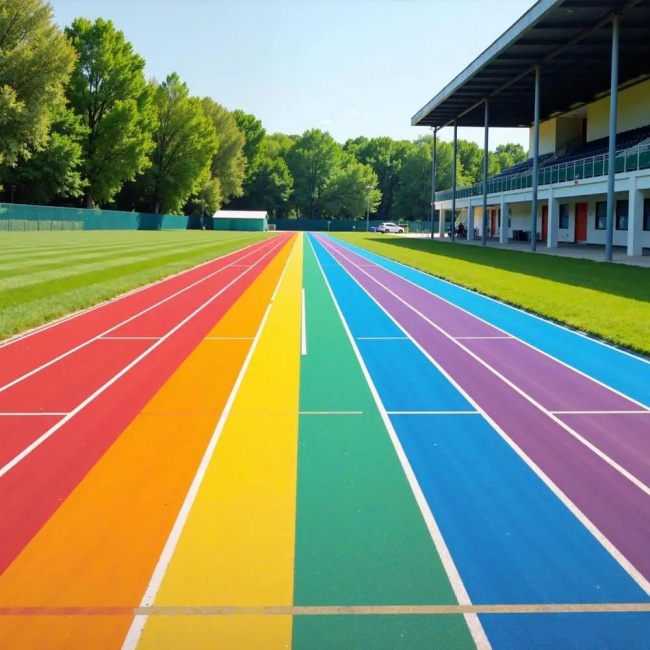
Why EPDM Granules Are Generally UV Resistant
EPDM rubber is widely used in outdoor surfacing because it has good resistance to sunlight, ozone, heat, and weathering. This makes it suitable for applications where the surface must remain durable, safe, and visually acceptable over time.
EPDM granules are commonly used in:
Playground safety surfaces
Wet pour rubber surfacing
Running tracks
Sports courts
Fitness areas
School yards
Pool surrounds
Walkways and recreational areas
In these applications, the material must handle rain, heat, UV radiation, foot traffic, and temperature changes. EPDM rubber granules are chosen because they can combine elasticity, shock absorption, slip resistance, and weather resistance in one surface system.
However, UV resistance is not only about the base rubber. Color stability also depends on how pigments are integrated into the granules and how well the material resists oxidation and surface degradation over time.
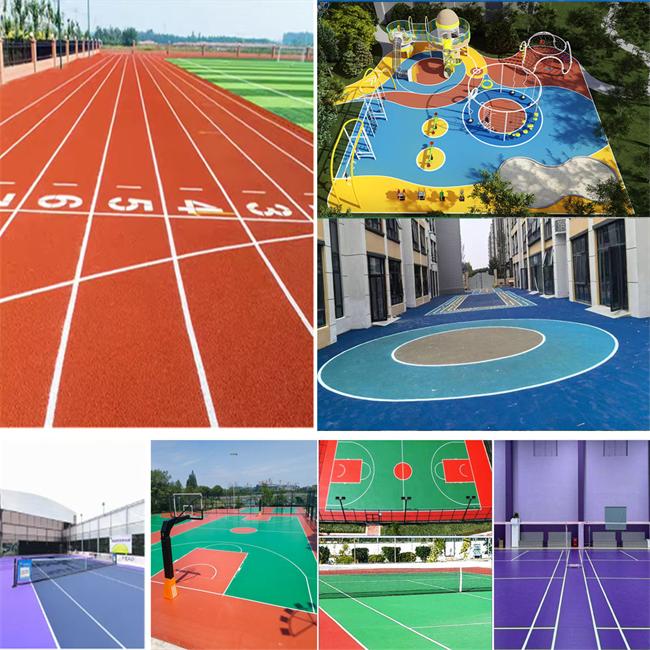
What Causes EPDM Granules to Fade?
Continuous UV Exposure
Sunlight contains ultraviolet radiation, which can gradually affect surface pigments and polymer materials. Outdoor EPDM surfaces receive direct sunlight for many hours each day, especially in hot climates.
Over a long period, UV exposure may cause:
Slight color softening
Reduced color brightness
Surface chalking in lower-quality materials
Gradual appearance change
High-quality EPDM granules are formulated to slow down this process, but no outdoor colored surface stays exactly the same forever.
Color Choice
Some colors are more sensitive to sunlight than others. Bright reds, yellows, oranges, and some intense blues may show visible fading earlier than more neutral or darker tones.
This does not mean bright colors are unsuitable. It means that if color consistency is important for branding, school logos, playground zones, or sports markings, the color selection should be considered at the design stage.
Pigment Quality
The pigments used in EPDM granules play a major role in color stability. If pigments are not well matched to the rubber compound or are not UV-stable, the surface may lose brightness faster.
For long-term outdoor use, granules should be produced with consistent pigment dispersion and stable color performance.
Material Formulation
EPDM granules are not all made the same. Differences in rubber compound, filler content, curing process, and additive selection can affect:
UV resistance
Color retention
Elasticity
Tensile strength
Aging resistance
Weather resistance
A granule that looks similar may perform differently depending on its formulation.
Climate and Installation Environment
EPDM surfaces in regions with strong sunlight, high temperatures, heavy rain, or large temperature differences may experience more visible aging over time.
Factors that influence fading include:
Local sunlight intensity
Surface orientation
Heat buildup
Rain and moisture
Air pollution
Nearby shade or tree cover
Surface drainage
A surface installed with good drainage and proper binder adhesion will usually perform better than one with poor installation conditions.
Maintenance and Surface Cleaning
Dirt, dust, algae, mold, leaves, and organic deposits can make EPDM surfaces look dull, even if the granules themselves have not faded significantly.
Regular cleaning helps maintain appearance. However, aggressive chemicals, strong acids, or harsh solvents should be avoided unless approved by the binder or granule supplier, because they may damage the surface.
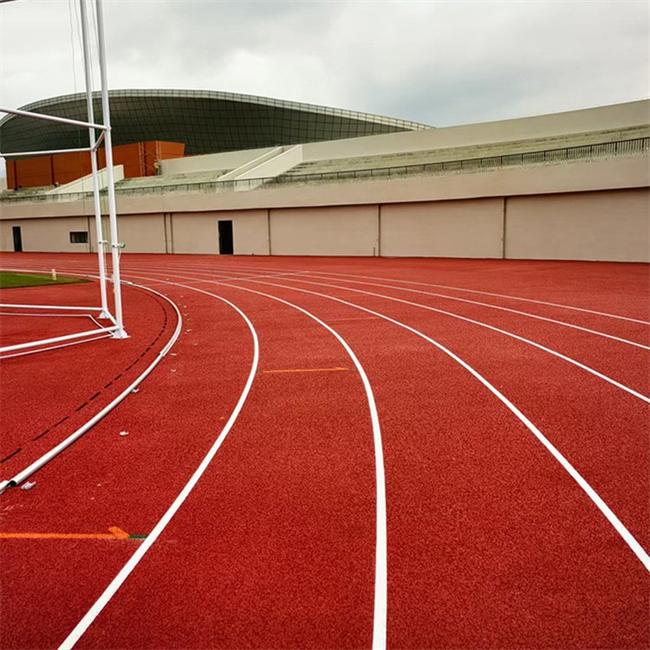
How to Judge Whether EPDM Granules Have Good Color Stability
When evaluating EPDM rubber granules for an outdoor project, do not judge only by initial brightness. A fresh sample may look vivid, but long-term performance depends on material stability.
Here are the key points to evaluate:
UV resistance — Check whether the granules are suitable for long-term outdoor exposure and how they perform under continuous sunlight.
Color consistency — Confirm whether the same color remains uniform across different batches, which is critical for phased installations or future expansions.
Particle size — Ensure the granule size matches the application and the surfacing system being used.
Elasticity — Verify that the granules can support impact absorption and surface resilience as required by the project.
Odor — Check whether the material has a strong or unusual smell, as odor-free granules often indicate better compound quality and cleaner production processes.
Supplier documentation — Confirm that specifications, test data, and product details are clear and available before placing an order.
For commercial and public projects, consistent color between batches is especially important. If one area is installed today and another area is added later, mismatched colors can affect the overall appearance.

Practical Considerations for Engineers, Contractors, and Buyers
For Playground and Sports surfacing Projects
If the EPDM surface is used for playgrounds, schools, or sports areas, color stability matters for both safety zoning and visual design. Different colors are often used to separate:
Running lanes
Play zones
Activity areas
Safety zones
Accessibility paths
Sports markings
In these cases, choose granules with reliable UV resistance and consistent color supply.
For Running Tracks and Sports Courts
Running tracks and sports courts usually require stable performance under repeated use and weather exposure. The EPDM granules should support:
Shock absorption
Surface elasticity
Slip resistance
Color visibility
Long-term durability
The exact performance will depend on the full surfacing system, including binder type, installation thickness, base preparation, and curing conditions.
For Wet Pour Rubber Surfaces
Wet pour systems often use EPDM granules mixed with binder and installed on-site. In these systems, granule quality affects:
Surface smoothness
Color uniformity
Elasticity
Weather resistance
Long-term appearance
Granule size and shape can influence how the surface compacts and how evenly the color appears after installation.
For Outdoor Areas with Strong Sunlight
In hot or high-UV environments, color fading may become more noticeable over time. Lighter or neutral colors may show less visible fading, while bright colors may require more careful selection if long-term color matching is important.
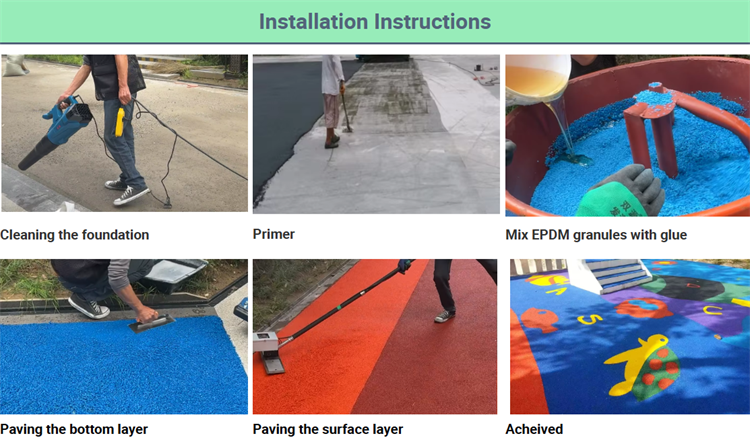
How to Choose EPDM Granules Based on Application
Choose the Right Granule Size
Granule size affects surface texture, elasticity, binder consumption, and installation performance.
Smaller granules may give a finer surface finish
Larger granules may affect texture and drainage behavior
Consistent particle size helps improve installation uniformity
The best size depends on the surfacing system, layer design, and performance requirements.
Consider Color Selection Carefully
For outdoor projects, consider:
Sunlight exposure
Project design
Safety zoning
Branding or school colors
Long-term color visibility
Batch-to-batch consistency
If the project uses multiple colors, confirm color matching before large-scale installation.
Check Material Performance, Not Only Price
Low price alone does not guarantee good performance. For outdoor EPDM surfaces, important factors include:
UV resistance
Elasticity
Tensile strength
Aging resistance
Color stability
Odor control
Batch consistency
These factors affect both installation quality and long-term maintenance cost.
Confirm Specification Before Ordering
Before purchasing, it is helpful to confirm:
Application type
Required granule size
Color code or sample
Quantity
Installation method
Performance expectations
Delivery and batch consistency
This helps avoid color mismatch, incorrect particle size, or unsuitable material selection.

FAQ
Will EPDM granules turn white after long-term sun exposure?
Some low-quality rubber surfaces may develop surface chalking or whitish discoloration over time. High-quality EPDM granules with good UV resistance and stable pigments are less likely to show severe whitening, but some gradual color change can still occur in strong outdoor conditions.
Which EPDM colors fade faster?
Bright colors such as red, yellow, orange, and some vivid blues may show fading more visibly than neutral or darker colors. The actual fading speed depends on pigment quality, material formulation, sunlight intensity, and installation environment.
Does EPDM granule color affect performance?
Color itself does not directly determine elasticity or shock absorption. However, the pigments and compound used with the color can influence UV resistance, aging resistance, and long-term appearance.
Can EPDM granules be used in hot climates?
Yes, EPDM rubber granules are commonly used in outdoor environments, including hot climates. However, in areas with intense sunlight and high temperatures, UV resistance, color stability, and material formulation become more important.
How can I reduce fading on an EPDM surface?
You cannot completely stop natural weathering, but you can reduce visible fading by:
Choosing UV-resistant EPDM granules
Selecting stable colors
Ensuring proper installation
Keeping the surface clean
Avoiding harsh cleaning chemicals
Maintaining good drainage
Is EPDM suitable for outdoor playgrounds?
Yes, EPDM granules are widely used in outdoor playgrounds because they can provide shock absorption, slip resistance, elasticity, and weather resistance. The final safety performance depends on the complete surfacing system, installation thickness, and compliance with relevant local safety requirements.
How do I know if EPDM granules are suitable for my project?
Check the granule size, color consistency, elasticity, UV resistance, odor, and supplier specifications. If the project has strict color or performance requirements, request samples and confirm the specification before full installation.
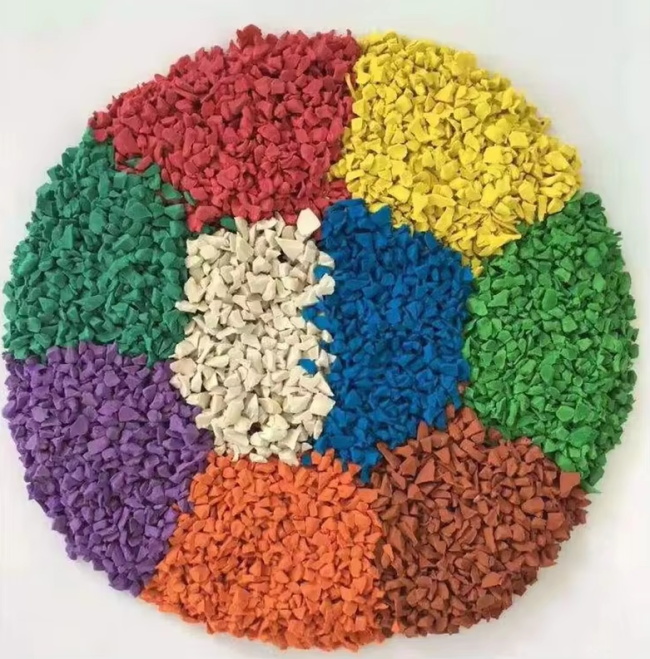
EPDM granules can fade slightly under long-term sunlight, but high-quality EPDM rubber granules are designed to resist UV exposure and maintain color stability much better than many conventional rubber materials. The actual fading performance depends on material formulation, pigment quality, color choice, installation environment, and maintenance.
For outdoor projects such as playgrounds, running tracks, sports surfacing, and wet pour surfaces, choosing EPDM granules with good UV resistance, consistent particle size, stable color, and reliable batch quality is more important than judging only by initial appearance.

If you are selecting EPDM rubber granules for a specific project, share your application, required granule size, color preference, and performance needs. We can help you choose a suitable EPDM granule specification for your surfacing system.
WOW(LYG) New Material Co Ltd is a manufacturer specializing in the production of EPDM rubber granules. We use sulfur-free vulcanization technology, it increases the service life by more than 3 times than traditional EPDM granules, and enhances the performance, including anti-aging, high-temperature resistance, and colorfastness.
We have over 25 years of production experience and offer customization for colors and granule sizes. NO MOQ.


