 注: 建议图片大小150px*50px
丨
注: 建议图片大小150px*50px 


Choosing the right color for your EPDM rubber granule project is far more than an aesthetic decision. It impacts UV stability, long-term maintenance costs, safety compliance, and even material performance over time.
For playground contractors, sports flooring specialists, and municipal project managers, the EPDM granule color chart is the starting point for material selection. But not all color charts are created equal—and understanding what lies beneath the surface can save your project from costly failures.
In this guide, we’ll walk you through everything you need to know about EPDM colored rubber granules, from technical specifications and color selection to common pitfalls and manufacturer insights. Whether you’re sourcing for a school playground in Australia, a running track in Europe, or a commercial project in the Middle East, this article will help you make informed, durable, and cost-effective decisions.

What Is an EPDM Granule Color Chart?
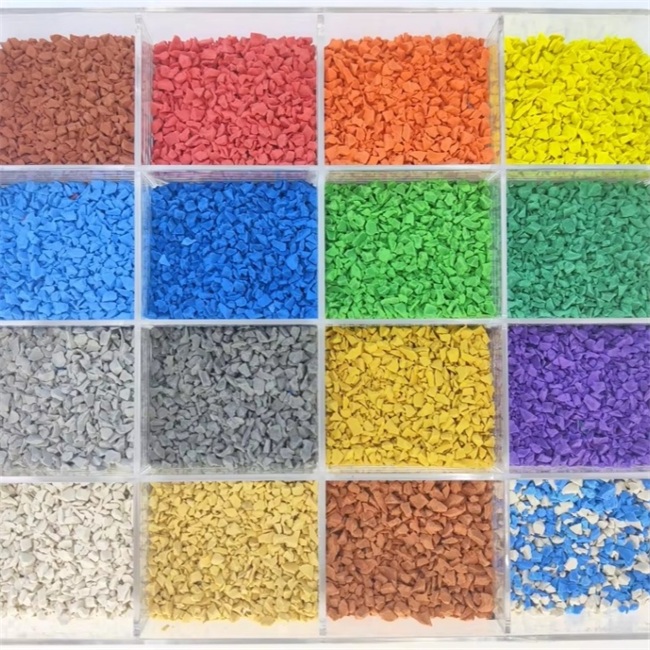
EPDM granule color chart is a reference tool that displays the range of colors available for EPDM (Ethylene Propylene Diene Monomer) rubber granules. These granules are used as the top wearing layer in wet-pour playground surfaces, running tracks, and safety surfacing systems.
Color charts typically include standard RAL or Pantone color codes, common names such as Red, Blue, Green, Yellow, Grey, and White, and visual color swatches for reference. Some advanced charts also provide recommended compatible binder types for each color.
However, a professionally designed color chart for playgrounds and sports surfacing should indicate more than just visual appearance. It should include UV stability grades, recommended applications, and appropriate binder recommendations.
Color chart is not just a marketing tool—it is a technical document that helps ensure color consistency, longevity, and safety in end-use applications.

Common Applications of Colored EPDM Granules
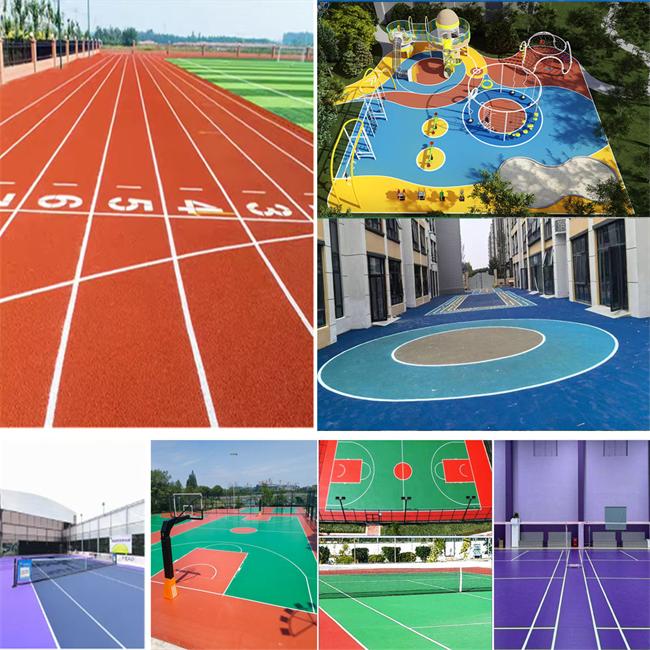
Different project types demand different colors and technical specifications. Here is a breakdown of how color choice and granule size vary by application:
For wet pour playground surfacing, the typical granule size range is 1–3mm or 2–4mm, and popular colors include bright primary shades such as Red, Yellow, Blue, and Green, as well as softer pastel tones.
For running tracks, the standard size is 2–4mm or 3–5mm, with the most commonly requested colors being Red, Brick Red, Dark Grey, and Blue.
For safety surfacing and poured-in-place systems, the size range is usually 1–4mm or 2–4mm. These projects often require custom color combinations, with contrasting colors used to create visual zones for safety.
For splash pads and water play areas, the preferred size is 1–3mm, and the most popular colors are Blue, Turquoise, Light Blue, and White, as these create a water-like aesthetic.
For parks and recreational pathways, the size range is 1–3mm or 2–4mm, and earth tones such as Beige, Brown, Dark Green, and Grey are widely chosen for their natural appearance.
For landscape and architectural projects, which require finer finishes, the size is typically 0.5–1.5mm or 1–3mm, with custom RAL or Pantone-matched colors being the norm.
Choosing the wrong color or size for the intended application can lead to fading, delamination, or premature wear—especially in high-traffic or high-UV environments.
How Colors Affect EPDM Performance and Longevity
1. UV Stability: Why Some Colors Fade Faster
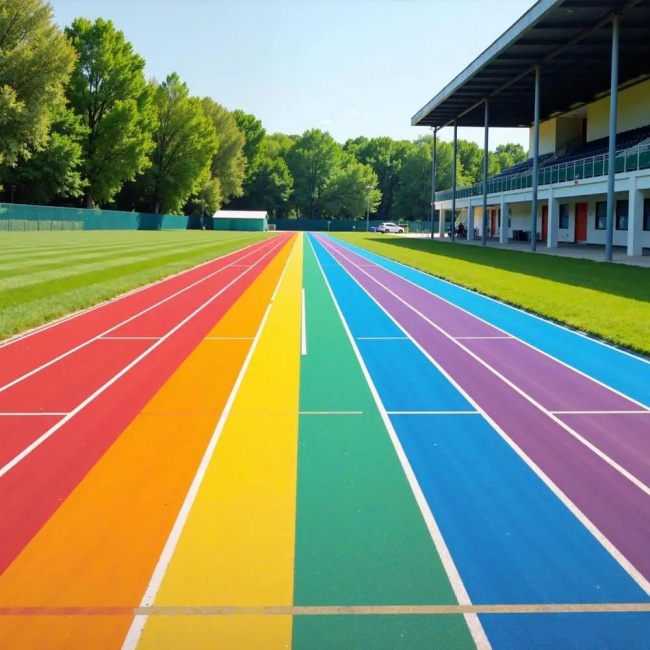
Not all colors react the same way to UV exposure. In EPDM granules, the pigment and the binder system work together to maintain color integrity.
Darker colors such as Dark Blue, Dark Green, Brown, and Grey generally offer higher UV resistance because they absorb less UV radiation and degrade pigment molecules more slowly.
Lighter colors such as White, Yellow, Bright Orange, Pink, and Turquoise are more sensitive to UV degradation and require aliphatic binders to prevent yellowing or fading.
Industry best practice recommends aliphatic (UV-stable) binders specifically for White, Lilac, Pink, Grey, Bright Blue, and Turquoise EPDM granules, as these colors show the highest risk of discoloration when exposed to sunlight.
2. Binder Compatibility: A Critical Factor
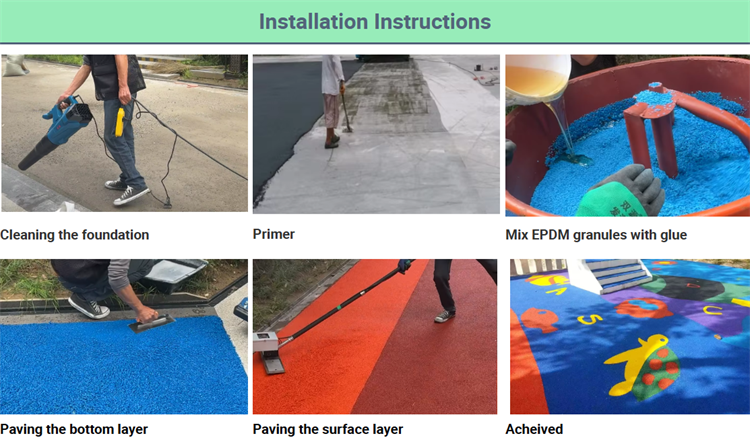
EPDM granules must be bound with polyurethane resin to form a durable surface. Polyurethane binders come in two main types:
Aromatic binders are non-UV-stable. They are more economical but prone to yellowing over time when exposed to sunlight.
Aliphatic binders are UV-stable. They are more expensive but retain color clarity and prevent discoloration.
Manufacturer insight: As a specialist EPDM granule manufacturer, we recommend that buyers and contractors check binder compatibility before selecting colors. Some colors are visibly affected by yellowing even within 6–12 months of installation if an inappropriate binder is used.
A best practice is to request binder recommendation charts from your supplier—these show which colors work best with aromatic versus aliphatic resins.
Benefits of Using High-Quality Colored EPDM Granules
When sourced from a reliable manufacturer, colored EPDM granules offer a range of performance and commercial benefits.
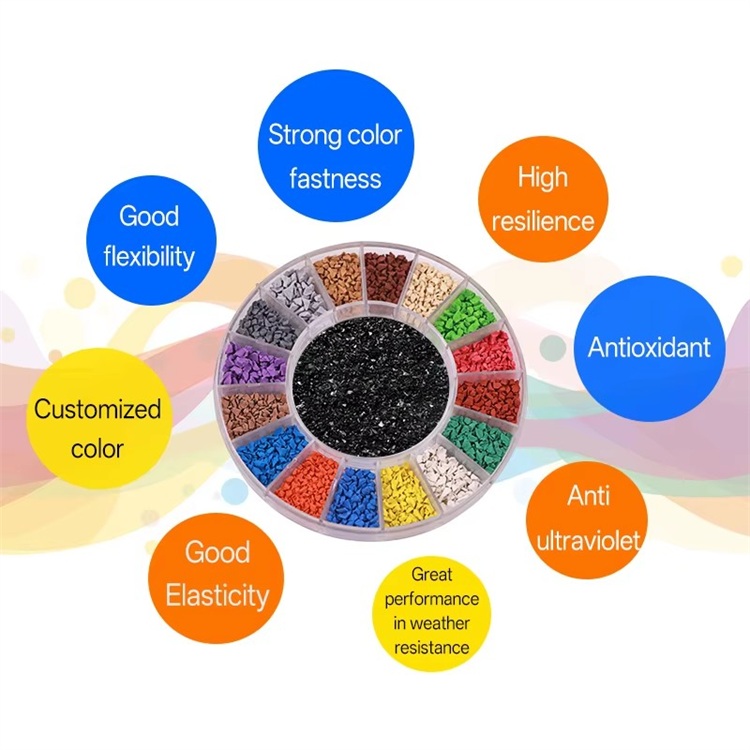
First, they provide excellent UV resistance. Premium grades using virgin EPDM and non-sulfur formulations maintain color stability even in extreme sunlight.
Second, they deliver a long service life. High-performance EPDM granules can last 10–15 years or more in playground applications with minimal fading.
Third, they require low maintenance. Dirt and stains can be removed with water and mild detergent, and the surface remains slip-resistant when wet.
Fourth, they offer extensive customization options. Color matching to RAL, Pantone, or customer samples is possible, enabling brand-specific or project-specific aesthetics.
Fifth, they meet safety compliance standards. Non-toxic, sulfur-free formulations comply with international standards for critical fall height protection.
Common Challenges in EPDM Color Selection
1. Color Fading and Yellowing Over Time
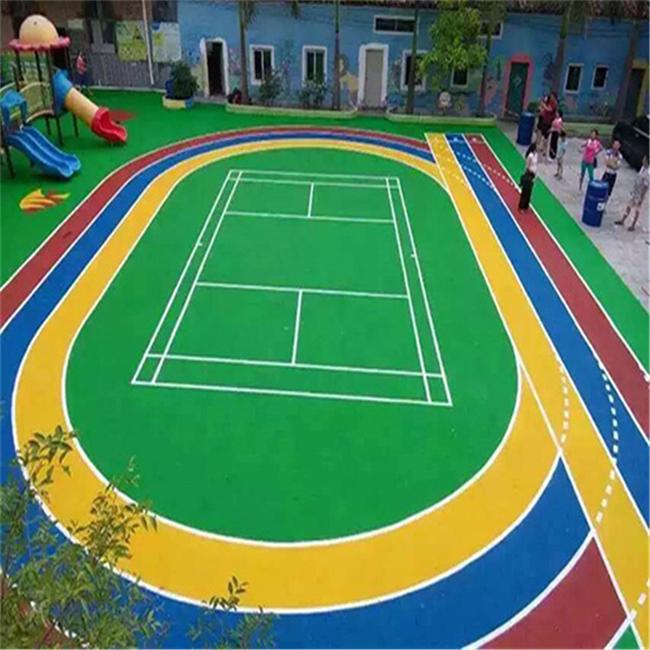
This is the number one complaint among playground owners and facility managers. Fading can be caused by low-quality pigments, sulfur-based EPDM formulations that degrade under UV, or incorrect binder selection (aromatic versus aliphatic).
2. Inconsistent Color Between Batches
When ordering EPDM granules in multiple batches, color variation can occur if the manufacturer does not use precise mixing and quality control systems. This results in visible patchiness across the finished surface.
3. Choosing the Wrong Granule Size
Color visibility and surface texture depend heavily on granule size. Larger granules (3–5mm) provide better drainage and a coarser finish, while smaller granules (0.5–1.5mm) create smoother, denser surfaces. Selecting the wrong size can compromise both aesthetics and functional performance.
4. Buying Recycled or Low-Grade Products
Some suppliers mix recycled rubber or low-grade EPDM with dye to imitate high-quality colored granules. These products fade quickly and lack the mechanical properties needed for heavy-use surfaces.
Technical Specifications to Look For
When evaluating EPDM colored granules, pay attention to these critical parameters:
Tensile Strength: High-quality virgin EPDM should achieve 4–7 MPa. Higher tensile strength means better resistance to tearing and wear.
Density: Lower density granules, typically in the range of 1.1–1.3 g/cm³, are more porous and provide better cushioning.
granule Size: Available ranges include 0.5–1.5mm, 1–3mm, 2–4mm, and 3–5mm. The chosen size affects surface texture, drainage, and ease of installation.
Color Consistency: Professional manufacturers maintain a color difference of ΔE ≤ 1.0 between batches, ensuring uniform visual appearance across large installations.
UV Resistance: High-quality granules show no noticeable fading after 1000 hours of QUV accelerated aging testing. This is critical for outdoor installations.

How to Choose the Right Supplier for Your EPDM Granules
1. Check Their Manufacturing Capabilities
Does the supplier produce EPDM granules in-house, or do they resell? A manufacturer with dedicated production lines, quality control labs, and R&D capabilities will deliver more consistent quality.
2. Ask for Color Charts and Samples
A good supplier will provide a detailed color chart with color codes, UV stability grades, and binder recommendations. They should also offer physical samples so you can verify color and texture.
3. Evaluate Customization Options
If your project requires specific colors or sizes, confirm that the supplier supports RAL color matching, Pantone color matching, custom granule sizes, and private labeling or OEM/ODM services.

Manufacturer Insights: Expert Advice for Buyers and Contractors
With over 25 years in the EPDM manufacturing industry, we offer these practical tips to help you make the right choice.
Match color to application. For high-UV environments such as the Middle East or Australia, choose earth tones or darker colors unless you are prepared to use aliphatic binders for lighter shades.
Do not compromise on binder quality. Even the best EPDM granules will fail if the binder is substandard. Always purchase binder from a reputable supplier that provides compatibility data with your chosen granules.
Request UV testing data. Ask for accelerated UV aging test reports. If a supplier cannot provide them, consider this a red flag.
Plan for future maintenance. Lighter colors show dirt and stains more easily. For high-traffic areas, consider darker or multi-colored blends.
Understand granule size effects. Smaller granules (0.5–1.5mm) produce a smoother surface, better for wheelchair access and barefoot areas. Medium granules (1–4mm) are versatile and commonly used for playgrounds and pathways. Larger granules (3–5mm) offer better drainage and a more textured finish, often used for running tracks.
Prioritize sulfur-free EPDM. We manufacture EPDM granules using a sulfur-free formulation. This not only eliminates odor but also enhances UV stability, aging resistance, and tensile strength, resulting in a product that lasts three times longer than conventional EPDM.
Why Global Buyers Choose Our EPDM Granules
As a specialized manufacturer and exporter of EPDM colored rubber granules, we serve clients across Europe, North America, Australia, the Middle East, and other international markets. Our key differentiators include:
Sulfur-free technology: Our EPDM granules are odorless, more stable, and maintain color brightness over time. The absence of sulfur means no decomposition into sulfuric acid under high temperature or strong UV exposure.
High tensile strength: Our granules achieve up to 7 MPa, providing superior durability and impact resistance.
Flexible customization: We support RAL, Pantone, and customer-specified color matching. Granule sizes are available from 0.5mm to 5mm. We also offer private label packaging for brand owners.
No minimum order quantity (MOQ): This makes us ideal for pilot projects, small-scale contractors, or specialty color requirements.
Stable supply chain: We can fulfill full container loads (FCL) and less-than-container loads (LCL) with reliable lead times.
Strict quality control: Our granules undergo rigorous testing for UV resistance, color consistency, and physical properties before shipment.
Global export experience: We understand documentation, logistics, and compliance for different destination countries.
Frequently Asked Questions (FAQ)
What is the best granule size for playground surfacing?
For most playground applications, 1–3mm or 2–4mm granules offer the best balance of cushioning, drainage, and durability. Smaller sizes (0.5–1.5mm) are ideal for splash pads and wheelchair-accessible surfaces, while larger sizes (3–5mm) are better suited for running tracks.
Do EPDM granules fade over time?
High-quality, sulfur-free EPDM granules with UV-stable pigments show minimal fading. Lighter colors require aliphatic (UV-stable) binders to prevent yellowing. Always request UV testing data from your supplier.
Can you match Pantone or RAL colors?
Yes. Professional manufacturers support RAL, Pantone, and customer-sample color matching. Always request a physical sample for verification before placing a bulk order.
How much PU binder is needed per ton of EPDM granules?
Typically, 6–10% binder by weight is required, depending on the granule size and desired porosity. Your supplier should provide technical specifications for the exact ratio.
How long does EPDM surfacing last?
With proper installation and maintenance, sulfur-free virgin EPDM surfaces can last 10–15 years or more. The sulfur-free formulation significantly enhances aging resistance.
What is the difference between EPDM granules and SBR granules?
EPDM is UV-stable, colorfast, and suitable for top wearing layers. SBR is typically used as a black base layer for shock absorption and is not UV-stable. Using SBR on the surface will result in rapid fading and degradation.
Can you provide custom colors for a specific project?
Yes. We support custom color matching for large and small orders with no MOQ. We can match RAL, Pantone, or customer-supplied samples.
Do you supply to Europe and North America?
Yes. We have extensive export experience and can arrange shipping to most international destinations, including Europe, North America, Australia, and the Middle East.
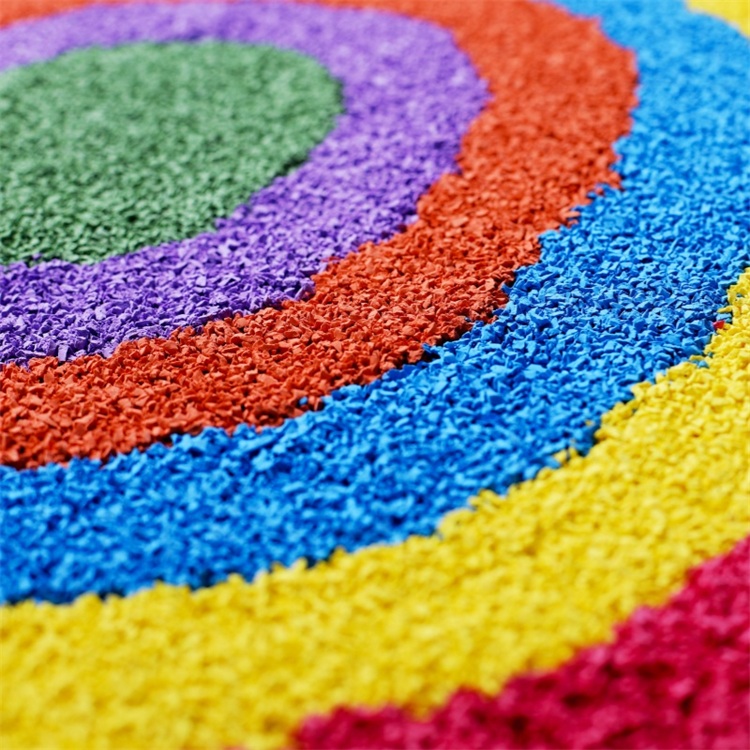
Selecting the right colors and specifications from an EPDM granule color chart is a critical step in ensuring the long-term performance, safety, and aesthetic appeal of your playground, sports facility, or recreational area. By understanding the technical factors—UV stability, binder compatibility, granule size, and pigment quality—you can avoid common pitfalls and make a durable investment.
Partnering with a specialized EPDM granule manufacturer who offers sulfur-free technology, flexible customization, and transparent technical documentation will save you time, money, and maintenance headaches over the life of your project.
If you are planning a new installation or a renovation, we invite you to contact us for color samples and competitive quotations. Our team is ready to support your project with professional expertise and reliable supply.

WOW(LYG) New Material Co Ltd is a manufacturer specializing in the production of EPDM rubber granules. We use sulfur-free vulcanization technology, it increases the service life by more than 3 times than traditional EPDM granules, and enhances the performance, including anti-aging, high-temperature resistance, and colorfastness.
We have over 25 years of production experience and offer customization for colors and granule sizes. NO MOQ.


