 注: 建议图片大小150px*50px
丨
注: 建议图片大小150px*50px 


EPDM granule density is a key technical parameter that directly affects material coverage, elastic layer thickness, construction efficiency, and long-term performance of rubber surfaces. Bulk density varies with granule size, color pigment, and manufacturing process. Choosing the right density helps buyers optimize project cost, ensure consistent surface quality, and meet international performance requirements for sports, playground, and landscape applications.

What EPDM Granule Density Helps Buyers Solve
For buyers, EPDM granule density is not only a packaging or transport indicator, but also a factor that influences application performance.
The right EPDM granules can help solve several common project challenges. They support better coverage and thickness control, so the elastic layer can be built up more predictably. They help maintain color consistency across large areas, reducing visible differences between batches. They also contribute to durability under outdoor conditions, including UV exposure, temperature changes, and long-term weathering. In addition, good elasticity supports impact absorption for playgrounds, running tracks, and recreational areas, while flexible color and granule size options allow buyers to match specific design, safety, and functional requirements.
What Is EPDM Granule Density?
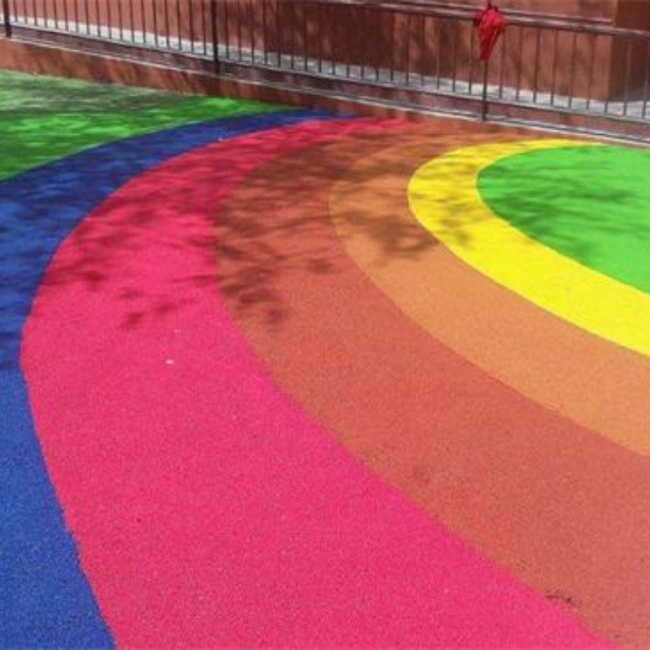
EPDM granule density usually refers to bulk density, which means the weight of granules per unit volume in loose or packed form.
It is different from the material’s solid density. Bulk density is more relevant for calculating how much material is needed per square meter, planning bag weight, pallet loading, and container loading, controlling mixing ratios with binder, maintaining consistent construction thickness, and reducing batch-to-batch variation.
For buyers, bulk density should always be checked together with granule size, color, shape, and application requirement.

Why Density Matters in EPDM Applications
Density plays a practical role in several application areas. For surface uniformity, stable density supports even spreading and helps reduce uneven texture. For cost estimation, it helps calculate material usage per area and supports more accurate project budgeting. For construction control, it supports consistent thickness and mixing performance on site. For color matching, stable production helps reduce visual inconsistency across batches. For long-term performance, suitable density works together with UV stability, weather resistance, and aging resistance to maintain surface quality over time.
Density alone does not determine quality. A reliable EPDM granule should combine suitable density with stable color, good elasticity, weather resistance, and consistent granule shape.

Common EPDM Granule granule Sizes
Granule size is one of the main factors that influence density, coverage, texture, and application suitability.
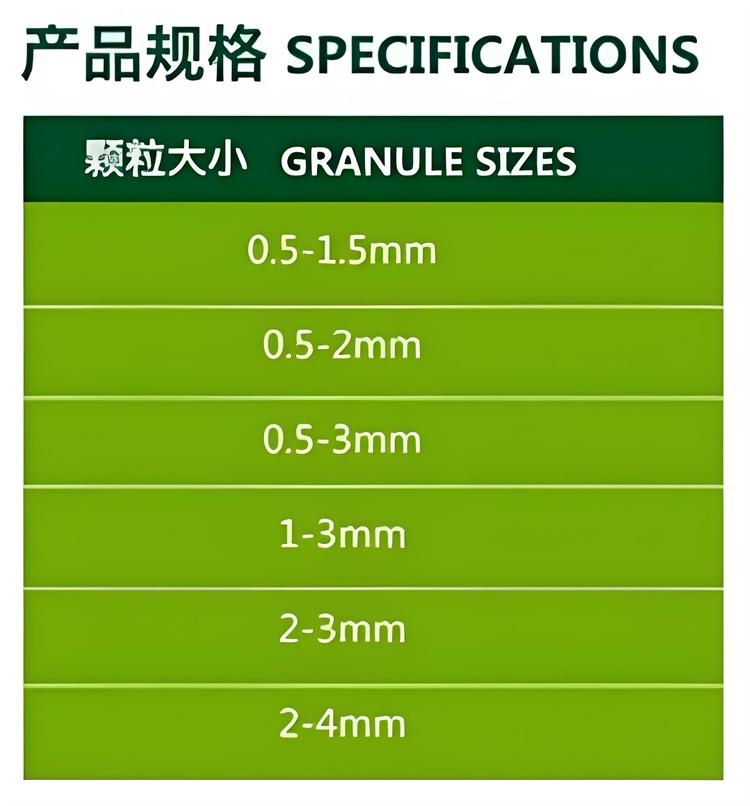
The 0.5–1.5mm fine granules are suitable for fine surface layers and detailed color effects. The 1–3mm size is widely used for playgrounds, sports surfaces, and general rubber surfacing. The 1–4mm size is suitable for applications requiring stronger texture and better coverage. The 2–4mm size is suitable for thicker elastic layers and impact-absorbing surfaces. Other special sizes are also available based on project requirements and custom specifications.
For most projects, buyers do not choose granule size by density alone. The best choice depends on surface thickness, binder system, safety requirements, design color, and expected durability.
Color Customization and Visual Consistency
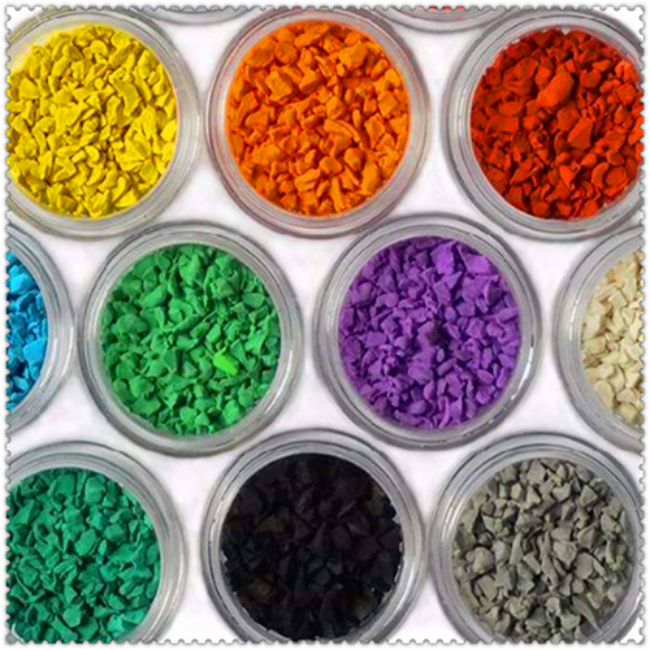
Color is one of the most important selection factors for EPDM granules, especially in playgrounds, sports courts, running tracks, landscaping, and commercial rubber surfaces.
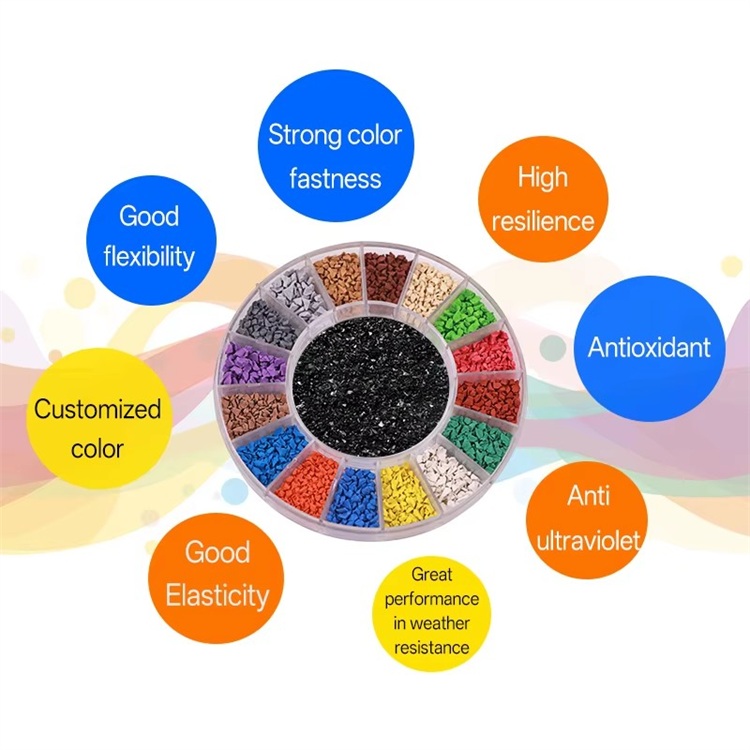
Custom color services help buyers match brand colors, school or club colors, safety zone colors, playground design themes, and landscape aesthetics. Available color customization options include RAL color customization, Pantone color customization, customer sample color matching, multiple color combinations, and batch color consistency control.
High color consistency helps reduce visible differences between production batches, which is especially important for large-area projects and long-term maintenance.

Advantages and User Value
EPDM granules are valued for their elasticity, color flexibility, weather resistance, and suitability for outdoor rubber surfaces.
Key performance advantages include UV stability, which helps resist color fading under sunlight; weather resistance, which supports performance in outdoor environments with temperature changes; aging resistance, which helps extend service life; elastic performance, which contributes to impact absorption and surface comfort; color durability, which helps maintain visual appearance over time; and custom adaptability, which supports different colors, granule sizes, packaging, and project requirements.
These advantages make EPDM granules suitable for applications where appearance, safety, durability, and consistent supply are important.

Sulfur-Free EPDM Granule Performance Benefits
Sulfur-free EPDM granules are designed to reduce odor and improve long-term performance stability.
Because the formulation does not contain sulfur components, the granules are less likely to produce sulfur-related decomposition odors under high temperature or strong UV exposure.
The main performance benefits include low odor performance, making them more suitable for indoor-outdoor transition areas and sensitive environments. The more stable molecular structure supports longer service life. Improved elasticity and tensile performance can reach approximately 4–7 MPa. Better performance retention helps maintain physical properties over time. Enhanced aging resistance supports outdoor durability. Improved oxidation resistance helps keep colors bright and reduces discoloration risk. Better high-temperature resistance makes the granules suitable for hot climates and sun-exposed surfaces. The more environmentally friendly formulation can meet food-grade hygiene standards. Lower bulk density with stronger granule structure supports natural granule shape and surface texture.
These features make sulfur-free EPDM granules a practical choice for buyers who need odor control, color stability, and reliable outdoor performance.
Main Applications
EPDM granules are widely used in outdoor and semi-outdoor rubber surfaces.
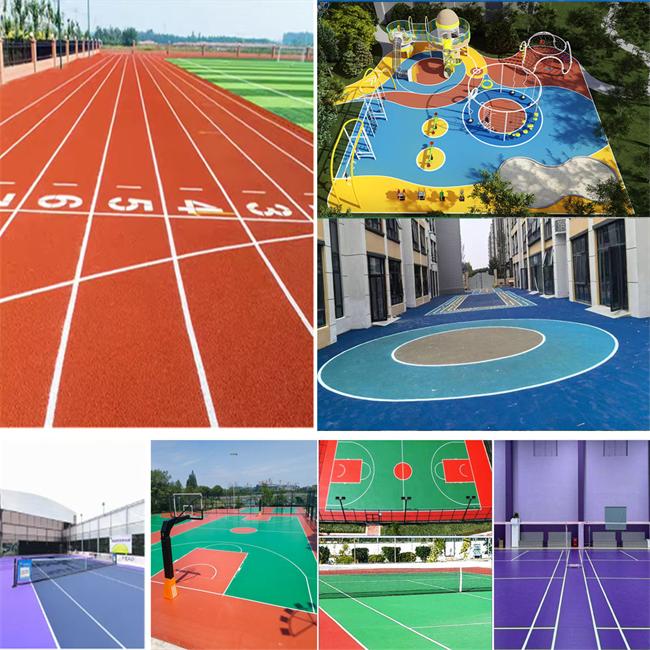
For playgrounds, they support color design, impact absorption, and safety zones. For running tracks, they provide consistent texture, elasticity, and color marking. For sports courts, they allow multi-color layouts and durable surface layers. For fitness areas, they offer shock-absorbing and non-slip surface performance. For landscaping, they create decorative rubber surfaces and garden pathways. For recreational areas, they are suitable for schools, parks, community centers, and commercial spaces.
For each application, granule size, color combination, layer thickness, and density should be matched to the project’s safety, design, and durability requirements.
Why Choose a Professional EPDM Granule Manufacturer
Choosing a professional EPDM granule manufacturer helps buyers reduce quality risk, improve supply stability, and get better technical support.
A reliable manufacturer should provide more than 25 years of industry experience, complete production lines for EPDM granule manufacturing, strict quality control, stable supply capacity, flexible MOQ, fast order response, and export-ready packaging and logistics support. This helps buyers manage large projects, recurring orders, and long-term product consistency.
OEM, ODM, and Private Label Services
For brands, distributors, contractors, and project buyers, flexible cooperation models are important.
Available services include OEM support, ODM support, Private Label support, custom color formulation, custom granule size selection, custom packaging, and custom color combinations.
These services help buyers build their own brand identity while keeping product quality and supply consistency.
Packaging and Shipping Options
EPDM granules are usually packed in bags, pallets, or bulk containers depending on order quantity and destination.
Available shipping options include custom packaging, FCL or full container loading, LCL or consolidated container shipping, export-standard packing, and stable supply for repeat orders.
Packaging and shipping should be confirmed based on order volume, destination country, port requirements, and project delivery schedule.
Quality Control Focus
Consistent EPDM granule quality depends on controlled production, testing, and inspection.
Key quality control points include color consistency, granule size distribution, bulk density stability, elasticity and tensile performance, UV and weather resistance, aging resistance, odor control, and packaging accuracy.
Strict quality control helps reduce project risk and ensures that delivered products match approved samples and technical requirements.
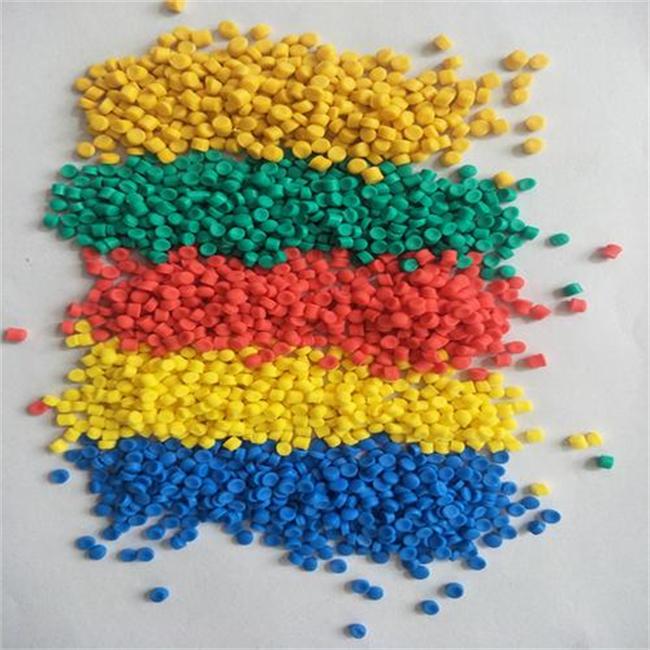
How to Choose the Right EPDM Granules
Buyers can follow a simple selection process. First, confirm the application, such as playground, track, sports court, landscaping, or custom surface. Second, choose granule size based on thickness, texture, and safety needs. Third, confirm the color system, including RAL, Pantone, or customer sample. Fourth, check density and coverage to match project area and layer thickness. Fifth, confirm performance needs such as UV resistance, elasticity, odor control, and climate suitability. Sixth, choose packaging and shipping, including custom packaging, FCL, or LCL. Finally, request samples to verify color, granule size, density, and workability before bulk order.
This process helps avoid mismatched specifications and supports smoother project execution.
FAQ
1. What does EPDM granule density mean?
EPDM granule density usually refers to bulk density, which indicates the weight of granules per unit volume. It helps buyers estimate coverage, mixing ratio, packaging weight, and container loading.
2. Does higher density mean better quality?
Not necessarily. Density should be matched with granule size, color, elasticity, UV stability, and application requirements. The right density depends on the project design and installation method.
3. Which granule size is best for playgrounds?
1–3mm and 1–4mm are commonly used for playground surfaces. The final choice depends on required thickness, safety level, binder system, and surface texture.
4. Can EPDM granules be customized by color?
Yes. Custom colors can be supported through RAL, Pantone, or customer samples. Multiple color combinations are also available for playgrounds, sports courts, and decorative surfaces.
5. Are sulfur-free EPDM granules low odor?
Yes. Sulfur-free EPDM granules are designed to reduce odor because they do not contain sulfur components that may produce sulfur-related decomposition smells under high temperature or strong UV exposure.
6. Do sulfur-free EPDM granules last longer?
Sulfur-free EPDM granules have a more stable molecular structure, which helps improve aging resistance, performance retention, and color stability. Actual service life depends on climate, installation, maintenance, and usage conditions.
7. Can you support OEM, ODM, or Private Label?
Yes. OEM, ODM, and Private Label services are available. Custom packaging, colors, granule sizes, and brand labeling can be arranged based on buyer requirements.
8. What shipping options are available?
Both FCL and LCL shipping options are available. Custom packaging and export packing can be arranged according to order quantity and destination.
9. How do you control color consistency?
Color consistency is controlled through standardized color matching, production monitoring, batch inspection, and sample confirmation before bulk production.
10. How should buyers confirm specifications before ordering?
Buyers should confirm application, granule size, color code or sample, density requirement, performance needs, packaging, and shipping terms. Requesting samples before bulk order is recommended.

If you need EPDM granules with specific density, granule size, color, packaging, or private label requirements, you can send your project details or sample request for a customized quotation and technical recommendation.

WOW(LYG) New Material Co Ltd is a manufacturer specializing in the production of EPDM rubber granules. We use sulfur-free vulcanization technology, it increases the service life by more than 3 times than traditional EPDM granules, and enhances the performance, including anti-aging, high-temperature resistance, and colorfastness.
We have over 25 years of production experience and offer customization for colors and granule sizes. NO MOQ.


