 注: 建议图片大小150px*50px
丨
注: 建议图片大小150px*50px Views: 0 Author: Site Editor Publish Time: 2026-07-31 Origin: Site


For playground contractors, sports surfacing installers, and international importers, selecting the correct EPDM granule size is the most critical step in ensuring a project's success. The wrong granule size can lead to catastrophic failures, such as poor surface leveling, inadequate shock absorption, or premature wear. Beyond sizing, procurement managers frequently face severe pain points like inconsistent batch quality, severe fading under UV exposure, and high minimum order quantities (MOQ) that tie up capital. Drawing on over 25 years of industry experience, this guide provides engineering-level insights into EPDM granule sizing, application matching, and how to avoid costly procurement mistakes while securing premium, sulfur-free materials.

Understanding EPDM Granule Sizes and Applications
EPDM granules are not one-size-fits-all. The granule diameter directly dictates the surface texture, permeability, and mechanical performance of the finished surface. Understanding these specifications is vital for architects and engineers designing safe, durable spaces.
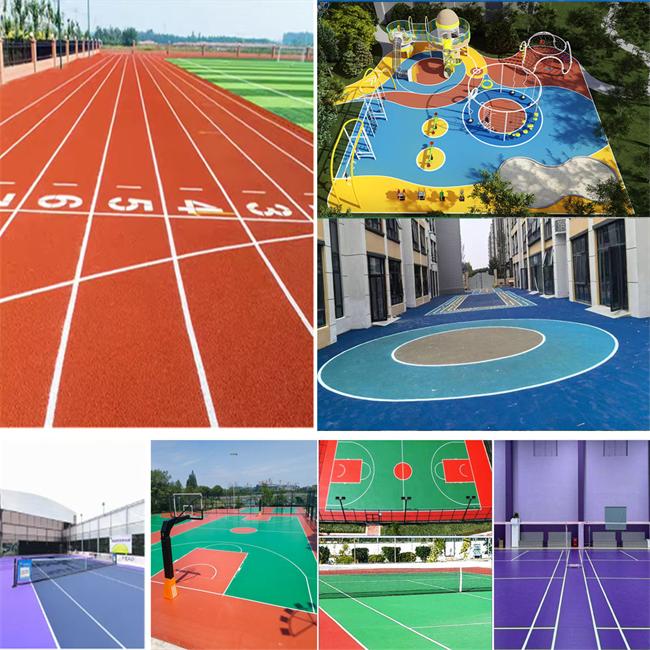
For Breathable tracks and spray-coat applications, the 0.5mm to 2mm size range is the industry standard. These smaller granules are mixed with polyurethane binder and sprayed to create a highly porous, non-slip surface that allows water to drain instantly, preventing puddles.
For standard athletic tracks, playgrounds, and high-traffic municipal projects, the 1mm to 4mm range is predominantly used. This mid-range size offers the perfect balance of structural integrity, impact absorption, and surface friction. When designing for heavy-duty sports courts like basketball or tennis, or specialized safety zones, the 1mm to 3mm specification provides optimal ball bounce and joint protection.
For maximum shock absorption in fall-zone areas or specialized hybrid systems, the 3mm to 5mm range is utilized. These larger granules create a thicker, more resilient cushioning layer, though they require precise installation to maintain surface evenness.
Why Sourcing Quality Matters More Than Size Alone
Contractors often specify the exact millimeter size but still suffer from premature field failures. This is because granule size is only half the equation; material chemistry is the other. Standard EPDM granules often degrade quickly due to sulfur vulcanization, which breaks down under high heat and UV radiation, releasing unpleasant odors and causing the surface to chalk and fade.
Modern engineering has shifted toward sulfur-free EPDM technology. By eliminating sulfur, the molecular structure becomes significantly more stable. This advanced formulation prevents the decomposition that causes foul smells in hot climates and boosts the material's tensile strength to 4-7 MPa, which is 2 to 3 times higher than traditional granules. Furthermore, the performance retention rate improves by over 500%, ensuring the vibrant colors and physical elasticity remain intact for years. For government procurement and school projects, this sulfur-free, food-grade hygienic standard is increasingly becoming a mandatory compliance requirement.

Practical Tips for Procurement and Installation
To avoid common sourcing pitfalls, purchasing managers should demand comprehensive testing data rather than just visual samples. Always request SGS or CMA certified reports verifying the absence of harmful substances and confirming the high polymer content.
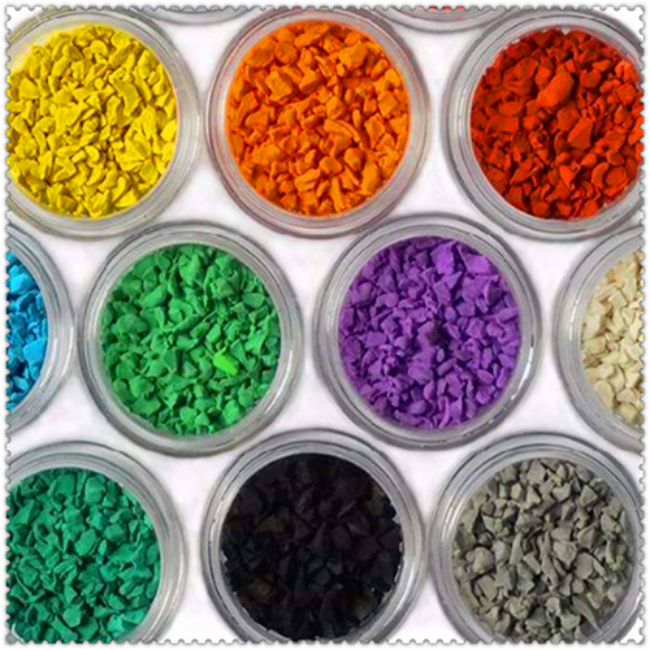
Beware of suppliers offering unusually low prices, as they often use recycled tire rubber disguised as EPDM. Genuine, high-quality EPDM should have a low bulk density and distinct, sharp geometric edges. A simple burn test or smell test can reveal impurities; premium sulfur-free granules will have virtually no odor and leave minimal ash.
When planning your logistics, partner with manufacturers that offer flexible MOQs. Traditional factories often require massive container loads, forcing contractors to over-order and store excess material. Sourcing from advanced production facilities that support zero-MOQ policies and custom color matching allows you to order exactly what you need for each specific project phase, optimizing your cash flow and reducing waste.
FAQ
What is the most common EPDM granule size for school playgrounds?
The 1-3mm range is the most widely specified size for school playgrounds and sports courts. It provides an ideal balance of safety, shock absorption, and a smooth surface for play, while allowing for intricate multi-color pattern designs.
How can I prevent my EPDM surface from fading and losing elasticity?
Fading and loss of elasticity are typically caused by UV degradation and sulfur breakdown. To prevent this, specify sulfur-free EPDM granules. These advanced materials feature superior antioxidant properties, high-temperature resistance, and color fastness that lasts significantly longer than traditional vulcanized rubber.
What is the minimum order quantity (MOQ) for custom EPDM colors?
While many traditional manufacturers require MOQs of several tons, modern advanced production lines support zero-MOQ policies. This allows contractors and distributors to order exact quantities for custom Pantone colors without tying up capital in excess inventory.
How do I distinguish high-quality EPDM from recycled rubber granules?
High-quality virgin EPDM granules have a uniform, sharp geometric shape, low bulk density, and virtually no odor. Recycled rubber often has a strong chemical or tar smell, irregular shapes, and excessive dust. Always verify quality through certified SGS or CMA laboratory reports.
Does the granule size affect the drainage of the sports surface?
Yes. Smaller granules (0.5-2mm) are typically used in spray-coat systems designed specifically for high permeability and rapid drainage. Larger granules (3-5mm) provide more cushioning but require careful installation to ensure the surface remains level and water does not pool.
Are sulfur-free EPDM granules safe for indoor kindergartens?
Absolutely. Because they contain no sulfur, these granules do not release harmful gases or odors, even under direct sunlight or high indoor temperatures. They meet stringent food-grade hygiene standards, making them the safest choice for indoor and outdoor children's environments.

Selecting the right EPDM granule size is fundamental, but ensuring the chemical integrity of the material is what guarantees a project's longevity. By understanding the specific size requirements for breathable tracks, playgrounds, and sports courts, and by prioritizing sulfur-free, high-tensile formulations, contractors can deliver superior results. Partnering with experienced manufacturers that offer flexible MOQs, custom sizing, and rigorous quality certifications ensures that your projects are not only compliant with international standards but also built to withstand decades of use.

WOW(LYG) New Material Co Ltd is a manufacturer specializing in the production of EPDM rubber granules. We use sulfur-free vulcanization technology, it increases the service life by more than 3 times than traditional EPDM granules, and enhances the performance, including anti-aging, high-temperature resistance, and colorfastness.
We have over 25 years of production experience and offer customization for colors and granule sizes. NO MOQ.


