 注: 建议图片大小150px*50px
丨
注: 建议图片大小150px*50px Views: 0 Author: Site Editor Publish Time: 2026-08-10 Origin: Site


The global demand for high-quality EPDM granules continues to grow across multiple sectors, from playground safety surfacing to professional running tracks. For contractors, engineers, and procurement professionals, navigating the complexities of sourcing from an EPDM granules exporter requires understanding material science, quality indicators, and supplier capabilities.
This guide provides technical insights and practical procurement strategies to help you make informed decisions when selecting EPDM granules for your projects, whether you're specifying for a municipal park in Europe, a school playground in Australia, or a sports complex in the Middle East.

What Are EPDM Granules?
EPDM (Ethylene Propylene Diene Monomer) is a synthetic rubber known for its exceptional resistance to weathering, UV radiation, and temperature extremes. The material's molecular structure—a saturated hydrocarbon backbone with unsaturated side chains—gives it remarkable durability that outperforms many other rubber compounds in outdoor applications.
EPDM granules are produced by compounding EPDM rubber with pigments, fillers, and curing agents, followed by vulcanization and granulation into specific granule sizes. The resulting granules serve as the surfacing material for poured-in-place (PIP) systems when combined with polyurethane binders.

Key Applications
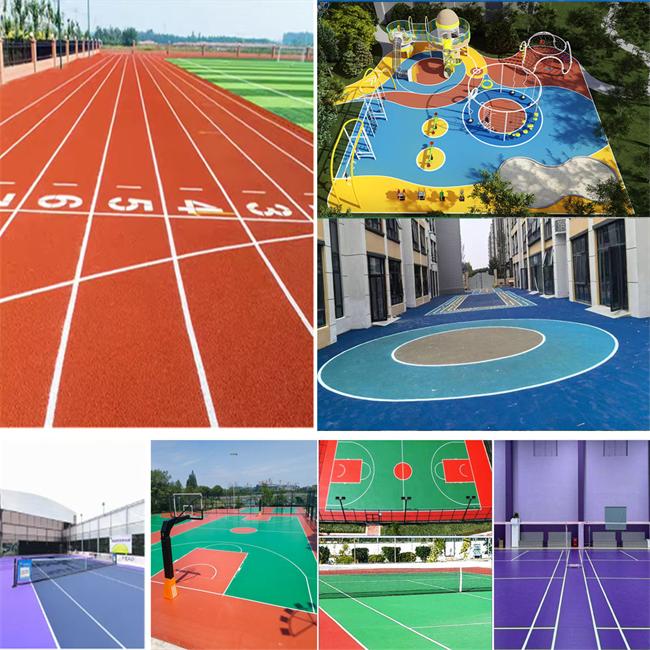
Understanding where and how EPDM granules are used helps buyers select the right specifications for their projects:
Playground Surfacing – Impact-absorbing safety surfaces under play equipment require high elasticity, fall height compliance, and color stability.
Running Tracks – Professional and recreational athletics surfaces demand abrasion resistance, consistent rebound, and dimensional stability.
Sports Courts – Multi-sport facilities, tennis courts, and basketball courts need uniform thickness, slip resistance, and color consistency.
Splash Pads – Water play areas in parks and water parks require water resistance, colorfastness, and non-toxic formulation.
Walking Paths – Recreational trails and fitness loops benefit from weather resistance and a comfortable underfoot feel.
Commercial Projects – Corporate campuses, retail spaces, and public plazas require aesthetic appeal, low maintenance, and high durability.
Common Challenges in EPDM Procurement
Buyers frequently encounter several issues when sourcing EPDM granules internationally. Understanding these challenges is the first step to avoiding them.
Color Inconsistency is one of the most common complaints among contractors. When a project calls for a specific RAL or Pantone color, receiving material that doesn't match expectations can lead to costly rework and client dissatisfaction. Color variation often stems from poor pigment dispersion, inconsistent base material, or inadequate quality control during production.
UV Fading and Premature Aging pose significant risks for outdoor installations. Standard EPDM formulations may degrade under intense sunlight, leading to color fading, surface cracking, and loss of elasticity. Conventional granules' anti-aging performance can be insufficient, potentially requiring repaving within 2 to 3 years of use.
Odor and Environmental Concerns have become increasingly important, particularly for projects serving children or in enclosed spaces. Traditional EPDM formulations containing sulfur-based curing agents can release odorous compounds under high temperatures or UV exposure. Additionally, some formulations may produce volatile organic compounds (VOCs) that are undesirable for sensitive environments.
Inconsistent granule Size Distribution affects installation quality. If granule sizes vary significantly, the poured surface may have uneven density, affecting both appearance and performance. Different applications require specific size ranges—finer granules for top coats, medium sizes for running tracks, and larger granules for base layers and shock pads.
Supplier Reliability and Supply Chain Risks have emerged as critical concerns, particularly in light of global trade disruptions. Trade data shows that China, India, and Southeast Asia have become key demand hubs for EPDM, with supply channels shifting in response to tariff changes and geopolitical factors. Buyers need to ensure their chosen exporter can maintain consistent supply despite market volatility.

How to Choose the Right EPDM Granules
Selecting appropriate EPDM granules requires evaluating multiple technical and commercial factors:
Granule Size Selection
The choice of granule size directly impacts surface finish and performance characteristics. For top and surface layers, granule sizes ranging from 0.5 to 1.5 millimeters create a fine, smooth finish that is ideal for color consistency and aesthetic appeal. Mid layers and running tracks typically perform best with granule sizes between 1 and 3 millimeters or 1 to 4 millimeters, as this range balances texture with performance properties. Base layers and shock pad applications require larger granules in the 2 to 4 millimeter range, which provide good shock absorption while remaining cost-effective for thicker installations.
Color Customization Capabilities
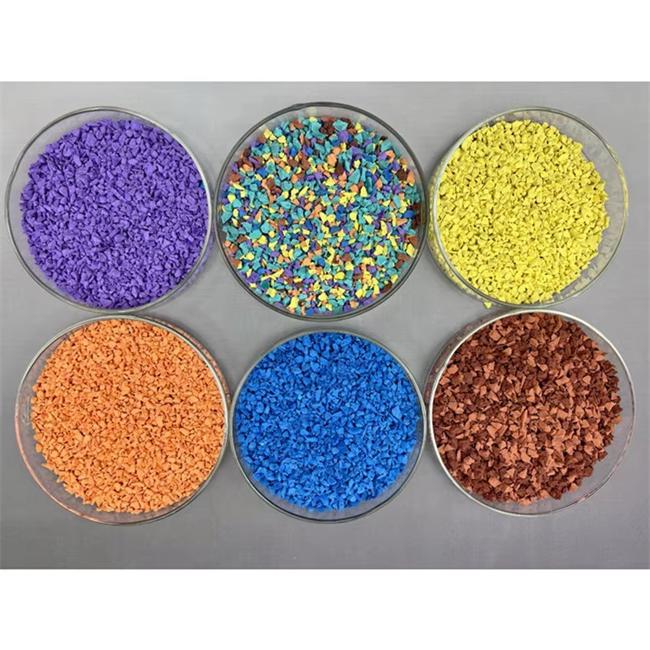
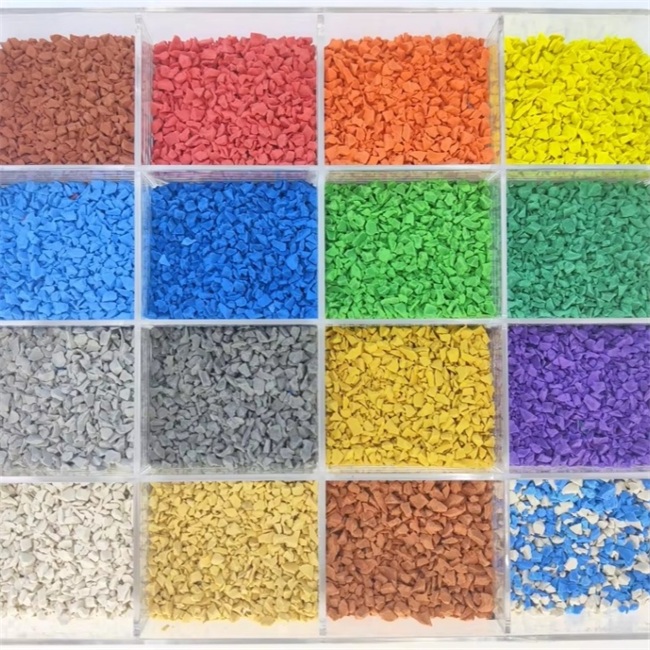
For projects with specific aesthetic requirements, verify your supplier's color matching capabilities. Quality exporters offer RAL color matching, Pantone color matching, custom color development from customer samples, and multi-color combinations for decorative patterns.
The quality of pigments used significantly affects color fastness. Higher-grade pigments with better UV resistance command a premium but deliver superior longevity.
Quality Indicators to Verify
Before placing an order, request and review complete technical documentation including TDS (Technical Data Sheet) which provides specifications for density, hardness, tensile strength, and elongation; MSDS (Material Safety Data Sheet) which confirms safety information and handling requirements; COA (Certificate of Analysis) which verifies batch-specific quality metrics; and third-party test reports from SGS, REACH, or other accredited laboratories.
Key parameters to evaluate include density—lower-density granules require less material to achieve the same coverage, reducing overall project cost. Tensile strength should reach 4 to 7 megapascals for high-performance applications, ensuring the material can withstand mechanical stress during use. Aging resistance must be tested according to relevant standards for UV and thermal stability to confirm long-term durability in the intended climate. Elasticity and rebound properties are critical for sports applications requiring consistent performance characteristics. Color stability should be verified through accelerated weathering test results, which indicate resistance to fading over time.
Environmental and Safety Compliance
A new group standard, T/ACCEM 703-2025, specifically addresses highly environmentally friendly and weather-resistant EPDM granular materials, setting requirements for product classification, testing, and quality control. Buyers sourcing for projects with stringent environmental requirements should verify supplier compliance with applicable standards.
Manufacturer Insights
Drawing from two decades of experience in EPDM granule production and global export, we offer the following professional guidance:
On granule Selection: For most playground applications, a 1 to 3 millimeter granule provides the best balance between aesthetics and performance. If budget permits, specifying 0.5 to 1.5 millimeter granules for the top coat achieves a smoother finish with superior color uniformity.
On Color Stability: When specifying colored EPDM for tropical or high-UV locations, insist on UV-stabilized pigments. Our sulfur-free formulation provides enhanced color retention because the absence of sulfur prevents compound decomposition under UV exposure, significantly extending service life.
On Testing: Always request aging test results specific to the end-use climate. Performance in temperate Europe does not necessarily translate to success in Middle Eastern heat or Australian UV conditions.
On Cost Control: While lower-quality granules may appear cost-effective initially, consider the lifecycle cost. Superior materials that last 5 years or more without significant degradation typically deliver better total cost of ownership than cheaper alternatives requiring replacement every 2 to 3 years.
On Supplier Partnership: In today's environment of supply chain volatility, partner with manufacturers who offer flexible minimum order quantities with no MOQ requirements, multiple shipping options including full container load and less than container load, responsive communication, complete technical documentation, and consistent quality across all batches.
Why Global Buyers Choose Our EPDM Granules
As a dedicated manufacturer and EPDM granules exporter with over 25 years of industry experience, we approach every order with a singular focus: producing premium EPDM granules that meet our customers' exact specifications.
Our Sulfur-Free Advantage: By eliminating sulfur from our formulation, our granules contain no sulfur compounds that decompose under heat or UV exposure. This technology delivers zero odor even in high-temperature conditions, service life extended by 3 times or more compared to conventional products, tensile strength reaching 4 to 7 megapascals which represents 2 to 3 times industry standards, and superior antioxidant properties for lasting color brilliance.
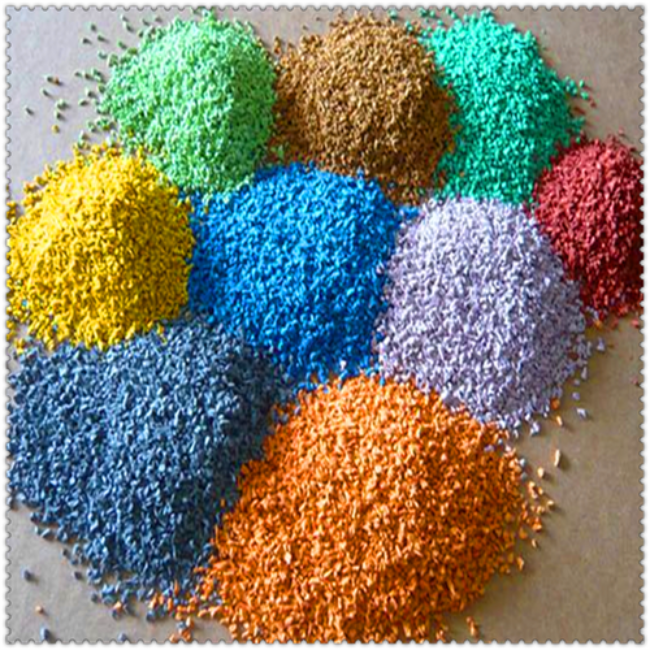
Customization Capacity: We support RAL and Pantone color matching, custom color development from customer samples, multiple granule sizes including 0.5 to 1.5 millimeters, 1 to 3 millimeters, 1 to 4 millimeters, 2 to 4 millimeters, and specialty sizes, private label and OEM/ODM arrangements, and tailored packaging solutions.
No MOQ: Our flexible production lines enable us to accommodate orders of any size, from sample quantities for trial and testing to full-container shipments for major projects.
Global Export Experience: Our products are installed across Europe, North America, Australia, the Middle East, and other international markets. We understand the documentation, certification, and shipping requirements for diverse destinations.
Frequently Asked Questions
What size EPDM granules should I choose for my project?
The required granule size depends on your application and desired finish. For top coats, 0.5 to 1.5 millimeter granules provide the smoothest surface. For running tracks, 1 to 3 millimeter or 1 to 4 millimeter sizes offer excellent performance. For shock pads and base layers, 2 to 4 millimeter granules are typically recommended. We can advise on the optimal size for your specific project requirements.
How long do EPDM granules last in outdoor installations?
With quality materials, EPDM surfaces can last 10 to 15 years or more. Our sulfur-free formulation significantly extends service life compared to conventional products, which may require repaving within 2 to 3 years in harsh conditions. Regular maintenance and proper installation are also critical factors.
Can EPDM granules fade or change color over time?
All EPDM granules experience some color shift over time, but the rate depends on pigment quality and formulation. Our products incorporate UV-stabilized pigments and sulfur-free technology that resist oxidation and maintain color integrity far longer than standard materials.
How much polyurethane binder is required for installation?
Binder requirements vary based on granule size, porosity, and desired porosity of the finished surface. Typical usage ranges from 5 to 8 percent by weight of granules for porous systems to 12 to 15 percent for denser surfaces. We provide technical recommendations for each product.
Can you match specific RAL or Pantone colors?
Yes. We offer comprehensive color customization services, including matching RAL, Pantone, or customer-supplied samples. Our color matching process ensures batch-to-batch consistency for projects requiring uniform appearance.
What certifications are available for your EPDM granules?
Our products undergo rigorous quality control and are tested according to international standards. We can provide test reports verifying physical properties, environmental compliance including REACH, and performance characteristics as required for your project specifications.
Is there a minimum order quantity (MOQ)?
No. We operate with no minimum order quantity, making us an ideal partner for both small-scale contractors seeking materials for specific projects and large-scale importers requiring container loads.
How do I verify EPDM granule quality before ordering?
We recommend requesting samples for your own testing and evaluation. Reputable suppliers should provide product samples along with complete documentation. Our quality control process includes multiple testing checkpoints throughout production to ensure consistent quality.
What makes sulfur-free EPDM granules better for playground applications?
Sulfur-free granules eliminate the risk of odorous compound release under heat or UV exposure, making them ideal for children's play areas. Additionally, the more stable molecular structure delivers longer service life, better color retention, and superior mechanical properties including higher tensile strength reaching 4 to 7 megapascals and enhanced elasticity compared to traditional sulfur-cured products.

Selecting the right EPDM granules exporter for your project requires balancing technical specifications, quality verification, logistical capabilities, and commercial considerations. By understanding the material properties, application requirements, and quality indicators outlined in this guide, buyers can make informed decisions that ensure successful project outcomes.
As a specialized EPDM granules exporter with over two decades of manufacturing expertise, we combine technical excellence with flexible service to meet the diverse needs of global customers. From custom color matching to sulfur-free formulation technology and no-MOQ policy, we are equipped to support projects of every scale and specification.
Contact us today to request samples, technical documentation, or a customized quotation for your EPDM granule requirements.

WOW(LYG) New Material Co Ltd is a manufacturer specializing in the production of EPDM rubber granules. We use sulfur-free vulcanization technology, it increases the service life by more than 3 times than traditional EPDM granules, and enhances the performance, including anti-aging, high-temperature resistance, and colorfastness.
We have over 25 years of production experience and offer customization for colors and granule sizes. NO MOQ.


