 注: 建议图片大小150px*50px
丨
注: 建议图片大小150px*50px Views: 0 Author: Site Editor Publish Time: 2026-07-20 Origin: Site


If you're reading this, you're likely not just browsing. You're a contractor facing a municipal playground tender, a distributor looking to source reliable material for a new sports complex, or an importer trying to navigate the complexities of the EPDM market. You’re probably searching for answers that go beyond the basics.
You want to know: How do I avoid a disaster?
I’ve been in this industry for over two decades. I've seen perfect projects win awards and small selection errors cost companies tens of thousands of dollars. This guide is written for professionals who need to make decisions that last. We will cut through the marketing fluff and look at the technical realities of EPDM granules for playground surfacing.

What Are EPDM Granules
Ethylene Propylene Diene Monomer (EPDM) is a type of synthetic rubber. For our industry, it is the gold standard for the top wearing course of safety surfaces .
However, not all EPDM is created equal. The critical distinction lies in the manufacturing process. The traditional industry standard has long been sulfur vulcanization. While effective, this process leaves behind residual sulfur in the material.
Here is the problem: When sulfur-based EPDM is exposed to heat and UV radiation, it degrades, releasing sulfuric acid byproducts. This often results in a distinct, sometimes unpleasant, odor. But more importantly, the sulfur bonds are also the weak link in the chain—literally. They break down over time, causing the material to become brittle, lose elasticity, and fade .
The superior alternative—and the one I recommend for high-stakes projects—is sulfur-free EPDM. Through advanced polymerization techniques, this approach eliminates those weak bonds, resulting in a far more stable and durable product.

Why EPDM? Understanding the "Why" Behind the Material
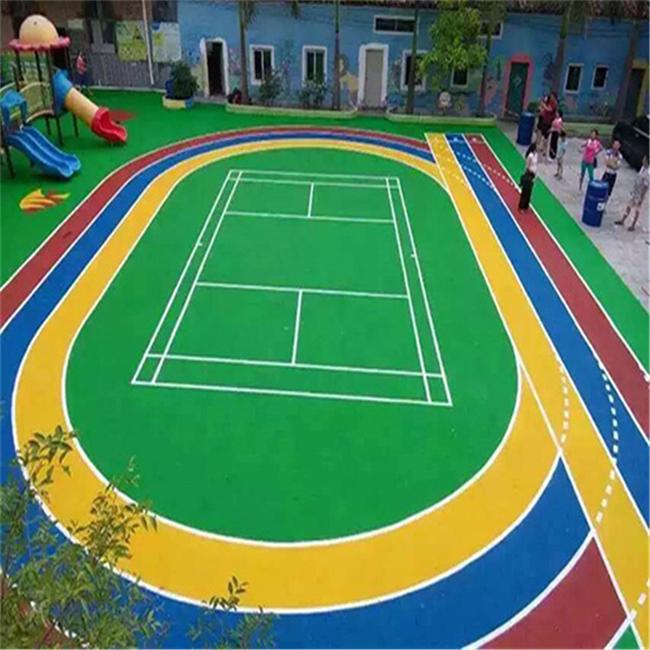
EPDM isn't just a pretty color; it's a functional safety component. It is used because it provides a seamless, permeable, and impact-absorbing surface. When installed correctly over a base layer (often made of more affordable SBR rubber), it creates a system that meets international safety standards like ASTM F1292 and EN 1177 .
For project managers, the primary reason to specify EPDM is liability and safety. It is engineered to reduce the severity of injuries from falls.
The 6 Critical Problems You Will Face (And How to Solve Them)
Based on my experience assisting clients globally, here are the most common pitfalls and how to navigate them.
1. The Fading Problem (UV Performance)
The Issue: You chose a vibrant red or bright blue, and within 12 months of installation, it looks washed out and patchy. This is your biggest aesthetic risk .
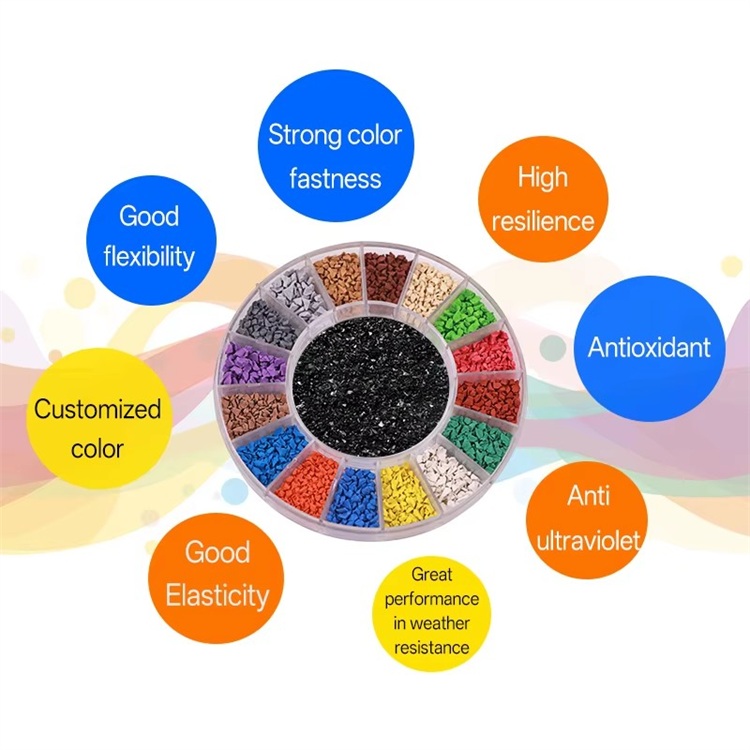
The Solution: UV resistance is not binary; it is a spectrum. High-quality sulfur-free EPDM utilizes advanced pigments integrated during the compounding process, not just painted on the surface. This ensures the color permeates the granule. Look for manufacturers who provide UV stability data (Gray Scale ratings) after extended exposure tests. Our sulfur-free EPDM granules, for instance, show significantly better color retention, with performance staying consistent even after extended UV exposure because the molecular structure remains intact.
2. The "New Rubber" Smell (VOCs)
The Issue: After installation, you notice a strong chemical smell. This is usually due to sulfur off-gassing and residual processing oils. For schools, hospitals, and municipalities, this is a dealbreaker.
The Solution: Specify 100% virgin, sulfur-free EPDM with a low VOC emission profile. Because our granules do not contain sulfur, they do not decompose into sulfuric acid under high heat or strong UV, meaning no irritating odor—ever. This is crucial for meeting stringent environmental and health standards.
3. Poor Granule Size and Shape
The Issue: The granules are either too flat, too fine, or inconsistent. This leads to a surface that is either too dense (causing hard spots) or too porous (reducing wear resistance) .
The Solution: The manufacturing process matters. We use specialized granulation equipment to produce granules that are three-dimensional and angular with a low bulk density. This “stereoscopic” shape binds better with PU glue, creating a more stable, open-cell structure that is both elastic and permeable. Uniform size (e.g., 1-3mm or 2-4mm) ensures a consistent troweling finish.
4. Adhesion Failure
The Issue: The EPDM is delaminating from the base layer. This is usually because the granules didn't bond properly with the Polyurethane (PU) binder.
The Solution: Low-quality granules often contain high levels of plasticizers or oily residues that migrate to the surface and prevent the PU glue from "wetting out" the granule. Our sulfur-free EPDM, with its stable molecular structure, ensures superior compatibility with PU binders, resulting in a tensile strength of 4–7 MPa (compared to the industry average of 2-3 MPa). This means the bond is incredibly strong and durable .
5. Longevity vs. Cost
The Issue: You need to balance the initial budget against long-term maintenance costs. Cheap EPDM might look good in year 1 but will cost more to replace in year 3.
The Solution: This is where the ROI of high-quality material becomes evident. The stability of sulfur-free EPDM means performance retention is elevated over 5 times compared to standard products. The lifespan is extended by at least 3 times, meaning you are effectively deferring the need for costly resurfacing. It’s a long-term investment in peace of mind.
6. Supply Chain Headaches (MOQ and Lead Times)
The Issue: You found the perfect material, but the supplier requires a 20-ton container minimum for a custom color. You are a distributor trying to test the market or a contractor working on a small playground.
The Solution: You need flexibility. We support projects of all sizes. Our manufacturing capability allows us to offer No Minimum Order Quantity (No MOQ). We can supply 100kg for a trial or a full 40ft container for a national park project. Our 25+ years of experience and advanced production lines mean we can also deliver custom colors and sizes with rapid turnaround times.
How to Select the Right EPDM Supplier
When evaluating suppliers, ask these specific questions:
1. What is your polymer content? A good grade will have a high percentage of virgin EPDM polymer.
2. Is it sulfur-free? This is the single most important factor for odor and longevity.
3. Can you provide certification? Look for REACH, RoHS, and EN71-3 compliance, especially for children's playgrounds .
4. What is the technical specification? Ask for the "Tensile Strength" (Aim for >4 MPa) and "Elongation at Break" (>450%). These show the material can stretch under impact without tearing .
5. What is the bulk density? Lower bulk density (e.g., 0.6-0.7 g/cm³) means you need less material by weight to cover the same area, often offsetting the cost of a premium product .

Choosing EPDM granules for your playground surfacing is not a commodity purchase. It is a decision that affects the safety of end-users, the reputation of your company, and the longevity of the installation. By understanding the engineering behind the product—specifically the role of sulfur-free, high-stability materials—you can avoid the costly mistakes of the past.
We don't just sell granules; we offer solutions. With 25 years of industry expertise and a commitment to technical excellence, we provide the reliability and performance required for international projects. Whether you require standard colors for a high school track or a custom blend for a thematic park, we have the flexibility and capacity to deliver.


Contact our technical sales team for samples, specifications, and pricing tailored to your needs.
WOW(LYG) New Material Co Ltd is a manufacturer specializing in the production of EPDM rubber granules. We use sulfur-free vulcanization technology, it increases the service life by more than 3 times than traditional EPDM granules, and enhances the performance, including anti-aging, high-temperature resistance, and colorfastness.
We have over 25 years of production experience and offer customization for colors and granule sizes. NO MOQ.


