 注: 建议图片大小150px*50px
丨
注: 建议图片大小150px*50px Views: 0 Author: Site Editor Publish Time: 2026-08-08 Origin: Site


Rubber granules are one of the most important material decisions in playground surfacing, sports surfacing, safety surfacing, running tracks, and outdoor recreational areas. However, many buyers search for "rubber granules" without realizing that performance, safety, color stability, and installation quality depend heavily on the type of granules used.
For wet pour playgrounds, poured-in-place rubber systems, running tracks, splash pads, walking paths, parks, schools, kindergartens, and commercial projects, EPDM rubber granules are usually the most suitable choice. EPDM granules provide better UV resistance, better color consistency, better elasticity, and better long-term weathering performance than many alternative rubber materials.
This guide is written for playground contractors, sports surfacing contractors, construction companies, engineers, architects, landscape companies, municipal contractors, government buyers, importers, wholesalers, distributors, purchasing managers, brand owners, and OEM buyers. It explains how to choose the right rubber granules, how to avoid common procurement mistakes, how to judge quality, and how to improve project performance.
As a professional EPDM colored rubber granule manufacturer with more than 25 years of industry experience, we focus specifically on EPDM granule production, color customization, granule size customization, quality control, and global supply. We do not install finished surfaces or running tracks. Our advantage is helping buyers choose the correct EPDM granule material and supporting stable, repeatable supply for international projects.

What Are EPDM Rubber Granules?
EPDM rubber granules are colored rubber granules made from EPDM rubber, a durable synthetic rubber known for its resistance to UV light, ozone, weathering, heat, and aging. In surfacing systems, EPDM granules are usually mixed with a polyurethane binder and poured or troweled onto a prepared base to create a seamless, shock-absorbing, and slip-resistant surface.
EPDM rubber granules are commonly used in:
Wet pour playground surfacing
Poured-in-place rubber systems
Running track systems
Sports surfacing
Safety surfacing
Outdoor rubber surfacing
Recreational areas
Walking paths
Splash pads
Parks, schools, and kindergartens
Commercial and municipal projects
The main difference between EPDM granules and other rubber granules is performance consistency. EPDM is especially suitable for outdoor environments because it maintains color, elasticity, and physical properties over time.

Why EPDM Rubber Granules Are Widely Used in Outdoor Projects
Outdoor rubber surfacing must survive sunlight, rain, temperature changes, foot traffic, play equipment, cleaning, and long-term exposure to weather. That is why EPDM rubber granules are widely specified by contractors, engineers, and project owners.
EPDM granules are chosen because they offer:
Better UV resistance
Better color retention
Better elasticity
Better shock absorption potential
Better weathering resistance
Better aging resistance
Better design flexibility
Better suitability for outdoor safety surfacing
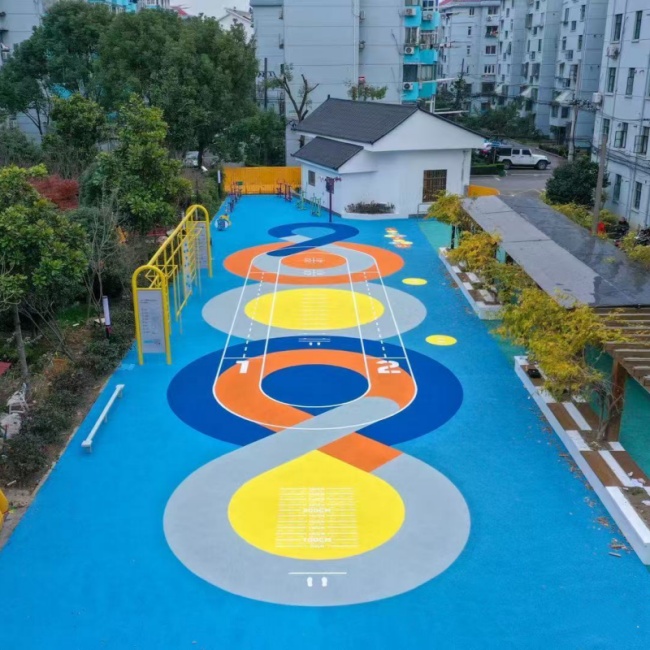
For playgrounds and schools, EPDM granules also allow creative colors, patterns, logos, safety zones, and themed designs. For running tracks and sports areas, consistent granule quality helps support uniform performance and installation results.
Main Applications of EPDM Rubber Granules
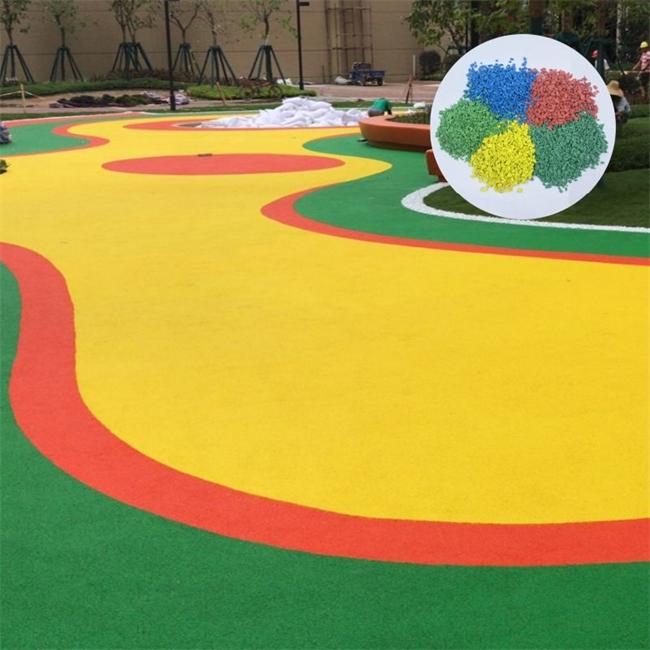
Wet Pour Playground Surfacing
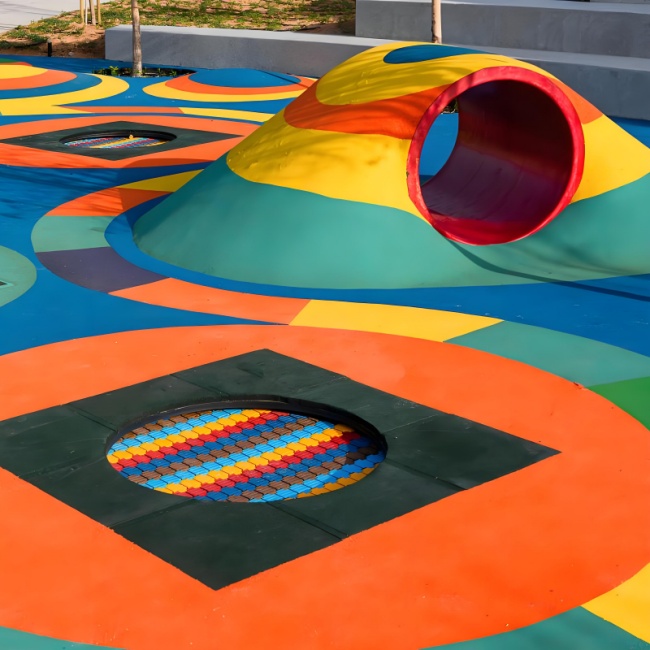
Wet pour playground surfacing is one of the most common applications for EPDM rubber granules. Contractors mix EPDM granules with PU binder and install them in layers to create a seamless, impact-absorbing surface.
EPDM granules are suitable for:
Critical fall height zones
Play equipment areas
School playgrounds
Kindergarten play areas
Park playgrounds
Municipal recreation areas
The correct granule size and color combination can help improve safety zones, visual guidance, accessibility, and design quality.
Poured-in-Place Rubber Systems
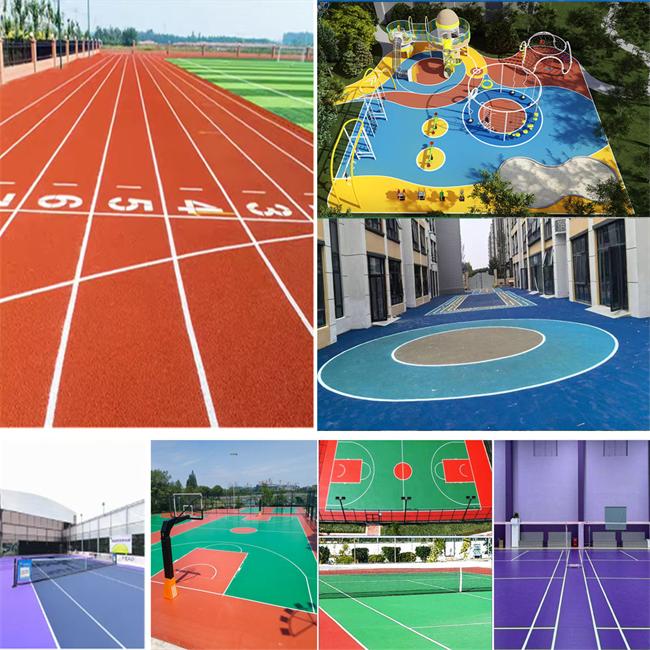
Poured-in-place rubber, also known as PIP rubber surfacing, depends heavily on granule quality. If the rubber granules have poor color stability, inconsistent size, or weak elasticity, the finished surface may fade, wear unevenly, or look inconsistent.
High-quality EPDM rubber granules help contractors achieve:
Stable color appearance
Uniform texture
Better bonding with PU binder
Better long-term outdoor performance
More predictable installation results
Running Track EPDM Systems
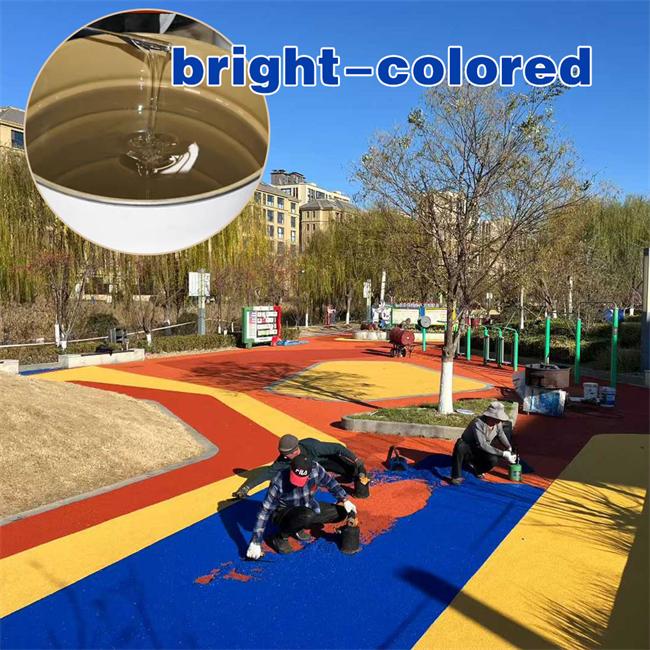
Running track projects require rubber granules with stable elasticity, good weather resistance, and consistent granule quality. EPDM granules are used in running track systems to help provide cushioning, durability, and color stability.
For running tracks, buyers should pay special attention to:
granule size distribution
Color consistency
Elasticity
UV resistance
Aging resistance
Long-term performance retention

Sports and Safety Surfacing
EPDM rubber granules are also used in multi-use games areas, fitness zones, outdoor gyms, recreational courts, walking paths, and safety surfacing areas.
The material is useful because it can be combined into different colors and patterns while still providing a seamless, flexible, and shock-absorbing surface.
Splash Pads, Parks, and Municipal Projects
For splash pads, parks, and municipal projects, buyers often need rubber granules that can resist water exposure, sunlight, frequent cleaning, and heavy public use. EPDM granules are a practical choice because they combine outdoor durability with design flexibility.
Key Benefits of Choosing EPDM Rubber Granules
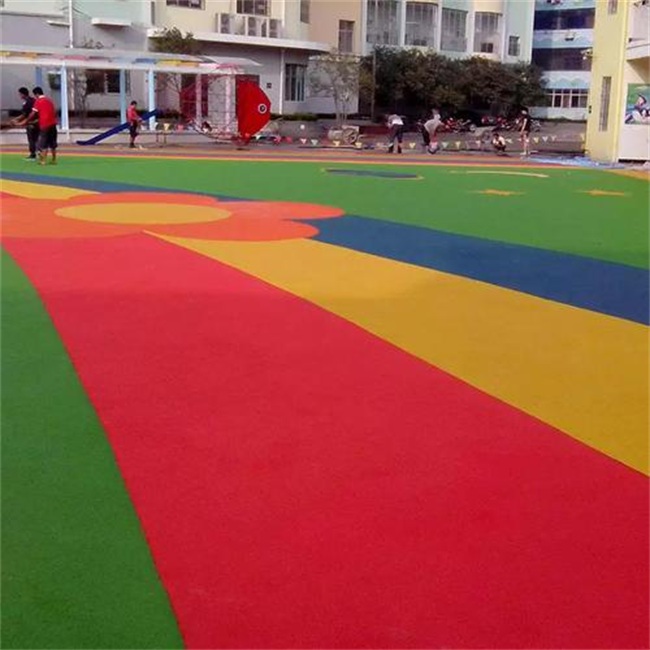
Better Color Stability
Color is one of the most visible quality factors in playground and sports surfacing. Poor-quality rubber granules may fade quickly, change color unevenly, or look different between batches.
EPDM rubber granules are preferred because they help maintain a more consistent appearance over time, especially in outdoor environments with strong sunlight.
Better UV and Weather Resistance
Outdoor rubber surfacing is exposed to sunlight, rain, heat, and temperature changes. EPDM rubber has strong resistance to UV radiation and weathering, which makes it suitable for long-term outdoor use.
Better Elasticity and Impact Performance
Elasticity is important for playgrounds, sports areas, and safety surfacing. EPDM granules with good elasticity can help improve the comfort, resilience, and shock-absorbing potential of the finished surface.
Better Aging Resistance
Aging resistance matters because rubber surfacing must perform well over many years. Materials with poor aging resistance may become brittle, lose elasticity, fade, or crack over time.
EPDM rubber granules are widely used because they generally offer better long-term stability in outdoor environments.
Better Design Flexibility
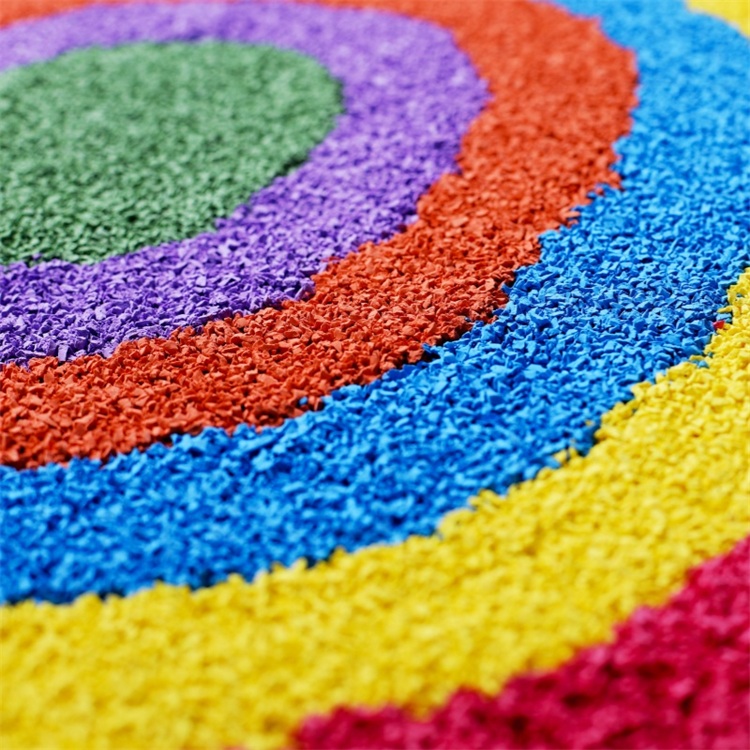
EPDM granules can be produced in different colors and granule sizes. This makes them suitable for creative playground designs, safety zones, school colors, municipal branding, themed areas, and custom patterns.
Common Challenges Buyers Face When Purchasing Rubber Granules
Color Fading and Inconsistent Appearance
Some buyers choose rubber granules based only on initial color, without checking UV resistance or long-term color retention. Over time, low-quality granules may fade, discolor, or look different from the original sample.
For outdoor projects, color stability is not optional. It affects safety, appearance, customer satisfaction, and project reputation.
Inconsistent granule Size
granule size affects mixing ratio, binder consumption, surface texture, installation speed, and final appearance. If the granule size is inconsistent, contractors may face uneven surfaces, higher material waste, or unpredictable installation results.
Low Elasticity and Poor Shock Absorption
Rubber granules with weak elasticity may reduce the performance of wet pour surfacing. This is especially important in playgrounds, schools, kindergartens, and safety surfacing areas.
Odor Issues
Odor is a common concern, especially for schools, kindergartens, indoor-outdoor play areas, and municipal projects. Rubber materials containing certain chemical components may produce stronger or more persistent odors, particularly in hot weather.
EPDM granules produced without sulfur-related components can help reduce odor concerns, making them more suitable for sensitive environments.
Unstable Supply Between Batches
For large projects, importers, contractors, and distributors need consistent supply. If different batches have different colors, sizes, or performance, the project may face delays, rework, or customer complaints.
Unclear Technical Documentation
Professional buyers should not purchase rubber granules without clear technical information. Suppliers should be able to provide product specifications, test reports, safety documents, and application recommendations when required.
How to Choose the Right Rubber Granules for Your Project
Confirm the Application First
Before choosing rubber granules, confirm the project type.
For playgrounds and schools, prioritize safety, color stability, elasticity, and odor control.
For running tracks, prioritize elasticity, durability, and consistent granule quality.
For splash pads and wet areas, prioritize water resistance and weathering performance.
For decorative landscapes, prioritize color design and long-term appearance.
Choose the Correct granule Size
Granule size affects surface texture, binder usage, and installation performance.
Finer granules are often suitable for top layers, detailed designs, and smoother finishes.
Medium granules are commonly used in standard wet pour surfacing.
Larger or mixed granules may be used in base layers or specific performance layers.
The correct size depends on the system design, installer experience, base condition, and performance requirements.
Check Color Consistency
For projects with large areas, color consistency is critical. Buyers should request samples, confirm color codes, and ensure the supplier can maintain stable color across different production batches.
If your project requires specific colors, it is better to confirm by RAL, Pantone, or physical sample rather than screen images alone.
Ask for Technical Documents
Professional procurement should include technical verification. Buyers should request:
Product specifications
granule size information
Density information
UV resistance data
Elasticity or tensile data
Aging resistance information
MSDS or safety documents
Relevant test reports
If a supplier cannot provide clear technical information, the procurement risk increases.
Evaluate Supplier Stability
A reliable EPDM granule supplier should be able to provide:
Consistent product quality
Stable color matching
Flexible granule size options
Clear production control
Reasonable lead time
Stable export experience
Responsive technical support
For long-term projects, supplier stability is often more important than a small initial price difference.
Technical Features Buyers Should Understand
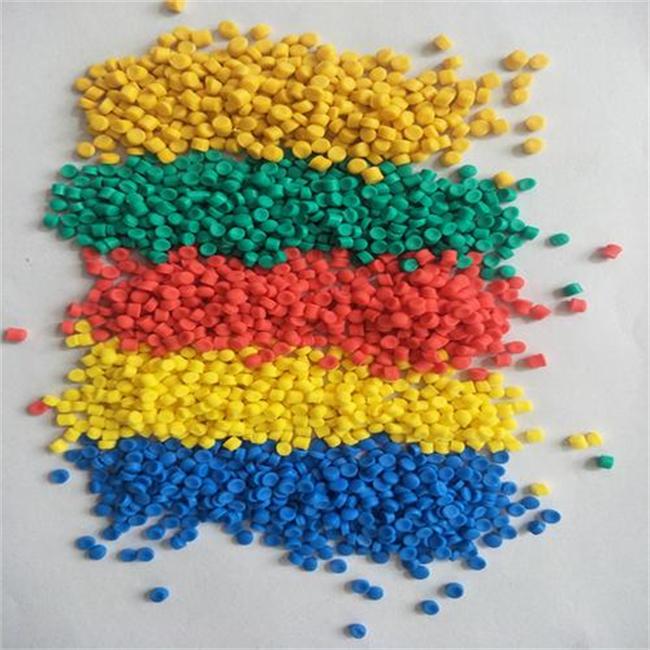
EPDM rubber granules are not all the same. Even when the material is called "EPDM," differences in raw materials, production process, granule size, color pigment quality, and quality control can create major performance differences.
When evaluating EPDM rubber granules, buyers should pay attention to the following technical features.
UV Resistance
Outdoor rubber surfacing must resist sunlight over time. UV resistance helps reduce fading, discoloration, and surface degradation.
Elasticity
Elasticity affects comfort, resilience, and shock-absorbing performance. EPDM granules with better elasticity are generally more suitable for playgrounds, sports areas, and safety surfacing.
Our EPDM rubber granules can reach a tensile strength range of approximately 4–7 MPa, which reflects stronger elasticity and tensile performance compared with many standard rubber granules.
Odor Control
Odor is especially important for schools, kindergartens, parks, and public recreation areas. Our EPDM granules are produced without sulfur components, so they do not generate sulfuric acid under high temperature or strong UV exposure. This helps reduce odor and makes the material more suitable for sensitive environments.
Aging Resistance
Aging resistance determines how well the granules maintain performance over time. Our sulfur-free EPDM formulation helps improve molecular stability, which supports longer service life and better performance retention.
Color Brightness and Anti-Oxidation Performance
EPDM granules with better anti-oxidation performance can help maintain brighter colors and reduce discoloration. This is important for playground designs, school projects, commercial landscapes, and municipal areas where appearance matters.
Granule Shape and Bulk Density
granule shape and bulk density affect installation efficiency, binder consumption, and surface texture. Our EPDM granules have low bulk density and strong three-dimensional granule shape, which can help improve coverage efficiency and visual texture.

EPDM Rubber Granule Sizes and How They Affect Installation
Granule size selection should not be random. Different sizes serve different functions in wet pour and poured-in-place rubber systems.
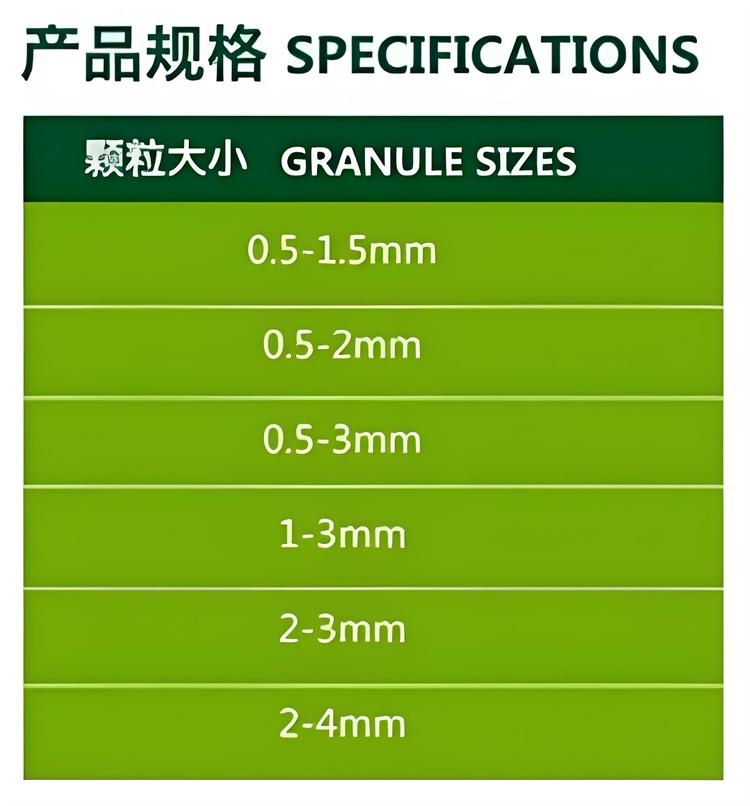
0.5–1.5mm
Fine EPDM granules are often suitable for top layers, detailed patterns, logos, and smoother surface finishes. They can help create finer visual effects, but they may require more careful control of binder ratio and mixing.
1–3mm
This is one of the most common size ranges for wet pour playground surfacing. It balances surface texture, installation efficiency, color visibility, and binder consumption.
1–4mm
Medium-range granules are suitable for general playground areas, safety surfacing, and standard poured-in-place rubber systems. They offer good flexibility for both base and top layer designs.
2–4mm
Larger granules are often used where stronger texture, better drainage compatibility, or specific performance layers are required. They may be suitable for certain base layers or heavy-use outdoor areas.
Custom granule sizes can also be produced depending on project requirements, system design, and installer preference.
How to Avoid Common Procurement Mistakes
Do Not Choose by Price Alone
The cheapest rubber granules may cost more in the long run. Poor color stability, weak elasticity, inconsistent granule size, or high odor can lead to customer complaints, rework, or damaged reputation.
Do Not Ignore Batch Consistency
For large projects, one container may not be enough. Buyers should confirm that the supplier can maintain color and granule size consistency across multiple batches.
Do Not Rely Only on Photos
Screen colors are not reliable for procurement. For important projects, buyers should confirm colors by physical sample, RAL code, Pantone code, or customer reference sample.
Do Not Overlook Odor Requirements
For schools, kindergartens, splash pads, and public playgrounds, odor can become a serious issue if the wrong material is selected. Buyers should confirm the material composition and request relevant safety documentation.
Do Not Forget Installation Compatibility
Rubber granules must work with the chosen PU binder, base preparation, mixing method, weather conditions, and installer experience. Material quality alone cannot guarantee a good project if installation control is poor.
How to Judge EPDM Rubber Granule Quality
Buyers can evaluate EPDM rubber granule quality by checking several practical factors.
Check Color Consistency
Compare samples from different bags or batches. The color should be stable, clear, and consistent.
Check granule Size Distribution
The granules should have a clear and consistent size range. Too much dust, oversized granules, or irregular size distribution may affect installation quality.
Check Elasticity
Good EPDM granules should feel resilient and flexible, not brittle or easily crushed.
Check Odor
EPDM granules for playgrounds and schools should have minimal odor. Strong or irritating smells are a warning sign.
Check Weathering and UV Performance
For outdoor projects, UV resistance and aging resistance are critical. Buyers should ask for test data or long-term performance information.
Check Documentation
A professional supplier should provide clear product information, technical data, safety documents, and quality control records when requested.

Manufacturer Insights: Professional Advice from an EPDM Granule Producer
As an EPDM colored rubber granule manufacturer, we often see buyers make the same mistakes: choosing color first, price second, and technical performance last. In reality, the correct order should be application, performance, consistency, and then cost optimization.
Choose granule Size Based on Layer Function
For top layers and decorative designs, finer granules usually give better visual detail. For base layers or performance layers, medium or larger granules may be more suitable. The best choice depends on the system design and installer experience.
Confirm Color Before Bulk Production
If your project requires exact color matching, confirm the color by physical sample, RAL code, or Pantone code. Do not rely only on digital images, because screen display differences can cause misunderstanding.
Order Sample Before Large Purchase
For new projects or new suppliers, ordering a sample is one of the lowest-cost ways to reduce procurement risk. Samples help verify color, granule size, texture, odor, and installation compatibility.
Control Binder Ratio Carefully
The amount of PU binder affects cost, surface hardness, elasticity, and durability. Too little binder may weaken the surface; too much binder may reduce elasticity and increase cost. The correct ratio should be confirmed by installation trial.
Protect Material During Storage
EPDM granules should be stored in a dry, clean, and shaded environment. Moisture, contamination, and direct long-term sunlight exposure should be avoided before installation.
Plan for Batch Consistency
For large projects, buyers should order enough material from the same production batch when possible. If multiple batches are needed, confirm color and granule size consistency before installation.

Why Global Buyers Choose Our EPDM Rubber Granules
We are a professional EPDM colored rubber granule manufacturer with more than 25 years of industry experience and complete production lines. Our focus is on producing high-quality EPDM granules for playground surfacing, sports surfacing, running tracks, safety surfacing, and outdoor recreational projects.
Our EPDM rubber granules are produced without sulfur components. This helps reduce odor and improves molecular stability, UV resistance, aging resistance, elasticity, and long-term performance retention. Our EPDM granules can reach a tensile strength range of approximately 4–7 MPa, with improved elasticity and tensile performance compared with many conventional rubber granules.
We support flexible customization for international buyers:
Custom colors
RAL color matching
Pantone color matching
Customer sample matching
Custom granule sizes
Custom packaging
OEM support
ODM support
Private label support
FCL orders
LCL orders
Flexible order quantity
No minimum order quantity
Fast production response
Stable global supply
We serve buyers from Europe, North America, Australia, the Middle East, and other international markets. Whether you are a playground contractor, sports surfacing contractor, importer, wholesaler, distributor, brand owner, or OEM buyer, we can help you choose the right EPDM granule specification and support stable project supply.

FAQ
What is the difference between EPDM rubber granules and other rubber granules?
EPDM rubber granules generally offer better UV resistance, better color stability, better elasticity, and better weathering performance than many common rubber granules. They are widely used in outdoor playgrounds, sports surfacing, running tracks, safety surfacing, and recreational areas.
Which rubber granule size should I choose for a wet pour playground?
For most wet pour playground projects, 1–3mm or 1–4mm EPDM granules are commonly used. Finer sizes such as 0.5–1.5mm are often suitable for top layers, logos, and detailed designs. The final choice should depend on the system design, installer experience, and surface requirements.
Can EPDM rubber granules fade over time?
All outdoor materials can be affected by sunlight and weather. However, high-quality EPDM rubber granules are designed for better UV resistance and color retention. For long-term outdoor projects, buyers should confirm UV stability, pigment quality, and batch consistency.
Do your EPDM granules have strong odor?
Our EPDM rubber granules are produced without sulfur components, so they do not generate sulfuric acid under high temperature or strong UV exposure. This helps reduce odor and makes them more suitable for schools, kindergartens, playgrounds, splash pads, and public areas.
Can you customize colors for our project?
Yes. We support custom colors, including RAL colors, Pantone colors, and customer sample matching. For large projects, we recommend confirming color by physical sample before bulk production.
Can you support OEM, ODM, and private label?
Yes. We support OEM, ODM, and private label packaging. We can also support custom granule sizes, custom colors, and custom packaging according to buyer requirements.
What is the minimum order quantity?
We support flexible order quantities with no minimum order quantity. This is helpful for sample testing, small projects, trial orders, and new market development.
How long can EPDM rubber surfacing last?
Service life depends on material quality, installation quality, base preparation, climate, traffic, UV exposure, and maintenance. High-quality EPDM rubber granules with good UV resistance and aging resistance can help extend the performance life of outdoor surfacing.
How can I reduce procurement risk when buying rubber granules?
The best way is to confirm application requirements, request samples, check granule size and color consistency, verify technical documents, and confirm supplier stability. For large projects, batch consistency and long-term supply reliability are more important than small short-term price differences.

Rubber granules are more than just a raw material. They directly affect the safety, appearance, durability, installation efficiency, and long-term performance of playgrounds, sports surfaces, running tracks, safety surfacing, and outdoor recreational areas.
For buyers, contractors, engineers, importers, and distributors, the most important decision is not simply choosing "rubber granules," but choosing the right EPDM rubber granules with stable color, consistent granule size, good elasticity, strong UV resistance, low odor, and reliable supply.
As a professional EPDM colored rubber granule manufacturer with more than 25 years of experience, we focus on helping global buyers make better material decisions. We support custom colors, custom granule sizes, OEM, ODM, private label, flexible order quantities, and stable international supply.
If you are planning a playground, sports surfacing, running track, safety surfacing, or municipal rubber surfacing project, we can provide product samples, technical specifications, color matching, and quotation support to help you move forward with confidence.

WOW(LYG) New Material Co Ltd is a manufacturer specializing in the production of EPDM rubber granules. We use sulfur-free vulcanization technology, it increases the service life by more than 3 times than traditional EPDM granules, and enhances the performance, including anti-aging, high-temperature resistance, and colorfastness.
We have over 25 years of production experience and offer customization for colors and granule sizes. NO MOQ.


