 注: 建议图片大小150px*50px
丨
注: 建议图片大小150px*50px Views: 0 Author: Site Editor Publish Time: 2026-07-31 Origin: Site


For sports surfacing contractors, playground builders, and global procurement managers, the running track wearing layer is the most critical component of any athletic surface. As the primary interface between the athlete and the ground, this top layer dictates the track's safety, performance, and visual longevity.
However, sourcing high-quality EPDM (Ethylene Propylene Diene Monomer) granules for this layer is often fraught with challenges. From premature fading and granule detachment to inconsistent batch quality, poor material choices can lead to costly project failures. This guide is engineered to help engineers, importers, and construction companies understand the technical specifications, procurement pitfalls, and selection criteria for premium EPDM wearing layers, ensuring your next project meets global standards and client expectations.
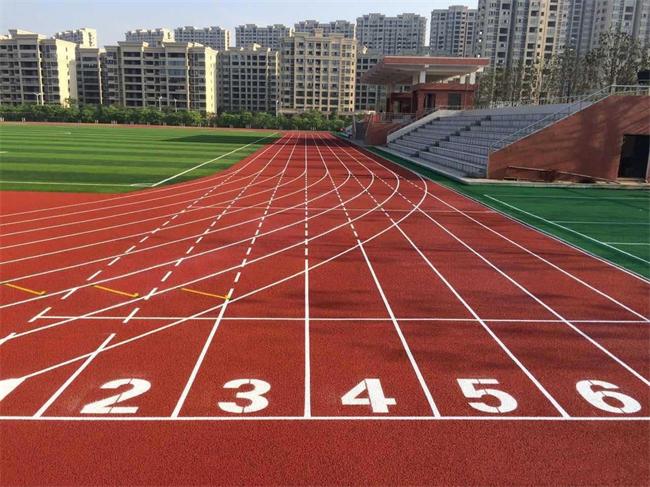
What is the Running Track Wearing Layer?
The running track wearing layer is the topmost surface of a sports surfacing system, typically ranging from 3mm to 6mm in thickness. It is constructed by mixing colored EPDM rubber granules with a high-quality polyurethane (PU) binder, which is then poured or sprayed over a base layer (usually black SBR rubber or a cushion layer).
Unlike the base layer, which focuses on shock absorption and cost-efficiency, the wearing layer is designed for:
Durability: Resisting heavy foot traffic, spiked shoes, and mechanical wear.
Weather Resistance: Withstanding UV radiation, ozone, and extreme temperature fluctuations.
Aesthetics: Providing vibrant, long-lasting color and custom patterns.
Safety: Offering optimal slip resistance and friction coefficients.

Why Engineers and Contractors Choose EPDM for Wearing Layers
EPDM has become the industry standard for running track wearing layers over traditional materials like PU or asphalt. The primary reasons include:
1. Superior UV and Weather Stability
EPDM is a synthetic rubber with a saturated polymer backbone, making it inherently resistant to oxidation, ozone, and UV degradation. High-quality EPDM granules maintain their structural integrity and color vibrancy even after years of direct sunlight exposure.
2. Excellent Shock Absorption and Elasticity
The wearing layer contributes to the overall force reduction of the track. A well-formulated EPDM layer provides the necessary energy return for athletes while cushioning joints, reducing the risk of impact-related injuries.
3. Design Flexibility
EPDM granules are available in a vast spectrum of colors. This allows landscape architects and municipal contractors to create color-coded lanes, school logos, and vibrant playground designs without the risk of paint peeling.

Key Technical Parameters for Procurement
When evaluating EPDM granules for a wearing layer, procurement managers and engineers must look beyond the price per ton. The following technical parameters directly impact the lifespan and performance of the track:
Rubber Content (Polymer Purity)
The percentage of pure EPDM rubber in the granule is the most significant cost and quality driver. Market-standard granules may contain only 10-15% rubber, filled with calcium carbonate. Premium engineering-grade granules should have a rubber content of 20% or higher. Higher rubber content translates to better elasticity, tensile strength, and resistance to cracking.
Granule Size and Gradation
For a wearing layer, the granule size directly affects the surface texture and binder consumption.
0.5mm - 2mm: Ideal for spray-coat systems and fine-textured wearing layers.
1mm - 3mm: The standard size for hand-laid or machine-laid sandwich systems, offering a balance of durability and smoothness.
2mm - 4mm: Often used in the cushion layer, but sometimes used in thicker wearing layers for specific traction requirements.
Tensile Strength and Elongation
A robust wearing layer must withstand the tearing forces of athletic spikes. High-quality EPDM granules should exhibit a tensile strength of at least 0.8 MPa (ideally higher) and an elongation at break of over 180%. This ensures the颗粒 (granules) do not snap or pulverize under stress.
Density and Shape
The physical shape of the granule affects the porosity and binder usage. Granules with a high degree of cubic shape and sharp edges (high立体感) provide better mechanical interlocking with the PU binder, reducing the risk of granule loosening. Conversely, irregular or overly dense granules can lead to poor bonding and surface defects.

Common Procurement Pitfalls and How to Avoid Them
Purchasing managers often face issues that compromise the final project. Here is how to navigate common pitfalls:
The "Fading Color" Problem
Cheap EPDM granules often use low-grade pigments or surface coatings that degrade quickly under UV light. To avoid this, specify that the color must be "through-and-through" (solid color), meaning the pigment is mixed into the raw rubber compound before vulcanization, not just painted on the surface.
Granule Detachment and Dusting
If the granules lack sufficient rubber content or the PU binder ratio is incorrect, the surface will begin to shed granules (dusting). This is often caused by high filler content (like calcium carbonate) which makes the granule brittle. Always request a sample and perform a manual crush test; high-quality EPDM should be difficult to crush by hand.
Inconsistent Batch Quality
For large municipal projects, color consistency across different batches is vital. Work with manufacturers who utilize automated production lines and strict quality control to ensure that the red granules delivered in June match the red granules delivered in August.
Hidden MOQ and Logistics Costs
Many suppliers impose high Minimum Order Quantities (MOQ), which can be problematic for smaller contractors or custom color orders. Look for flexible suppliers who can accommodate smaller batch sizes without penalizing you on freight or unit price.

Practical Tips for a Successful Installation
Even the best EPDM granules will fail if installed incorrectly. Ensure your construction team follows these guidelines:
Moisture Control: The base layer must be completely dry. Moisture trapped beneath the wearing layer will turn to steam in the sun, causing bubbles and delamination.
Binder Ratio: The ratio of PU binder to EPDM granules is critical. Typically, this ranges from 1:8 to 1:10 by weight, depending on the granule size and desired porosity. Over-diluting the binder with solvents to save money is a primary cause of premature failure.
Weather Conditions: Do not install the wearing layer in rain or when humidity is extremely high, as this interferes with the PU curing process.
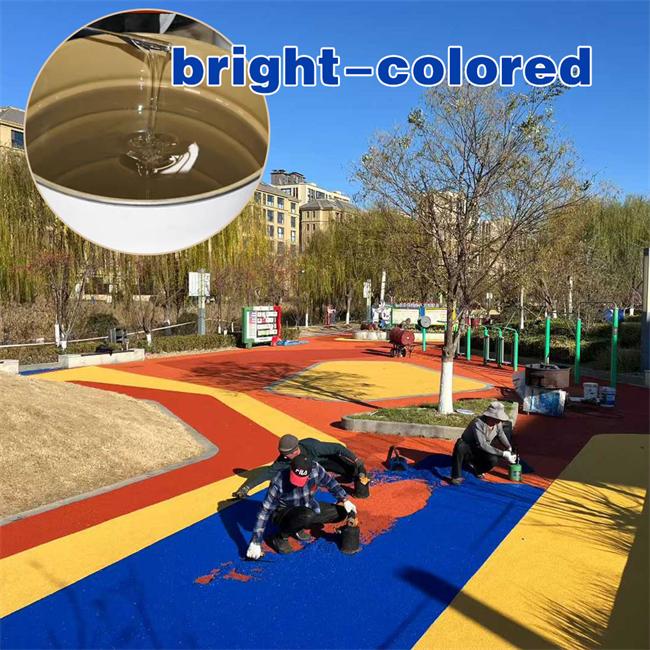
Why Our EPDM Granules Are the Superior Choice
With over 25 years of industry experience, we understand the exacting demands of global engineering and procurement standards. Our EPDM granules are engineered to solve the most common pain points in the sports surfacing industry:
Sulfur-Free Technology for Zero Odor
Unlike traditional rubber, our EPDM granules contain absolutely no sulfur. This means they do not decompose into sulfuric acid under high heat or strong UV exposure, eliminating the "rotten egg" smell often associated with rubber tracks. This makes them safe for enclosed spaces and sensitive environments like schools.
Unmatched Lifespan and Stability
Because of our sulfur-free formulation, the molecular structure of our rubber is significantly more stable. This results in a service life that is over 3 times longer than standard market products, with performance retention rates improved by more than 5 times.
Superior Mechanical Properties
Our granules offer enhanced elasticity and tensile strength, reaching 4-7 MPa (2-3 times higher than standard). This ensures the wearing layer remains intact even under the rigorous use of spiked shoes.
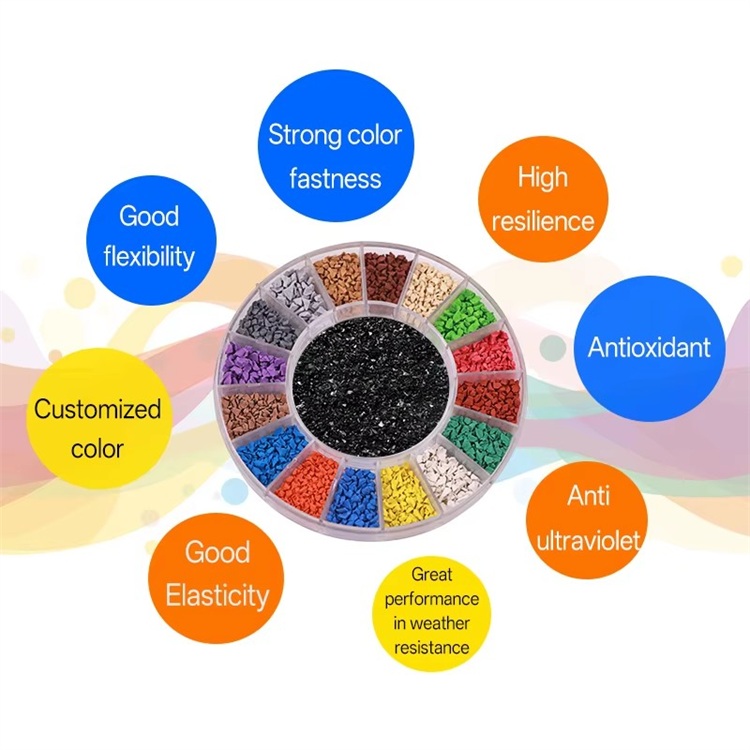
Vibrant, Fade-Resistant Colors
We use premium, food-grade pigments that are anti-oxidant and highly resistant to UV fading. The colors remain bright and distinct for years, maintaining the aesthetic value of the facility.
Flexible Procurement for Global Buyers
We understand the needs of international distributors and contractors. We offer:
No MOQ (Minimum Order Quantity): Whether you need a small batch for a playground repair or a full container for a stadium, we can fulfill your order.
Full Customization: We support custom colors and precise granule size screening to match your specific project specifications.
Rapid Turnaround: Our advanced production lines ensure fast completion of orders, minimizing project delays.
FAQ: Questions Procurement Managers Ask
1. What is the recommended EPDM granule size for a running track wearing layer?
For most spray-coat and sandwich systems, a size range of 1-3mm is ideal for the wearing layer. It provides a good balance of surface texture, durability, and binder efficiency. For spray systems, 0.5-2mm is preferred.
2. How can I test the quality of EPDM granules before importing?
Request a sample and perform a "burn test" or "crush test." High-quality EPDM with high rubber content will be elastic and difficult to crush. It should also have a clean, non-pungent smell. Additionally, ask for the Technical Data Sheet (TDS) and third-party test reports (like SGS or Intertek) regarding tensile strength and heavy metal content.
3. Why do some EPDM tracks turn white or fade after a few years?
This is usually due to the use of low-quality pigments or surface-coated granules rather than solid-colored ones. UV radiation breaks down inferior pigments. Always specify "through-and-through" colored EPDM with UV stabilizers.
4. What is the typical mixing ratio of EPDM granules to PU binder?
The ratio typically ranges from 8:1 to 10:1 (granules to binder) by weight. However, this depends on the granule size, density, and the specific type of PU binder used. Always follow the binder manufacturer's recommendation.
5. Can EPDM granules be used in cold climates?
Yes, EPDM is highly resistant to temperature extremes. However, in freezing climates, it is crucial to ensure the track has proper drainage and that the binder used is formulated for low-temperature flexibility to prevent cracking.
6. Do you have a Minimum Order Quantity (MOQ)?
No, we do not have an MOQ. We support flexible ordering to accommodate both large-scale municipal projects and smaller contractor needs, including custom color matching.
7. Are your EPDM granules environmentally safe for schools?
Yes. Our granules are sulfur-free, odorless, and meet food-grade hygiene standards. They are free from heavy metals and harmful solvents, making them compliant with strict environmental regulations like EN71-3 and REACH.
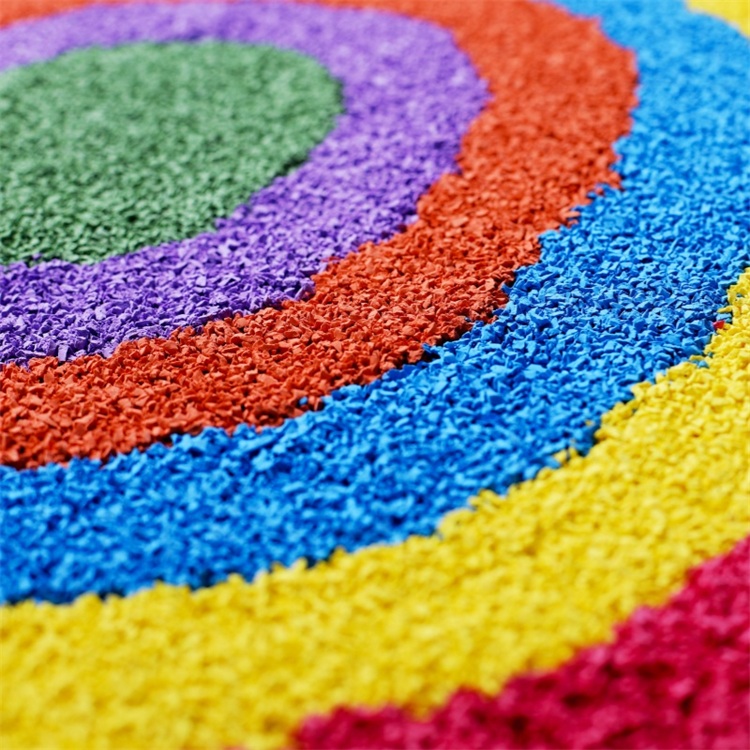
Selecting the right running track wearing layer is a decision that impacts the safety of athletes and the long-term ROI of a construction project. By prioritizing high rubber content, sulfur-free technology, and precise granule sizing, engineers and procurement managers can avoid the common failures of fading, cracking, and granule loss. Partnering with an experienced manufacturer who offers technical support, flexible MOQs, and certified quality ensures that your sports surfacing projects stand the test of time, delivering performance and aesthetic excellence for decades.

WOW(LYG) New Material Co Ltd is a manufacturer specializing in the production of EPDM rubber granules. We use sulfur-free vulcanization technology, it increases the service life by more than 3 times than traditional EPDM granules, and enhances the performance, including anti-aging, high-temperature resistance, and colorfastness.
We have over 25 years of production experience and offer customization for colors and granule sizes. NO MOQ.


