 注: 建议图片大小150px*50px
丨
注: 建议图片大小150px*50px Views: 0 Author: Site Editor Publish Time: 2026-08-04 Origin: Site


In the modern sports construction and playground industry, the quality of the surface dictates the safety, performance, and longevity of the facility. EPDM sports surfacing has emerged as the premier choice for contractors and engineers due to its versatility and shock-absorbing properties. However, the performance of a poured-in-place (PIP) rubber surface or a running track relies entirely on the quality of the raw materials used.
As a specialized manufacturer and exporter of EPDM colored rubber granules, we understand that procurement is not just about price; it is about chemical stability, color consistency, and long-term durability. This guide is designed to help global buyers, contractors, and engineers navigate the technical specifications of EPDM granules, avoid common procurement pitfalls, and select the right material for their specific projects.

What is EPDM Sports Surfacing?
EPDM (Ethylene Propylene Diene Monomer) sports surfacing refers to a seamless, permeable rubber surfacing system. It is typically constructed in two layers:
Base Layer: Usually composed of black SBR (Styrene Butadiene Rubber) granules mixed with a polyurethane binder to provide cushioning and drainage.
Wearing Course (Top Layer): Composed of high-quality colored EPDM rubber granules mixed with a UV-stable binder.
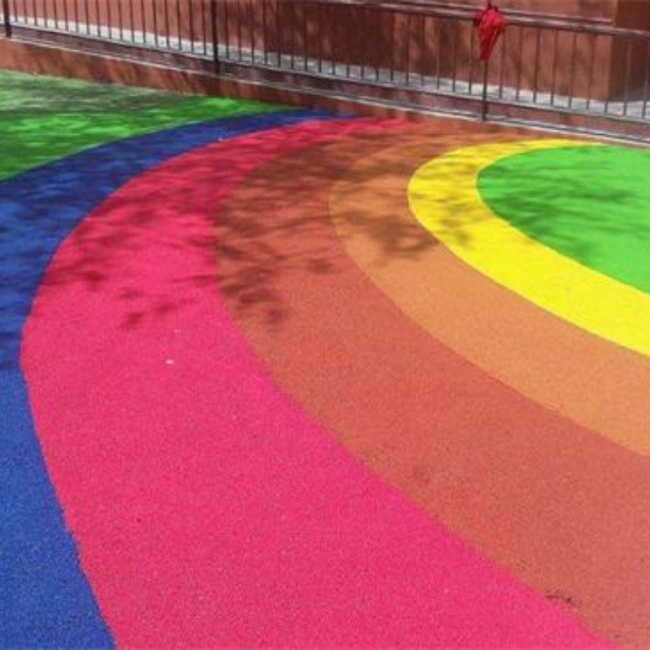
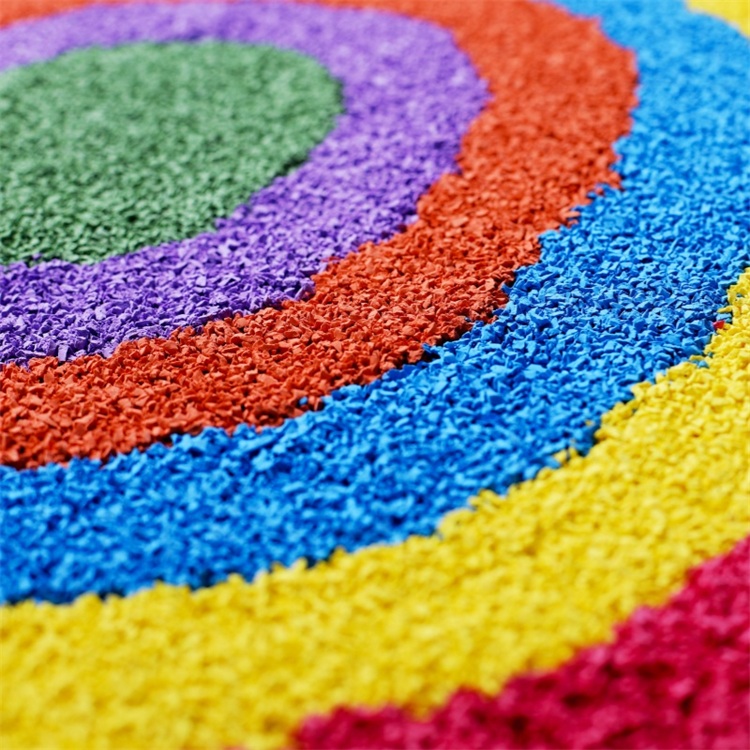
This top layer is critical. It provides the aesthetic appeal, the slip resistance, and the primary protection against environmental factors. Unlike prefabricated rolls, EPDM sports surfacing is poured on-site, allowing for custom designs, logos, and complex geometric patterns.
Key Applications
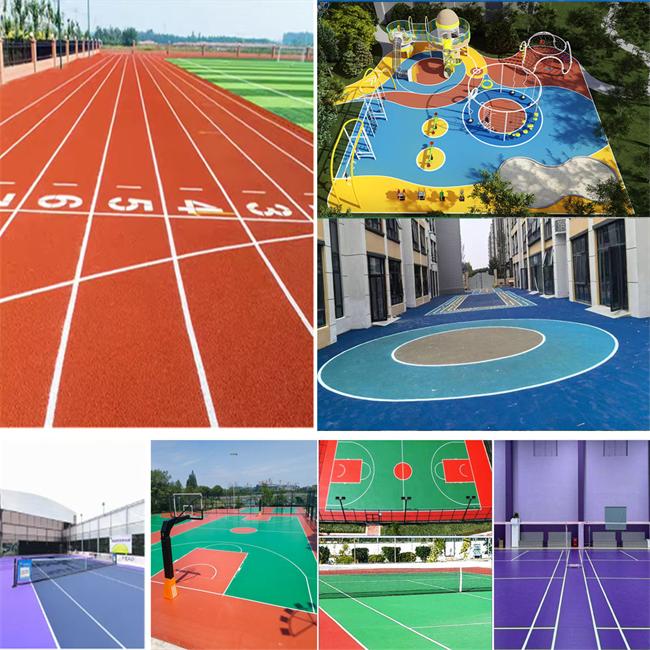
EPDM granules are the standard for projects requiring safety, durability, and aesthetic flexibility. Common applications include:
Educational Facilities: Primary and secondary school running tracks, kindergarten playgrounds, and university sports courts.
Public Recreation: Park walking paths, fitness trails, and outdoor gym areas.
Safety Surfacing: Fall zones under playground equipment, splash pads, and pool decks.
Commercial Spaces: Rooftop terraces, balcony surfacing, and commercial recreational areas.
Core Benefits of High-Quality EPDM Granules
When sourcing materials for EPDM sports surfacing, the chemical composition of the granules determines the outcome. High-grade virgin EPDM offers distinct advantages over recycled alternatives:
Superior UV Stability: Premium EPDM granules are engineered to resist fading. Even under intense sunlight, the color retention remains high, ensuring the facility looks new for years.
Chemical Resistance: EPDM is inherently resistant to ozone, acid rain, and temperature fluctuations. It does not harden in winter or soften excessively in summer.
Elasticity and Shock Absorption: The material provides excellent energy return, reducing the impact on athletes' joints and minimizing injury risks during falls.
Permeability: The porous nature of the granule-binder matrix allows water to drain through, preventing puddles and allowing the surface to be used immediately after rain.

Common Challenges and How to Avoid Them
Procurement managers and engineers often face specific challenges when importing or purchasing EPDM granules. Understanding these risks is crucial for project success.
1. The "Sulfur" Issue and Odor
One of the most significant issues in the EPDM industry is the presence of sulfur in the vulcanization process.
The Problem: Traditional EPDM often contains sulfur. Under high temperatures or strong UV exposure, this sulfur can decompose and release sulfuric acid. This not only causes a pungent odor but also accelerates the degradation of the polyurethane binder, leading to premature failure of the surface.
The Solution: We utilize a Sulfur-Free technology. Our EPDM granules contain no sulfur components. This ensures the molecular structure remains stable, eliminating odors even in high heat and extending the service life of the product by more than three times compared to standard market options.
2. Color Fading and Inconsistency
Contractors often struggle with color matching between batches or fading after just one season.
The Problem: Low-quality granules use inferior pigments or recycled rubber fillers that bleach quickly.
The Solution: High-quality EPDM uses inorganic pigments that are resistant to UV radiation. Furthermore, strict quality control ensures that the color difference (Delta E) between batches is negligible, which is vital for large-scale projects like stadiums.
3. Granule Breakdown and Dusting
The Problem: Soft or poorly cured granules can crumble under foot traffic, creating "dust" and reducing the thickness of the wear layer.
The Solution: Our manufacturing process ensures high tensile strength (4-7 MPa) and elasticity. The granules maintain their structural integrity, providing a rough, non-slip texture that lasts.
How to Choose the Right EPDM Granules
Selecting the correct specification is essential for both performance and cost-efficiency.
1. Granule Size Selection
The size of the granule affects the texture and the amount of binder required.
0.5 - 1.5mm (Fine): Often used for the top layer of running tracks or areas requiring a smoother finish. It provides a tighter surface but requires slightly more binder.
1 - 3mm or 1 - 4mm (Medium): The industry standard for playgrounds and general sports surfacing. It offers a good balance of texture, drainage, and binder consumption.
2 - 4mm (Coarse): Used for thicker base layers or specific landscape applications where high drainage is needed.
2. Color Customization
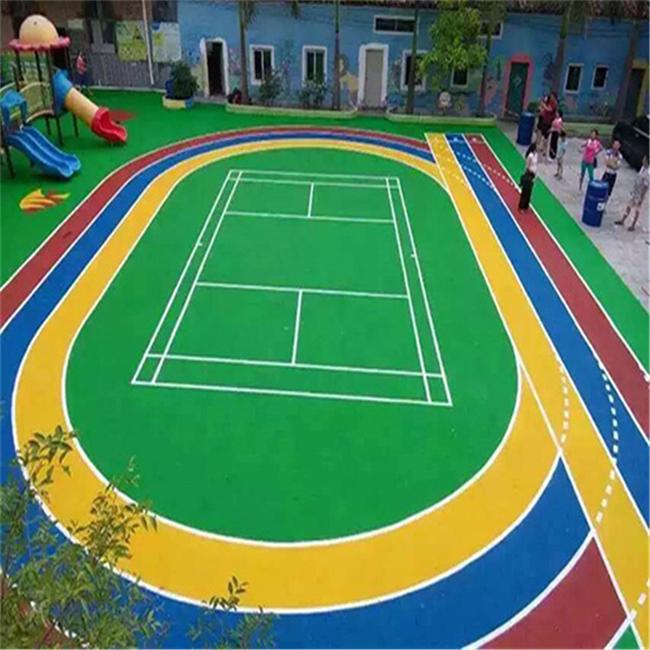
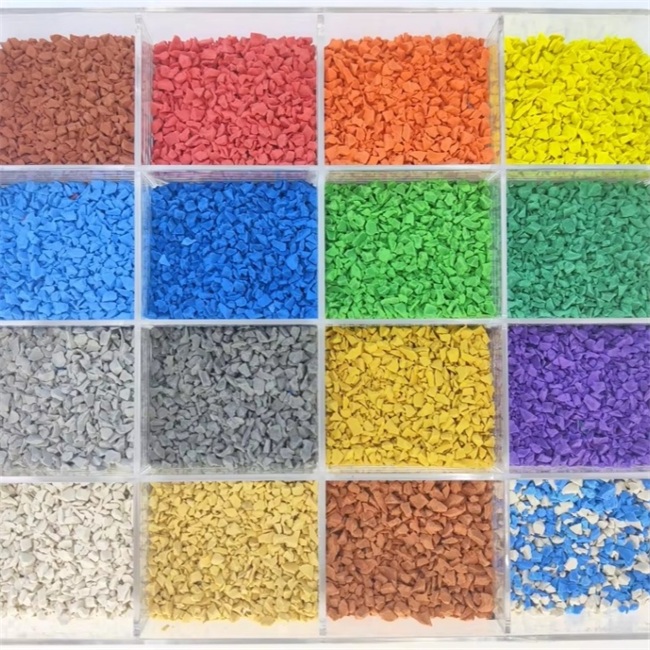
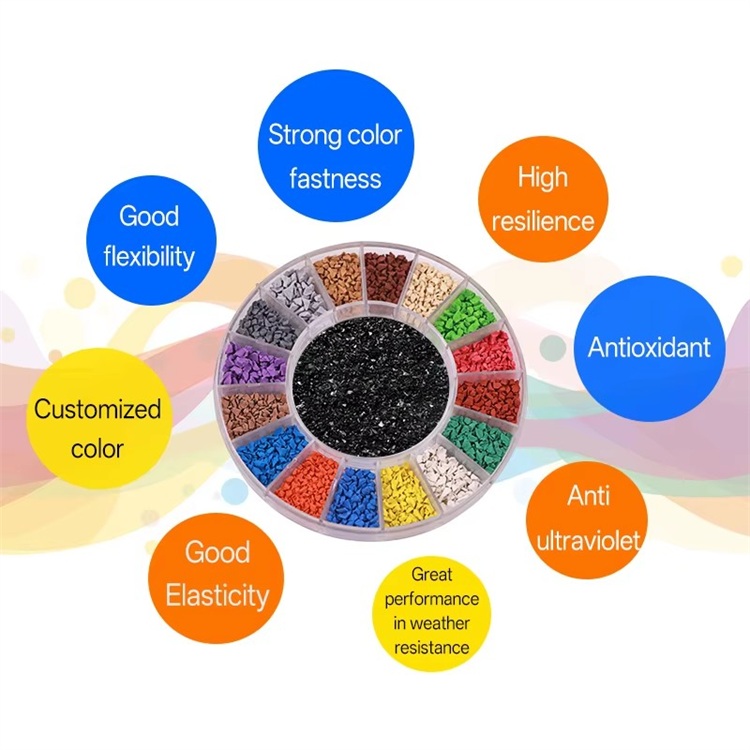
While standard colors like Terracotta Red, Grass Green, and Blue are readily available, many architects require specific shades.
Customization: We support full customization based on RAL or Pantone color charts. Whether you need a specific school color or a corporate brand shade, the granules can be produced to match.
3. Purity and Density
Always verify the density of the granules. High-quality EPDM has a lower bulk density because it is porous and elastic. Heavy granules often indicate the presence of fillers like calcium carbonate, which reduces elasticity and durability.

Technical Specifications
To assist engineers and procurement teams in their evaluation, here are the standard technical parameters for premium EPDM granules.
Material Composition: 100% Virgin EPDM Rubber (Sulfur-Free).
Tensile Strength: 4 - 7 MPa (High elasticity and tear resistance).
granule Sizes: Available in 0.5-1.5mm, 1-3mm, 1-4mm, 2-4mm, and custom blends.
Color Fastness: Grade 4 or higher (Blue Wool Scale), ensuring long-term UV resistance.
Elasticity: High rebound resilience suitable for sports impact absorption.
Temperature Resistance: Stable from -40°C to +150°C.
Fire Rating: Class E (according to EN 13501-1) or equivalent standards.
Heavy Metals: Compliant with EN71-3 (Safe for toys and playgrounds).

Manufacturer Insights: Expert Advice for Buyers
As a manufacturer with over 25 years of experience, we offer these insights to help you optimize your procurement and installation process:
Insight 1: The Binder Ratio Matters
The quality of the EPDM granule dictates how much Polyurethane (PU) binder you need. Our sulfur-free, high-surface-area granules are designed to coat efficiently. Typically, a ratio of 8% to 12% binder (depending on granule size) is sufficient. Using low-quality, filler-heavy granules often forces contractors to use more binder to achieve cohesion, increasing overall project costs.
Insight 2: Insist on TDS and MSDS
Never purchase without a Technical Data Sheet (TDS) and Material Safety Data Sheet (MSDS). These documents confirm the chemical composition and safety of the product. We provide full documentation, including SGS test reports, to ensure compliance with local environmental and safety regulations in your country.
Insight 3: Consider the "Sulfur-Free" Advantage
If your project is in a hot climate or a sensitive environment (like a school), insist on sulfur-free EPDM. The absence of sulfur prevents the "acid attack" on the binder, meaning the surface stays bonded longer and smells neutral, even in summer.
Why Global Buyers Choose Our EPDM Granules
We are not just a supplier; we are a dedicated partner for the global sports surfacing industry.
Direct Manufacturer: We control the entire production process, ensuring consistent quality and competitive pricing without middlemen.
Flexible MOQ: We understand that project sizes vary. We offer No Minimum Order Quantity (MOQ), making us ideal for both small playground repairs and large stadium projects.
Global Export Experience: We regularly ship to Europe, North America, Australia, and the Middle East. We understand the logistics, packaging requirements, and documentation needed for smooth customs clearance.
Customization Capability: From specific RAL colors to unique granule size blends, we tailor our production to your exact project specifications.
FAQ
Q1: What is the difference between EPDM and SBR granules?
A: EPDM (Ethylene Propylene Diene Monomer) is a virgin synthetic rubber known for its excellent UV resistance, color stability, and durability. It is used for the top, colored layer. SBR (Styrene Butadiene Rubber) is typically made from recycled tires (black) and is used for the bottom base layer because it is more cost-effective but lacks color stability.
Q2: How much PU binder is required for EPDM sports surfacing?
A: Generally, you need about 8% to 15% of the weight of the EPDM granules in Polyurethane binder. The exact amount depends on the granule size (smaller granules need more binder) and the specific binder viscosity.
Q3: Can EPDM granules be used indoors?
A: Yes. High-quality, sulfur-free EPDM granules are odorless and non-toxic, making them safe for indoor gyms, playgrounds, and recreational centers.
Q4: How long does an EPDM sports surface last?
A: With proper installation and high-quality virgin EPDM granules, the surface can last between 8 to 15 years. The sulfur-free technology we utilize can extend this lifespan significantly by preventing chemical degradation.
Q5: Do you provide samples for testing?
A: Absolutely. We encourage all potential clients to request samples to test the color, texture, and elasticity before placing a bulk order.
Q6: What certifications do your EPDM granules have?
A: Our products are tested and certified to meet international standards, including SGS testing for heavy metals (EN71-3), fire resistance, and VOC emissions. We can provide TDS, MSDS, and COA (Certificate of Analysis) upon request.
Q7: Can you match a specific color for our project?
A: Yes, we support full color customization. You can provide a RAL number, a Pantone code, or a physical sample, and our lab will match it precisely.
Choosing the right EPDM sports surfacing material is a critical decision that impacts the safety of users and the reputation of the contractor. By selecting high-quality, sulfur-free EPDM granules, you ensure a surface that is durable, vibrant, and safe for decades.
As a specialized manufacturer, we are committed to providing the industry with the highest quality raw materials. Whether you need standard colors for a school track or a custom blend for a designer playground, we have the capacity and expertise to deliver. Contact us today to request a quote, technical data sheets, or free samples for your next project.


WOW(LYG) New Material Co Ltd is a manufacturer specializing in the production of EPDM rubber granules. We use sulfur-free vulcanization technology, it increases the service life by more than 3 times than traditional EPDM granules, and enhances the performance, including anti-aging, high-temperature resistance, and colorfastness.
We have over 25 years of production experience and offer customization for colors and granule sizes. NO MOQ.


