 注: 建议图片大小150px*50px
丨
注: 建议图片大小150px*50px Views: 0 Author: Site Editor Publish Time: 2026-07-13 Origin: Site


What This Guide Will Do for You
If you are comparing EPDM vs TPV granules, you are not just choosing a material. You are making a decision that will affect project costs, installation timelines, maintenance frequency, user safety, and your professional reputation for years to come.
This guide is written specifically for playground contractors, sports flooring installers, importers, distributors, purchasing managers, architects, engineers, and government procurement officers who need to understand what actually matters when selecting between these two materials.
We will cover what each material is, where each performs best, what the real-world tradeoffs are, and—most importantly—how to avoid the costly mistakes that even experienced specifiers sometimes make.
Understanding What These Materials Actually Are
EPDM Granules
EPDM stands for Ethylene Propylene Diene Monomer. It is a synthetic rubber that belongs to the thermoset family of materials. Think of it as a material that, once manufactured, achieves its final permanent form through a chemical cross-linking process. This cross-linking is what gives EPDM its signature elasticity, durability, and weather resistance.
The key thing to understand about EPDM is that it is a porous material at the microscopic level. This porosity is not a defect—it is precisely what allows EPDM granules to bond so effectively with polyurethane binders. The binder literally penetrates the granule surface and creates a mechanical lock, resulting in an exceptionally strong and durable bond.
Most EPDM granules on the market are manufactured using sulfur-based vulcanization systems. This has been the industry standard for decades because sulfur is inexpensive and effective. However, this conventional approach carries significant drawbacks that we will discuss in detail.
TPV Granules
TPV stands for Thermoplastic Vulcanizate. This is a composite material that combines fully cross-linked EPDM rubber particles with a continuous polypropylene thermoplastic matrix. In simpler terms, tiny rubber particles are suspended within a plastic structure.
Because TPV is thermoplastic, it can be remelted and reprocessed—a significant sustainability advantage over thermoset EPDM. The polypropylene matrix also effectively encapsulates the rubber particles and any pigments, which gives TPV its reputation for good color stability.
However, the thermoplastic nature comes with tradeoffs. TPV has a non-porous surface structure, which means it relies on chemical adhesion rather than mechanical bonding when used with binders. This difference has practical consequences for installation and long-term performance.

The Critical Differences That Affect Your Project
Mechanical Performance: What Happens Under Load
The most fundamental difference between these materials becomes apparent when you test their mechanical properties. EPDM consistently demonstrates superior tensile strength and elongation characteristics.
Our advanced sulfur-free EPDM formulation achieves tensile strength in the range of 4 to 7 megapascals. To put this in perspective, this is two to three times greater than conventional EPDM and comfortably exceeds the typical 3.5 megapascal range of TPV.
What does this mean for your project? Higher tensile strength translates directly to a surface that resists cracking, tearing, and degradation under the stresses of heavy foot traffic, impact from playground equipment, and the repeated loading of athletic activity. Running tracks, in particular, demand this level of resilience to maintain consistent performance characteristics over years of use.
Elongation at break is another important consideration. EPDM can stretch approximately fifty percent more than TPV before failure occurs. This elasticity is essential for impact absorption in playground safety surfaces—it is what allows the material to cushion falls and reduce injury risk. For sports flooring, this elasticity contributes to energy return and athlete performance.
Color Stability and UV Performance: The Honest Assessment
This is the area where the industry debate is most heated, and it requires careful analysis. TPV's encapsulation of pigments within the polypropylene matrix does provide excellent color retention, particularly in extremely sunny environments. This is why TPV has gained traction in markets like the Middle East, where intense UV exposure is a constant challenge.
However, the color stability advantage of TPV depends entirely on what EPDM you are comparing it against. Conventional sulfur-vulcanized EPDM does experience accelerated fading and surface degradation under UV exposure because the sulfur compounds can decompose and attack the polymer structure.
This is precisely where our sulfur-free EPDM technology changes the equation. By eliminating sulfur entirely from the vulcanization process, we prevent the decomposition reactions that cause conventional EPDM to fade and degrade. The molecular structure remains stable under UV exposure, and the enhanced antioxidant properties preserve color integrity five times longer than standard EPDM.
The practical result is that our sulfur-free EPDM achieves color stability comparable to premium TPV while maintaining the superior mechanical properties that only EPDM can provide. For architects and specifiers, this means you do not have to choose between color retention and performance.
Odor: A Deal-Breaker for Many Projects
This is perhaps the most underappreciated differentiator between these materials, and it can have serious consequences for indoor facilities, schools, and enclosed sports venues.
Conventional sulfur-vulcanized EPDM contains residual sulfur compounds within the polymer structure. When exposed to heat and UV radiation, these sulfur compounds can decompose and release sulfuric acid derivatives—and with them, noticeable odors. This is why many indoor rubber surfaces have a characteristic "rubber smell" that intensifies on hot days or in poorly ventilated spaces.
TPV does not have this issue. The thermoplastic matrix encapsulates any reactive components, and the material generally performs well in terms of odor.
Our sulfur-free EPDM formulation eliminates the odor problem at the molecular level. Because there is no sulfur in the material, there is nothing to decompose into odorous compounds, even under high temperatures and strong UV exposure. The material is completely odor-free, which makes it suitable for indoor installations, schools, hospitals, and any environment where air quality is a concern.
Binder Adhesion and Installation Success
This is a practical difference that affects every installation contractor and directly impacts long-term surface durability. EPDM and TPV behave very differently when it comes to bonding with polyurethane binders.
EPDM's porous surface structure is a significant advantage during installation. When polyurethane binder is applied, it penetrates the microscopic pores on the granule surface and creates a mechanical bond. This is the same principle that makes epoxy coatings bond so effectively to rough concrete surfaces. The result is an exceptionally strong, durable bond that resists separation even under heavy use.
TPV's non-porous surface lacks this mechanical bonding mechanism. Adhesion relies entirely on chemical compatibility between the binder and the polypropylene matrix. This is a more delicate and less forgiving bond. In practice, this means TPV installations often require specialized binders formulated specifically for thermoplastic materials. Some contractors report the need for aliphatic binders, which can cost significantly more than standard aromatic binders—in some cases up to five times the cost.
The practical consequences of poor adhesion are serious. Granule shedding, surface delamination, and premature failure are all risks when the binder-granule bond is inadequate. For contractors, these issues mean costly callbacks and damage to professional reputation. For facility owners, they mean shortened service life and unexpected maintenance expenses.
Temperature Performance: Extreme Conditions Matter
Both EPDM and TPV are used in applications around the world, but they respond differently to temperature extremes.
EPDM maintains its elasticity and mechanical properties across a very wide temperature range, from approximately -50 degrees Celsius to +130 degrees Celsius. The material remains flexible in cold conditions and resists softening or deformation at high temperatures. This thermal stability is one of EPDM's defining characteristics and a key reason it is specified for outdoor applications in both arctic and desert climates.
TPV, by contrast, is limited by its polypropylene matrix. Polypropylene softens at elevated temperatures, which means TPV's mechanical properties degrade in hot conditions. At low temperatures, the thermoplastic phase becomes harder and more brittle, compromising the material's flexibility and impact absorption.
For engineers designing surfaces for extreme environments, this thermal performance difference is a critical specification consideration.
Lifespan and Performance Retention
This is where the lifecycle cost analysis becomes compelling. Our sulfur-free EPDM formulation offers service life that is three times longer than conventional EPDM—and significantly longer than TPV in demanding applications.
The performance retention advantage is equally important. Our EPDM maintains its properties five times longer under environmental stress compared to standard formulations. This means the surface continues to perform as designed—providing consistent impact absorption, traction, and aesthetic appearance—for years beyond what conventional materials can achieve.
For procurement managers and facility owners, this translates directly to lower total cost of ownership. A surface that lasts three times longer requires fewer replacements, generates less waste, and delivers better value over the project lifecycle.
Sustainability and Recyclability: A Balanced View
TPV offers a clear advantage in recyclability. Because it is thermoplastic, TPV can be remelted and reprocessed at the end of its service life. This is an important sustainability consideration for projects pursuing certification or meeting corporate environmental commitments.
However, sustainability must be considered holistically. A product that lasts three times longer consumes fewer raw materials, generates less waste, and requires less energy for manufacturing and transportation over the project lifecycle. The longer service life of our advanced EPDM represents a substantial sustainability benefit that should be weighed against the recyclability advantage of TPV.
Additionally, the practical reality of recycling TPV sports surfaces is worth examining. These installations often contain sand and dirt infill, along with binder residues, which complicates the recycling process. The theoretical recyclability of TPV may not fully translate to practical circularity in the sports flooring context.

Application-Specific Recommendations
Playground Safety Surfacing
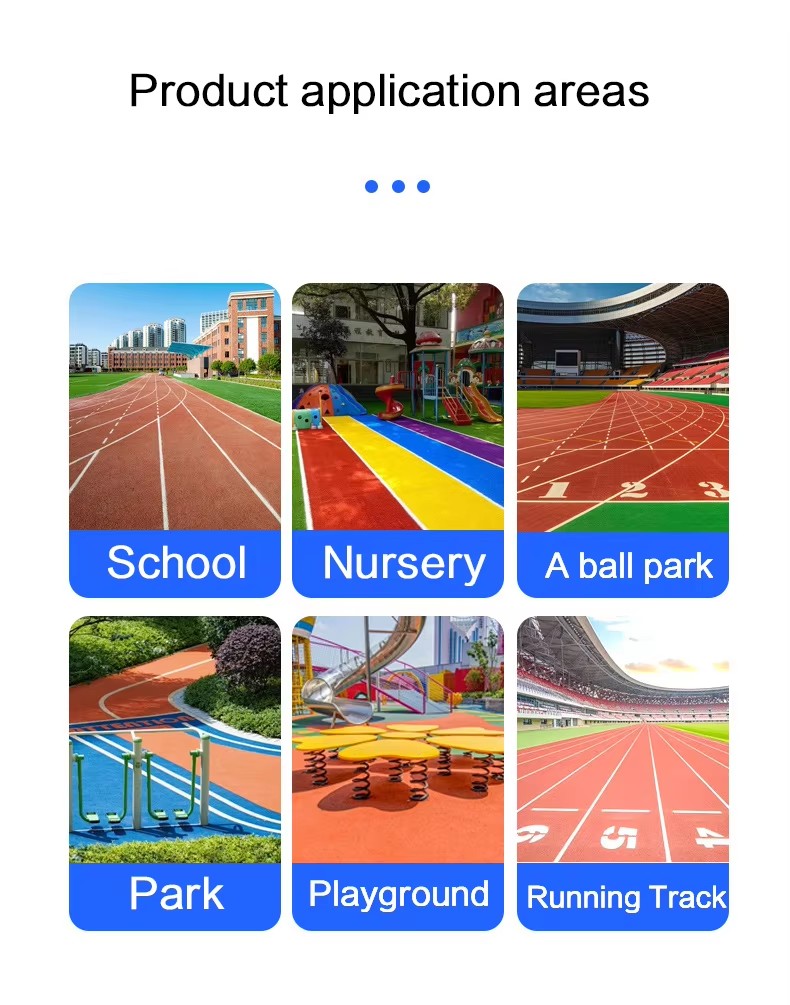
For children's playgrounds, the priority is impact absorption combined with safety and aesthetic appeal. EPDM is the established standard for this application, and our sulfur-free formulation addresses the historical concerns about fading and odor.
The superior elasticity of EPDM provides better fall protection, which is the primary safety function of playground surfacing. Strong binder adhesion prevents loose granules from becoming a choking hazard or causing slips. The odor-free characteristic of sulfur-free EPDM is particularly valuable for school playgrounds and public parks.
TPV can be used in playground applications, but it requires careful binder selection and may not achieve the same level of impact absorption. For projects where color matching is the absolute priority and mechanical demands are minimal, TPV may be considered.
Running Tracks and Athletics Facilities
For competitive running tracks, mechanical performance is paramount. Athletes depend on consistent surface properties for performance and injury prevention. EPDM is the material of choice for professional tracks for good reason.
The higher tensile strength and elasticity of EPDM provide the energy return and consistent traction that athletes require. Temperature stability ensures the track performs the same way in different weather conditions. Strong binder adhesion prevents delamination under the repeated stress of spikes and foot strikes.
TPV is not recommended for competitive or professional athletic facilities. The lower mechanical properties and thermal limitations compromise performance in ways that are unacceptable for serious athletes.
Indoor Facilities and Educational Institutions
For indoor applications, odor is a primary concern. Facilities managers and school administrators understandably resist any material that could affect indoor air quality or create unpleasant odors for students and users.
Our sulfur-free EPDM eliminates this concern completely. The material is odor-free and meets food-grade safety standards. For schools, this means the surface is safe for children who may come into contact with it during play. For indoor sports facilities, it means comfortable air quality for players and spectators.
TPV is also acceptable for indoor applications from an odor perspective. The decision between the two materials in this context depends on the mechanical demands of the application and cost considerations.
Artificial Turf Infill
For artificial turf systems, both EPDM and TPV are viable infill options. EPDM offers a wider range of color options for design customization and has proven durability in sports applications. TPV offers the sustainability advantage of recyclability.
The decision here often comes down to project requirements. If the client has specific sustainability certifications in mind, TPV may be preferred. If color matching is critical or the field will see heavy use, EPDM may be the better choice.

Common Procurement Mistakes and How to Avoid Them
Mistake One: Choosing Based on Price Per Kilogram
This is the most common mistake in sports flooring procurement, and it is also the most costly. TPV often sells for ten to twenty percent less per kilogram than premium EPDM, which makes it appear to be the cost-effective choice.
The problem is that price per kilogram does not account for installation costs, maintenance requirements, or service life. A surface that fails prematurely or requires frequent repairs is not a bargain at any purchase price.
Our sulfur-free EPDM offers service life three times longer than conventional EPDM—and that means much longer than TPV in demanding applications. Stronger binder adhesion reduces maintenance requirements. Superior mechanical properties prevent premature failure. When you calculate total cost of ownership over the full project lifecycle, high-quality EPDM is almost always the better investment.
Mistake Two: Assuming All EPDM Is the Same
This misconception causes more projects to underperform than almost any other factor. The difference between conventional sulfur-vulcanized EPDM and advanced sulfur-free EPDM is not minor—it is fundamental.
Conventional EPDM fades, degrades, and develops odor over time. Our sulfur-free formulation eliminates all of these issues while delivering superior mechanical performance. When you specify EPDM, you must specify the formulation. Without this clarity in the project documents, you may receive conventional EPDM and end up with a surface that does not meet your expectations or your client's requirements.
Mistake Three: Overlooking Binder Compatibility
TPV installations often carry hidden costs that are not apparent in the initial material quote. The non-porous surface requires binders formulated for thermoplastic materials, and in some cases, these binders cost significantly more than standard options.
Additionally, some TPV formulations require protective top coatings to prevent premature fading or to protect the polypropylene matrix from UV degradation. These coatings add material cost and installation labor, and they must be reapplied periodically as part of maintenance.
Mistake Four: Ignoring Sustainability Performance
Sustainability is increasingly important in government procurement and corporate specifications. However, many procurement managers assess sustainability only on recyclability without considering the full lifecycle.
A material that lasts three times longer generates less waste, consumes fewer resources, and requires less manufacturing energy over the project lifecycle. A recyclable material that fails prematurely and must be replaced frequently is not more sustainable. The industry needs to adopt a more sophisticated approach to sustainability assessment.

Why Our Sulfur-Free EPDM Technology Represents a Step Change
After more than twenty-five years in this industry, we have developed a manufacturing process and material formulation that addresses every historical concern about EPDM performance. Our sulfur-free technology delivers:
Complete odor elimination through sulfur-free vulcanization. Without sulfur in the material, there is nothing to decompose into odorous sulfuric compounds under heat or UV exposure. The material remains odor-free throughout its service life.
Three times longer service life through molecular stability. The sulfur-free cross-linking structure is inherently more stable than conventional vulcanization systems. The material resists degradation and retains its properties over a significantly extended timeframe.
Superior mechanical performance with tensile strength of four to seven megapascals. This is two to three times greater than standard EPDM and provides exceptional resilience for demanding applications.
Five times better performance retention under environmental stress. The material maintains its properties longer, which means consistent performance over a longer service life.
Enhanced UV and antioxidant properties. The formulation includes advanced stabilizers that protect against degradation from sunlight and oxidation, keeping surfaces looking and performing better for longer.
Food-grade safety standards. The material meets the strictest international standards for safety, making it suitable for children's play areas and sensitive environments.
Low bulk density with high particle definition. Our manufacturing process produces uniform, well-defined particles that provide excellent coverage and a professional aesthetic finish.
Full customization capability. We can match any color requirement and produce any particle size needed for your specific application.
No minimum order quantity. Whether you need a small sample for testing or a container load for a major project, we can accommodate your requirements.
Complete production control. With our own advanced manufacturing facilities and decades of technical expertise, we control quality at every stage of the production process.
For most professional applications, sulfur-free EPDM offers the optimal combination of mechanical performance, color stability, odor-free characteristics, and total cost of ownership. Our formulation addresses the historical concerns about EPDM while retaining and enhancing its established advantages over TPV.
TPV remains a viable option for specific applications where thermoplastic recyclability is a non-negotiable requirement, or where extreme UV exposure in a low-mechanical-demand setting makes color retention the absolute priority. However, in most cases, sulfur-free EPDM will deliver better performance, longer service life, and lower total cost.
The key insight for specifiers, contractors, and procurement professionals is that the material decision is not simply EPDM versus TPV—it is about understanding what each material can deliver in your specific application context. With the right formulation and a reliable supplier, EPDM can provide color stability that rivals TPV while delivering superior mechanical performance and longer service life.


WOW(LYG) New Material Co Ltd is a manufacturer specializing in the production of EPDM rubber granules. We use sulfur-free vulcanization technology, it increases the service life by more than 3 times than traditional EPDM granules, and enhances the performance, including anti-aging, high-temperature resistance, and colorfastness.
We have over 25 years of production experience and offer customization for colors and granule sizes. NO MOQ.


