 注: 建议图片大小150px*50px
丨
注: 建议图片大小150px*50px Views: 0 Author: Site Editor Publish Time: 2026-08-07 Origin: Site


When designing or renovating a kindergarten playground, the surfacing material you choose is one of the most critical decisions. It directly impacts child safety, the longevity of the play area, and the overall aesthetic of the learning environment. For contractors, engineers, and purchasing managers, selecting the right material involves navigating a complex landscape of technical specifications, safety standards, and supplier credibility.
EPDM for kindergarten applications has become the global gold standard for safety surfacing. EPDM (Ethylene Propylene Diene Monomer) rubber granules are the primary material used in wet pour, poured-in-place (PIP) rubber surfacing systems. Unlike loose-fill materials, these systems create a seamless, resilient surface that offers superior impact absorption and is accessible for wheelchairs and strollers. According to technical specifications, these systems can achieve critical fall height ratings of up to 3.23 meters, significantly reducing the risk of injury from falls—a primary concern in any childcare setting .
As a specialized manufacturer focused exclusively on EPDM colored rubber granules, we understand the technical nuances that separate a high-performance, long-lasting kindergarten surface from one that fails prematurely. This guide is designed to provide you with the professional insights needed to make the right choice for your next project.

What Is EPDM Playground Surfacing?
EPDM playground surfacing, often referred to as "wet pour" or "poured-in-place" rubber, is a seamless system installed onsite. It typically consists of two layers:
1. Base Layer: Usually made of recycled black rubber (SBR) bound with polyurethane resin. This layer provides the bulk of the shock absorption.
2. Wear/Color Layer: Made from premium EPDM rubber granules mixed with a clear or colored PU binder. This top layer provides the vibrant, durable, and UV-resistant finish that comes into contact with children .
The binders, often using a 22% ratio for a 10–15mm application, securely bond the granules while maintaining flexibility, ensuring the surface retains its performance characteristics over time . For a typical 13mm kindergarten surface, a standard installation involves a base layer of approximately 8mm and a top layer of 5mm EPDM granules .
Key Applications in Kindergarten Settings
EPDM for kindergarten is not a one-size-fits-all solution. It can be tailored for various specific applications within the school grounds:
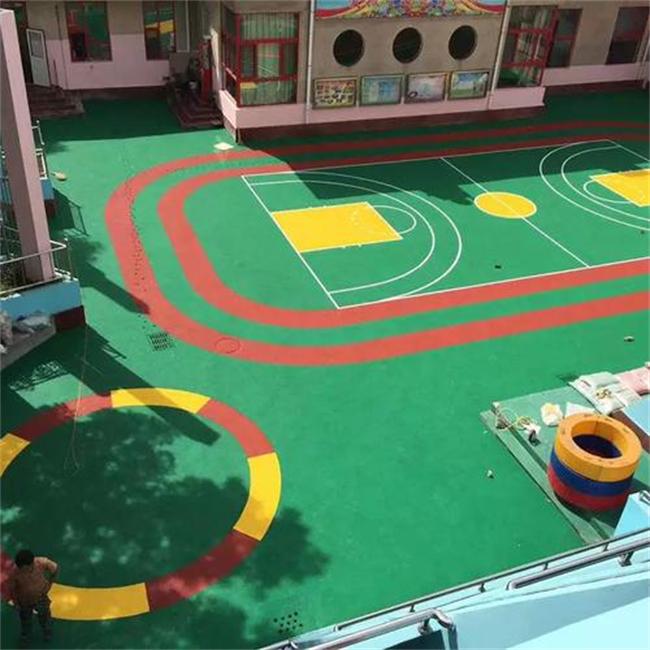
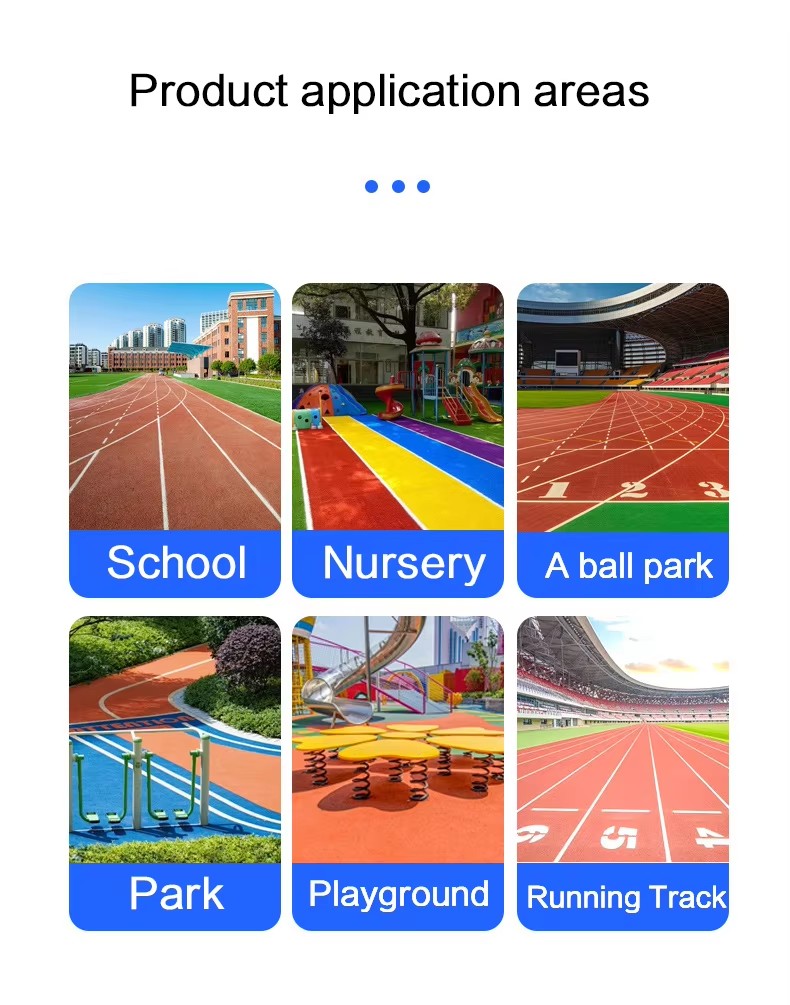
- Play Equipment Zones: Provides critical fall protection beneath swings, slides, and climbing frames. The system’s shock absorption can be engineered to meet specific safety standards like EN1177 .
- Activity Tracks and Pathways: A smooth, slip-resistant surface ideal for tricycles, running, and walking paths, reducing the risk of skidding even when wet .
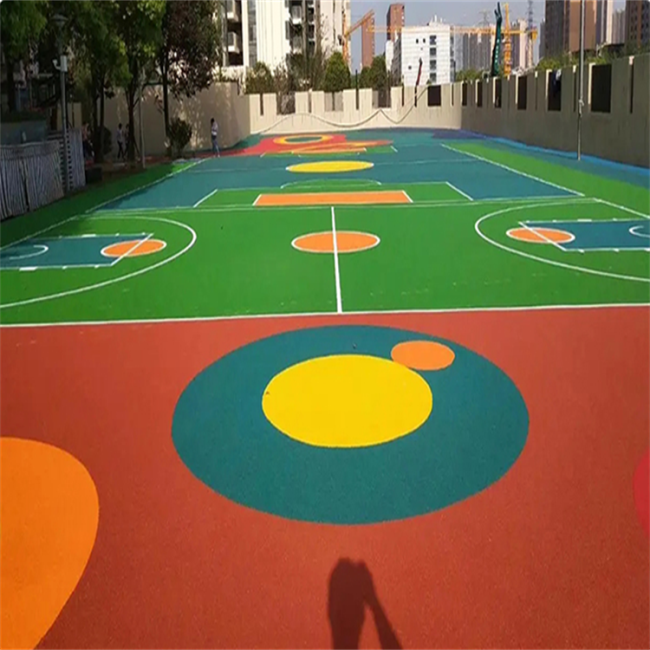
- Multi-Purpose Courts: Creating a safe zone for sports like basketball or simple ball games.
- Themed Play Areas: The material’s flexibility allows for the seamless integration of colorful designs, games like hopscotch, road markings for tricycles, and numbers to create an educational and engaging environment .
Why EPDM Is the Superior Choice for Kindergartens
The selection process often comes down to comparing EPDM with other options like SBR (recycled tire rubber) or TPV. Here’s why a high-quality EPDM surface is the best investment for a kindergarten project.
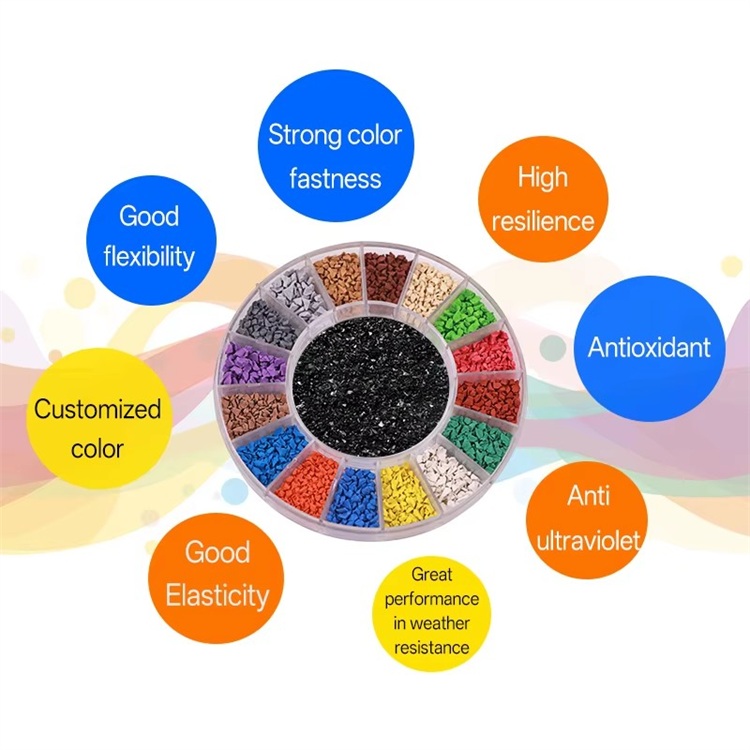
- Safety and Impact Absorption: EPDM surfaces are designed to be soft and resilient, cushioning falls and significantly reducing the risk of serious injuries like fractures or head trauma. A well-designed EPDM system can have a shock absorption of over 35% .
- UV Stability and Color Longevity: Traditional SBR granules are prone to fading and oxidation over time due to UV exposure. Premium EPDM granules contain a higher polymer content, providing inherent UV resistance. This keeps the playground vibrant and appealing for years, a key consideration for architects focused on the aesthetic quality of the learning environment .
- Durability and Weather Resistance: EPDM is engineered to withstand extreme weather conditions, from the intense heat of the Middle East to the freezing winters of North America and Canada. Its resistance to ozone, oxidation, and general weathering ensures the surface maintains its physical properties—remaining elastic, not hard and brittle—for years .
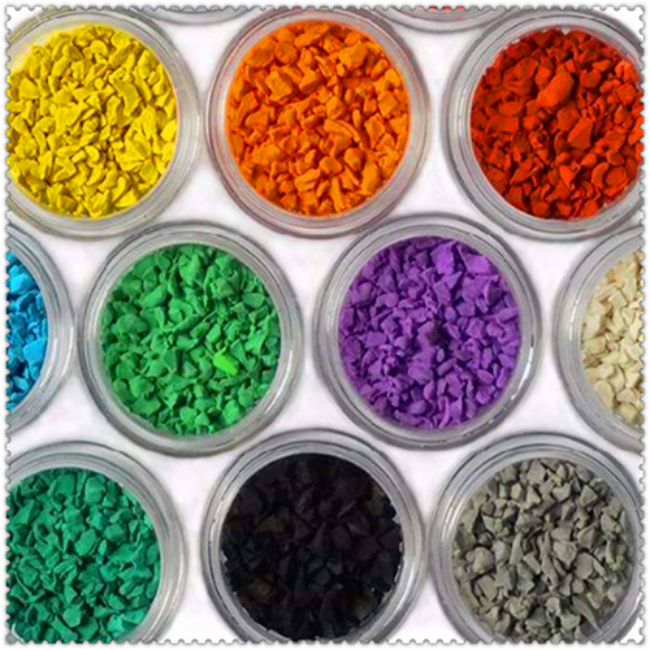
- Design Versatility: EPDM granules are available in a vast palette of colors, including custom RAL and Pantone options. This allows for limitless design creativity, enabling the creation of specific zones, logos, and educational patterns that distinguish a standard playground from a world-class early childhood facility .
Common Challenges in Kindergarten EPDM Projects
Even with the best materials, projects can fail due to common mistakes. Being aware of these challenges is the first step in avoiding them.
1. Fading and Color Inconsistency
One of the most common complaints is a playground losing its vibrant color after just one season. This often occurs when lower-cost granules with a low polymer content or recycled content are used. These granules cannot withstand UV radiation, leading to rapid pigment breakdown .
2. Poor Binder Adhesion
If the binder ratio is incorrect or the granules are incompatible with the chosen PU system, the surface can become "dusty" or start to delaminate. This creates a poor texture and compromises the structural integrity of the surface .
3. Incorrect Thickness for Safety Compliance
To meet critical fall height (CFH) standards, a certain thickness is required. Many contractors try to cut costs by reducing the layer thickness, which can lead to a surface that fails safety inspections and poses a risk to children. The required thickness is directly related to the critical fall height standard, such as EN1177 .
4. Inconsistent Appearance and Texture
Project delays and a poor final appearance often result from not adhering to strict installation guidelines, such as temperature control or curing times. A rushed job can lead to a messy, uneven surface .
How to Choose the Right EPDM Granules for a Kindergarten
For a contractor or purchasing manager, choosing the right product is about balancing cost, performance, and safety. Here is a professional checklist to guide your decision.
1. Granule Size and Grit
The size of the EPDM chips impacts the final texture and performance. For a kindergarten, the two most common sizes are:
- 2–4mm: The most robust and standard choice for the main play area. It provides a textured, slip-resistant surface that is durable enough for heavy foot traffic from children and adults .
- 1–3mm: This finer grade is excellent for creating smooth surfaces on pathways, quiet zones, or for achieving sharp outlines in logos and designs .
2. EPDM Content
This is the most critical technical specification. The polymer content directly correlates with the granule's performance and longevity. Look for products with a high EPDM content, ideally above 20%, to guarantee elasticity and UV resistance . High-quality granules will have a precise gradation to ensure a smooth finish and low dust content for better binder adhesion .
3. Color Selection and Stability
While aesthetics are important, function should not be sacrificed. Pastel colors and bright yellows or whites often show signs of fading more quickly than earth tones or darker shades if not formulated with high-grade pigments. Always request a sample of the specific color you plan to use and test its color stability .
4. Certifications and Test Reports
Before purchasing, insist on seeing test reports and certifications. Key standards to look for include:
- EN1177: The European standard for impact attenuation of playground surfacing .
- EN 12230: For tensile strength and elongation (often requiring ≥4 MPa) .
- ISO 7619-1: For Shore A hardness.
- Material Safety: Ensure compliance with environmental standards like ROHS or REACH, and that the material is certified non-toxic and suitable for children .
5. Selecting a Reliable Manufacturer
Beyond the product specifications, the manufacturer’s reliability is paramount. Look for a partner with global export experience, a proven track record of quality control, and the flexibility to accommodate your project’s specific needs, such as custom color matching or packaging.
Manufacturer Insights: A 20-Year Industry Perspective
As a manufacturer specializing in EPDM granules, we understand the concerns that keep project managers and importers up at night. Here is our professional advice:
- Focus on Material, Not Just Price: The cheapest granules are often a mix of low-grade EPDM and high volumes of calcium powder or recycled SBR. This leads to poor performance, high failure rates on site, and a damaged reputation. The up-front cost savings are negligible compared to the cost of a failed project. The "No Sulfur" technology used in modern high-quality EPDM eliminates odors and dramatically increases weather resistance and lifespan .
- Insist on Pre-Shipment Samples: Before committing to a large order for a school or kindergarten, you must approve a physical sample. Check the color accuracy, the shape of the granules (which should be angular to lock together), and confirm it matches the TDS (Technical Data Sheet). Our low-density, angular granules with good "loose bulk density" provide better coverage and a more robust structure.
- Confirm Technical Support: Does your supplier provide a detailed TDS and MSDS? Can they offer guidance on PU binder compatibility based on their material? A partnership with a knowledgeable manufacturer can prevent costly installation errors. If you are an OEM buyer or importer, a supplier offering flexible MOQs and private-label capabilities is a significant advantage.

Why Global Buyers Choose Our EPDM Granules for Kindergarten Projects
Our company is a specialized manufacturer and exporter of colored EPDM rubber granules, and we have been serving the global market for over 25 years. Unlike generalist surfacing companies, we are entirely focused on the production of EPDM materials. This singular focus means we have mastered every aspect of the granule manufacturing process, from polymer compounding to granule sizing and color matching.
Our production process utilizes advanced, sulfur-free technology. This results in a highly stable molecule that is fundamentally resistant to degradation from UV light and heat. This is why our granules are:
- Odorless: The sulfur-free compound does not decompose under high temperatures, eliminating the unpleasant "rubber smell" often associated with recycled or low-grade materials.
- Exceptionally Durable: We have enhanced the tensile strength (up to 4–7 MPa) and elasticity of our granules by 2-3 times, leading to a surface that lasts three times longer than standard alternatives.
- Vibrant for Longer: Our sulfur-free formulation is five times better at retaining its original color, ensuring the kindergarten playground remains aesthetically pleasing for years.
We offer full customization to meet the diverse requirements of international clients:
- Color Customization: We offer precise color matching services, including Pantone and RAL codes, or you can send us your own physical sample.
- Size Flexibility: Need a specific size, like 0.5-1.5mm for a detailed pattern? We can produce it. We have all the standard sizes covered, including 1-3mm, 2-4mm, and other special specifications.
- Low MOQ: We understand the needs of international importers and local contractors alike. We offer low minimum order quantities and flexible packaging options, including whole containers or LCL (Less than Container Load), to help you manage project costs without tying up capital in large inventory.
Our decade-plus of experience exporting to Europe, North America, Australia, and the Middle East means we understand the logistics, documentation, and quality standards required for successful international projects.

Frequently Asked Questions (FAQ)
Q: What is the best EPDM granule size for a kindergarten playground?
A: For the main playing surface, 2–4mm granules are the industry standard, providing an excellent balance of durability, impact absorption, and slip resistance. For finer details, pathways, or logos, 1–3mm is a better choice .
Q: Can EPDM rubber surfaces fade in the sun?
A: Low-quality EPDM granules will fade and chalk. However, high-quality granules with a high polymer content are formulated with UV-stable pigments and will maintain their color for many years. The best materials can significantly outperform standard products in this regard .
Q: What certifications should I look for when buying EPDM for a kindergarten?
A: The most critical certification is EN1177, which measures impact attenuation and ensures the surface can prevent serious injury from falls. Additionally, request test reports for tensile strength (EN 12230) and material safety (e.g., REACH, ROHS) .
Q: Do you provide free samples before I place an order?
A: Yes, we understand the importance of physical verification. We can provide free material samples for you to assess the color, quality, and texture of our EPDM granules before you commit to a bulk order.
Q: Can you customize the color of the EPDM granules?
A: Yes, we have a full R&D department dedicated to color matching. We can produce EPDM granules to match any Pantone or RAL color code, or we can develop a custom color based on your physical sample.
Q: What is the recommended thickness for kindergarten EPDM surfaces?
A: While it depends on the specific critical fall height (CFH) requirements, a standard kindergarten surface is often 10–15mm thick. A typical configuration is an 8mm base layer and a 5mm EPDM wear layer . Always consult a safety standard expert for your specific needs.
Q: Are EPDM granules environmentally friendly and safe for children?
A: Yes, premium EPDM granules are non-toxic and can meet stringent safety standards. Many are odorless and can even be formulated to meet food-grade safety standards. Avoid materials with high sulfur content, which can release harmful gases and create unpleasant odors .

Selecting the right EPDM for kindergarten projects is a decision that significantly impacts the safety, longevity, and visual appeal of the play environment. By understanding the technical specifications—from granule size and polymer content to safety certifications—you can ensure a successful installation that meets the needs of children, educators, and facility managers.
As a specialized manufacturer with decades of experience, we are not just a supplier; we are a partner dedicated to providing the highest quality materials and the expert support needed to bring your vision to life. We encourage you to request a sample, discuss your color specifications, and explore how our advanced manufacturing capabilities can elevate your next kindergarten project.

WOW(LYG) New Material Co Ltd is a manufacturer specializing in the production of EPDM rubber granules. We use sulfur-free vulcanization technology, it increases the service life by more than 3 times than traditional EPDM granules, and enhances the performance, including anti-aging, high-temperature resistance, and colorfastness.
We have over 25 years of production experience and offer customization for colors and granule sizes. NO MOQ.


