 注: 建议图片大小150px*50px
丨
注: 建议图片大小150px*50px Views: 0 Author: Site Editor Publish Time: 2026-08-05 Origin: Site


When specifying surfacing materials for playgrounds, running tracks, or recreational areas, contractors and engineers face a critical decision that impacts safety, durability, and long-term project costs. Among the available options, green EPDM rubber granules have emerged as the industry standard for high-performance, visually appealing, and long-lasting surfaces. But not all EPDM granules are created equal.
This guide provides technical insights, procurement strategies, and quality assessment criteria drawn from manufacturing experience. Whether you are specifying materials for a municipal playground, a school running track, or a commercial recreation project, understanding what lies beneath the surface is essential for making informed decisions that protect your investment and reputation.

What Are Green EPDM Rubber Granules?
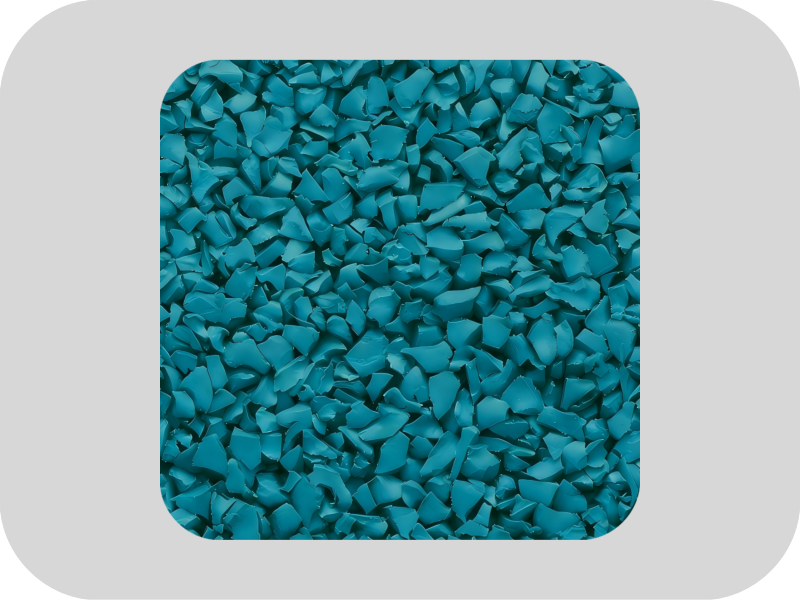
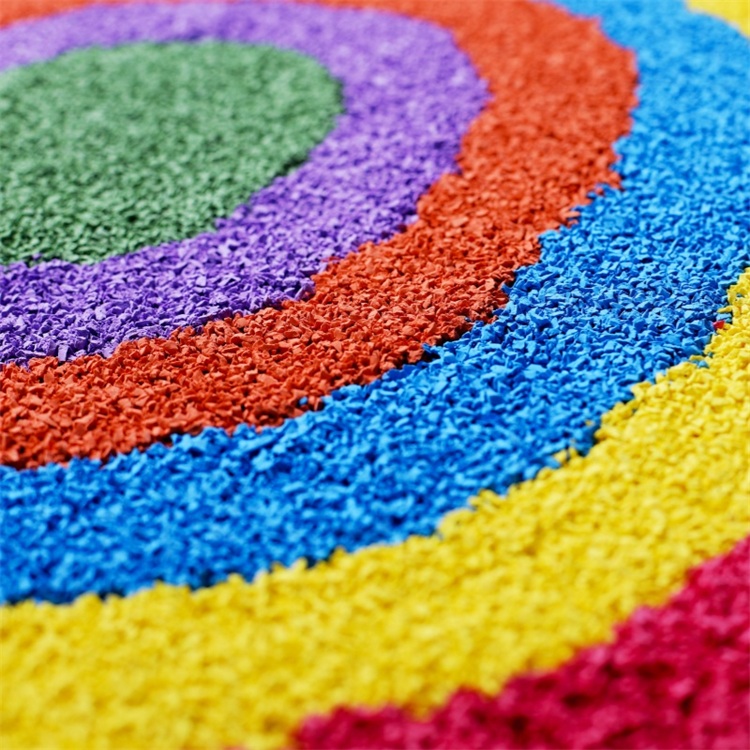
EPDM (Ethylene Propylene Diene Monomer) is a high-performance synthetic rubber known for exceptional durability, weather resistance, and color stability. Green EPDM rubber granules are precision-engineered granules produced by compounding virgin EPDM polymer with high-quality pigments, fillers, and processing aids before vulcanization .
Unlike SBR (Styrene-Butadiene Rubber) granules, which are typically manufactured from recycled tire rubber, EPDM granules are produced from virgin materials. This distinction has profound implications for performance, safety, and longevity .
How EPDM Granules Are Manufactured
The production process begins with compounding EPDM polymer with pigments, calcium carbonate, and rubber processing oils . This mixture is then vulcanized through a curing process that creates a cross-linked molecular structure. The resulting rubber sheet is cryogenically ground and sieved to achieve specific granule size distributions.
A significant technical differentiator is the vulcanization system used. Conventional EPDM granules utilize sulfur-based vulcanization. However, advanced manufacturers employ sulfur-free, peroxide-cured technology. This approach eliminates sulfur from the compound, producing granules that do not release sulfuric acid under UV exposure—a primary cause of unpleasant odors and premature degradation .
Applications of Green EPDM Rubber Granules
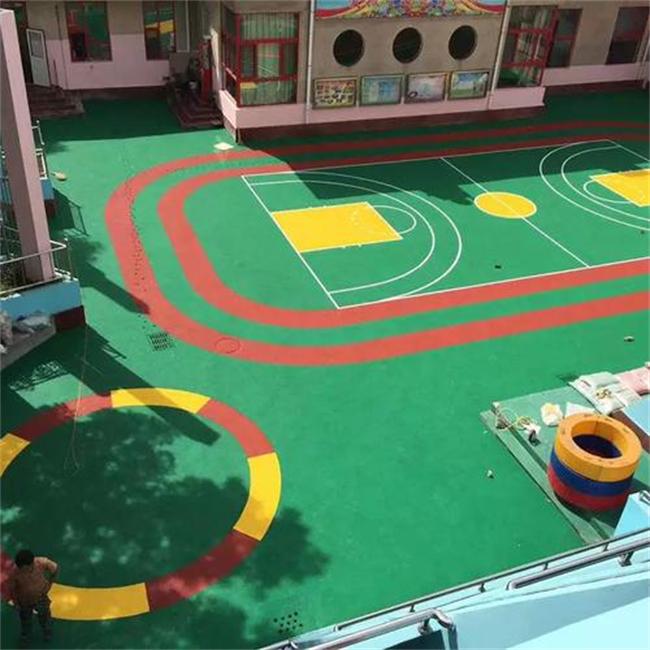
Green EPDM granules are versatile materials suitable for diverse applications:
- Wet Pour Playground Surfacing: Impact-absorbing safety surfaces for children's play areas
- Poured-in-Place (PIP) Rubber Systems: Seamless, porous surfacing requiring on-site installation
- Running Track Wearing Courses: Top-layer surfacing for athletic tracks with critical traction and performance requirements
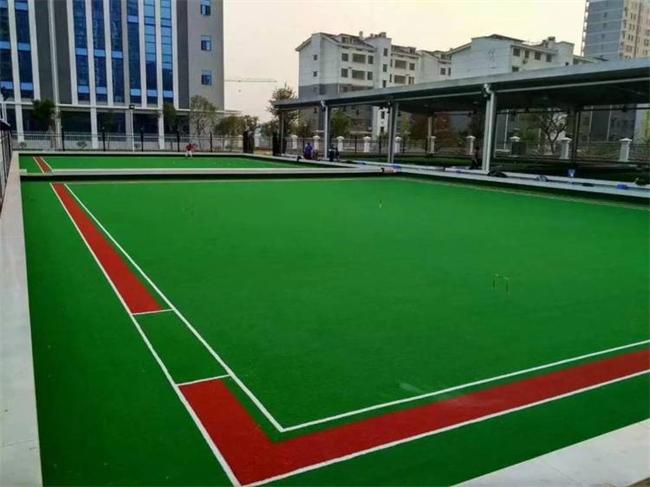
- Sports Court Surfacing: Multi-use games areas, tennis courts, and basketball courts
- Splash Pads and Water Parks: Slip-resistant surfacing in wet environments
- Walking Paths and Recreational Trails: Aesthetic and durable pedestrian surfaces
- Landscape and Amenity Areas: Decorative surfacing for parks and public spaces
Green is among the most widely specified colors due to its association with natural landscapes, visual harmony with outdoor environments, and minimal UV fading visibility.
Benefits of Specifying EPDM Over SBR
The choice between EPDM and SBR granules has significant technical and commercial implications.
Durability and Service Life
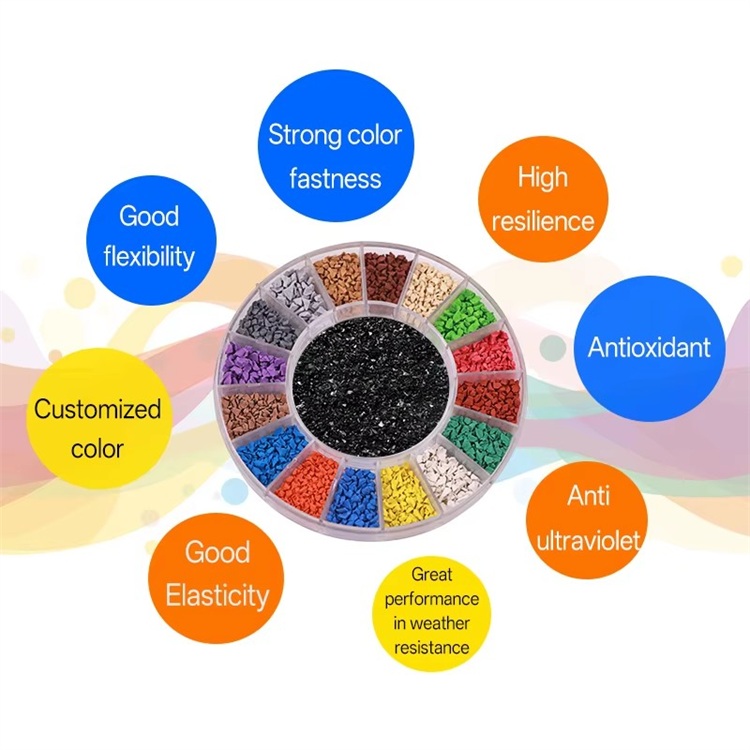
EPDM's saturated polymer backbone provides inherent resistance to oxidation, ozone, and UV radiation—the primary degradation mechanisms affecting rubber materials in outdoor applications. High-quality EPDM granules maintain physical properties and appearance for 8-10 years or more under normal weather conditions .
SBR granules, being recycled rubber, undergo significant property degradation over time. The material becomes brittle, surface chalking occurs, and color loss is unavoidable.
Color Stability
EPDM granules are colored throughout the granule matrix using inorganic pigments with excellent UV stability. The color remains integral to the granule and resists fading even under prolonged sun exposure . Green shades, in particular, maintain their appearance when formulated with appropriate pigment systems.
SBR granules are typically black and cannot be produced in vibrant colors. Colored coatings applied to SBR surfaces eventually wear or chip away.
Safety and Environmental Compliance
Virgin EPDM granules from reputable manufacturers are non-toxic, heavy metal-free, and comply with stringent safety standards including EN71-3 for toy safety and REACH regulations . Sulfur-free formulations further enhance environmental credentials by eliminating volatile sulfur compounds.
SBR granules may contain contaminants from their tire origins, including heavy metals, polycyclic aromatic hydrocarbons (PAHs), and other substances of concern.
Performance Characteristics
EPDM granules maintain elasticity and shock absorption properties across a wide temperature range, from -50°C to high summer temperatures . This consistent performance is critical for safety surfacing applications where impact attenuation must remain predictable.

Common Challenges with EPDM Surfacing
Understanding potential issues helps specifiers and contractors avoid costly problems.
Color Inconsistency
Variation in pigment dispersion or pigment quality between batches produces visible color differences in installed surfaces. This is particularly problematic for green shades where even slight variations are noticeable.
Solution: Specify suppliers using automated pigment dosing systems with batch-to-batch color control, supported by spectrophotometric measurement and color tolerance specifications. Request color samples from the actual production batch prior to final order.
Premature Fading
Green pigments are susceptible to UV degradation when lower-quality or organic pigments are used. Inadequate UV stabilization leads to visible fading within 12-18 months of installation.
Solution: Verify that the supplier uses high-grade inorganic pigments with proven UV stability. Request independent test data demonstrating color fastness to international standards.
Surface Chalking and Dusting
Degradation of the rubber surface through oxidation produces a powdery residue—a sign of inadequate antioxidant protection or low EPDM polymer content.
Solution: Insist on EPDM polymer content exceeding 20% . Lower polymer content indicates excessive filler loading, accelerating surface degradation.
Odor Issues
Sulfur-cured EPDM granules release sulfuric acid compounds when exposed to heat and UV. This produces unpleasant odors, particularly in warm weather.
Solution: Specify sulfur-free, peroxide-cured EPDM granules. These products eliminate the sulfur source and maintain stability without odor generation.

How to Choose the Right Green EPDM Rubber Granules
granule Size Selection
The appropriate granule size depends on application requirements:
- 0.5-1.5 mm: Fine texture suitable for thin wearing courses, splash pads, and areas requiring smoother finish
- 1-3 mm: Standard size for playground safety surfacing and wet-pour applications
- 2-4 mm: Coarser granules for running tracks and sports surfaces requiring greater traction and drainage
- 3-5 mm: Infill applications for artificial turf systems
EPDM Polymer Content
Higher polymer content directly correlates with durability, elasticity, and resistance to aging. Industry standards typically require minimum 20% EPDM content for quality applications . Premium products may contain 25-35% polymer.
Bulk Density
Lower bulk density—typically 650-750 kg/m³—indicates better coverage efficiency, reducing material consumption for a given project area . This factor has a direct impact on project material costs.
Tensile Strength and Elongation
These parameters provide objective measures of mechanical performance. Tensile strength exceeding 4.0 MPa and elongation at break exceeding 500% indicate robust material properties .

Technical Specifications and Quality Parameters
When reviewing technical data sheets (TDS) and certificates of analysis (COA), focus on these critical quality indicators:
EPDM Polymer Content: Quality specifications require minimum 20% EPDM content, with premium products reaching 25-35%. This parameter, verified through FTIR and TGA testing, directly determines durability and aging resistance.
Tensile Strength: Values exceeding 4.0 MPa when tested according to ASTM D412 indicate robust material integrity capable of withstanding mechanical stress during installation and service.
Elongation at Break: Measurements above 500% demonstrate sufficient flexibility to accommodate substrate movement and temperature-induced expansion without cracking.
Bulk Density: Ranging from 650 to 750 kg/m³ per ASTM D6851, lower values indicate superior coverage efficiency and reduced material consumption per square meter.
Hardness: Shore A values between 55 and 65 provide optimal balance of impact absorption and structural integrity.
Compression Set: Values not exceeding 15% per ASTM D395 indicate excellent recovery properties after loading—critical for safety surfacing where impact attenuation must be maintained.
Color Fastness: Gray scale ratings of 3-5 per ISO 105 confirm resistance to fading under UV exposure.

Manufacturer Insights
With over two decades of EPDM manufacturing experience, we offer these practical observations:
Selecting the Correct granule Size
Contractors frequently choose sizes based on familiarity rather than technical suitability. For playground safety surfaces requiring 40-60 mm total thickness, 1-3 mm granules provide an optimal balance of aesthetics and impact absorption. For splash pads where slip resistance and water drainage are priorities, finer 0.5-1.5 mm granules produce a smoother, more comfortable surface underfoot.

Managing Procurement Risks
The most common procurement failures involve:
Unverified Quality Claims: Request production samples and independent test reports before committing to large orders. A reputable manufacturer should readily provide TDS, MSDS, COA, and SGS test reports.
Inconsistent Supply: Some manufacturers maintain limited production capacity, creating delivery risks for larger projects. Verify production capabilities and request references for similar project scales.
Hidden Logistics Costs: Packaging configurations significantly affect shipping costs. Optimize packing density by specifying palletized, shrink-wrapped units that maximize container utilization.
Understanding the "Cost-Quality Trade-off"
Lower-priced granules typically contain reduced EPDM polymer content and lower-cost pigments. The apparent savings are often negated by shorter service life, higher maintenance costs, and potential replacement expenses that far exceed the initial material savings.
Sustainability Considerations
Forward-thinking specifiers increasingly prioritize environmental credentials. Sulfur-free EPDM granules manufactured from virgin materials offer a "cleaner" product with extended service life, reducing environmental impact through longevity rather than relying solely on recycled content claims.

Why Global Buyers Choose Our EPDM Granules
As a specialized EPDM manufacturer with over 25 years of continuous production experience, we focus exclusively on EPDM rubber granules—not on finished surfacing or track installation. This specialization allows us to maintain rigorous quality control and continuous process refinement.
Manufacturing Excellence: Our production facilities utilize advanced, sulfur-free, peroxide-cured technology. This approach yields granules with exceptional UV stability, thermal resistance, and extended service life compared to conventional sulfur-cured products .
Quality Assurance: Every batch undergoes comprehensive testing for physical properties, color consistency, and compliance with international standards. We provide complete documentation including TDS, MSDS, COA, and SGS test reports.
Customization Capabilities: We support full customization of:
- granule size from 0.5 mm to 5.0 mm
- Any RAL or Pantone color match
- OEM and private label packaging
- Flexible packaging configurations
- Container load or LCL shipping
Global Experience: Our products are supplied to projects across Europe, North America, Australia, the Middle East, and other international markets. We understand the documentation, certification, and logistical requirements for successful export.
No MOQ: We welcome orders of all sizes, from sample quantities to full container loads, providing flexibility for both trial orders and large-scale projects.

FAQ
Q1: What is the difference between EPDM and SBR rubber granules?
EPDM is a virgin synthetic rubber offering superior UV resistance, color stability, and durability. It is used for visible wearing courses. SBR is recycled tire rubber, suitable for lower layers where aesthetics are less important, but it has limited color options and will fade over time .
Q2: How long does green EPDM maintain its color?
With quality UV-stable pigments, green EPDM granules retain color for 8 years or more under normal weather conditions. Some gradual fading may occur after this period, particularly in areas with extreme sun exposure .
Q3: What granule size should I choose for a playground project?
For standard playground wet-pour surfacing, 1-3 mm granules provide optimal performance. For thinner wearing courses or splash pads, consider 0.5-1.5 mm for a smoother finish. For running tracks, 2-4 mm granules offer enhanced traction.
Q4: How much PU binder is required with EPDM granules?
Typically, binder content ranges from 12% to 18% by weight, depending on granule size, desired porosity, and application requirements. The precise ratio is determined by conducting small test batches before full application.
Q5: Can green EPDM granules fade or chalk over time?
Fading and chalking indicate inadequate UV stabilization or low polymer content. Quality products with sufficient EPDM content (≥20%) and proper pigment systems resist these degradation mechanisms for extended periods .
Q6: Do you provide TDS, MSDS, and COA?
Yes, we provide complete documentation including Technical Data Sheets, Material Safety Data Sheets, Certificates of Analysis, and SGS test reports with every shipment. Certification is verified before production commences.
Q7: Can you customize colors to match specific requirements?
Yes, we support customization to any RAL or Pantone color specification. We also offer color matching from customer-provided samples. Color uniformity is maintained through automated production control.
Q8: What is the typical shelf life of EPDM granules?
When stored in a dry, cool environment with protection from direct sunlight, EPDM granules have an indefinite shelf life. However, for optimal processing, we recommend use within 24 months of production.
Q9: Do you support OEM and private label packaging?
Yes, we provide full OEM and private label services including custom packaging, branding, and labeling. Minimum quantities are flexible and negotiable.
Q10: What quality certifications are available?
Our products meet international standards including EN71-3, REACH, RoHS, and relevant ASTM specifications. We can provide SGS testing and other third-party certifications upon request.
Green EPDM rubber granules represent an investment in safety, aesthetics, and longevity. Understanding the technical distinctions between product types—particularly the differences between sulfur-cured and sulfur-free formulations—enables specifiers and contractors to make decisions that protect project outcomes.
When evaluating suppliers, look beyond price to consider manufacturing capability, quality control systems, customization flexibility, and export experience. The most successful projects are built on materials that are specified correctly, produced consistently, and delivered reliably.
Our specialization in EPDM granules, combined with sulfur-free manufacturing technology and comprehensive customization support, positions us to meet the requirements of demanding international projects. We invite contractors, engineers, and procurement professionals to contact us for samples, technical documentation, and project-specific consultation.
WOW(LYG) New Material Co Ltd is a manufacturer specializing in the production of EPDM rubber granules. We use sulfur-free vulcanization technology, it increases the service life by more than 3 times than traditional EPDM granules, and enhances the performance, including anti-aging, high-temperature resistance, and colorfastness.
We have over 25 years of production experience and offer customization for colors and granule sizes. NO MOQ.


