 注: 建议图片大小150px*50px
丨
注: 建议图片大小150px*50px Views: 0 Author: Site Editor Publish Time: 2026-07-21 Origin: Site


Why Your EPDM Wet Pour Project Keeps Failing
You've specified EPDM granules for wet pour surfacing on a playground project. Six months after installation, the vibrant red has faded to a dull pink. The surface is starting to crack. And the client is demanding answers.
This scenario plays out daily across the industry. The problem isn't EPDM itself—it's that most buyers and contractors don't understand what separates high-performance granules from budget-grade materials that fail prematurely.
This guide addresses what procurement managers, contractors, and specifiers actually need to know: how to select EPDM granules that stay vibrant, bond properly, and last for years rather than months. We're not just describing the product; we're solving the specific problems that cost this industry millions annually in repairs and replacements.

What Are EPDM Granules for Wet Pour Surfacing?
EPDM (Ethylene Propylene Diene Monomer) is a synthetic rubber compound that, when processed into granules and mixed with a polyurethane binder, creates a seamless, resilient surface installed directly on-site. The "wet pour" method involves mixing granules with liquid binder on location and troweling the mixture to the specified depth .
A properly specified wet pour system consists of two layers:
- A base layer of recycled SBR (Styrene-Butadiene Rubber) for cushioning and cost efficiency
- A top wearing course of virgin or high-quality EPDM granules for color, UV resistance, and durability
The EPDM wearing course is typically applied at a thickness of 10–15mm, depending on the required critical fall height (CFH) rating. Playground surfaces can achieve fall height protection of up to 3.23 meters with proper depth specification .
Industry standard tensile strength for EPDM wet pour surfaces is 4 MPa with elongation at break of 400%, measured per EN 12230 . Shore A hardness typically falls between 62 and 67 .

The 7 Biggest Problems with EPDM Wet Pour Surfacing—and How to Solve Them
Problem 1: UV Degradation and Fading
The Reality: Within 6–18 months of installation, many EPDM surfaces show visible fading. Brighter colors—purple, bright yellow, pillar box red, orange, and blue—are particularly susceptible . UV radiation attacks the synthetic polymer chains, breaking down the molecular structure and causing color loss.
Why It Happens: Most EPDM granules contain sulfur-based curing agents. Under UV exposure and heat, these sulfur compounds degrade and release sulfates, which not only create odor but also accelerate molecular breakdown. The result is fading that makes playgrounds look aged and neglected within a single season.
The Solution: Sulfur-free EPDM technology eliminates this fundamental weakness. Without sulfur in the molecular structure, UV exposure doesn't trigger the same degradation pathway. The molecular chains remain stable, and color retention improves dramatically. Independent testing shows that sulfur-free formulations maintain color stability far beyond standard requirements, with some variants exceeding 5,000 hours of UVA exposure while still meeting performance benchmarks .
What This Means for You: Projects using sulfur-free EPDM maintain their specified colors for years rather than months. For municipalities and schools concerned about public perception and long-term maintenance budgets, this is a critical specification point.
Problem 2: Unpleasant Odors in Heat
The Reality: Walk onto any EPDM playground on a hot summer day, and you might notice a distinct rubbery odor. In poorly ventilated indoor sports facilities, the smell can be overwhelming and even trigger complaints.
Why It Happens: Traditional EPDM formulations use sulfur cross-linking agents. When temperatures rise and UV exposure increases, these sulfur compounds break down and release sulfuric acid derivatives. The gases emitted carry that characteristic "burnt rubber" smell.
The Solution: EPDM manufactured without sulfur contains no sulfur compounds to degrade. Under heat and UV exposure, there's no sulfate release—meaning no odor. This is particularly important for:
- Indoor sports facilities with limited ventilation
- Schools where children spend extended periods on the surface
- Enclosed playgrounds in shopping centers and commercial spaces
- Projects in hot climates where surface temperatures regularly exceed 50°C
Problem 3: Short Lifespan and Accelerated Wear
The Reality: Many EPDM surfaces need replacement or major repair within 3–5 years of installation. The top layer becomes brittle, granules loosen, and cracks appear—particularly in high-traffic zones under swings and slides.
Why It Happens: Traditional EPDM's molecular structure degrades under UV, temperature cycling, and mechanical stress. As the polymer chains break down, the material loses elasticity. Granules that were once securely bound by polyurethane binder become loose. Cracks develop where the binder can no longer flex with temperature changes.
The Solution: Sulfur-free EPDM offers molecular stability that translates directly to longevity. The stable polymer chains resist the breakdown mechanisms that cause traditional EPDM to fail. Performance metrics show:
- Tensile strength increases to 4–7 MPa (versus standard 4 MPa)
- Elasticity and tensile properties improve 2–3 times over standard formulations
- Performance retention improves more than 5 times
In practical terms, this means a sulfur-free EPDM surface from a quality supplier maintains its physical integrity for more than a decade of active use, reducing lifecycle costs by 30–50%.
Problem 4: Poor Resin Adhesion and Granule Shedding
The Reality: Within months of installation, granules begin to shed from the surface. The rubber becomes visible on shoes, clothing, and surrounding areas. The surface texture becomes inconsistent, affecting both appearance and slip resistance.
Why It Happens: The bond between the EPDM granule and the polyurethane binder depends on surface cleanliness and granule geometry. Smooth, rounded granules provide less surface area for mechanical and chemical bonding. Poorly manufactured granules may contain surface contaminants that prevent proper binder adhesion .
The Solution: Granules with angular particles—sharp corners and irregular shapes—provide significantly more surface area for binder attachment. This mechanical keying, combined with chemical bonding, creates a much stronger composite material.
Beyond Geometry: High-quality EPDM granules are processed to ensure clean, contaminant-free surfaces before any binder is applied. Dust, oils, and processing residues are removed, allowing the polyurethane binder to form a strong chemical bond with the granule surface .
Problem 5: Binder Yellowing and Color Distortion
The Reality: The EPDM granules you specified may be the perfect color, but the finished surface appears discolored—often taking on a yellow or brown tint that masks the intended shade.
Why It Happens: Polyurethane binders come in two types: aromatic and aliphatic. Aromatic binders are not UV-stable. When exposed to sunlight, they undergo yellowing that affects the overall appearance of the surface . This yellowing effect is particularly visible with light colors and pastel shades.
The Solution: Match the binder type to both the EPDM color and the application environment:
- Aromatic binders work acceptably with dark, earthy colors (brown, dark green, dark grey) where yellowing is less visible
- Aliphatic binders are essential for bright, light, or pastel colors where any color shift would be unacceptable
For critical projects where color integrity is paramount, UV-stable aliphatic binders should be specified regardless of granule color. The additional cost is minimal compared to the risk of a failed color specification.
Problem 6: Installation Difficulties and Thickness Inconsistencies
The Reality: Wet pour surfaces are installed on-site, and the quality of the finished product depends heavily on the installation team's skill. Uneven thickness, poor drainage leading to water pooling, and inconsistent troweling create safety hazards and premature failure .
The Challenge: Standard EPDM granules have variable density and irregular flow characteristics. Achieving consistent thickness across large areas requires significant skill. The working time with mixed materials is limited—typically 30 minutes before the binder begins to cure .
The Solution: Lower-density EPDM granules with consistent particle geometry flow more smoothly during troweling. The reduced density means:
- Better coverage per kilogram of material
- Easier leveling and consistent thickness
- Less compaction required during installation
- More uniform appearance across large areas
For contractors, this translates to faster installation, fewer errors, and higher client satisfaction. The installation guide from industry sources emphasizes that consistent granule quality is essential for achieving professional results .
Problem 7: Quality Inconsistency Between Batches
The Reality: You order EPDM granules for a large project, and the material arrives in multiple shipments. The color doesn't quite match between pallets. The particle size varies. Some batches perform differently with the same binder.
The Challenge: Many EPDM producers rely on inconsistent raw material sources, variable production methods, and minimal quality control. When projects require multiple batches, the differences become visible—and unacceptable.
The Solution: Suppliers with full production control and rigorous quality systems deliver batch-to-batch consistency. When you specify from a manufacturer with:
- Comprehensive in-line production control
- Consistent raw material sourcing
- Documented quality testing for each batch
- Over 25 years of manufacturing experience
The result is material that behaves predictably, installs consistently, and delivers the performance you specified—across every shipment.
Why More Projects Are Specifying EPDM Granules
Despite these challenges, EPDM wet pour surfacing continues to gain market share. Why?
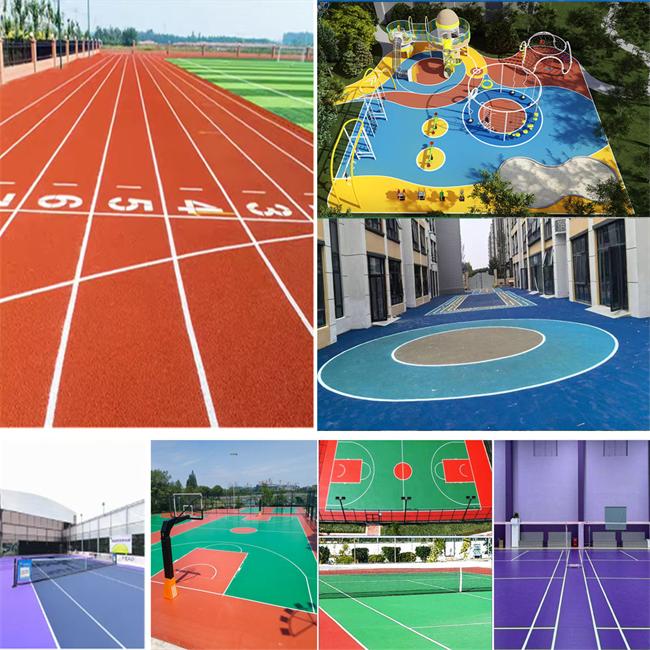
1. Safety Certification: Wet pour EPDM can achieve critical fall height ratings that other surfaces cannot match. In playground applications, this compliance with safety standards is non-negotiable.
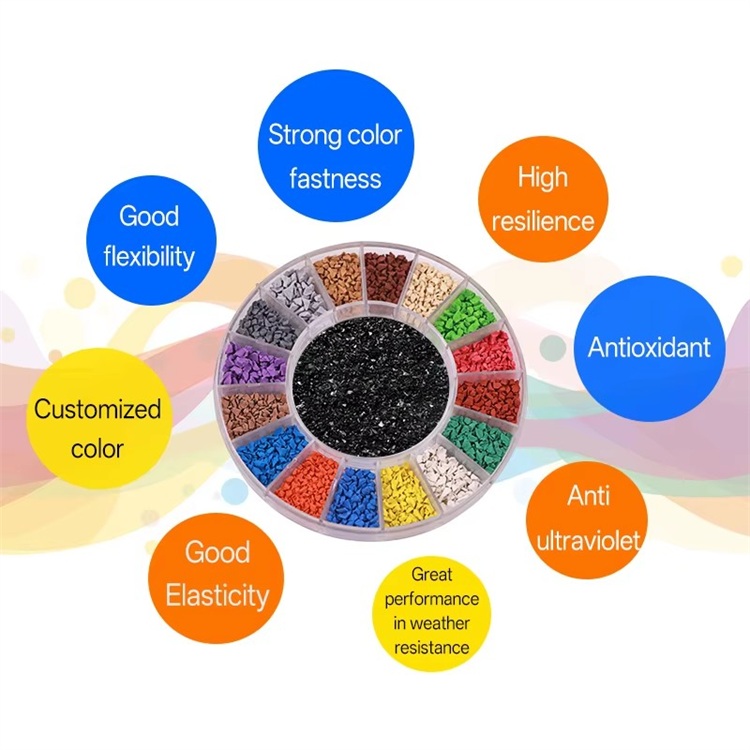
2. Design Flexibility: EPDM supports custom colors, patterns, and logos that are integrated directly into the surface. The color goes through the material, so wear doesn't reveal an underlying base color.
3. Seamless Installation: Unlike rubber tiles, wet pour systems have no seams, joints, or edges that can separate or create tripping hazards.
4. Accessibility: The combination of slip resistance and shock absorption makes EPDM suitable for accessible playgrounds and pathways.
5. Low Maintenance: When properly specified and installed, EPDM surfaces require minimal maintenance—primarily periodic cleaning and occasional sealant application .
6. Sustainability: Many systems incorporate recycled SBR in the base layer, reducing environmental impact. High-quality EPDM from reputable manufacturers also meets strict environmental standards, including low PAH content .
How to Select the Right EPDM Granules for Your Project
For Contractors and Installers
Prioritize:
- Consistent particle size distribution for predictable coverage and easier troweling
- Angular particle shape for improved binder adhesion and longer wear life
- Low density for better coverage and easier installation
- Sulfur-free formulation for UV stability, odor elimination, and longevity
Verify:
- Manufacturer's quality certifications (ISO, SGS testing, PAH compliance)
- Batch-to-batch color consistency documentation
- Compatibility with your chosen binder system
For Procurement Managers and Specifiers
Evaluate:
- Total lifecycle cost—the cheapest granules often become the most expensive
- Color retention warranties—3+ years of guaranteed color stability is standard for quality products
- MOQ flexibility—avoid being locked into large minimum orders that don't match project requirements
Verify:
- Manufacturer track record (25+ years experience is a meaningful benchmark)
- Production capacity to meet project timelines
- Custom color and size capability

Common Questions About EPDM Granules for Wet Pour Surfacing
What is the right granule size for wet pour applications?
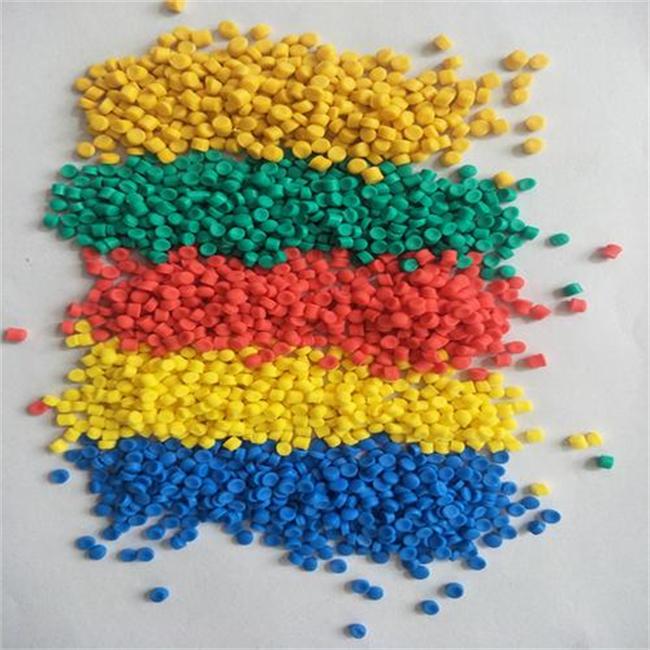
1–3mm or 1–4mm granules are typical for most wet pour surfacing . Smaller granules provide a finer finish but may require more binder. Larger granules offer better drainage and durability in heavy-use areas.
How do I know if a supplier offers truly sulfur-free EPDM?
Sulfur-free EPDM is odorless when heated, with no characteristic burnt rubber smell. The molecular structure remains stable under UV exposure, and color retention is visibly superior.
What's the typical binder ratio?
Industry standards vary, but typical EPDM to binder ratios range from 4:1 to 6:1 by weight . More binder improves adhesion and durability but adds cost. The specific ratio depends on application, climate, and performance requirements.
How long does installation take?
With skilled installers, EPDM wet pour installation proceeds at approximately 30 minutes of working time per mixed batch . Curing requires 24–48 hours before the surface is ready for use .
Can EPDM be installed in cold weather?
Ideally, installation should occur when temperatures exceed 10°C . Low temperatures slow the curing process and can compromise adhesion. Extended curing times or heating systems may be required for cold-weather installations.
Making the Right Choice for Your Next Project
EPDM wet pour surfacing offers an unmatched combination of safety, design flexibility, and performance—but only when the right granules are specified.
Sulfur-free technology addresses the fundamental weaknesses of traditional EPDM: UV degradation that fades colors, sulfur release that creates odors, and molecular instability that shortens lifespan. With tensile strength of 4–7 MPa, 2–3 times better elasticity, and performance retention over 5 times higher than standard formulations, sulfur-free EPDM represents a significant step forward in playground and sports surfacing technology.
For contractors, this means fewer callbacks and repairs. For specifiers and procurement managers, it means surfaces that maintain their appearance and safety standards for years beyond the warranty period. For end users, it means safer, more attractive, and more durable installations.

WOW(LYG) New Material Co Ltd is a manufacturer specializing in the production of EPDM rubber granules. We use sulfur-free vulcanization technology, it increases the service life by more than 3 times than traditional EPDM granules, and enhances the performance, including anti-aging, high-temperature resistance, and colorfastness.
We have over 25 years of production experience and offer customization for colors and granule sizes. NO MOQ.


