 注: 建议图片大小150px*50px
丨
注: 建议图片大小150px*50px Views: 0 Author: Site Editor Publish Time: 2026-07-20 Origin: Site


For playground contractors, sports flooring specialists, and government procurement managers, specifying the right surface material is rarely straightforward. When a project calls for "PIP Playground" — meaning "Poured-In-Place" playground surfacing — the stakes are high. You're not just buying colored rubber; you're making a decision that will impact safety certification, maintenance costs, and user satisfaction for the next eight to twelve years.
A municipal park project in the Midwest recently faced a nightmare scenario: six months after installation, their vibrant red and green playground surface began to gray, develop a strong odor on hot days, and lose its shock-absorbing properties. The problem? The EPDM granules used contained sulfur-based vulcanizing agents that broke down under UV exposure and heat. This guide exists to ensure your next PIP playground project does not suffer the same fate.
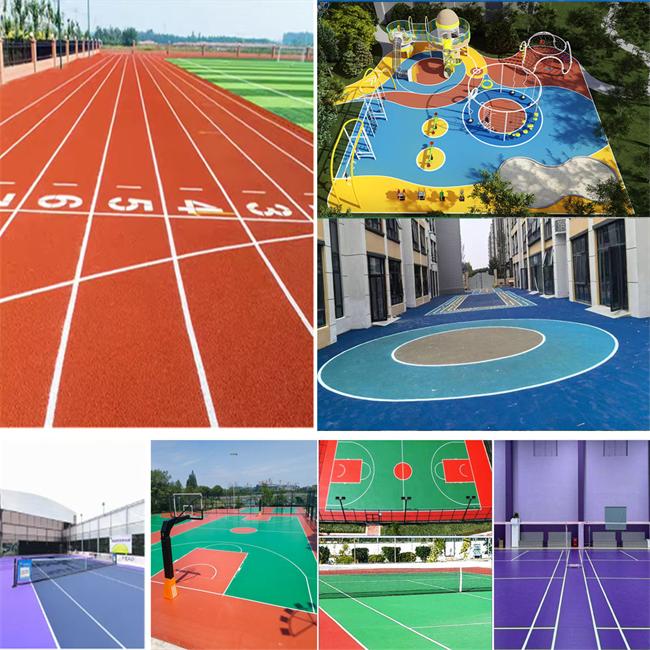
What Are EPDM Rubber Granules for Playgrounds?
EPDM stands for Ethylene Propylene Diene Monomer — a synthetic rubber renowned for its exceptional weather resistance, UV stability, and color retention. Unlike recycled tire rubber (SBR), which is often used as a cost-saving base layer, premium EPDM granules are engineered specifically for the visible, wear-resistant top layer of poured-in-place (PIP) playground surfaces.
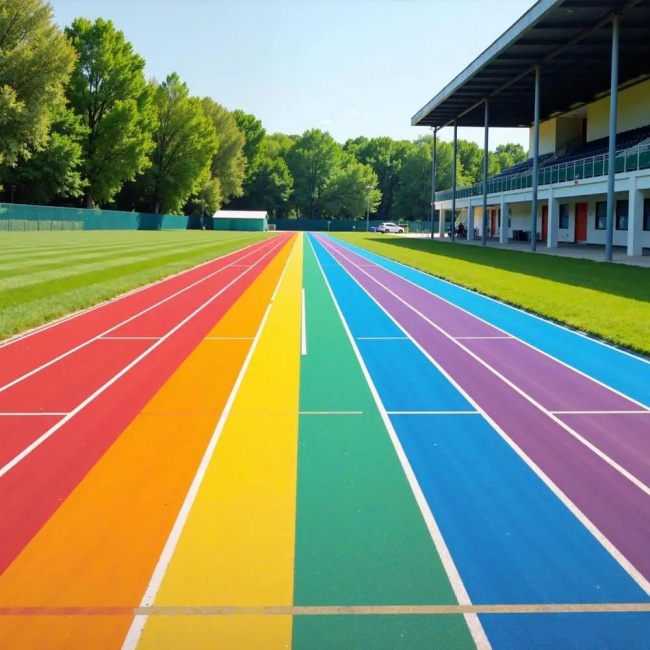
In a typical PIP installation, EPDM granules are mixed with a polyurethane binder and troweled or sprayed onto a prepared sub-base to create a seamless, porous, impact-absorbing surface. The "poured-in-place" method allows for creative designs, logos, and color transitions that are impossible with interlocking tiles.
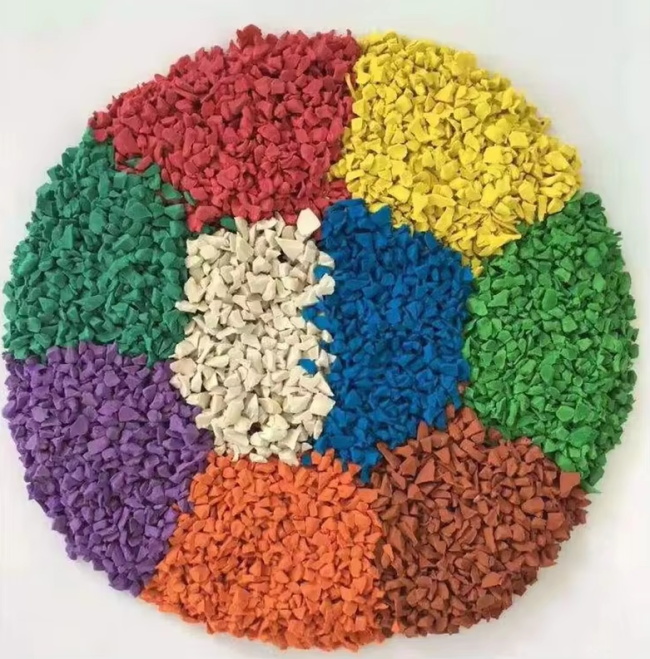
Why Are More Municipalities and Schools Choosing EPDM for PIP Playgrounds?
The shift from traditional poured-in-place surfaces (like asphalt or concrete with a rubber overlay) toward fully EPDM-surfaced playgrounds is driven by three critical factors:
1. Compliance with Stricter Safety Standards
Government procurement now mandates adherence to standards like GB 36246-2018 for synthetic sports surfaces and ASTM F1292 for impact attenuation. High-quality EPDM provides predictable fall-height ratings, reducing liability for municipalities and school districts.
2. The End of "Black Bottom" Aesthetics
Pure EPDM surfaces don't require mixing in recycled black rubber for structural integrity. This means true, vibrant colors for the entire depth of the wear layer, which maintains the visual appeal of the playground for years.
3. The Odor Problem in Urban Heat Islands
Traditional sulfur-vulcanized rubber releases sulfuric compounds when exposed to high heat. For playgrounds in densely populated areas, this off-gassing is unacceptable. This is where sulfur-free EPDM technology has become a game-changer for contractors and landscape architects.

The Core Technology: Why Sulfur-Free EPDM Solves Your Biggest Pain Points
Most EPDM granules on the market rely on sulfur vulcanization to cure the rubber. While cheap to produce, this process creates molecular bonds that are susceptible to breaking down under high heat, UV light, and ozone. This is the primary reason why playground surfaces fade, become brittle, and develop that "rubber tire" smell.
Our patented sulfur-free EPDM technology addresses every major complaint voiced by installers and procurement managers:
Pain Point 1: "The surface smells terrible on a sunny afternoon."
Solution: Traditional EPDM contains residual sulfur that reacts with heat and UV radiation, decomposing into sulfuric acid and volatile compounds. Our sulfur-free granules contain zero sulfur, meaning no acid byproducts are released — ever. Even at extreme summer temperatures exceeding 60°C (140°F), the surface remains odorless.
Pain Point 2: "The color faded completely within two years."
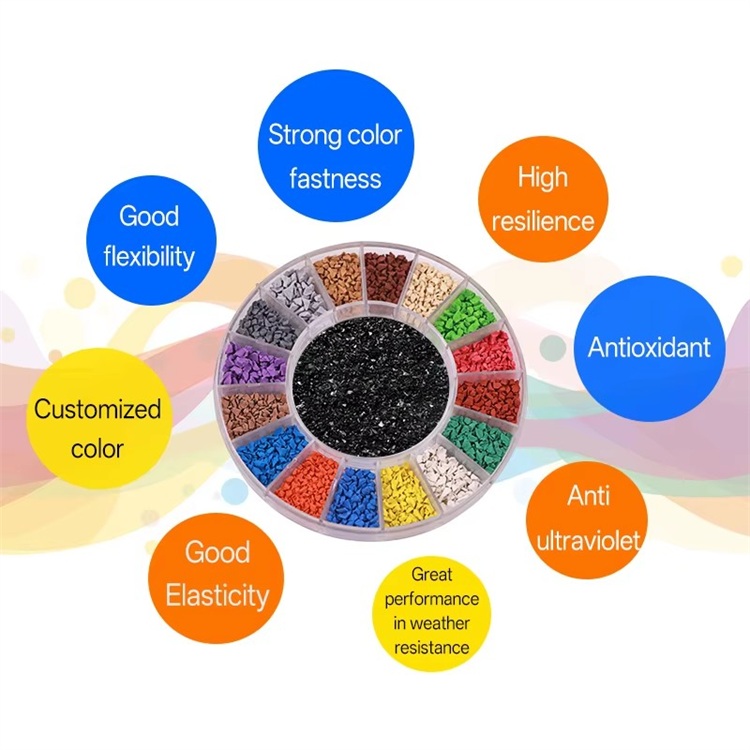
Solution: In standard EPDM, the sulfur crosslinks act as weak points where oxygen and ozone attack the polymer chains, causing the pigment to break down. Sulfur-free technology stabilizes the molecular structure at an atomic level. Laboratory tests indicate color retention and UV resistance are enhanced by more than five times compared to traditional sulfur-vulcanized granules. Vibrant colors remain vivid even in direct, year-round sunlight for over eight years.
Pain Point 3: "The surface is cracking and losing its bounce after only 3 years."
Solution: Because the polymer chain remains intact without sulfur-induced degradation, the tensile strength of sulfur-free EPDM is dramatically higher — reaching 4 to 7 MPa, compared to industry standards that often hover around 0.5 to 1.7 MPa. This represents a 2 to 3 times improvement in elasticity and tensile strength. For contractors, this means fewer warranty claims. For schools, it means a surface that can survive heavy foot traffic and dragging equipment without deteriorating.
Pain Point 4: "I have to use a special, expensive binder to get it to stick."
Solution: Our sulfur-free granules are engineered with a lower density and sharper three-dimensional angularity than cheap, round particles. This provides a larger surface area for the polyurethane binder to "grip," ensuring a mechanical and chemical bond that significantly reduces delamination — a common issue where the top layer peels away from the base. The low density also translates to more coverage per kilogram, effectively lowering your material cost per square meter.
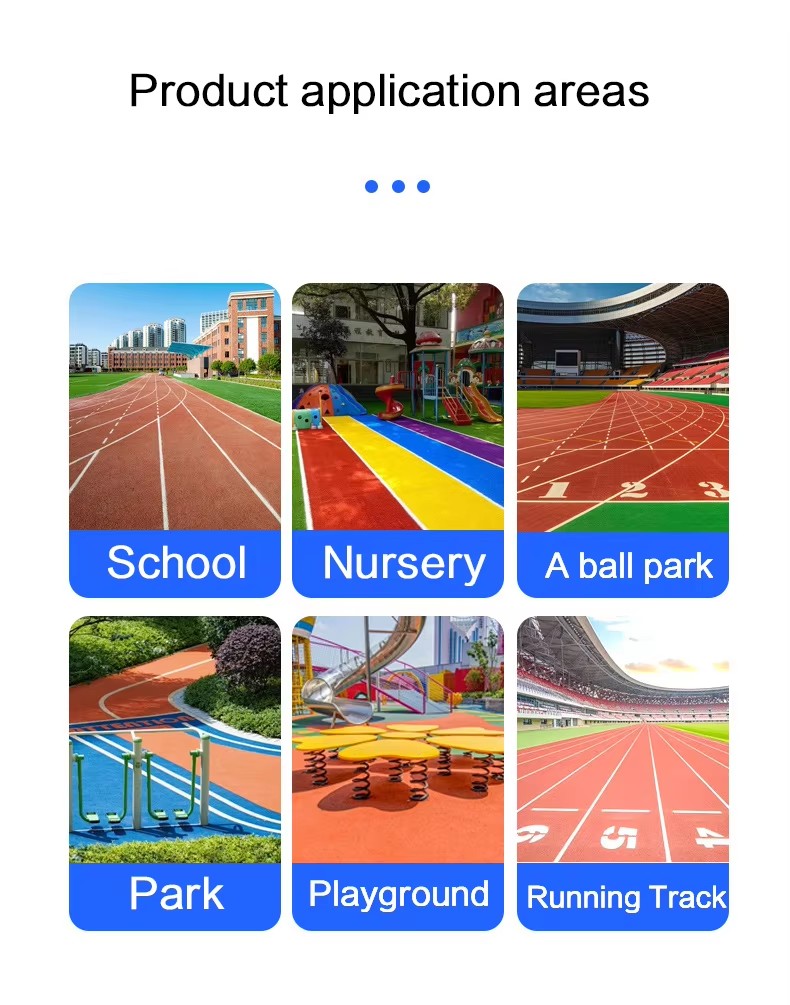
Applications: Where PIP EPDM Excels
For Playground Contractors
- Municipal Parks: Custom color blends to match city branding, with fall-height certification up to 3 meters.
- School Playgrounds: Meets international safety standards for impact absorption, protecting children during high-risk activities.
- Inclusive Playgrounds: High elasticity (compression recovery rate of up to 98.5%) ensures wheelchair users experience comfortable movement while maintaining impact safety.
For Sports Flooring Contractors
- Multi-Use Games Areas (MUGAs): Provides a fast-draining, non-slip surface that supports both casual sports and competitive play.
- Athletic Warm-Up Areas: Used as perimeter surfacing for high-performance running tracks.
For Landscape Architects and Engineers
- Pathways and Jogging Trails: Aesthetics that integrate with landscaping while offering a water-permeable surface.
- Rooftop and Balcony Gardens: Low density reduces structural load stress.
For Importers and Distributors
The ability to offer no minimum order quantity (No MOQ) is critical for the international market. Many local governments need to test a small area (e.g., a 50 sqm pilot zone) before approving a project budget. Being able to supply custom colors and specific particle sizes (ranging from 0.5-1.5mm for infill to 2-4mm for thick top layers) without requiring a full container order provides a massive competitive advantage for distributors.
How to Avoid Buying Mistakes: A Procurement Guide
When comparing quotes for your PIP playground project, these are the "hidden" details you must scrutinize:
Mistake 1: Only looking at price per kilogram
The Trap: Cheap sulfur-vulcanized granules use oil and calcium carbonate to bulk up weight.
The Fix: Ask for the bulk density (kg/m³). Sulfur-free, high-purity EPDM has a lower density (around 650-750 kg/m³). You need fewer kilograms to cover the same area. A higher price per kg often results in a lower price per square meter.
Mistake 2: Ignoring the "Sulfur" Question
The Trap: Unscrupulous suppliers hide the curing agent details in the fine print.
The Fix: Explicitly ask: "Is this sulfur-vulcanized or peroxide/sulfur-free?" If they hesitate or don't know, walk away. A sulfur-free product is non-negotiable for projects requiring odor-free certification and 8-year color warranties.
Mistake 3: Assuming "Same Color" means "Same Pigment"
The Trap: Organic dyes fade within months.
The Fix: Require a UV-weathering test report (e.g., ASTM G154) . Our sulfur-free formulation uses inorganic pigments that are chemically locked into the rubber matrix, ensuring color consistency from batch to batch, a crucial factor for large-scale municipal projects.
Mistake 4: Underestimating Lead Times
The Trap: "Made to order" often means a 60-day wait.
The Fix: Look for suppliers with 25+ years of industry experience and multiple automated production lines. We maintain a capacity of over 20,000 tons per year, ensuring we can handle urgent large-scale government procurement schedules and peak-season demands.
Frequently Asked Questions (FAQs)
Q: What is the lifespan of a high-quality EPDM PIP playground surface?
A: With sulfur-free EPDM granules, the lifespan extends to 8 to 12 years, three times longer than standard sulfur-based granules, even under continuous UV exposure and seasonal temperature swings.
Q: Can the surface be repaired if it gets damaged?
A: Yes. Poured-in-place is one of the easiest surfaces to repair. Because the granules are uniform and the binder is compatible, damaged areas can be cut out and re-poured seamlessly. This is a major reason why architects specify PIP for high-traffic zones.
Q: Is EPDM suitable for indoor playgrounds?
A: Absolutely. In fact, the sulfur-free attribute is even more critical indoors where ventilation is limited. Our EPDM can meet food-grade hygiene standards due to the absence of heavy metals and the non-toxic vulcanization process, making it safe for indoor play centers and daycare facilities.
Q: How does the cost compare to SBR (recycled tire rubber)?
A: SBR is cheaper upfront but is usually black and requires painting (which flakes off) or a top layer of EPDM anyway. SBR also fades and deteriorates much faster in UV light. EPDM is a "buy once, cry once" material. The cost-per-year of ownership is often significantly lower for EPDM.

Making the Right Choice
For playground contractors, sports flooring experts, and government buyers, the choice of EPDM granules is the defining factor between a project that wins awards and one that generates warranty complaints. The market has moved beyond black rubber surfaces. Today, clients demand vibrant, safe, and long-lasting colors.

WOW(LYG) New Material Co Ltd is a manufacturer specializing in the production of EPDM rubber granules. We use sulfur-free vulcanization technology, it increases the service life by more than 3 times than traditional EPDM granules, and enhances the performance, including anti-aging, high-temperature resistance, and colorfastness.
We have over 25 years of production experience and offer customization for colors and granule sizes. NO MOQ.


