 注: 建议图片大小150px*50px
丨
注: 建议图片大小150px*50px Views: 0 Author: Site Editor Publish Time: 2026-07-24 Origin: Site


If you’re reading this, you’re likely not just browsing. You’re in the middle of a project—or about to be. Maybe you’re a playground contractor staring down a spec sheet that demands compliance with ASTM F2479 and EN1177. Maybe you’re a procurement manager tasked with vetting suppliers from overseas. Or perhaps you’re an architect who needs to specify a surface that will still look good and perform safely a decade from now.
Whatever your role, you’re here because poured playground surface (often called wet-pour rubber or PIP) isn't a simple product. It’s a system. And choosing the wrong system—or the wrong partner—can lead to color fading, delamination, failed impact tests, and a seriously unhappy client.
This guide is engineered for professionals. We’ll cut through the marketing fluff and address the real technical questions, procurement pitfalls, and engineering considerations that determine whether a poured surface succeeds or fails.
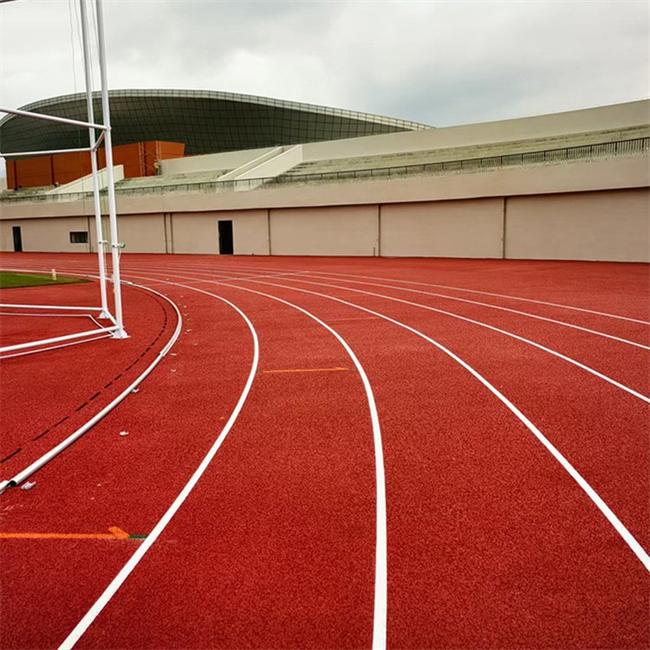
What Is a Poured Playground Surface?
A poured-in-place (PIP) playground surface is a seamless, unitary rubber surfacing system mixed and installed on-site . Unlike loose-fill materials like wood chips or rubber mulch, PIP creates a continuous, bound surface that is ADA-compliant, durable, and highly customizable.
The system typically consists of two layers:
1. The Base Layer: Usually made of recycled SBR (styrene-butadiene rubber) bound with polyurethane resin. This provides the bulk thickness and shock absorption.
2. The Wear Layer (Top Layer): Composed of EPDM (ethylene propylene diene monomer) granules bound with a clear or pigmented resin. This layer provides color, UV resistance, and a durable wearing surface .
This two-layer system is what allows a poured surface to achieve critical fall height ratings of up to 3.23 meters (over 10 feet) while remaining safe and resilient .

Why Choose Poured-In-Place Over Other Surfaces?
For most commercial projects, the choice comes down to longevity and accessibility. Here’s what sets a quality poured surface apart:
- Seamless & Accessible: Because it's unitary, it provides a smooth, firm surface that wheelchairs and strollers can navigate easily, meeting ADA requirements without the "shifting" issues common to loose fill .
- Customization: Logos, school colors, and even games (like hopscotch or mazes) can be permanently integrated into the wear layer .
- Porous: Water drains through the surface, meaning no puddles and rapid dry times after rain .
- Durability: When installed correctly, these surfaces withstand heavy foot traffic and harsh weather for years.
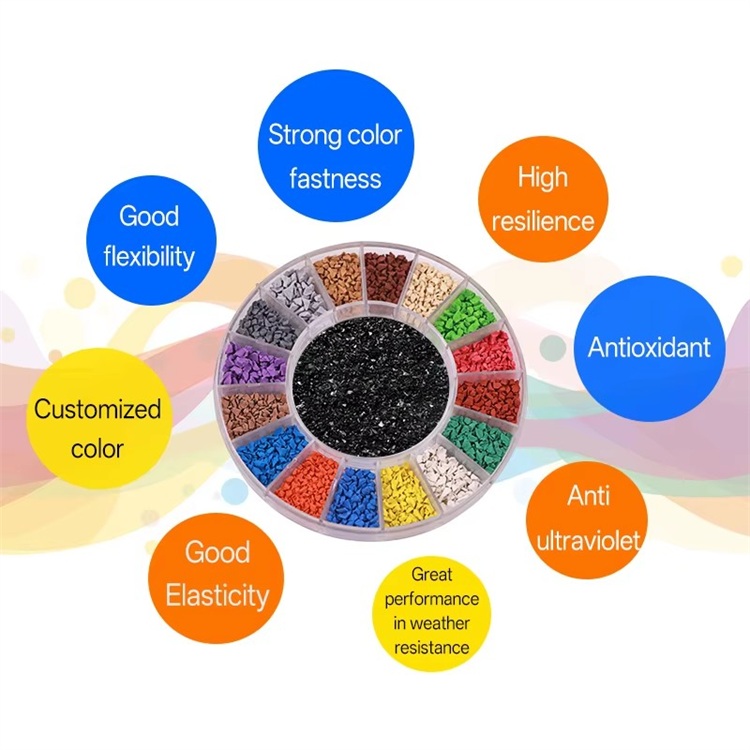
The Critical Procurement Checklist: What to Look For (and What to Avoid)
As a buyer or contractor, you are bombarded with pricing. The cheapest quote is often the most expensive over time due to premature failure. Here is the checklist that matters.
1. The "Hidden" Cost of Sourcing: MOQ and Lead Times
One of the biggest pain points for contractors and importers is the Minimum Order Quantity (MOQ). Many factories require container-sized orders. This is a problem if you have a small municipal job or need a specific custom color. If you are forced to over-order, you tie up cash flow and deal with expensive storage.
The Smart Move: Look for suppliers who offer flexible MOQs. Being able to order exactly what you need for the specific square footage of the project (without paying a premium for "waste") gives you better margin control and allows for more competitive bidding. It also prevents the logistical nightmare of storing pallets of material you don't need immediately.
2. Color Retention and UV Resistance
This is the 1 complaint from end-users. Nothing looks worse than a faded, patchy playground. Most standard EPDM granules use a sulfur-based vulcanization process. While effective, this makes them vulnerable to UV degradation over time.
The Problem with Sulfur: In a typical sulfur-cured granule, the sulfur bonds break down under UV radiation and heat, leading to fading, chalking, and a breakdown of the molecular structure .
The Engineering Solution: We utilize a sulfur-free, peroxide-based vulcanization process. This is not a marketing spin; it is a fundamental chemistry difference. By removing sulfur, we eliminate the primary cause of UV degradation and oxidation. The result is a molecular structure that is significantly more stable. Our materials achieve a Grey Scale rating of 4-5 even after extensive UV exposure , which translates to superior color retention that outperforms competitor products by over 3 to 5 times. For high-sun environments like Australia, the Middle East, or the southern US, this is non-negotiable.
3. Performance Specifications (Tensile Strength and Elasticity)
Don't just look at the color; look at the data. A brittle granule is a failing granule. The international standard for high-quality EPDM wear layers typically requires a tensile strength above 3.5 MPa.
Our EPDM granules consistently achieve a tensile strength exceeding 4 MPa, reaching up to 7 MPa . This isn't just a number—it means the material can handle the shear stress of constant foot traffic, dragged equipment, and extreme weather without cracking or crumbling. Combined with an elongation at break that exceeds 550%, the material maintains its elasticity, ensuring consistent impact absorption over its lifespan.
4. Safety and Environmental Compliance
This is where we see the most "budget" failures. Substandard granules often contain heavy metals, excessive PAHs (polycyclic aromatic hydrocarbons), or harmful plasticizers that are a health hazard, especially for children.
- Compliance: Our material meets stringent international safety standards, including REACH, EN 71-3 (toy safety), and GB 36246-2018 .
- Odor: Most complaints about rubber surfaces come from the "tire smell." This is caused by sulfur off-gassing. Because our proprietary formula is sulfur-free, the granules remain completely odorless even under extreme heat. There is no sulfate decomposition, making them safe for enclosed areas or sensitive environments like hospitals and daycares.

How to Avoid Common Installation Mistakes
Even the best material fails if installation is poor. As a contractor or project manager, here are the top mistakes to watch for:
1. Moisture in the Base: The base layer must be dry. If moisture is trapped, it will cause delamination—the top layer peeling away from the base.
2. Inconsistent Thickness: Impact absorption is directly tied to thickness . If the installer cuts corners in the fall zone (where children are most likely to fall from the highest equipment), you fail safety inspections. Always require zone-based thickness verification documented with photographs and probes.
3. Incorrect Binder Ratio: Too little binder, and the granules won't stick (debris). Too much, and the surface becomes hard (losing safety properties). A consistent, temperature-controlled mixing process is vital.
4. Mixing Batch Colors: Even with top-quality granules, there can be slight color deviations between production batches. Ensure the installer mixes material from different batches thoroughly during installation to ensure a uniform color across the entire surface .

Frequently Asked Questions (B2B & Technical Focus)
Q: What is the critical fall height (CFH) rating for your system?
A: While the exact CFH depends on the thickness of the base layer, our top-layer EPDM granules are designed to integrate with high-performance base layers that can achieve CFH ratings of over 3.0 meters, complying with EN 1177 and ASTM F1292 .
Q: Does the "sulfur-free" process affect the bonding with the PU glue?
A: No. In fact, the chemical stability of the peroxide-cured granule often provides a more consistent bonding surface than sulfur-cured alternatives, which can have surface contaminants that inhibit adhesion . This ensures that the top layer stays bonded to the base layer significantly longer.
Q: Can you match a specific Pantone color?
A: Yes. Our manufacturing process allows for full customization of color and granule size . We work with clients to develop specific color formulations to match branding or aesthetic requirements, with no MOQ constraints.
Q: Why should I avoid sulfur-cured granules?
A: Aside from UV fading, sulfur-cured granules degrade from the inside out due to the breakdown of the sulfur cross-links. This leads to a loss of tensile strength over time . Peroxide-cured granules retain their elasticity and strength significantly longer, resulting in a surface life that is effectively 3 times longer.

Making the Right Engineering Choice
When specifying or purchasing a Poured Playground Surface, you are purchasing safety and aesthetics. Don't let a low price per kilogram cost you a replacement in five years. By prioritizing sulfur-free chemistry, high tensile strength (>4 MPa), and strict adherence to environmental standards, you ensure that your project stands the test of time and weather.
We offer the industry expertise (25+ years), advanced production capabilities, and flexible logistics (no MOQ) to support projects of any scale—from a small daycare center in California to a large municipal park in Europe.


WOW(LYG) New Material Co Ltd is a manufacturer specializing in the production of EPDM rubber granules. We use sulfur-free vulcanization technology, it increases the service life by more than 3 times than traditional EPDM granules, and enhances the performance, including anti-aging, high-temperature resistance, and colorfastness.
We have over 25 years of production experience and offer customization for colors and granule sizes. NO MOQ.


