 注: 建议图片大小150px*50px
丨
注: 建议图片大小150px*50px Views: 0 Author: Site Editor Publish Time: 2026-07-19 Origin: Site


If you are a playground contractor, sports flooring installer, municipal project manager, or procurement specialist, you have likely encountered the term Poured in Place Rubber (often abbreviated as PIP). It is widely considered the gold standard for safety surfacing in playgrounds, athletic facilities, and landscape projects. However, if you are reading this, you probably aren't looking for a basic definition. You are likely wrestling with specific pain points: vendor reliability, material longevity, UV stability, and cost management.
This guide addresses the real-world questions and concerns of industry professionals. We will examine why a seemingly simple product can have vastly different performance outcomes, how to avoid the most expensive mistakes during procurement, and why the chemistry of the granules (specifically, EPDM) matters more than you might think.

What is Poured in Place Rubber Surfacing?
Before diving into technical specifications, let’s define the product with precision. Poured in Place Rubber is a seamless, unitary surfacing system installed on-site. It is engineered to provide impact absorption (critical fall height protection) and accessibility (meeting ADA requirements).
The system is a composite of two layers:
1. The Base Layer (Impact Layer): Usually composed of black recycled SBR (Styrene-Butadiene Rubber) granules mixed with a polyurethane binder. This provides the cushioning.
2. The Wear Layer (Top Layer): Composed of EPDM (Ethylene Propylene Diene Monomer) colored granules mixed with a UV-stable binder. This provides the color, UV protection, and durability against traffic.
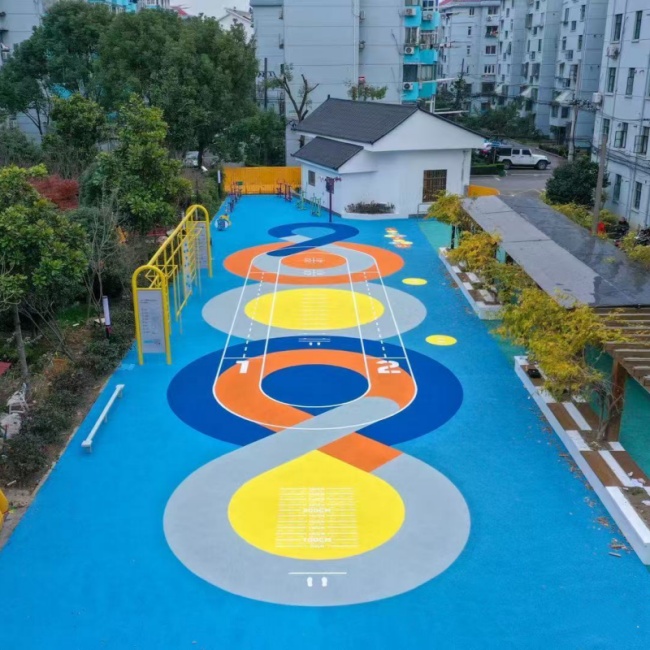
Why EPDM is Critical: The Science of Durability and "No Odor"
For procurement managers and installers, the debate often boils down to material science. Why do some surfaces last 10 years while others crumble in less than 5? The answer often lies in the chemistry of the EPDM granules and the binder.
One of the biggest complaints regarding rubber surfacing is odor and discoloration. Traditional rubber granules often utilize sulfur in their vulcanization (curing) process. Under high temperatures and UV exposure, sulfur-based compounds can degrade, releasing sulfuric acid and other volatile compounds. This not only creates a persistent, unpleasant odor but also causes the material's molecular structure to break down, leading to color fading, chalking, and brittleness.
The industry evolution has shifted toward peroxide-cured or "No Sulfur" EPDM granules. By removing sulfur, the molecular structure becomes more stable. This translates directly to practical benefits for your projects:
- Zero Odor: No sulfuric acid breakdown means no smell, even in high heat.
- 3x+ Longevity: The stability of the cross-linked bonds prevents premature aging.
- Superior Tensile Strength: High-quality EPDM achieves tensile strength between 4-7 MPa, which ensures that the material holds together under heavy foot traffic and shear stress.
- Color Retention: Without the oxidative degradation caused by sulfur, the granules maintain their vibrancy significantly longer (up to 5 times longer than traditional options).

The Procurement Problem: Why Quality Fails in the Field
As an importer, wholesaler, or purchasing manager, you face risks beyond the unit price. Here are the most common pitfalls observed in municipal and commercial projects:
1. Binder Failure vs. Granule Failure
It is a common misconception that color fading is always the granule's fault. Often, it is the binder—the glue holding the granules together. There are two primary types of polyurethane binders:
- Aromatic Binder: Strong and cost-effective, but sensitive to UV light. It turns amber or darkens, which ruins the aesthetic of light-colored surfaces.
- Aliphatic Binder: UV-stable and water-clear. Essential for projects requiring specific color matches or bright hues.
However, even the best binder cannot save poor-quality granules. If the granules themselves have low polymer content or high ash content, they will not properly absorb the binder, leading to granulation (granules coming loose) within months.
2. The "High Ash" Trap
Ash content is the inorganic filler left after burning the rubber. Lower-quality granules often have ash contents exceeding 62%. High ash content means lower rubber content, resulting in poor elasticity and low tensile strength. You want a polymer content of ≥20% to ensure durability.
3. The Installation Weather Window
Contractors often face pressure to install in non-ideal conditions. Binders require specific temperatures—generally between 10°C and 28°C (50°F - 82°F)—to cure properly. If it is too cold, the binder takes too long to cure, risking moisture damage and micro-foaming. If it is too hot, it cures too fast (often in a 30-40 minute window), leaving no time for troweling.

How to Choose the Right Poured in Place Rubber System
When evaluating suppliers for your next project, here is a checklist of technical requirements to verify:
- Request the "No Sulfur" Spec: Confirm that the EPDM granules are manufactured using a peroxide-curing, sulfur-free process. This eliminates odor and enhances UV resistance.
- Check the "Shelf Life" and "Bulk Density": Quality granules have a bulk density of approximately 680-750 g/m³. Lower density often means more "fluff" and less mass, which can affect the final compaction and resilience of the floor. Check the tensile strength—it should be ≥ 4 MPa.
- Demand IPEMA Certification: For playgrounds, ensure the system is IPEMA-certified. This verifies that the surfacing meets ASTM F1292 standards for impact attenuation. Do not accept verbal assurances; ask for the test results.
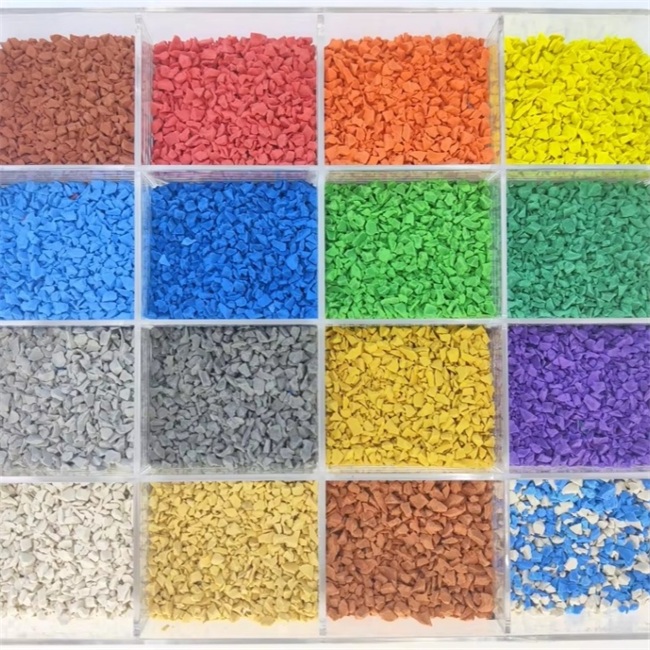
Why the Industry is Moving to Advanced EPDM
The market is shifting away from cheap, sulfur-based products not just because of "green" trends, but because of total cost of ownership. A cheap surface that requires replacement in 3 years is far more expensive than a premium surface that lasts 12-15 years.
Today's advanced EPDM offers:
- Anti-Oxidation & Anti-Aging: The molecular stability prevents the rubber from hardening over time.
- Thermal Performance: Higher heat resistance and lower thermal conductivity ensure the surface stays cooler than traditional asphalt or concrete, reducing heat island effects in urban projects.
- Design Flexibility: With no MOQ (Minimum Order Quantity) constraints in modern supply chains, architects can finally implement custom color matches without paying exorbitant penalties.

Poured in Place Rubber remains the superior choice for safety, aesthetics, and accessibility. However, your project's success depends heavily on the chemistry of the granules and the quality of the installation. By focusing on sulfur-free EPDM, high tensile strength (4-7 MPa), and proper binder selection (Aliphatic for colors, Aromatic for budget), contractors and procurement managers can ensure a surface that stands the test of time and weather.

WOW(LYG) New Material Co Ltd is a manufacturer specializing in the production of EPDM rubber granules. We use sulfur-free vulcanization technology, it increases the service life by more than 3 times than traditional EPDM granules, and enhances the performance, including anti-aging, high-temperature resistance, and colorfastness.
We have over 25 years of production experience and offer customization for colors and granule sizes. NO MOQ.


