 注: 建议图片大小150px*50px
丨
注: 建议图片大小150px*50px Views: 0 Author: Site Editor Publish Time: 2026-07-20 Origin: Site


Rubber surfacing has become the global standard for playgrounds, athletic tracks, and recreational areas—but choosing the right material and supplier remains a persistent challenge for contractors, importers, and procurement professionals. This guide addresses the real questions and pain points buyers face, drawing on industry expertise and technical knowledge to help you make informed decisions that protect your investment.

What Is Rubber Surfacing?
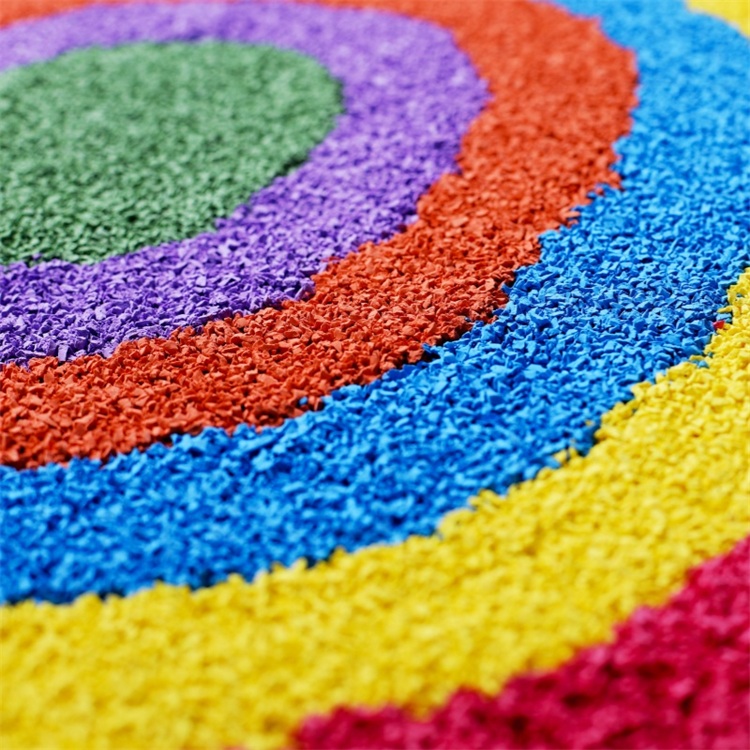
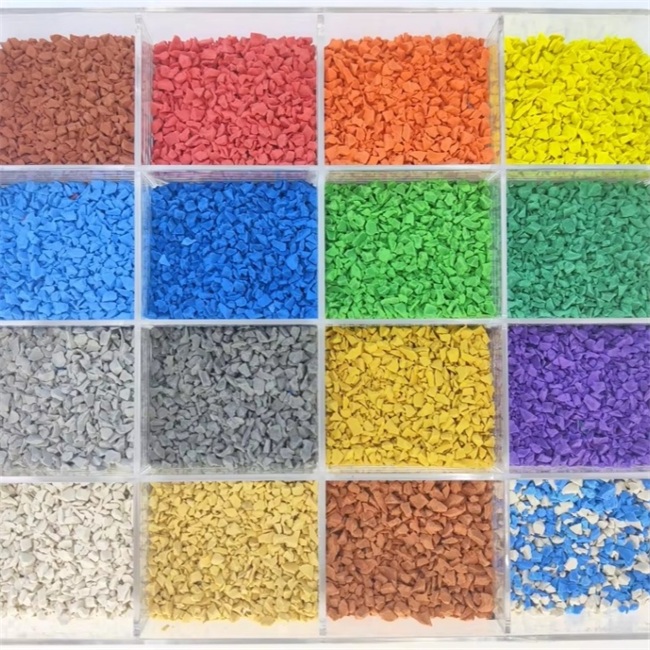
Rubber surfacing refers to seamless, resilient flooring systems installed over prepared bases (concrete, asphalt, or aggregate) in outdoor and indoor environments. The most common high-performance formulation uses EPDM (Ethylene Propylene Diene Monomer) granules as the wear layer, bound together with polyurethane adhesive to create a porous, durable, and impact-absorbing surface.
The typical system consists of:
- A base layer of black rubber granules (often recycled) for cushioning and drainage
- A top wearing layer of colored EPDM granules that provides color, UV protection, and wear resistance
- A polyurethane binder that bonds the granules together while maintaining permeability
EPDM rubber surfacing is distinct from other options like rubber tiles or loose-fill mulch. It is a unitary system—meaning it forms a continuous, seamless surface that does not shift or migrate over time.

Why Projects Fail: The Real Problems Buyers Face
Before we discuss what makes a good surface, it is critical to understand why so many rubber surfacing projects underperform. Based on documented industry experience, the most common failure modes include:
Inconsistent thickness in critical fall zones, creating safety hazards where impact attenuation does not meet required standards. This is the fastest way to fail a safety inspection.
Poor drainage and slope control, leading to standing water that degrades the binder, accelerates wear, and creates slip risks. Drainage failure is the single most consistent predictor of short surfacing life.
Weak edges and transitions that trap water or create trip points, particularly where the surface meets sidewalks, equipment posts, or containment borders.
Premature wear in high-traffic zones—especially under swing bays and at slide exits—where contractors failed to plan for concentrated impact.
Discoloration and fading within the first 12-24 months due to poor UV resistance in the EPDM compound.
Delamination and micro-foaming caused by moisture reacting with polyurethane binders during installation, resulting in bubbling, weak spots, and eventual surface failure.
These issues are not inevitable. They stem from three root causes: poor material quality, inadequate base preparation, and unskilled installation. As a buyer, your job is to control all three.

The Technical Difference: Why EPDM Grade Matters
Not all EPDM granules are created equal. The critical distinction lies in the vulcanization (curing) system used during manufacturing.
Traditional Sulfur-Cured EPDM
Most commodity EPDM granules are cured using elemental sulfur. This is an inexpensive, fast process that produces acceptable results under ideal conditions. However, sulfur-cured EPDM has significant drawbacks:
- UV degradation: Sulfur crosslinks break down under prolonged sunlight exposure, causing the material to become brittle and release sulfuric compounds—the source of the characteristic "rubber smell" in hot weather
- Color fading: The breakdown products accelerate pigment degradation, leading to dulling and whitening within 12-18 months
- Limited lifespan: The molecular structure is inherently less stable, reducing the usable life to approximately 3-5 years in outdoor applications
Peroxide-Cured (Sulfur-Free) EPDM
Advanced EPDM formulations use peroxide curing systems that eliminate sulfur entirely. This technical choice has profound performance implications:
- No odor: Without sulfur, there is no breakdown into sulfuric compounds under heat or UV exposure—the surface remains completely odor-free throughout its life
- Superior molecular stability: The peroxide crosslinks are more thermally and photochemically stable, preserving elasticity and strength for 8-10 years or more—three times the lifespan of sulfur-cured equivalents
- Enhanced tensile strength: Sulfur-free EPDM achieves tensile strength of 4-7 MPa, compared to 0.7-3.5 MPa for standard grades. Elongation at break typically exceeds 550%, providing far greater resistance to tearing and impact
- UV and oxidation resistance: The material retains its color and physical properties 5 times longer under accelerated weathering tests
- Food-grade safety: Sulfur-free formulations can meet the most stringent safety standards, including EN71-3 (toy safety) and REACH compliance, without heavy metal or PAH contamination
For contractors and specifiers, specifying sulfur-free, peroxide-cured EPDM is the single most effective step you can take to ensure long-term performance and client satisfaction.
Key Technical Specifications Every Buyer Should Verify
When evaluating EPDM rubber surfacing materials, demand the following performance data from your supplier:
Tensile Strength: Should exceed 3.5 MPa for playground applications and ideally reach 4-7 MPa for premium performance. Higher tensile strength indicates better resistance to tearing and wear.
Elongation at Break: Minimum 450%, with premium grades reaching 550-800%. Higher elongation means the surface can deform under impact without cracking.
EPDM Polymer Content: Must exceed 20%. Lower polymer content indicates excessive filler loading, which compromises elasticity, durability, and color retention.
Density: Should be below 1.60 g/cm³ and ideally in the range of 1.48-1.60 g/cm³. Lower density with angular granules provides better coverage (more square meters per ton) and improved drainage.
UV Stability: Request Grey Scale test results (typically 3-5 out of 5, depending on color). Higher ratings mean less fading.
PAH Content: Must comply with REACH Annex XVII, Entry 50—each of the 8 regulated PAHs must be below 1.0 mg/kg for general products and below 0.5 mg/kg for toys/childcare applications.
Certifications: Verify EN71-3 (toy safety), REACH, RoHS, and any relevant national standards (e.g., GB 36246-2018 for Chinese markets). Red flags include suppliers who cannot provide current test reports from accredited third-party labs.

Installation: The Other Half of the Equation
Even the best material will fail if installed incorrectly. Here are the critical installation considerations that separate successful projects from costly failures.
Base Preparation
The base must be sound, stable, and properly sloped. Most base failures involve:
- Inadequate compaction of aggregate bases, leading to settlement and uneven surfaces
- Poor drainage slopes—the surface should pitch at 1-2% away from structures to prevent ponding
- Insufficient thickness—playground surfacing thickness is determined by the critical fall height of the equipment. A 13mm wear layer is standard for many applications, but fall zones may require 40-60mm of total system thickness
Environmental Conditions
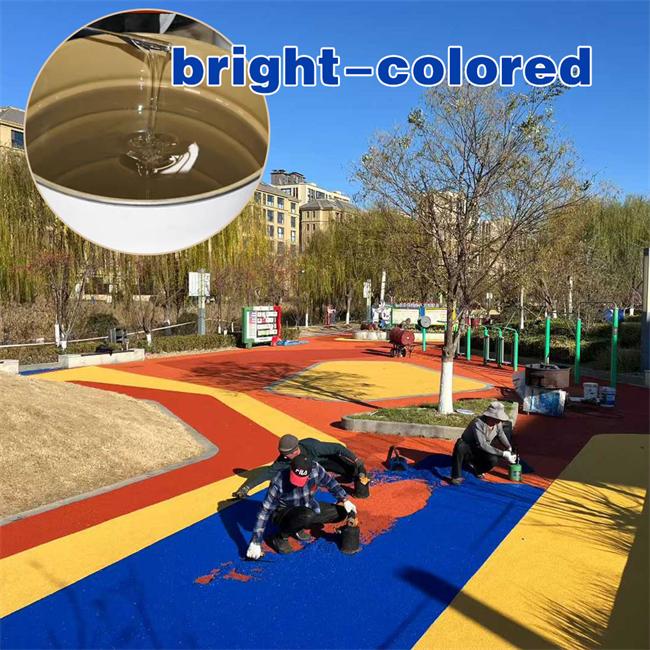
Polyurethane binders are moisture-sensitive. Micro-foaming occurs when moisture contacts the binder during curing, creating a foamy, weakened surface that will fail prematurely.
Critical conditions:
- Surface temperature consistently above 5°C (41°F)
- No rain forecast for at least 6-8 hours after installation
- Low humidity conditions
- Surfaces must be completely dry—check under decks and in shaded areas for trapped moisture
Curing
The binder requires adequate time to cure before the surface is exposed to traffic or moisture. Rushed cure times are a common contractor shortcut that leads to premature failure. Typical cure times range from 24-72 hours depending on temperature and binder chemistry. Request the manufacturer's cure schedule and enforce it.
How to Avoid Common Procurement Mistakes
Mistake 1: Choosing the Lowest Bid Without Comparing Scope
Two bids for the same square footage can be dramatically different in what they include. The apparent "savings" often reflect excluded items that will be added as change orders later.
What to demand in every bid:
- Zone-based build-up specifications, not just total square footage
- Clearly defined thickness by zone, tied to equipment fall heights
- Base preparation responsibility and acceptance criteria
- Drainage plan with slope targets and verification method
- Quality control checklist and inspection schedule
- Warranty documents—both material and workmanship—provided before contract signing
Mistake 2: Accepting "Equivalent" Substitutions
When a contractor offers a "comparable" material at a lower price, it almost always represents a downgrade in polymer content, UV stability, or cure system.
Protect yourself: Require the exact product specification, including polymer type, cure system (peroxide vs. sulfur), and minimum performance criteria. Any substitution must be submitted in writing with full technical data for your review before installation.
Mistake 3: Not Testing Samples Before Bulk Orders
Color matching, particle size distribution, and binder compatibility should be verified with physical samples before committing to a container order.
Best practice: Request a minimum of 5 kg of the actual production material and 1 kg of the recommended binder. Conduct a small test pour on a representative substrate. Evaluate:
- Color accuracy and vibrancy
- Curing behavior in your local climate conditions
- Coverage rate and waste factor
- Odor during and after curing
Mistake 4: Ignoring the Supplier's Track Record
A supplier may look legitimate online but have limited production capacity, inconsistent quality control, or a history of missed deliveries.
Due diligence:
- Request contact details for 3 recent projects of similar scale and type
- Verify production capacity (e.g., 30-50 tons per day indicates a serious operation)
- Confirm lead times and the supplier's ability to meet your schedule
- Ask about their quality control process—do they test every batch? Are samples retained?
- Verify their flexibility on order quantities—suppliers with high MOQs may not be reliable for smaller or custom orders
Application Use Cases: Where Rubber Surfacing Excels
Playgrounds and Childcare Centers
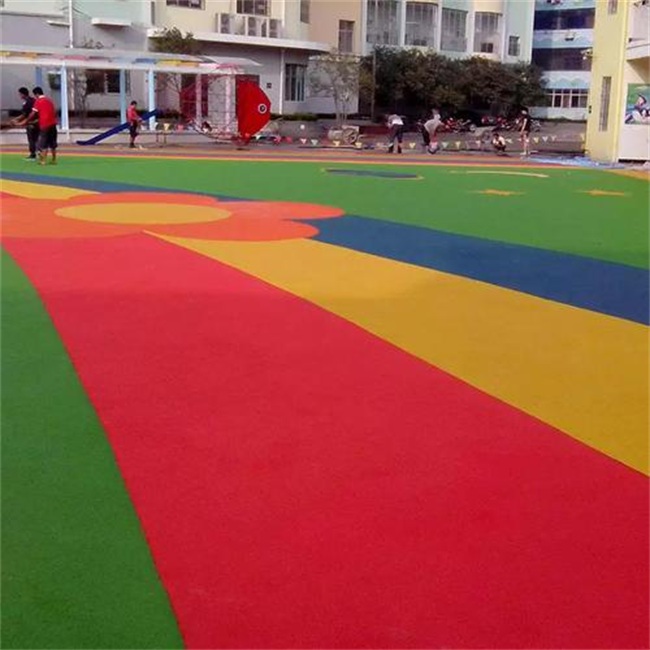
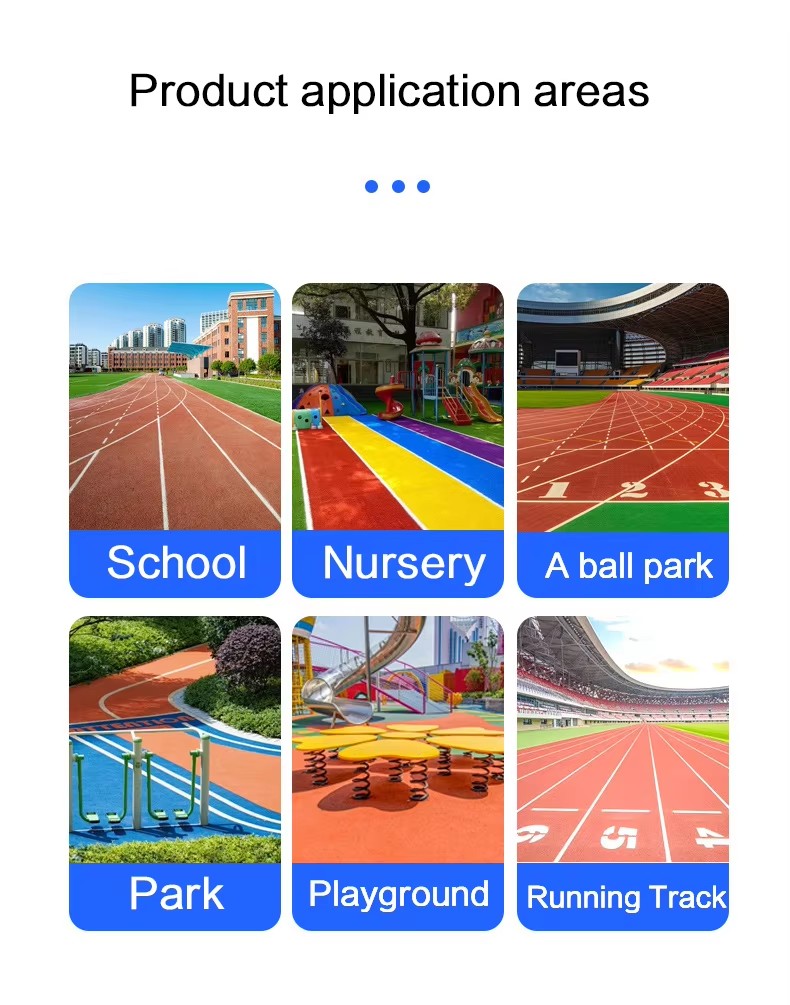
The combination of impact absorption (critical fall height protection), color customization, and accessibility makes EPDM poured-in-place surfacing the premium choice for schools, parks, and daycare facilities. Sulfur-free EPDM is particularly important here due to children's sensitivity to odors and chemical exposure.
Athletic Tracks and Multi-Use Games Areas
Sulfur-free EPDM provides the consistent rebound, traction, and durability required for competitive sports surfaces. The improved tensile strength (4-7 MPa) and elongation (550%+) directly translate to better athlete performance and surface longevity.
Community Parks and Fitness Trails
Color stability and low maintenance make EPDM ideal for public spaces where appearance and durability matter. The material's permeability reduces standing water and ice formation.
Swimming Pool Surrounds and Water Parks
EPDM's slip resistance, chemical resistance, and drainage properties make it suitable for wet environments. Sulfur-free formulations are preferred to avoid any potential reaction with pool chemicals.
Municipal and Government Projects
For public procurement, the combination of safety standards, accessibility compliance (ADA), longevity, and low lifecycle cost makes EPDM the preferred unitary surfacing option.
Supplier Selection: What to Look For
Based on industry best practices, a reliable EPDM rubber surfacing supplier should demonstrate:
Experience: Minimum 10-15 years in the industry with a track record of successful international projects.
Production Capability: In-house manufacturing with 30-50 tons/day capacity and multiple production lines ensures they can handle large orders and meet tight deadlines.
Quality Control: Comprehensive testing for tensile strength, elongation, density, UV stability, and PAH content on every production batch. Suppliers should provide MSDS and test reports from accredited third-party labs.
Technical Support: Ability to advise on binder selection, installation conditions, and troubleshooting. This separates commodity sellers from true partners.
Flexibility: Low or no MOQ, support for custom colors and particle sizes, and the ability to scale up for large projects.

Investing in Performance, Not Just Material
Rubber surfacing is a significant investment in safety, accessibility, and long-term asset value. The cost difference between sulfur-cured commodity EPDM and premium sulfur-free EPDM is modest relative to the total project budget—but the performance difference is dramatic.
By specifying sulfur-free, peroxide-cured EPDM with verified tensile strength (>4 MPa), elongation (>550%), and UV stability, you ensure that your surface will:
- Remain safe throughout its intended lifespan
- Maintain its color and appearance for 5+ years
- Stand up to heavy traffic and extreme weather
- Meet and exceed international safety and environmental standards
As one industry expert noted: you are not just buying a material—you are buying installation quality, documentation, and a repair pathway. Choose your supplier with the same diligence you apply to your contractor, and your rubber surfacing project will deliver decades of reliable performance.
Frequently Asked Questions
Q: Does sulfur-free EPDM really eliminate odor?
A: Yes. Since there is no sulfur in the compound, UV exposure does not generate sulfuric compounds. The material remains odorless even in hot, sunny conditions—a critical advantage for schools, childcare centers, and sensitive environments.
Q: How long should quality rubber surfacing last?
A: Sulfur-free EPDM installed correctly over a sound base typically lasts 8-10 years before showing significant wear. Sulfur-cured materials often begin degrading within 3-5 years.
Q: What is the most common cause of color fading?
A: Poor UV resistance in the EPDM compound, usually due to sulfur crosslinking or low polymer content. Premium sulfur-free EPDM maintains color stability 5 times longer than standard grades.
Q: How can I verify a supplier's product quality before ordering?
A: Request samples, third-party test reports (SGS or equivalent), and MSDS documentation. Arrange a physical sample pour to evaluate coverage, curing, and performance.
Q: Is rubber surfacing ADA-compliant?
A: Yes, properly installed unitary rubber surfaces meet ADA accessibility requirements for firmness and stability, unlike loose-fill materials that can shift and create barriers for wheelchairs and mobility aids.

WOW(LYG) New Material Co Ltd is a manufacturer specializing in the production of EPDM rubber granules. We use sulfur-free vulcanization technology, it increases the service life by more than 3 times than traditional EPDM granules, and enhances the performance, including anti-aging, high-temperature resistance, and colorfastness.
We have over 25 years of production experience and offer customization for colors and granule sizes. NO MOQ.


