 注: 建议图片大小150px*50px
丨
注: 建议图片大小150px*50px Views: 0 Author: Site Editor Publish Time: 2026-07-22 Origin: Site


If you’re reading this article, you certainly don’t need a basic definition of EPDM rubber granules. You’re most likely a construction contractor grappling with the challenges of track installation, a procurement manager comparing quotes from multiple suppliers, or an engineer drafting material specifications for a municipal project.
You already know what EPDM is. What you really need to figure out is: Which granules will retain their color even after ten years? Which supplier can precisely match your RAL color code without requiring a minimum order of twenty metric tons? And how can you avoid catastrophic installation failures caused by using the wrong bonding system?

What Are Rubber Granules for Running Tracks?
Rubber granules for running tracks are durable, elastic granules with a precise granule size range, specifically designed for sports surface applications. Their core raw material is ethylene-propylene-diene monomer (EPDM) rubber. Unlike recycled rubber crumbs, which are typically processed from scrap tires, virgin EPDM granules are engineered specifically for sports surface performance.
The most critical technical distinction lies in the cross-linking structure of the polymer molecular chains. When produced using advanced catalytic processes, the vulcanization and cross-linking of EPDM does not involve sulfur. This is by no means merely a footnote in a chemical formula; rather, it is the fundamental reason why high-end granules can resist UV degradation, maintain elasticity under extreme temperature fluctuations, and remain odorless even when surface temperatures reach 60 degrees Celsius.
Different application scenarios require different granule size specifications:
- 1 to 3 mm granule size: Primarily used for the wear layer on the surface of running tracks—the red or colored portion we commonly see.
- 2 to 4 mm granule size: Often used for elastic cushioning layers or as infill granules for artificial turf.
- 0.5 to 1.5 mm granule size: Suitable for fine-pattern paving and detailing around edges and corners.
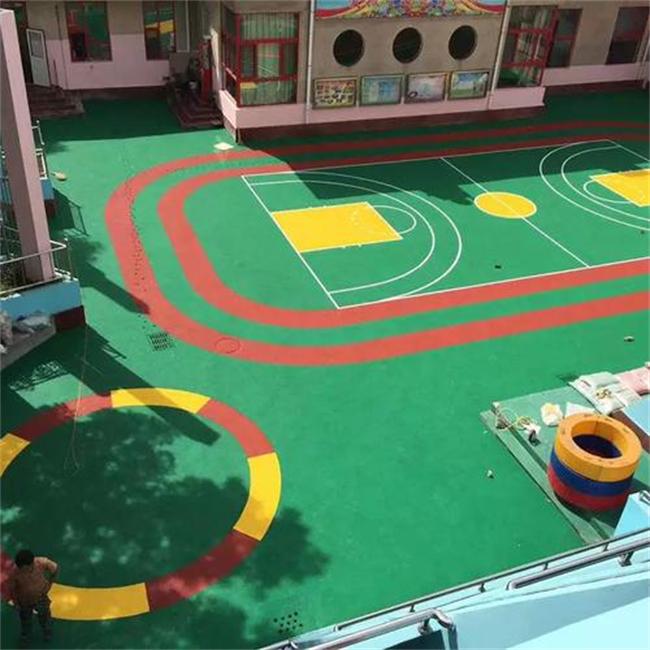
Core Application Scenarios Across the Construction Industry
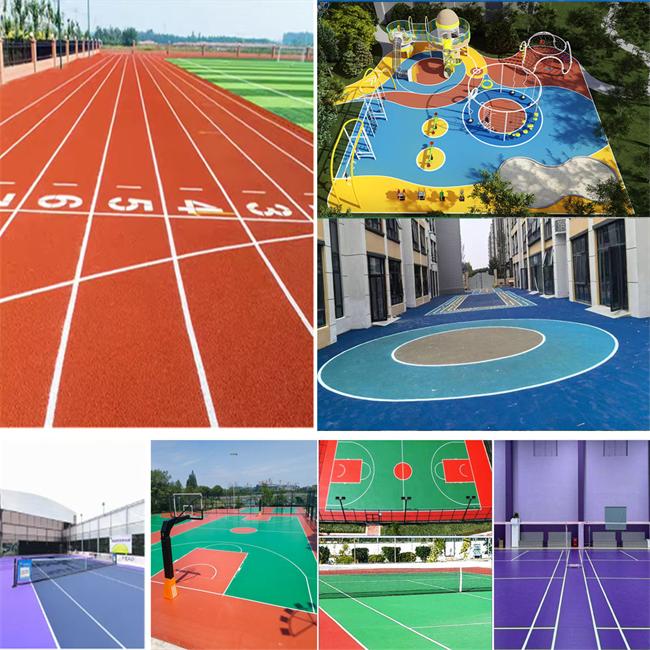
Only by accurately understanding the application scenarios can technical specifications be precisely defined. Below is how professionals classify these projects:
I. Competition-Grade Track and Field Running Tracks
For competition tracks that meet World Athletics certification requirements, the granules must satisfy strict thickness tolerance requirements—typically with a total thickness of 12 to 13 millimeters—and possess specific force absorption rates. Contractors require granules with a tensile strength exceeding 4 MPa to withstand repeated puncture and abrasion from professional track spikes.
II. Playground Safety Surfacing
In this application, the focus shifts from speed to impact absorption. The granule material must maintain a uniform installation thickness to meet the protective requirements for specific fall heights as specified in ASTM F1292 or EN 1177 standards. The challenge for this type of surfacing is long-term exposure to extreme sunlight and high-frequency foot traffic from children; therefore, UV stability is an absolute, non-negotiable requirement.
III. Multipurpose Sports Fields
When used for tennis courts, basketball courts, or indoor soccer fields, these surfaces require granules with an extremely uniform granule size distribution to ensure stable ball bounce trajectories and consistent surface friction coefficients, thereby guaranteeing athlete safety and competitive fairness.
IV. Landscape Gardening and Decorative Surfaces
An increasing number of architects are beginning to use EPDM on rooftop terraces and pedestrian walkways, valuing its permeability and the design flexibility it offers when mixed with the appropriate adhesive. For importers and distributors making bulk purchases, the ability to provide custom color matching is a key differentiator in supplier service levels.
Pain Points: Why Does EPDM Fail Prematurely?
If you have managed sports facilities for more than five years, you have likely witnessed the following phenomena: severe color fading, surface cracking, or a pungent rubber odor in hot weather. These are by no means inevitable; rather, they are the inevitable consequences of selecting substandard raw materials.
The most common failure modes are as follows.
Regarding rapid color fading, granules produced using traditional processes contain sulfur and impurities that are highly prone to oxidation when exposed to UV light, causing the pigments to break down. In contrast, granules made with a sulfur-free vulcanization system have an extremely stable molecular structure that firmly locks the pigments into the polymer chains, effectively preventing UV-induced color degradation.
Regarding the issue of pungent odors at high temperatures, the root cause lies in sulfur compounds decomposing when heated and releasing volatile sulfuric acid-like substances. Sulfur-free technology completely breaks this chemical reaction chain, thereby eliminating the source of the odor.
Regarding the loss of elasticity and surface hardening, the molecular chains in traditional materials break down due to thermal-oxidative aging. The introduction of high-performance antioxidants and a stable, sulfur-free cross-linked structure maintain elasticity and tensile strength at levels between 4 and 7 MPa, extending the service life by up to three times.
Regarding granule detachment caused by adhesive failure, irregular granule shapes and residual surface oil significantly increase bonding difficulty. Granules with high bulk density and a well-defined, three-dimensional structure provide stronger mechanical interlocking forces, which not only reduce adhesive consumption but also substantially enhance the overall strength of the installed layer.

Why Sulfur-Free EPDM Is the New Industry Standard
During the procurement process, you will encounter two types of EPDM granules: “economy grade” and “premium grade.” The difference between the two goes far beyond the amount of pigment added; the core distinction lies in their fundamentally different vulcanization systems.
The vast majority of EPDM granules rely on sulfur to cross-link the polymer chains. This method is low-cost and reacts quickly. However, sulfur is the “Achilles’ heel” of outdoor rubber materials. Sulfur-crosslinked bonds are structurally unstable and extremely prone to breaking under UV exposure and ozone erosion. These microscopic fractures gradually develop into microcracks visible to the naked eye, allowing moisture to penetrate the substrate. Repeated freeze-thaw cycles in cold climates ultimately lead to widespread cracking and peeling of the surface layer.
Our production process employs a sulfur-free cross-linking system, resulting in a highly saturated, chemically stable, network-like structure. For government procurement officials responsible for calculating full life-cycle costs, this translates to tangible long-term benefits, including a significant reduction in maintenance frequency—eliminating the need for costly resurfacing every three years; consistent performance across a wide temperature range from -40°C to 80°C; and the complete elimination of complaints about rubber odors from school staff, students, and nearby residents.

Ten Core Technical Advantages of High-End Sulfur-Free EPDM
For engineers and quality control managers reading this article, the following are key metrics worthy of special attention and subject to quantifiable verification.
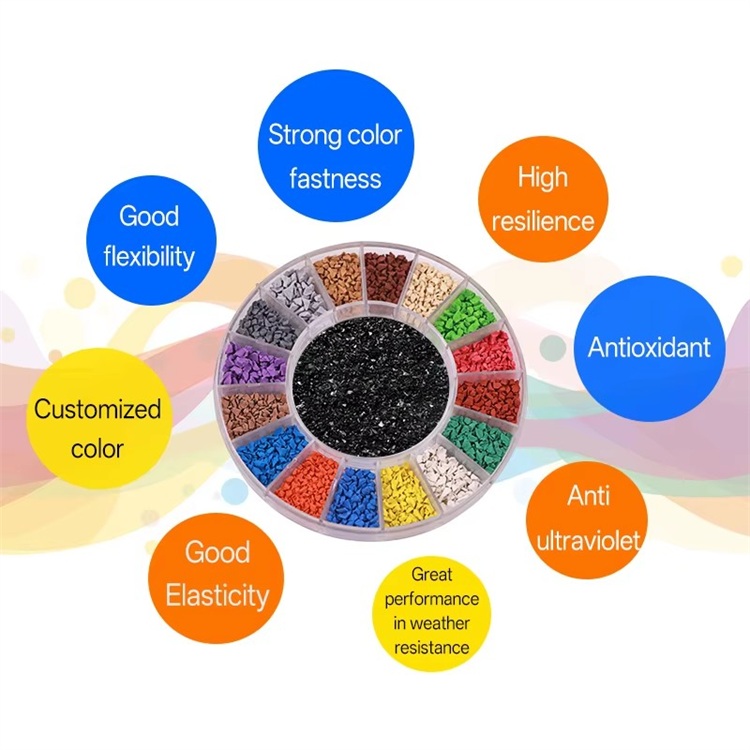
First, it is completely odorless. Since the entire cross-linking system contains no sulfur components, degradation reactions involving sulfur-containing compounds are not triggered even under extreme high-temperature conditions. This makes the material an ideal choice for indoor venues and enclosed stadiums.
Second, a threefold increase in service life. The highly stable molecular chain structure offers exceptional resistance to fracture, ensuring the surface layer maintains a functional lifespan of 10 to 15 years under normal usage conditions, whereas traditional sulfur-cured products typically last only 3 to 5 years.
Third, exceptional tensile strength. Measured values can reach 4 to 7 MPa, which is two to three times that of ordinary granules. Higher tensile strength means greater resistance to scratches from athletic shoe spikes.
Fourth, outstanding elastic recovery. The material rebounds quickly after being compressed, providing athletes with consistent and stable energy return.
Fifth, a five-fold extension in performance retention. The rate of performance degradation is significantly reduced, meaning the track’s physical response in its eighth year is virtually identical to that in its first year.
Sixth, advanced anti-aging capabilities. We have added a highly effective antioxidant system that effectively prevents chalking on the rubber surface—the white powdery substance commonly seen on old tracks.
Seventh, exceptional color stability. Without the interference of sulfur, pigments retain their original hues. The color is integrated throughout the granules rather than merely a surface coating.
Eighth, excellent high-temperature resistance. The polymer matrix maintains structural stability even at temperatures as high as 120 degrees Celsius, effectively preventing surface softening and deformation caused by intense summer heat.
Ninth, food-grade safety standards. The product contains no heavy metals or toxic accelerators and fully complies with the highest standards for safe contact with children.
Tenth, low bulk density and high-angular structure. The granules feature a unique three-dimensional angular structure that forms a strong mechanical interlock with the polyurethane adhesive, reducing adhesive consumption by approximately 10 to 15 percent compared to spherical granules.
How to Choose a Supplier: Avoiding Costly Procurement Mistakes
As an importer or distributor, focusing solely on the lowest price per kilogram is often the most costly mistake. Below are the five most common procurement pitfalls and strategies to avoid them.
Pitfall 1: Passing off recycled material as virgin material. Many so-called black EPDM granules on the market are actually made by blending scrap tire rubber powder with a small amount of virgin material. To avoid this, request that suppliers provide a Material Safety Data Sheet (MSDS) and RoHS and REACH compliance test reports issued by third-party organizations, and pay close attention to the ash content indicator; excessively high ash content indicates an excessive proportion of fillers or recycled material.
Pitfall 2: Inflating Weight by Adding Fillers. Some manufacturers add calcium carbonate powder to the granules to increase the weight per bag; in reality, you are paying for stone powder rather than rubber. To avoid this, test the bulk density. High-end granules, due to their low filler content, are actually lighter per cubic meter, meaning you get greater volume coverage per kilogram.
Pitfall 3: Surface coating instead of through-body coloring. Cheap pellets are often black rubber balls sprayed with a layer of colored paint; once the surface wears away, the original blackish-gray color is exposed. To avoid this, request that the supplier provide cross-sectional samples of the pellets. In high-end products, the color is evenly distributed throughout the entire cross-section of the pellet, rather than merely sitting on the surface.
Pitfall 4: Inconsistent quality between batches. Suppliers lacking their own production control systems may deliver a first batch with a granule size of 2 to 4 mm, only for the next container shipment to consist of 1 to 3 mm granules, completely disrupting your installation schedule. To avoid this, partner with a manufacturer that has a fully integrated production line and a track record of continuous production spanning more than 25 years.
Pitfall 5: Incompatibility between granules and the adhesive system. Not all EPDM granules are compatible with all polyurethane adhesives. The pH level and residual oil content on the granule surface directly affect the adhesive’s curing reaction. To avoid this, request a pre-mix small-sample test before formal construction begins. We can provide specific technical guidance on adhesive mixing ratios based on the specific surface area characteristics of our granules.

In-Depth Answers to Common Questions from Importers and Contractors
Q: Why did the color of my track fade significantly after three years of use?
A: This is typically caused by insufficient pigment stability and the oxidation of sulfur. When sulfur cross-links break, acidic byproducts are generated; these acidic substances have a “bleaching” effect on the pigments from within. Switching to sulfur-free granules, combined with high-pigment iron oxide coating technology, can fundamentally resolve this issue.
Q: Can these granules be used in indoor multi-purpose sports facilities?
A: Absolutely. Thanks to our odorless formulation, we have supplied materials to numerous indoor facilities. Traditional rubber releases volatile organic compounds (VOCs) in enclosed spaces, whereas our granules do not pose such issues.
Q: What is the main difference between 1–3 mm and 2–4 mm granules?
A: For running tracks, 1–3 mm is the standard specification for the top wear layer, providing a dense, compact surface capable of withstanding punctures from spiked shoes. 2–4 mm is typically used for elastic sub-bases or cushioning layers. For playground projects, 2–4 mm is preferable because it allows for greater installation thickness, which better meets fall height rating requirements.
Q: As a landscaping company, how can we ensure the granules bond securely to the concrete subbase?
A: A specialized bonding agent must be applied to the concrete subbase. We can provide technical documentation regarding subbase moisture content and installation procedures. Additionally, the lower the moisture content of the granules during mixing, the better the bond will be.
Q: Other suppliers require a full container load (FCL) as the minimum order quantity. Do you offer more flexible options?
A: Yes. We have no minimum order quantity restrictions. While most distributors choose to order by full container load to reduce costs, we also support sample orders of 100 kg, 500 kg, or 1 metric ton, allowing project-based contractors and engineers to test the material before making bulk purchases.
Q: What is the lead time for custom colors?
A: Standard stock colors can be shipped within 7 to 10 days. The lead time for custom RAL or Pantone colors is typically 15 to 20 days, which is significantly faster than the industry average of over 30 days.

Why Your Project Needs Sulfur-Free EPDM: A Long-Term Return on Investment Analysis
For procurement managers and municipal project contractors, budgets are always tight, and the temptation to purchase inexpensive materials is ever-present. However, the true cost of a track is not merely the unit price of the material, but rather the average cost per year of use.
In terms of maintenance costs, sulfur-free running tracks require only periodic high-pressure water jet cleaning to maintain their appearance. There is no need to spend substantial amounts every two years on surface touch-ups or refinishing. In terms of facility downtime costs, replacing a failed running track means the venue must be closed for several weeks. A high-quality, durable surface ensures your project remains a valuable asset rather than a liability. In terms of safety liability risks, slip-and-fall and abrasion accidents are often directly related to the degradation of the surface material’s performance. A stable coefficient of friction is maintained over the long term because the rubber does not harden or develop a glazed surface over time.
We are not just a supplier—we are your technical partner. With 25 years of deep expertise in the rubber industry, we have integrated internationally leading production technologies to ensure that every batch of our products meets the stringent requirements of World Athletics and safety standards.

Are you ready to choose truly durable materials for your project?
We are a specialized manufacturer of EPDM track rubber granules with over two decades of export experience. We offer comprehensive customization services—from color to granule size—and our team of engineers is on standby to provide full technical support for your specific project.
Contact us to request samples, technical data sheets, or expert advice tailored to your project’s needs.

WOW(LYG) New Material Co Ltd is a manufacturer specializing in the production of EPDM rubber granules. We use sulfur-free vulcanization technology, it increases the service life by more than 3 times than traditional EPDM granules, and enhances the performance, including anti-aging, high-temperature resistance, and colorfastness.
We have over 25 years of production experience and offer customization for colors and granule sizes. NO MOQ.


