 注: 建议图片大小150px*50px
丨
注: 建议图片大小150px*50px Views: 0 Author: Site Editor Publish Time: 2026-07-21 Origin: Site


If you are reading this, you are likely facing a real-world problem. Maybe you are a playground contractor whose last installation faded to a dull pink within a year. Perhaps you are a distributor stuck with a container of EPDM granules that have a strong chemical odor, making them unsuitable for the school project you bid on. Or maybe you are an architect who needs to specify a surfacing material that can withstand intense UV exposure without compromising child safety.
You are not looking for a basic definition. You need answers about performance, longevity, procurement pitfalls, and how to avoid costly callbacks. Let’s cut through the marketing jargon and address the actual challenges of working with Colored EPDM Granules.
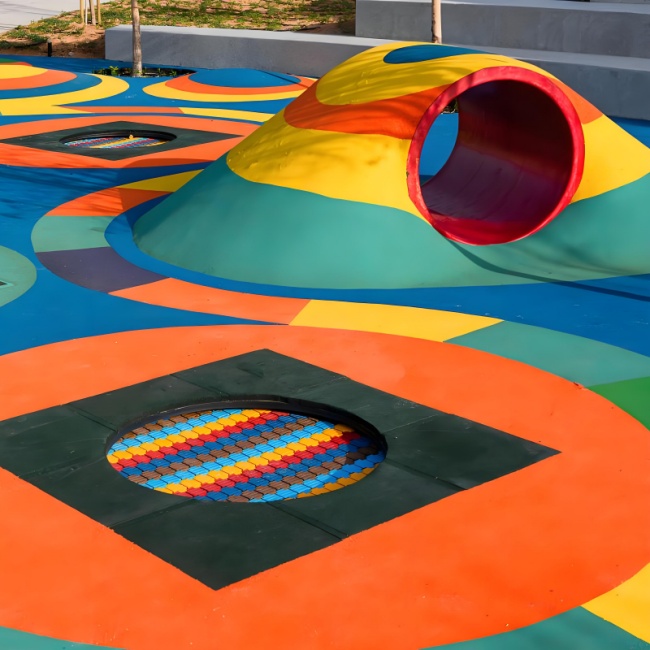
What Are Colored EPDM Granules, Really?
Colored EPDM granules are small, synthetic rubber granules made from Ethylene Propylene Diene Monomer. Unlike cheaper alternatives like SBR (which comes from recycled tires), virgin EPDM is engineered for outdoor performance. The key differentiator in 2026 is the manufacturing process.
Traditional EPDM relies on sulfur for vulcanization (curing). However, the industry is shifting toward sulfur-free or peroxide-cured technologies. Why does this matter to you? Because sulfur breaks down under heat and UV light, leaching out as sulfuric acid—which causes the dreaded "rotten egg" smell on hot playgrounds and accelerates aging. Sulfur-free granules eliminate this chemical reaction, leading to a more stable molecular structure.

The "Why" Behind the Spec: Solving Industry Pain Points
We analyzed the most common complaints about colored EPDM surfaces to explain why this material is often the best choice.
The Challenge of Fading (UV Degradation)
One of the biggest worries for contractors is color stability. Standard EPDM often fails the gray scale test for color fastness after 2,550 hours of UV exposure . In practical terms, this means an expensive red track turning orange within two summers.
- The Solution: High-end EPDM formulations now offer endurance grades that maintain a gray scale rating of ≥3 even after 5,000 hours of UV exposure—almost double the standard requirement . This ensures the playground looks vibrant for years, protecting your reputation and reducing maintenance disputes.
The Challenge of Odor and Toxicity
For schools and municipal projects, safety is non-negotiable. Standard EPDM often contains sulfur or heavy metals.
- The Solution: Advanced manufacturers now produce odorless granules. By removing sulfur, the granules meet food-grade safety standards . This is critical for indoor sports halls, kindergartens, and spaces with high summer temperatures where off-gassing is a concern.
The Challenge of Mechanical Failure (Weak Tensile Strength)
If the granules or the binder fail, the surface crumbles or delaminates. Standard granules often have a tensile strength of around 2-3 MPa.
- The Solution: High-quality Colored EPDM Granules with high rubber content (often denoted by a HIG+ standard) achieve tensile strengths of 4–7 MPa . This elasticity is 2–3 times higher than standard products, ensuring the surface absorbs impact effectively for sports performance and safety.
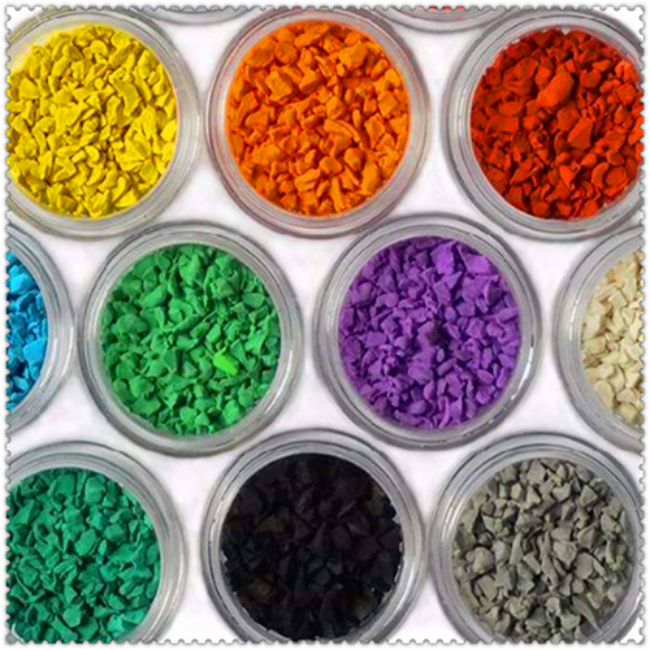
Procurement Pitfalls: How to Avoid Costly Mistakes
Importers and purchasing managers often face a disconnect between the "sample" and the "bulk order." Here is a checklist to protect your next order.
1. The "Binder Compatibility" Trap: You can buy the best granules in the world, but if you use the wrong polyurethane binder, the installation will fail. Aromatic binders are cheap but yellow (turn brown) under UV light. Aliphatic binders are UV-stable. For lighter shades (White, Bright Blue, Pink), you must use aliphatic binders, or the color will shift significantly .
2. The Density Deception: Suppliers often sell you a lower volume of material than you think. Look for products with a lower bulk density. Less weight per cubic meter means you get more coverage per kilogram . It also indicates a higher "air void" content, which contributes to better permeability and shock absorption.
3. The Uniformity Issue: Inconsistent granule size leads to a rough, uneven surface. Always verify the sizing distribution. Good granules should have sharp "stereoscopic" angles (triangular or multi-sided shapes) rather than being round or flat. This interlocking shape creates a stronger mechanical bond with the PU binder.
4. Excessive Powder and Dust: High dust content means the granules are either low quality or degraded. Dust interferes with the adhesion of the PU binder, leading to a weak surface that "powders" or sheds granules quickly. Good manufacturing processes (and thorough pre-shipment inspections) maintain low dust levels .
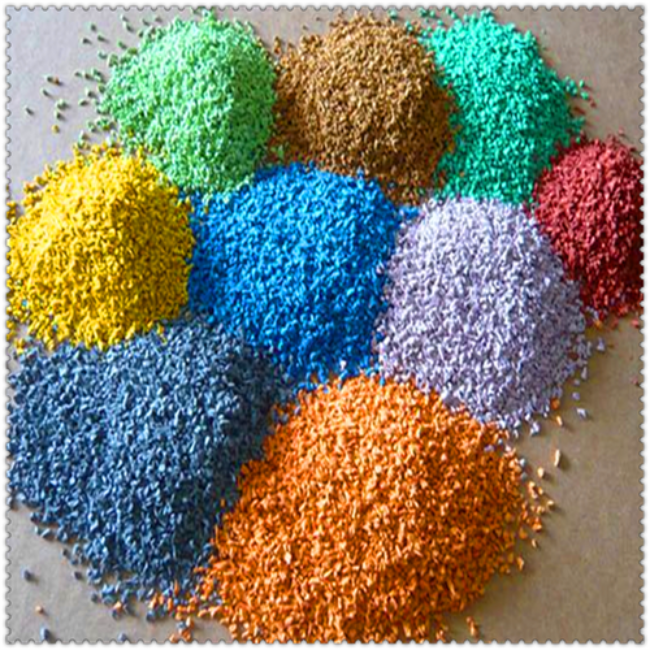
Why the Industry is Shifting to High-Performance EPDM
Beyond the basic colors, the trend in 2026 is toward sustainability and longevity. We are seeing a move away from "cheap" materials toward "cost-effective" ones.
- Total Cost of Ownership (TCO): While sulfur-free EPDM may carry a higher upfront cost, its lifespan is 3 to 5 times longer than conventional EPDM or SBR . If a standard track lasts 6 years, a high-performance EPDM track lasts 18 to 25 years. This reduces the "lifecycle cost" significantly—a major selling point for government procurement projects.
- Customization without MOQ: A common barrier for installers is the Minimum Order Quantity (MOQ). The industry is adapting. It is now possible to source custom colors and specific granule sizes (0.5mm to 4mm) without being locked into container-sized orders, allowing smaller contractors to bid on high-end projects .
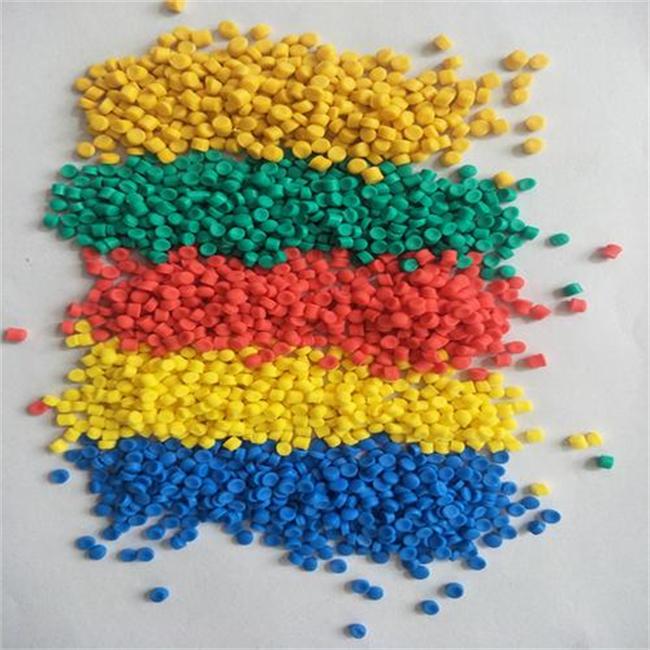
Making the Right Choice
Whether you are laying a kindergarten surface in Europe or a running track in the Middle East, the principles are the same. Prioritize sulfur-free, odorless material. Verify the tensile strength (aim for >4 MPa). Always pair light-colored or bright granules with aliphatic binders .
For procurement professionals, request a technical data sheet that includes tensile strength, UV test results (gray scale rating), and density. Don't just buy a color; buy a performance specification.

Frequently Asked Questions
1. Why do some EPDM playgrounds smell bad in the summer?
The smell is typically caused by the breakdown of sulfur used in the vulcanization process of cheaper rubber granules. Sulfur reacts with UV light and heat, releasing sulfuric acid compounds. High-quality, sulfur-free EPDM granules do not contain sulfur, making them odorless even under intense heat.
2. How do I prevent my EPDM surface from fading?
Color fading is primarily due to UV degradation. You should specify granules with high UV stability (certified to withstand >5,000 hours of weathering). Additionally, ensure the installation uses an aliphatic (UV-stable) polyurethane binder rather than an aromatic binder, as aromatic binders yellow and discolor the surface over time .
3. What is the biggest cost factor in EPDM installation?
The biggest hidden cost is the "binder ratio." Low-quality granules have a high dust content or absorbent surfaces, requiring you to use significantly more expensive PU glue to achieve a bond. High-quality, angular granules bond efficiently, requiring less glue and saving 15–20% on binder costs. Additionally, the elimination of future repairs is a major savings.

WOW(LYG) New Material Co Ltd is a manufacturer specializing in the production of EPDM rubber granules. We use sulfur-free vulcanization technology, it increases the service life by more than 3 times than traditional EPDM granules, and enhances the performance, including anti-aging, high-temperature resistance, and colorfastness.
We have over 25 years of production experience and offer customization for colors and granule sizes. NO MOQ.


