 注: 建议图片大小150px*50px
丨
注: 建议图片大小150px*50px Views: 0 Author: Site Editor Publish Time: 2026-07-21 Origin: Site


If you are a playground contractor, sports surfacing installer, or procurement manager searching for "Sports Court Surfacing," you are not just looking for a product definition. You are likely facing a specific set of challenges. Perhaps you are worried about a project failing due to color fading within a year, or you are dealing with complaints about strong odors on a newly installed kindergarten playground. You might be an importer trying to balance cost and quality, or a government procurement officer needing to ensure a surface meets safety standards for the next decade.
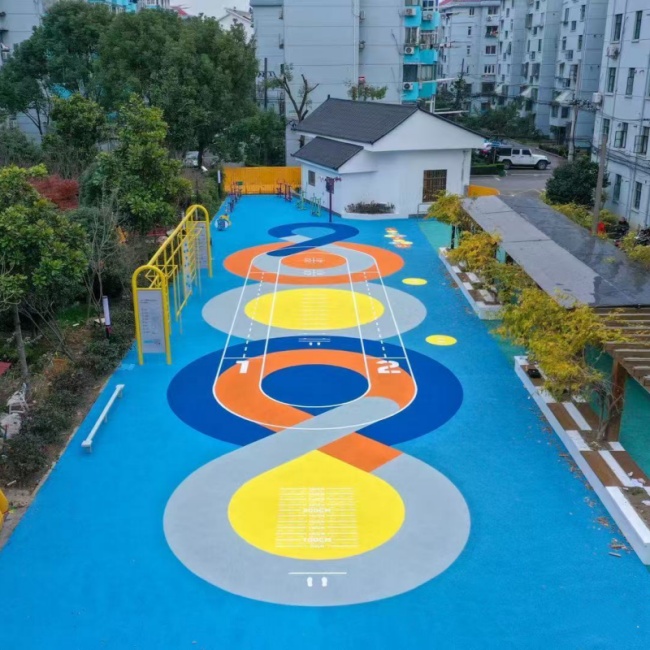
What is Sports Court Surfacing with EPDM?
When we talk about modern sports court surfacing, we are often referring to a system made from EPDM (Ethylene Propylene Diene Monomer) rubber granules. These are synthetic rubber granules known for their exceptional durability and flexibility. Unlike surfacing made from recycled tire rubber (SBR), EPDM is engineered for high performance. It is typically mixed with a polyurethane (PU) binder and troweled or poured onto a prepared base (like asphalt or concrete) to create a seamless, resilient, and porous surface .

Why EPDM? Solving the Core Problems of Traditional Surfaces
Traditional surfaces like asphalt or plain concrete crack under stress and offer no fall protection. Even other rubber options, like SBR (Styrene Butadiene Rubber) from recycled tires, have significant weaknesses. For outdoor sports courts and playgrounds, the difference comes down to chemistry. EPDM's molecular structure makes it inherently more stable.
Here is a breakdown of how high-quality EPDM surfacing solves common industry problem:
Problem: Color Fades and Surface Looks Worn Within Months
The solution is high UV resistance and color stability. High-grade EPDM granules are formulated with advanced pigments to withstand years of sun exposure without significant fading .
Problem: Strong, Unpleasant Odors, Especially in Heat
The culprit is often sulfur-based curing agents used in lower-quality rubbers. A premium solution uses sulfur-free, "peroxide-cured" EPDM. This prevents the breakdown of sulfur compounds under UV and heat, which typically releases foul-smelling gases .
Problem: Constant Complaints About Injuries from Hard Falls
The surface must offer superior shock absorption and elasticity. A properly installed EPDM system provides a cushioned, slip-resistant surface that meets critical safety standards for impact attenuation, such as EN 1177 .
Problem: Surface Cracks and Deteriorates Quickly
This points to poor tensile strength and aging resistance. Advanced EPDM technology delivers tensile strength of 4-7 MPa and superior molecular stability, significantly extending the surface's lifespan .
The Hidden Trap: Why Buying Cheap Costs You More
For procurement managers and importers, the price per kilogram is a critical metric, but it tells only half the story. The other half lies in two key factors: binder compatibility and bulk density.
First, the quality of the PU binder you use with the granules is as important as the granules themselves. A cheap binder can yellow, degrade, or fail to adhere, causing the surface to crumble regardless of the EPDM quality . Second, high-quality EPDM granules often have a lower bulk density. This means you need fewer kilograms of material to cover the same area, effectively lowering your total project cost even if the unit price per kg is higher .
Types of Sports Court Surfaces: Understanding the Applications
Different projects require different specifications. Here is how EPDM surfacing is typically categorized:
1. Poured-in-Place (Monolithic) Surfaces
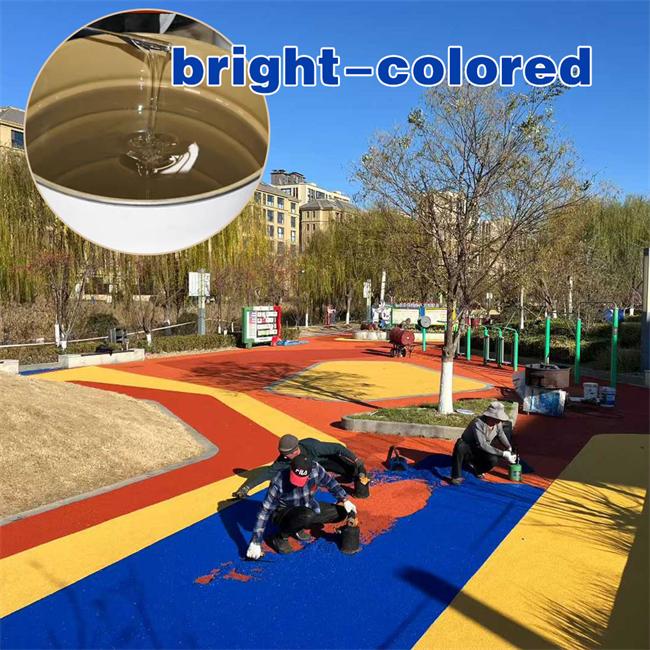
This is the most common system for high-quality sports courts and playgrounds. It involves mixing the EPDM granules with a binder on-site and troweling it to a seamless finish. Typical thickness ranges from 8mm to 15mm, with a 1cm (10mm) thickness being standard for many applications . A common setup includes a black SBR rubber shock pad layer for cost-effective impact absorption, topped with a vibrant, high-performance EPDM wear layer .
2. EPDM Top Layer for Tracks and Courts
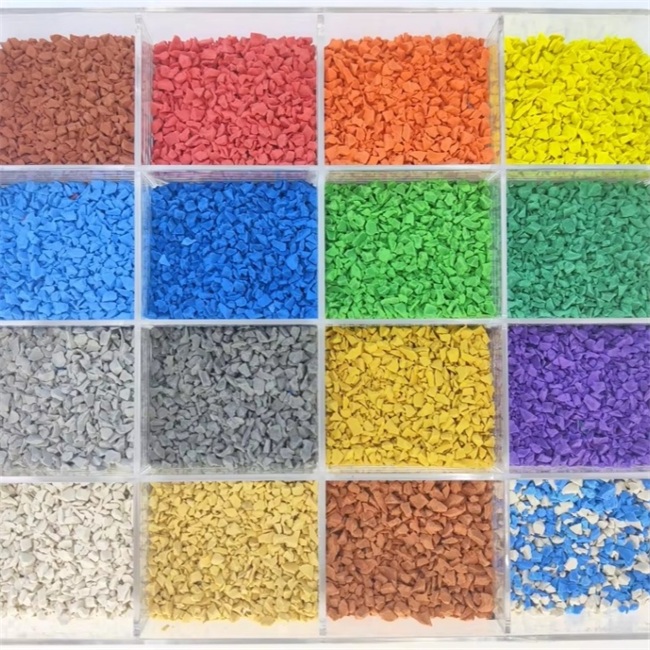
Many prefabricated or multi-layer systems use a thin (often 2-3mm) layer of fine EPDM granules (0.5-1.5mm) as a colorful, weather-resistant wearing course over a more economical base layer .
3. EPDM Tiles and Mats
For some applications, pre-manufactured rubber tiles offer a modular solution. While not always the choice for high-performance running tracks, they are popular for gyms and some playground applications due to ease of installation .
How to Avoid Procurement Mistakes: A Checklist for Professionals
For importers, distributors, and project managers, the key to success is rigorous supplier evaluation. Don't make a decision based on price alone.
Verify the Basics:
Check for a valid business license and ISO 9001 quality management certification. This indicates a baseline level of operational stability .
Demand Performance Data, Not Just Promises:
Request third-party lab test reports, not just in-house data. Key metrics include:
- Tensile Strength (MPa): Should be robust (e.g., >3.5 MPa) .
- UV & Aging Resistance: Request specific data on color fastness .
- Granule Size Consistency: Inconsistent sizes lead to uneven surfaces. Ensure the supplier strictly controls granule size for your application .
Trust but Verify (Order Samples):
Always order samples before placing a bulk order. Conduct your own simple tests for color consistency, dust levels, and shape uniformity .
Audit the Factory and Supply Chain:
Ask for video walkthroughs of the production facility. Check for inventory management and quality control checkpoints . Look for suppliers with high reorder rates and responsive communication (e.g., ≤4 hours response time) as these are strong indicators of reliability .
Choosing a Partner, Not Just a Product
Selecting the right sports court surfacing is a critical decision that impacts public safety, project longevity, and your professional reputation. By understanding the science behind EPDM, the pitfalls of low-quality materials, and the crucial questions to ask suppliers, you can secure a surface that performs for decades.
Why Partner with Us?
With over 25 years of industry leadership, we offer more than just product—we offer peace of mind:
- Superior, Odorless Technology: Our proprietary sulfur-free EPDM ensures no unpleasant smells, even under intense heat.
- Unmatched Performance: Our granules offer 3x the lifespan and 2-3x better elasticity (4-7 MPa tensile strength) compared to conventional products.
- Engineered for Color Stability: Our advanced antioxidant formulation keeps colors vibrant and prevents fading.
- Flexible and Fast: We offer no minimum order quantity (MOQ) and full customization of color and granule size, with a fast turnaround to meet tight deadlines.


Contact us today to discuss your specific project requirements. Let's build a surface that stands the test of time.
WOW(LYG) New Material Co Ltd is a manufacturer specializing in the production of EPDM rubber granules. We use sulfur-free vulcanization technology, it increases the service life by more than 3 times than traditional EPDM granules, and enhances the performance, including anti-aging, high-temperature resistance, and colorfastness.
We have over 25 years of production experience and offer customization for colors and granule sizes. NO MOQ.


