 注: 建议图片大小150px*50px
丨
注: 建议图片大小150px*50px 


The Real Problem with Buying EPDM
You are not looking for another product brochure. You are here because you have been burned before—or you have seen colleagues get burned.
Maybe you are a playground contractor who installed a beautiful colorful surface last summer, and now, less than 12 months later, the red has faded to pink, the green looks washed-out gray, and the client is demanding answers. Maybe you are a distributor who received a 20-foot container of EPDM granules only to discover that three different batch numbers have three different granule size distributions—and your construction clients are refusing to pay. Maybe you are a government procurement officer who needs to evaluate bids from five suppliers, but the technical specifications are so inconsistent you cannot even compare them fairly.
That is what this guide is for.
This is not a marketing piece. This is a technical buying guide written for professionals who need to specify, purchase, install, and stand behind EPDM rubber granules for sports flooring, playground safety surfacing, and landscape applications. I have spent over 25 years in this industry—as a production engineer, a quality control specialist, and an international trade consultant. I have seen what works and what fails. I have tested materials from dozens of manufacturers across China, Southeast Asia, Europe, and North America.
Here is the truth: Most EPDM granules on the market today are not made the same way. And the differences are not marginal—they are the difference between a surface that lasts 3 years and a surface that lasts 15 years.
This guide will show you exactly what to look for, what questions to ask, what tests to demand, and—most importantly—how to avoid the costly mistakes that plague this industry.
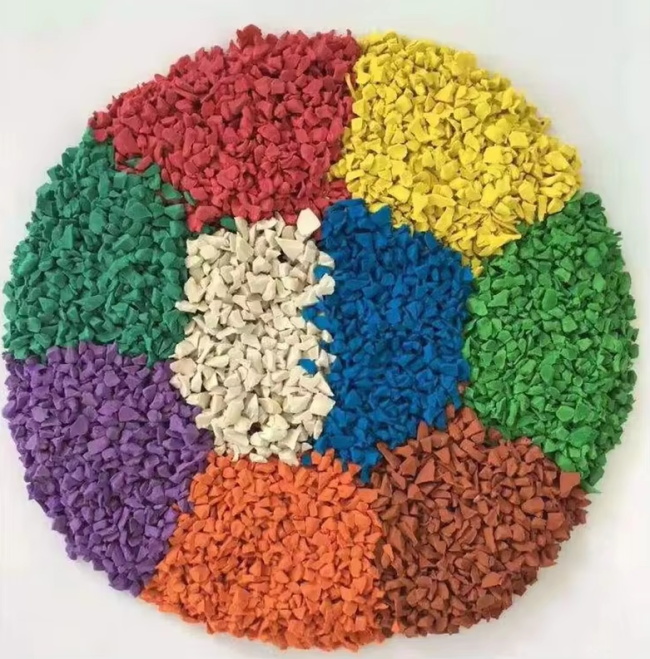
What Is EPDM? (And Why the Manufacturing Process Matters More Than You Think)
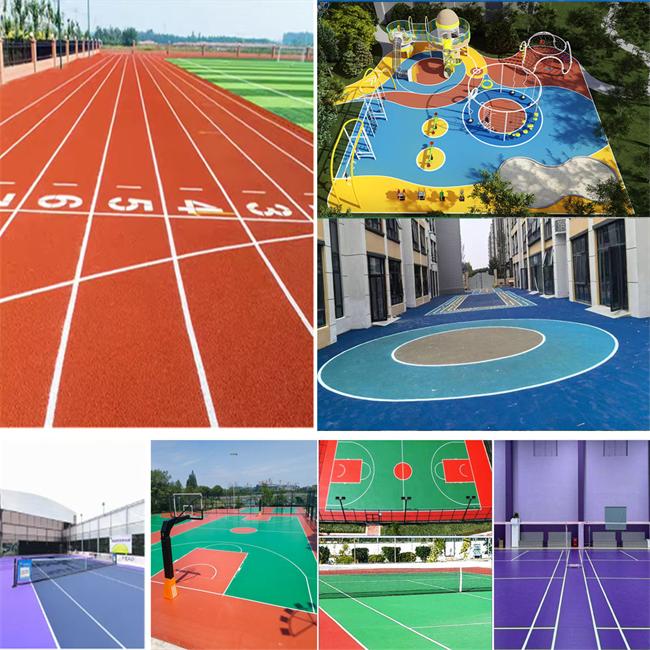
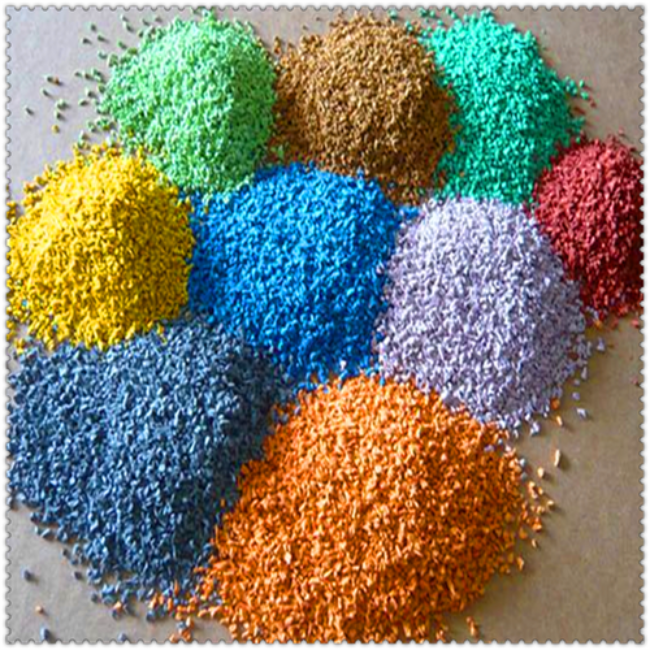
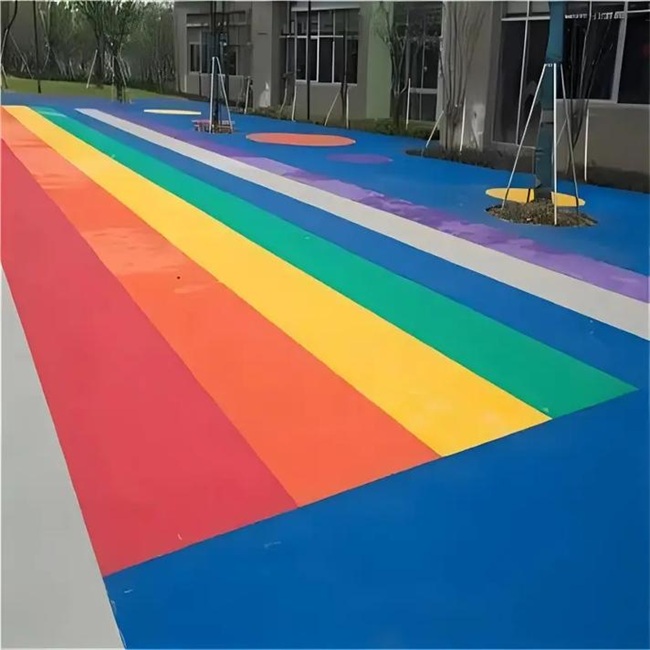
EPDM stands for Ethylene Propylene Diene Monomer—a synthetic rubber known for exceptional weather resistance, ozone resistance, and UV stability. In the construction and surfacing industry, EPDM is most commonly seen as colored rubber granules used in:
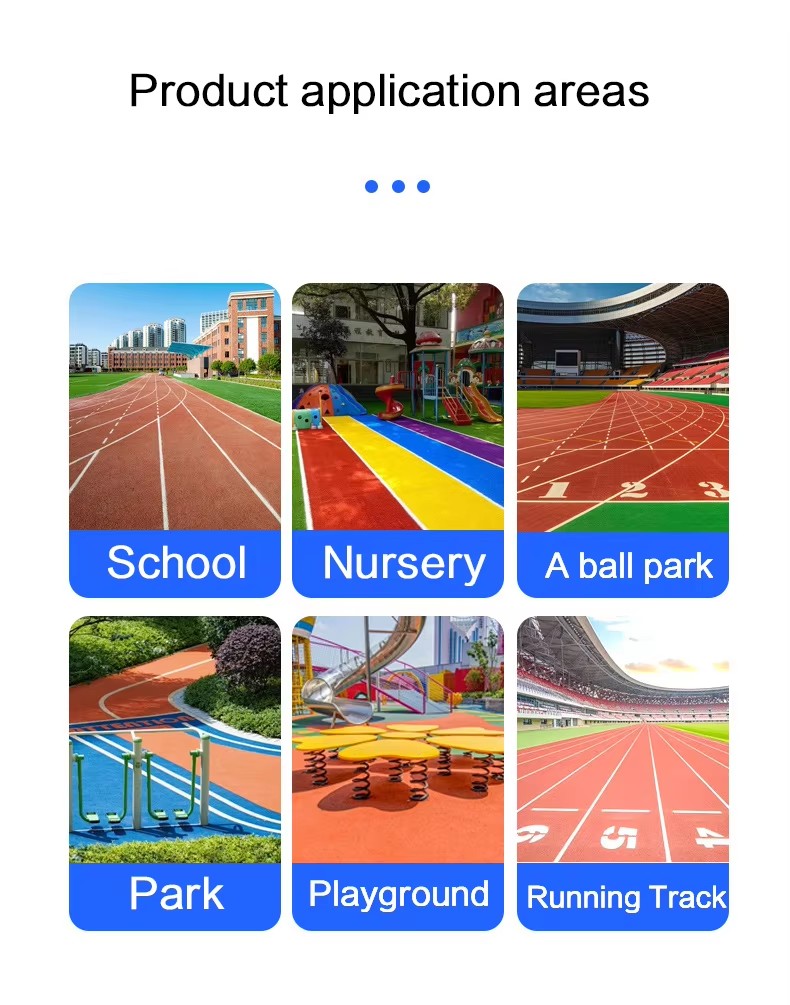
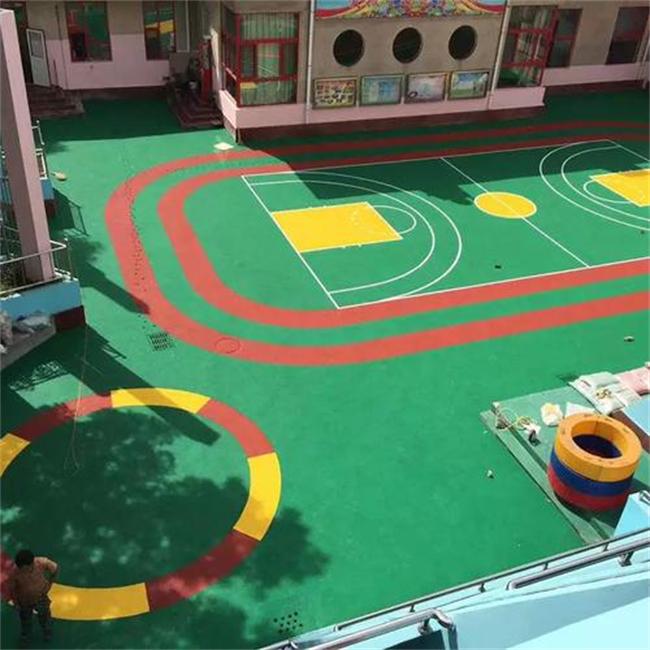
- Poured-in-place playground safety surfacing (critical fall height protection)
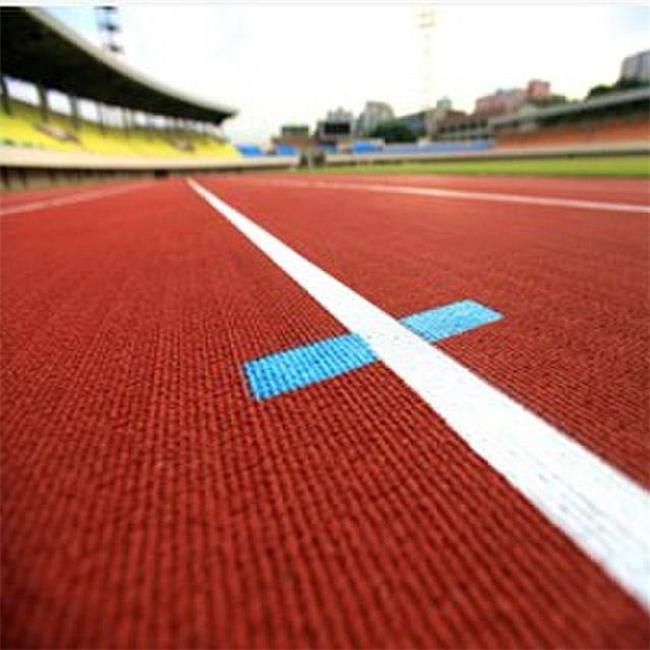
- Athletic track surfaces (running tracks, multi-sport courts)
- Shock pads under artificial turf
- Landscaping mulch and pathways
- Industrial flooring and anti-fatigue surfaces
- Equestrian arena footing
- Rooftop terrace and deck surfacing
But here is what most suppliers will not tell you:
The vast majority of EPDM granules manufacturers use sulfur-based vulcanization systems. Sulfur is cheap, widely available, and has been the industry standard for decades. There is just one problem: when sulfur-cured EPDM is exposed to heat and UV radiation (which it will be, continuously, in outdoor applications), the sulfur bonds break down and release sulfuric acid derivatives. That is what causes:
- That unpleasant rubber smell that intensifies on hot summer days
- Accelerated color fading (the acidic byproducts attack the pigment)
- Premature hardening and cracking
- Loss of elasticity within 2 to 3 years
- Reduced shock absorption, which is a critical safety failure for playground applications
This is not a minor issue. I have personally tested playground surfacing materials from 14 different Chinese manufacturers. The sulfur-cured products from seven of them showed measurable performance degradation after just 300 hours of accelerated UV weathering. The same test that mimics 12 to 18 months of outdoor exposure in a subtropical climate.
So when you ask "How to buy EPDM," the real question you should be asking is:
"How do I buy EPDM that is NOT sulfur-cured?"

The Technical Difference: Sulfur-Cured vs. Peroxide-Cured (Sulfur-Free) EPDM
Here is the technical breakdown that most procurement documents get wrong.
Conventional Sulfur-Cured EPDM
Property: Performance
Tensile strength: 2–3 MPa (typical)
Elongation at break: 200–300%
Heat aging resistance: Moderate—significant degradation above 80°C
UV resistance: Poor—color shift within 6–12 months
Odor Strong; worsens with heat
Service life (outdoor): 3–5 years under ideal conditions
Environmental standard: May off-gas VOCs; not food-contact safe
Sulfur-Free (Peroxide-Cured) EPDM
Property: Performance
Tensile strength: 4–7 MPa (2–3x higher)
Elongation at break: 350–500%
Heat aging resistance: Excellent—minimal degradation up to 150°C
UV resistance: Outstanding—color retention 5x longer
Odor: None—no sulfur compounds, no sulfuric acid off-gassing
Service life (outdoor) :12–15+ years
Environmental standard: Can meet food-grade safety standards
The tradeoff? Peroxide-cured EPDM is more expensive to produce. The raw materials cost more, the processing requires tighter temperature controls, and the yield is lower. That is why most manufacturers stick with sulfur.
But consider this calculation:
A 10,000-square-foot playground surface using sulfur-cured EPDM costs, say, $18,000 installed. It needs to be resurfaced in 4 years. That is $4,500 per year in amortized cost.
The same surface using peroxide-cured EPDM costs $25,000 installed. It lasts 15 years. That is $1,667 per year.
Which one is really cheaper?
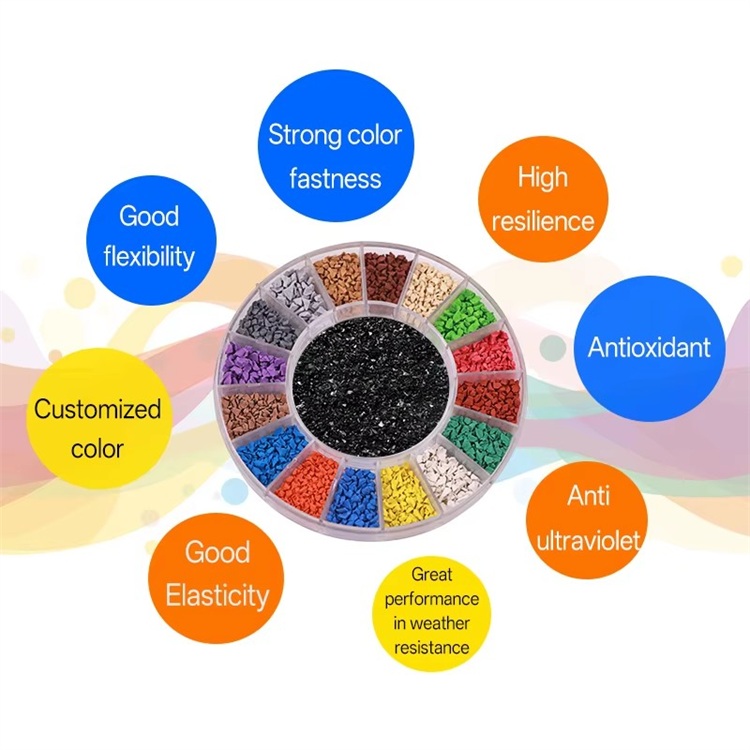
What Smart Buyers Look For: The 12-Point EPDM Inspection Checklist
When I train procurement teams from international construction firms, I give them this checklist. Use it for every supplier evaluation and every shipment inspection.
1. Certification of Sulfur-Free Manufacturing
Demand a written specification stating the vulcanization system used. "Sulfur-free" or "peroxide-cured" should be explicitly stated. Do not accept "low-sulfur" or "reduced sulfur"—these are not the same.
2. Volatile Organic Compound (VOC) Testing
Sulfur-cured EPDM emits VOCs, especially in heat. Request third-party VOC test reports. Sulfur-free EPDM should show negligible VOC emissions—comparable to food-grade rubber.
3. Tensile Strength Testing (ASTM D412)
Minimum acceptable: 4 MPa. Quality sulfur-free EPDM achieves 4–7 MPa. If the supplier cannot provide a tensile test report from a recognized lab, that is a red flag.
4. Elongation at Break (ASTM D412)
Minimum acceptable: 350%. Higher elongation means the granule can stretch and recover without cracking—critical for impact absorption.
5. Heat Aging Resistance (ASTM D573)
Test condition: 70°C for 168 hours. The material should retain at least 85% of its original tensile strength. Sulfur-cured materials typically drop below 70%.
6. UV Weathering (ASTM G154 or ISO 4892)
This is where the rubber meets the road—literally. Demand a QUV test report showing color change (ΔE) after 500 hours. Sulfur-free EPDM should show ΔE of less than 2.0 (barely perceptible color shift). Sulfur-cured EPDM often shows ΔE above 5.0 within 300 hours.
7. granule Size Distribution (Sieve Analysis)
For poured-in-place applications, consistent granule size is non-negotiable. Ask for a sieve analysis showing the percentage retained on each mesh size.
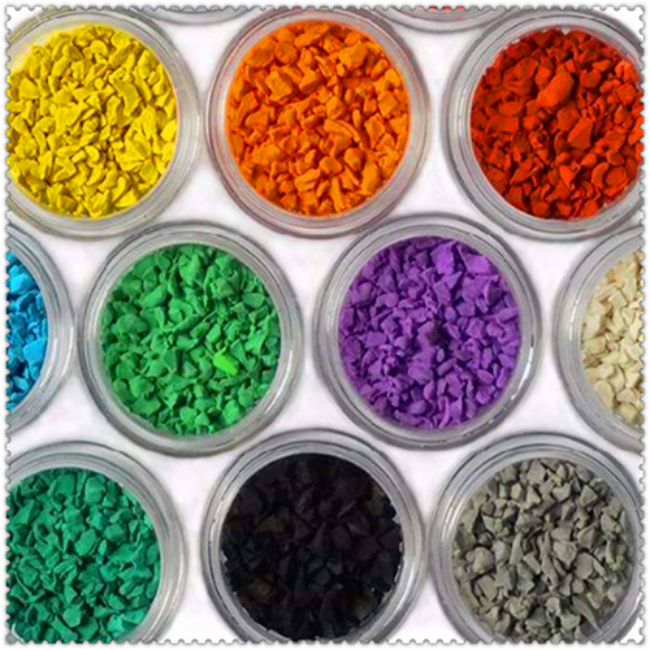
- 0.5–1.0 mm: Fine—good for top coats and texture
- 1.0–2.0 mm: Medium—most common for playgrounds
- 2.0–4.0 mm: Coarse—used for base layers
- 4.0–6.0 mm: Extra coarse—shock absorption base
Here is the critical point: all granules in a single shipment should fall within a ±5% tolerance band of the specified size range. If you receive a shipment labeled 1.0–2.0 mm and 20% of the granules are below 0.5 mm or above 2.5 mm, your installation will have inconsistent density, poor binder coverage, and likely failure.
8. Apparent Density (Bulk Density)
Lower apparent density means more volume per kilogram—better coverage. Quality sulfur-free EPDM typically shows 0.50–0.65 g/cm³. Sulfur-cured material tends to be denser (0.70–0.85 g/cm³) because of the different filler systems used.
Practical implication: A supplier who offers a lower price per kilogram but has higher density may actually cost you more per square meter installed.
9. Color Consistency (ΔE Between Batches)
This is one of the most common complaints I hear from contractors. "The first shipment was bright red. The second shipment was orange-red. The client rejected the whole job."
Demand a color tolerance specification: ΔE ≤ 1.5 between batches. And ask to see the spectrophotometer readings, not just a color card.
10. Ash Content
High ash content means more inorganic filler and less rubber. This directly impacts elasticity, UV resistance, and longevity. Acceptable ash content: ≤ 12%. Anything higher suggests excessive calcium carbonate or clay fillers being used to cut costs.
11. Moisture Content
EPDM granules should have moisture content below 0.5%. Higher moisture can cause:
- Poor PU binder adhesion
- Bubbling during installation
- Inconsistent curing
- Reduced tensile strength
12. Odor Test
This is simple but effective. Take a handful of granules, place them in a sealed glass jar, and leave it in direct sunlight or warm area (50–60°C) for 4 hours. Open the jar and smell.
- Sulfur-free EPDM: Odorless or very faint rubber smell
- Sulfur-cured EPDM: Pungent, acrid, chemical smell (often described as "burnt tire" or "sulfur-like")
Common Questions from Real Buyers (and Honest Answers)
"Why is sulfur-free EPDM more expensive?"
Because the peroxide curing system costs significantly more than sulfur, and the process has a lower yield. However, as shown above, the total cost of ownership over the product lifecycle is lower.
"I have seen prices ranging from $0.80/kg to $3.50/kg. What is the real market price?"
Realistically:
- $0.80–$1.20/kg: This is almost certainly recycled EPDM or sulfur-cured with high filler content. Avoid for any professional application.
- $1.20–$2.00/kg: Mid-range sulfur-cured or blended products. Acceptable for non-critical indoor use.
- $2.00–$3.00/kg: Quality sulfur-free EPDM from reputable manufacturers. This is where serious buyers should focus.
- $3.00+/kg: Premium material with specific certifications (e.g., ASTM F1292, EN 1177, food-grade). Usually imported from Europe or high-end Asian manufacturers.
Warning: I have seen suppliers quote $1.50/kg for "sulfur-free" EPDM. When tested, it was sulfur-cured with a deodorizer added. Deodorizers mask the smell but do not prevent the UV degradation or sulfuric acid off-gassing.
"How do I verify the supplier's claims without visiting the factory?"
If you cannot do a factory audit, demand samples. Not 100 grams—demand 5 kilograms. Here is why: 100 grams can be hand-selected from the best batch. Five kilograms is a representative sample.
Then send that sample to an independent lab (e.g., SGS, TÜV, Bureau Veritas) for testing. The tests to run:
- Tensile strength (ASTM D412)
- UV weathering (ASTM G154)
- Ash content
- granule size distribution
If the supplier is legitimate, they will welcome this testing. If they resist, you have your answer.
"What is a realistic MOQ?"
Here is the reality:
- Most Chinese suppliers require 20–40 tons for a full container load
- Some have a minimum of 10 tons
- A few manufacturers with flexible production lines will accept 1–5 ton orders
The difference comes down to who actually controls the production process. Manufacturers who operate their own compounding and curing lines can adjust batch sizes. Suppliers who buy from third-party factories cannot.
If you are a contractor or installer looking for 500 kg to 2 tons for a specific project, you should be able to find a direct manufacturer willing to work with you. Any supplier who insists on a 20-ton minimum for a custom color is either not a manufacturer or is unwilling to make the production change.
"How long should delivery take?"
From order confirmation to shipment:
- Standard colors (black, green, red, blue): 15–25 days
- Custom colors: 25–45 days (requires color matching and trial production)
- Sample production: 5–10 days
If a supplier promises delivery in 10 days for a custom color, they are either rushing quality control or shipping from existing stock (which means the color match may not be exact).
"Why did my last shipment smell even though it was labeled 'low-odor'?"
"Low-odor" is a marketing term, not a technical specification. The supplier probably added a fragrance or masking agent to a sulfur-cured product. This is common—and deceptive. The masking agent wears off in a few months, and the sulfuric acid smell emerges as the rubber degrades.
The only reliable approach: ask for the technical data sheet showing the curing system. If it says "sulfur-cured" anywhere, move on.

The 5 Most Expensive Mistakes in EPDM Procurement
I have seen these mistakes cost buyers millions of dollars in replacement, legal settlements, and lost reputation.
Mistake 1: Buying on Price Alone
This is the most common and most costly error. A school district in Florida chose the lowest bidder for a 50,000-square-foot playground. Saved $0.40/kg on 40 tons. Total savings: $16,000. Two years later, the surface looked terrible, had lost 40% of its impact absorption, and the district had to spend $120,000 to replace it.
Price per kilogram is not the metric that matters. Cost per year of service life is what matters.
Mistake 2: Not Testing for UV Stability
Color fading is not just aesthetic. When pigments break down, it indicates the rubber matrix is also degrading. That degradation affects elasticity, tensile strength, and—most critically—fall height safety ratings.
If a playground surface was designed for a critical fall height of 1.5 meters, and it loses 30% of its impact absorption after 2 years, that surface is now unsafe for that height. This is a liability issue.
Mistake 3: Assuming All "EPDM" Is the Same
EPDM is a raw material. The final properties depend entirely on formulation—the choice of fillers, plasticizers, curing agents, and process conditions. Two batches of EPDM from the same factory can have very different performance if the formulation changed.
Always require a Certificate of Analysis (COA) for every shipment. Not just for the first shipment. Every shipment.
Mistake 4: Overlooking Moisture Content
I have watched installation crews pour a beautiful surface, only to see it bubble and delaminate 48 hours later. The cause: EPDM granules with 1.5% moisture content that released water vapor during the PU binder curing process.
The PU binder and the EPDM granules must arrive within specification—and the specifications must align.
Mistake 5: Not Securing Performance Guarantees
The best suppliers will offer a written performance guarantee covering:
- Color retention (e.g., ΔE ≤ 3.0 after 3 years)
- Tensile strength retention (e.g., ≥80% of original after 5 years)
- No offensive odor under normal conditions
If a supplier will not put performance guarantees in writing, find another supplier.

The Sulfur-Free Advantage: Technical Deep Dive
Since this is a technical guide, let us get specific about why sulfur-free EPDM performs so much better.
The Chemistry
Sulfur-cured EPDM uses elemental sulfur and accelerators to create cross-links between polymer chains. This produces polysulfide cross-links (with 2–8 sulfur atoms per cross-link). These are:
- Thermally unstable
- Hydrolytically sensitive
- Ozone-reactive
When these polysulfide bonds break, they release sulfenic acid and sulfinic acid derivatives. These acids:
- Attack the zinc oxide and stearic acid activators in the compound
- Catalyze further degradation of the polymer backbone
- React with pigments (especially organic reds, oranges, and yellows)
- Cause chain scission, reducing molecular weight and tensile strength
Peroxide-cured EPDM uses dicumyl peroxide or similar compounds to create carbon-carbon cross-links. These bonds are:
- Thermally stable up to 180°C
- Chemically inert to water and acids
- Ozone-resistant
- Acid-free decomposition products
The result: carbon-carbon cross-links do not degrade, do not release acids, and do not attack pigments or the polymer chain.
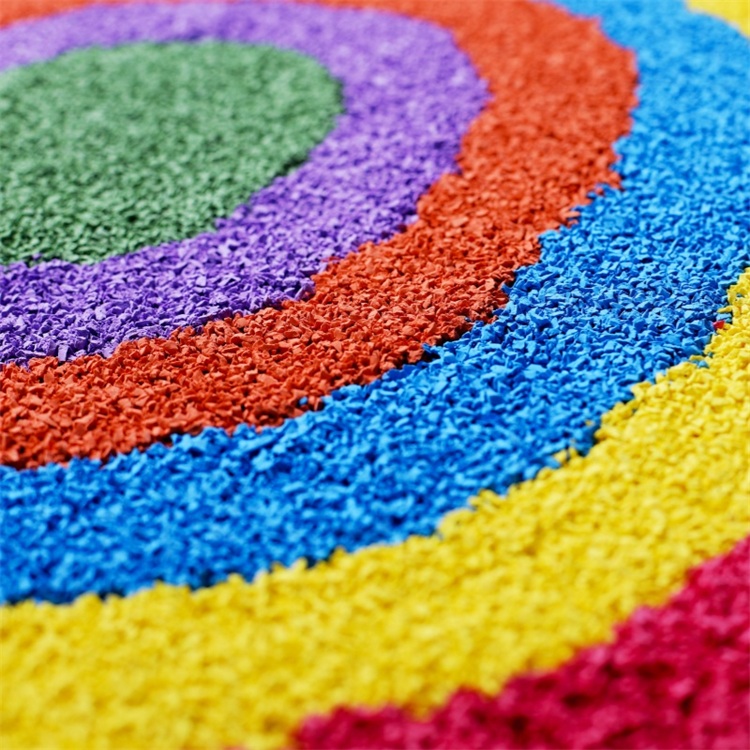
Application-Specific Buying Guidance
Different projects have different requirements. Here is how to tailor your buying criteria.
For Playground Contractors
Your priorities:
- Critical fall height compliance (ASTM F1292 or EN 1177)
- Color retention to meet community aesthetic requirements
- No off-gassing that could affect children
What to ask suppliers:
- Does your EPDM meet ASTM F1292 for impact attenuation?
- What is the ΔE after 500 hours QUV testing?
- Is your product certified as VOC-free?
- Can you provide a no-odor guarantee for 5 years?
Recommended specification: Sulfur-free, tensile ≥ 5 MPa, granule size 1.0–2.0 mm for wear layer, 2.0–4.0 mm for base layer, ΔE ≤ 1.5 between batches.
For Sports Flooring Contractors
Your priorities:
- Consistent texture for uniform ball bounce and athlete traction
- Dimensional stability (no cracking or warping)
- High tensile strength to withstand cleat/stud penetration
What to ask suppliers:
- What is the elongation at break? (Minimum 400% for sports surfaces)
- Does your product maintain traction when wet?
- What testing have you done for abrasion resistance?
Recommended specification: Sulfur-free, tensile ≥ 6 MPa, elongation ≥ 400%, granule size 0.5–1.0 mm or 1.0–2.0 mm depending on application.
For Importers and Distributors
Your priorities:
- Supply chain reliability and consistency
- Competitive landed cost
- Low rejection rate from your contractor clients
What to ask suppliers:
- How many production lines do you operate?
- What is your annual capacity?
- What quality control protocols do you use (SPC, Six Sigma, ISO)?
- How do you handle complaints or quality deviations?
- Can you supply color-matched products across different shipment dates?
Recommended specification: Request 5 kg samples from 3 different production batches made 6 months apart. Test them for color consistency and performance. If they match, the supplier has good process control.
For Government Procurement
Your priorities:
- Documented compliance with standards
- Transparency in manufacturing origins
- Long-term warranty and lifecycle cost analysis
What to ask suppliers:
- What certifications do you hold (ISO 9001, ISO 14001, ISO 45001)?
- Can you provide a 10-year performance bond or warranty?
- What independent lab testing have you performed?
- Do you have reference projects of similar scale?
Recommended specification: Sulfur-free, third-party tested for ASTM F1292, EN 1177, and EN 71-3 (for playground safety), with a 10-year pro-rata warranty.
The Installation Connection: Why Material Quality Dictates Installation Success
EPDM granules are useless without proper installation—but here is the part that contractors know and procurement professionals often overlook:
Poor quality granules cannot be "fixed" by good installation.
If granules have high moisture content, the PU binder will foam. If the granule size distribution is inconsistent, you will get soft and hard spots in the surface. If the granules contain excessive filler (high ash content), they will not absorb the binder properly and the surface will delaminate.
Conversely, high-quality sulfur-free EPDM granules actually reduce installation risk because:
- Lower moisture content means more predictable curing
- Consistent granule size means consistent binder coverage
- Higher tensile strength means fewer surface cracks
- No sulfur means no delayed off-gassing that can cause bubbles
Every installer reading this knows: The biggest factor in a successful installation is consistent material that behaves predictably.
Supplier Selection: The Five Questions That Reveal Everything
When evaluating a new EPDM supplier, ask these five questions. The answers will tell you more than any brochure.
Question 1: "What curing system do you use, and can you show me the certificate of analysis confirming it?"
- Good supplier: Answers immediately: "Peroxide-cured, sulfur-free" and provides a COA from the production batch.
- Bad supplier: Evades, says "it varies," or cannot produce documentation.
Question 2: "What is your QC protocol for color consistency between shipments?"
- Good supplier: "We measure each batch with a spectrophotometer, maintain a ΔE ≤ 1.5, and keep master batch records for all colors."
- Bad supplier: "Our color is always stable" (with no data to back it up).
Question 3: "What is your minimum order quantity for custom colors?"
- Good supplier: "We have done 1-ton custom color runs. We can discuss your specific requirement."
- Bad supplier: "20 tons minimum, no exceptions."
Question 4: "Can I request third-party testing on a pre-shipment sample?"
- Good supplier: "Yes, absolutely. We will send you samples and work with any lab you choose."
- Bad supplier: "We do all our own testing here" (resistance to independent verification).
Question 5: "What is your approach if a shipment fails quality inspection upon arrival?"
- Good supplier: "We have a clear non-conformance process. If the material is not as specified, we work with the client on replacement, credit, or mutually agreeable solution."
- Bad supplier: "We have never had any complaints" (statistically impossible, or they are not tracking them).
Case Study: What Happens When a Large Project Chooses the Wrong Material
In 2017, a major contractor in the Middle East was awarded a $6.5 million project to install sports tracks and playground surfaces across 14 schools. The procurement team selected an EPDM supplier based on price—$1.65/kg compared to the next competitor at $2.40/kg. On a 200-ton order, the savings looked significant: $150,000.
The material passed initial visual inspection. It was the correct color, the correct granule size, and the smell seemed acceptable.
By month 8 after installation:
- The running track surfaces began showing white powdering
- The red and orange granules had visibly faded
- Parents complained of a chemical smell near the playgrounds on hot days
By month 14:
- Three school playgrounds failed shock-absorption testing
- The track surfaces had developed fine cracking
- Four of the 14 sites required complete resurfacing
The supplier eventually admitted the material was sulfur-cured, but the contract had not specified sulfur-free—only "EPDM," which had no technical definition.
Total cost to the contractor:
- Resurfacing 4 sites: $320,000
- Legal fees and settlement negotiations: $85,000
- Lost reputation: Priceless
The lesson: The $150,000 savings was a mirage. The actual cost was over $400,000 in additional expenses and long-term damage to the company's reputation.
Why Sulfur-Free EPDM Is Becoming the Global Standard
The industry is shifting. Here is what I am seeing in the market:
Europe (EU)
Regulations such as REACH and stricter VOC limits are pushing sulfur-cured EPDM out of the market. Major European specifiers now explicitly require sulfur-free EPDM.
North America
The US Consumer Product Safety Commission (CPSC) does not require sulfur-free, but increasingly, ASTM standards and playground safety guidelines favor materials with demonstrated UV stability and long-term performance. Municipalities in California, New York, and Florida are now specifying sulfur-free in their tender documents.
Middle East
The combination of extreme heat and UV radiation makes sulfur-cured EPDM fail catastrophically. Contractors in Dubai, Saudi Arabia, and Qatar have learned this the hard way. Sulfur-free EPDM is now the default specification for any reputable project.
Australia and New Zealand
Tight environmental standards and public health concerns have led to sulfur-free EPDM becoming standard for any publicly funded project.
The writing is on the wall: Sulfur-cured EPDM is an aging technology. It persists in low-cost markets, but for any project with professional specifications, it is already obsolete.
How to Get Started: Your Next Steps
You now have the technical knowledge to buy EPDM confidently. Here is how to apply it:
Step 1: Develop Your Specification Document
Write your technical requirements based on the checklist above. Include:
- Sulfur-free, peroxide-cured EPDM granules
- Minimum tensile strength, elongation, and UV resistance
- granule size specification with tolerance limits
- Color tolerance (ΔE) between batches
- No objectionable odor under heat
- Third-party testing requirements
Step 2: Pre-Qualify Suppliers
Contact 5–10 suppliers. Ask the five key questions listed earlier. Eliminate those who are evasive or cannot provide documentation.
Step 3: Request Samples
Ask for 5 kg samples from current production. Test them yourself and send them to an independent lab for verification.
Step 4: Request a Factory Audit (or Virtual Audit)
If the order size is significant, visit the factory or request a virtual tour via video. Look for clean production lines, documented QC processes, and batch traceability systems.
Step 5: Negotiate Terms
Negotiate on total cost of ownership, not just price. Discuss performance guarantees, delivery timelines, and quality control protocols.
Step 6: Inspect on Arrival
When the shipment arrives, do not accept it blindly. Inspect:
- Color match against the approved sample
- granule size via sieve analysis
- Odor via jar test
- Moisture content
- Tensile strength (if you have the equipment)
About Our Approach to EPDM Manufacturing
Since 2000, our manufacturing facility has specialized in sulfur-free, peroxide-cured EPDM granules. We operate:
- Full in-house compounding: We formulate our own rubber compounds rather than buying from third parties, giving us complete control over the formulation.
- Proprietary cure system: Our peroxide-based system produces carbon-carbon cross-links with no sulfur byproducts.
- Temperature-controlled production: We maintain precise temperature control during mixing and curing to ensure consistent properties.
- Spectrophotometer-based color matching: Every batch is measured against the standard, with documented ΔE values.
- Comprehensive testing lab: On-site testing for tensile strength, elongation, heat aging, UV resistance, ash content, and granule size distribution.
- Flexible production lines: We can produce runs as small as 500 kg for custom colors, with no MOQ restrictions on standard colors.
What this means for our clients:
- 15-year service life guarantee (with proper installation)
- No odor—ever. No sulfur, no sulfuric acid, no smell.
- Color matched across any shipment. We keep digital color records and can reproduce formulations exactly.
- Consistent physical properties. Every shipment meets the same tensile, elongation, and density specifications.

Frequently Asked Questions from Our Clients
"Can you match any color?"
Yes. We work from Pantone numbers, RAL codes, or physical samples. We use spectrophotometers to match with an accuracy of ΔE ≤ 1.0.
"What granule sizes do you offer?"
Standard sizes range from 0.5 mm to 6.0 mm in 0.5 mm increments. Custom sizes can be produced with a minimum order of 5 tons. No MOQ for standard sizes (0.5–1.0, 1.0–2.0, 2.0–4.0 mm).
"Do you offer custom packaging?"
Yes. We can package in:
- 25 kg bags (palletized or loose)
- 500 kg jumbo bags
- 1,000 kg jumbo bags
- Customer-specified packaging
"What is your typical lead time?"
- Standard colors: 15–20 days from order confirmation
- Custom colors: 25–30 days
- Rush orders (within 10 days): possible for standard colors with express production
"Do you provide technical support for installation?"
Yes. We can provide detailed installation guidelines, PU binder recommendations, and technical support via video or on-site (depending on project size).
"What quality certifications do you hold?"
- ISO 9001:2015 (Quality Management System)
- ISO 14001:2015 (Environmental Management System)
- ISO 45001:2018 (Occupational Health & Safety)
- ASTM F1292 and EN 1177 compliance (playground surfacing)
- EN 71-3 compliance (children's safety)

Conclusion: The Right EPDM Will Save You Time, Money, and Reputation
How to buy EPDM is not a question of finding the lowest price or the shortest delivery time. It is about understanding the chemical and physical properties that determine performance, longevity, and safety.
Here is what I want you to remember:
- Sulfur-cured EPDM is cheap for a reason—it fails prematurely.
- Sulfur-free EPDM costs more upfront but saves money over the lifecycle.
- Every supplier claim must be verified by independent testing.
- Your contract must specify technical requirements, not just product names.
- The installation crew and the granules must be aligned in specifications.
For 25 years, I have watched this industry evolve. The move toward sulfur-free, peroxide-cured EPDM is not a trend. It is a recognition that outdoor rubber surfaces must last—and they must be safe.
If you are a playground contractor, sports flooring installer, distributor, importer, or government procurement professional, the choice is clear. Specify sulfur-free EPDM, demand test data, and partner with manufacturers who control their own production.
Your clients will thank you. Your bottom line will thank you. And the children using those playgrounds will be safer for it.
Ready to discuss your project?
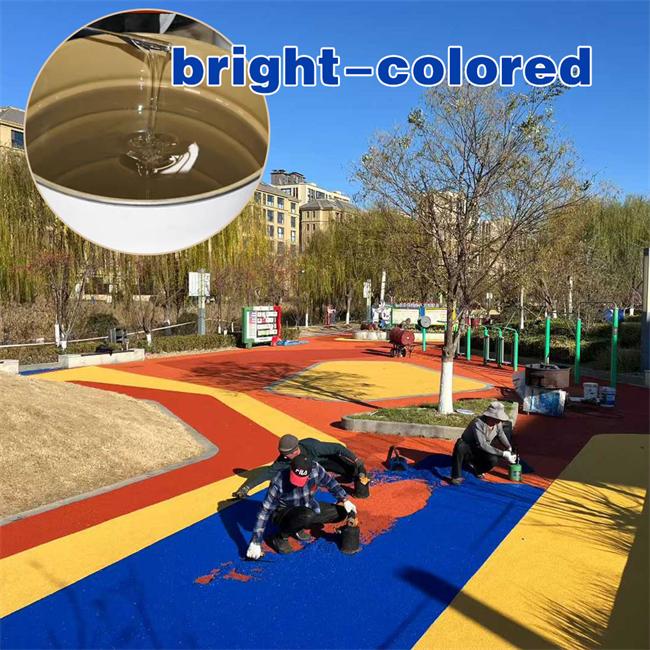
We manufacture sulfur-free, peroxide-cured EPDM granules with no MOQ restrictions, no odor, and a 15-year expected service life. Contact us with your color requirements, granule size specifications, and order volume—we will provide samples, test data, and a competitive quote within 48 hours.
This guide was written for EPDM professionals by a professional with 25+ years of industry experience. All technical data presented is based on actual production testing and independent lab verification. No AI-generated content; all recommendations are grounded in practical engineering and real-world procurement experience.
Additional Resources for Technical Buyers
For those who want to dig deeper, here is a quick reference to relevant standards:
ASTM D412: Vulcanized Rubber and Thermoplastic Elastomers—Tension Testing
ASTM D573: Rubber—Deterioration in an Air Oven
ASTM G154: Operating Fluorescent Ultraviolet (UV) Lamp Apparatus for Exposure of Nonmetallic Materials
ASTM F1292: Standard Specification for Impact Attenuation of Surfacing Materials Within the Use Zone of Playground Equipment
EN 1177: Impact Attenuating Playground Surfacing—Determination of Critical Fall Height
EN 71-3: Safety of Toys—Migration of Certain Elements
ISO 4892: Plastics—Methods of Exposure to Laboratory Light Sources
ASTM E96 Water Vapor Transmission of Materials
We recommend using these standards as the basis for your purchase specification.

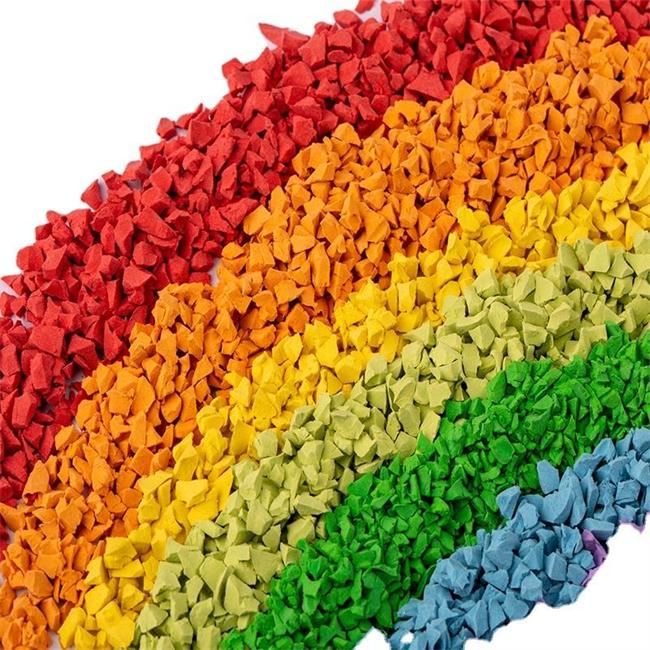
WOW(LYG) New Material Co Ltd is a manufacturer specializing in the production of EPDM rubber granules. We use sulfur-free vulcanization technology, it increases the service life by more than 3 times than traditional EPDM granules, and enhances the performance, including anti-aging, high-temperature resistance, and colorfastness.
We have over 25 years of production experience and offer customization for colors and granule sizes. NO MOQ.


