 注: 建议图片大小150px*50px
丨
注: 建议图片大小150px*50px Views: 0 Author: Site Editor Publish Time: 2026-07-29 Origin: Site


If you're reading this, you're probably not just browsing. You're in the middle of a project—or about to start one—and you need to make a decision about rubber surfacing granules. Maybe you're a playground contractor worried about a surface that will hold up to kids and weather. Maybe you're a purchasing manager trying to figure out why one quote is half the price of another. Or maybe you're an importer looking for a reliable supplier who won't disappear after the first container.
The reality is that not all rubber surfacing granules are created equal, and the choice you make today will affect your project's safety, durability, and your reputation for years to come. This guide cuts through the marketing and tells you what actually matters when sourcing EPDM rubber granules.

What Are Rubber Surfacing Granules, Really?
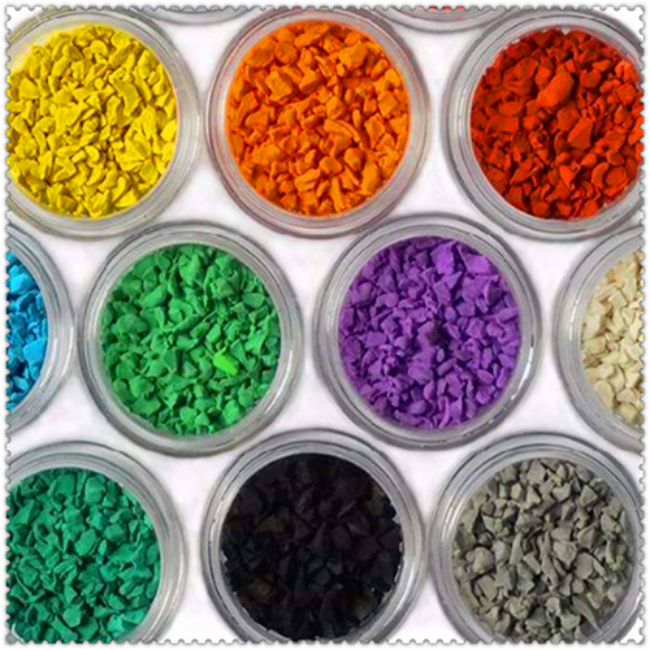
Rubber surfacing granules are small granules of synthetic or recycled rubber used as the top layer or infill in playgrounds, sports tracks, and recreational surfaces. The most common type for high-performance applications is EPDM (Ethylene Propylene Diene Monomer) —a synthetic elastomer known for its weather resistance and color retention .
Unlike crumb rubber from recycled tires, EPDM granules are manufactured through a controlled polymerization process, which gives them consistent physical properties and allows for vibrant, stable colors . You'll find them in wet-pour safety surfacing, running tracks, artificial turf infill, and decorative landscaping.
But here's what most suppliers won't tell you: The manufacturing method makes a massive difference. Traditional EPDM granules use sulfur-based vulcanization. More advanced formulations use a sulfur-free, peroxide-curing process, which fundamentally changes the material's stability and lifespan.

Why the "Sulfur vs. No-Sulfur" Difference Is a Game-Changer
This is one of the most important technical distinctions most buyers never learn about—until something goes wrong.
Traditional EPDM granules use sulfur as a vulcanizing agent. Under normal conditions, this works fine. But under prolonged UV exposure and high temperatures (think: a playground in direct sunlight during a summer heatwave), sulfur can break down and release sulfuric acid derivatives. This not only creates a noticeable odor but also accelerates molecular degradation .
Sulfur-free EPDM granules, by contrast, use peroxide curing systems. The result:
No odor—Because there's no sulfur to break down under heat and UV, the material doesn't release acidic compounds.
3× longer lifespan—The more stable molecular structure means significantly slower degradation.
2–3× better tensile strength—Reaching 4–7 MPa compared to conventional products.
5× better performance retention—The material keeps its physical properties much longer.
Superior UV resistance and color stability—Colors stay vibrant without fading.
Higher heat resistance—Performs consistently even in extreme temperatures.
For a playground or sports facility expected to last 8–10 years, this difference isn't academic—it's the difference between a surface that stays safe and attractive and one that becomes hard, brittle, and faded within three years.

What Are the Real Applications?
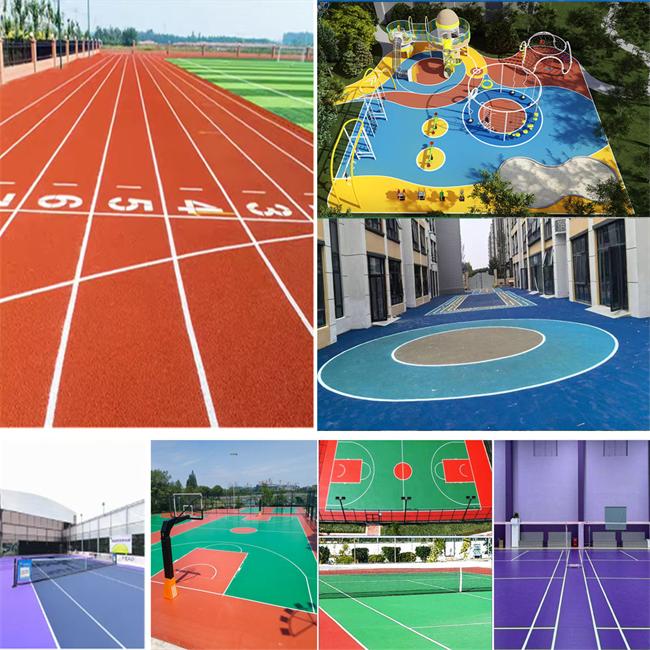
Understanding where rubber surfacing granules are used helps you select the right specification for your project:
Playground Safety Surfacing—EPDM granules form the top wear layer of wet-pour systems, providing impact absorption for fall protection. Thickness typically ranges from 15mm to 65mm depending on critical fall height requirements .
Sports Surfacing—Used in running tracks, tennis courts, and multi-use games areas, EPDM provides shock absorption and energy return for athletes .
Artificial Turf Infill—Granules are spread between turf fibers to improve traction, cushioning, and temperature regulation .
Landscaping and Architectural Features—Decorative pathways, rooftop gardens, and commercial plazas use colored granules for visual appeal and slip resistance .
Municipal and School Projects—From kindergarten play areas to high school athletic facilities, EPDM is specified for its durability and compliance with international safety standards .
What Keeps Contractors and Purchasing Managers Up at Night?
After talking to hundreds of industry professionals, here are the real concerns that come up again and again:
"Will the color fade after a year?"
This is the number one complaint. You've seen it—a bright, beautiful playground surface that turns dull and patchy after one summer. The culprit? Low-quality pigments and poor UV stabilization.
Quality EPDM granules with proper UV protection maintain color stability for years. The difference isn't subtle: some products show measurable fading within weeks of UV exposure, while high-quality granules retain their color even after extended weathering . The key is the pigment system and the polymer's inherent UV resistance—which is precisely what sulfur-free formulations deliver.
"Is this going to smell?"
Some rubber surfaces develop a strong, unpleasant odor as they age, especially in hot weather. This is almost always due to sulfur-based degradation or the use of recycled tire crumb. High-quality, sulfur-free EPDM granules are essentially odorless, even under extreme heat .
"Will the granules stay bonded, or will they start coming loose?"
Poor adhesion between the granules and the polyurethane binder causes delamination—a serious safety hazard. This typically happens when:
- The granules have excessive dust or moisture
- The binder-to-granule ratio is incorrect
- The granules lack sufficient angularity for mechanical interlock
The best EPDM granules have an angular, irregular shape (not perfectly round) that helps the binder "grip" the granule. This "棱角立体感" (angular three-dimensionality) improves interlocking and reduces the risk of surface degradation .
"How do I know I'm getting virgin material, not recycled junk?"
This is the dirty secret of the industry. Some suppliers blend recycled tire crumb or industrial scrap into their "EPDM" granules to cut costs. These materials have:
- Lower tensile strength
- Higher ash content
- Inconsistent granule size
- Potential contamination with metals, fibers, or other debris
The simplest field test? Squeeze a handful of granules. Quality material has resilience—it bounces back. Recycled or low-quality material crushes or feels dead. Another test: rub them on white paper. Heavy black marks suggest high carbon black content, often indicating recycled rubber .
"How thick does the surface actually need to be?"
This depends entirely on the critical fall height requirement of the playground equipment—not your installer's preference. A 15mm surface might be adequate for equipment under 0.6m, but a 65mm system could be required for taller climbing structures . The choice isn't about what looks good; it's about safety compliance under EN 1177 or ASTM F1292 standards.
"What about the binder—does it matter?"
Yes, and more than most people realize. The polyurethane binder must be compatible with the EPDM granules. The standard ratio is approximately 1 part binder to 5 parts granules by weight . Using a binder with low solids content (below 98%) or the wrong viscosity will produce a weak surface that fails prematurely.

"What are the red flags when evaluating suppliers?"
There are several warning signs to watch for :
- No transparency about raw materials—If a supplier can't tell you exactly what goes into their granules, walk away.
- Inconsistent samples—If the sample bag has variation in color or granule size, the production batch will be worse.
- Prices significantly below market—In one real case, a buyer saved 25% on granules only to have the entire surface fail within six months. The replacement cost was triple the original price.
- No third-party testing—Reputable manufacturers send products to independent labs for testing. If they rely only on their own reports, proceed with caution.
"What certifications should I actually look for?"
The most important standards, depending on your market, include:
- ASTM F1292 — Playground impact attenuation
- EN 1177 — European playground impact standard
- EN 71-3 — Toy safety (heavy metals and toxic elements)
- REACH and RoHS — EU chemical compliance
- GB 36246-2018 — Chinese standard for synthetic sports surfaces
- ISO 9001 — Quality management systems
Some manufacturers pursue additional certifications like FIFA or World Rugby for sports applications .
The Practical Buying Checklist
If you take nothing else from this guide, use this checklist when evaluating suppliers and products:
1. granule Size and Consistency
Determine what size your project requires (typically 0.5–1.5mm for surface layers, 1–3mm for base layers). Request a sample and check that at least 90% of granules fall within the specified range. Irregular sizes cause inconsistent compaction and drainage .
2. Color Depth
Poor-quality granules are colored only on the surface and fade quickly. Quality granules have pigment throughout. Cut a few granules open: if the inside is much lighter than the outside, expect fading .
3. Bulk Density
Lower bulk density (typically 680–750 g/m³) means better coverage—you get more square meters per ton. Some suppliers achieve this through better manufacturing, others by adding fillers. The difference shows up in performance .
4. Polymer Content
The EPDM polymer content should be at least 13% under Chinese standards and at least 20% for premium products . Lower polymer content means more fillers and lower durability.
5. Moisture Content
Granules must be dry before mixing with binder. Moisture causes bubbling and delamination. For projects in humid climates, ensure the supplier can deliver material with moisture content below 5% .
6. Branded vs. Generic
Some manufacturers use brand-name raw materials (e.g., Dow or Exxon EPDM) while others use generic or off-spec material. This affects batch-to-batch consistency .
7. New vs. Recycled
Authentic EPDM granules use virgin synthetic rubber. Some suppliers add recycled material to reduce costs but won't disclose it. The price difference reflects real material cost—if it seems too cheap, it probably is .
8. No MOQ
If you're testing a new supplier or fulfilling a small project, a minimum order quantity (MOQ) can lock you into a large commitment before you've verified quality. Suppliers who offer flexible MOQs are often more confident in their product.
Why EPDM Keeps Winning Over Alternatives
Compared to other surface materials, EPDM rubber surfacing granules offer a compelling combination of benefits:
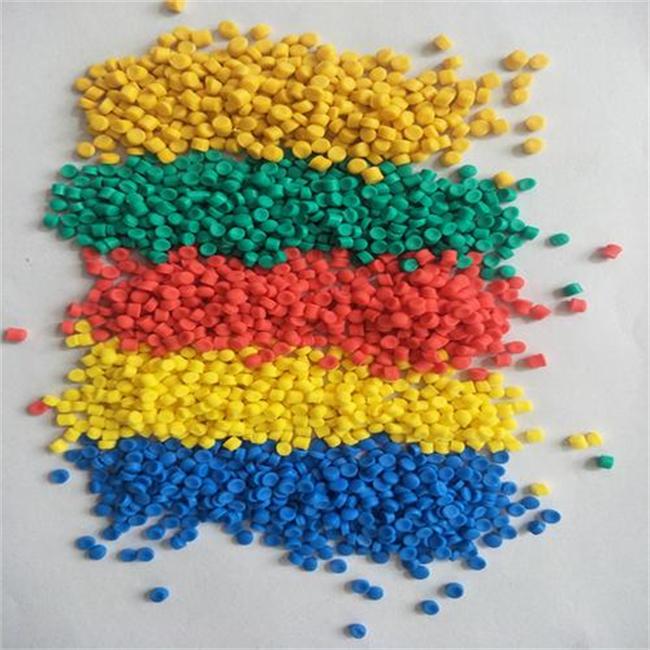
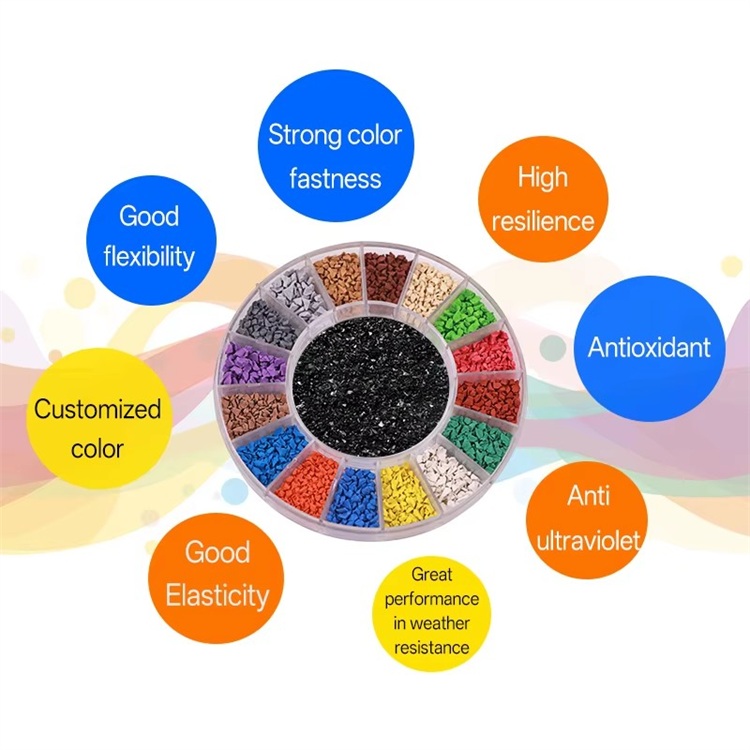
- Unmatched color options—Available in virtually any color, with custom blending for themed environments
- Exceptional weather resistance—Performs in everything from tropical heat to freezing winters
- Low maintenance—No repainting or sealing required
- Safety compliance—Meets international impact standards
- Slip resistance—Performs well in both wet and dry conditions
- Environmental safety—Non-toxic and free from hazardous substances when properly manufactured
Final Advice: Don't Buy on Price Alone
The most expensive EPDM project is the one that has to be replaced. I've seen playground surfaces fail within 18 months because the contractor saved $2,000 on materials. The cost to remove and replace the failed surface was well over $20,000—not counting the reputational damage and lost business.
The professionals who succeed in this industry long-term don't shop for the cheapest granules. They shop for:
- Proven quality backed by data, not promises
- Consistent supply from manufacturers with dedicated production lines
- Technical support from people who understand the chemistry and installation
- Flexible ordering for both large-scale and pilot projects
- Transparency about what's in the material and how it's made
With over 25 years in the industry and full in-house manufacturing capabilities, we've seen virtually every problem that can occur with rubber surfacing—and we've engineered our sulfur-free EPDM granules to avoid them. No minimum order quantity, full custom color and size support, and performance that outperforms standard products by 2–3x in tensile strength and 5x in longevity.
Because the surface you specify today isn't just a material choice. It's a safety decision, a business decision, and in many cases, a public trust.


Have specific questions about your project's requirements? Contact our technical team for product samples, test reports, and recommendations tailored to your application.
WOW(LYG) New Material Co Ltd is a manufacturer specializing in the production of EPDM rubber granules. We use sulfur-free vulcanization technology, it increases the service life by more than 3 times than traditional EPDM granules, and enhances the performance, including anti-aging, high-temperature resistance, and colorfastness.
We have over 25 years of production experience and offer customization for colors and granule sizes. NO MOQ.


