 注: 建议图片大小150px*50px
丨
注: 建议图片大小150px*50px Views: 0 Author: Site Editor Publish Time: 2026-08-04 Origin: Site


For playground contractors, sports surfacing installers, and procurement professionals, sourcing EPDM rubber granules often feels like navigating a minefield. Will the color fade within a year? Will the surface lose its bounce? Will the supplier deliver inconsistent quality mid-project?
This guide addresses these concerns head-on. Drawing from over 25 years of industry experience and advanced sulfur-free manufacturing technology, we will explore what makes *high resilience* EPDM granules the superior choice for modern infrastructure projects, why they outperform standard materials, and how to avoid costly procurement mistakes.

What Are High Resilience EPDM Rubber Granules?
EPDM (Ethylene Propylene Diene Monomer) is a synthetic rubber renowned for its exceptional resistance to weathering, UV radiation, and temperature extremes. However, *high resilience* takes this a step further. It refers to the material’s ability to rapidly return to its original shape after compression or impact .
In technical terms, we are looking at compression recovery rates exceeding 98% and springback values around 26mm . This is not just about bouncing back; it translates to superior shock absorption for athletes, long-lasting cushioning for playgrounds, and a surface that does not "bottom out" under heavy foot traffic.

Why Choose High Resilience EPDM? Solving the Hidden Crisis of "Dead" Surfaces
When you specify high resilience EPDM, you are solving a fundamental engineering problem: surface fatigue.
Standard granules often contain sulfur-based vulcanizing agents. Over time, heat and UV exposure degrade these chemical bonds. The granules harden, become brittle, and lose their elastic properties—what we call a "dead" surface. This increases the risk of injury on playgrounds and reduces performance on running tracks.
The Sulfur-Free Advantage
The production technology utilized in high-grade EPDM manufacturing removes sulfur from the vulcanization process .
Here is why this matters for your project:
1. Elimination of Odor: Without sulfur, the granules do not decompose to release sulfuric acid under high heat or strong UV. The surface remains completely odorless, even on the hottest days.
2. Molecular Stability: The polymer structure is more stable. This results in a lifespan that is 3 to 5 times longer than conventional EPDM .
3. Superior Tensile Strength: We see tensile strength reaching 4–7 MPa with improved elongation (often exceeding 550%) . This prevents tearing and cracking during extreme temperature fluctuations or heavy use.
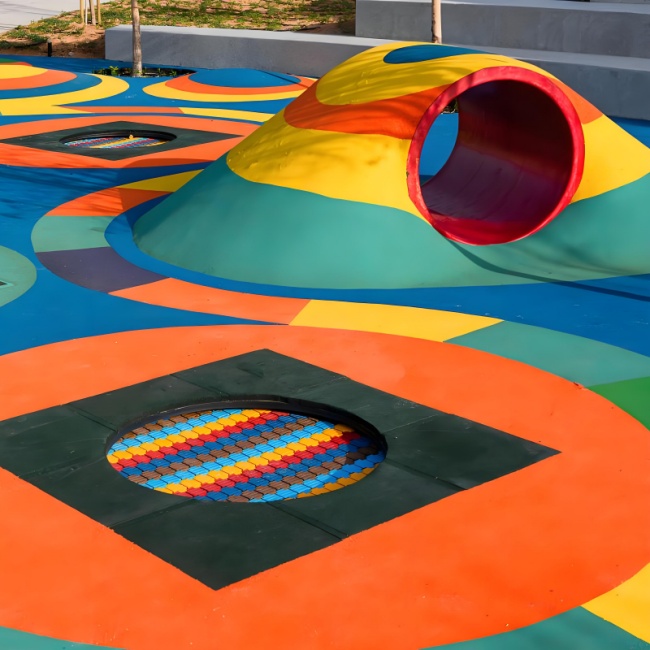
The True Cost of "Cheap" Granules: Why Low Resilience Fails
Procurement managers often ask, "Why is this grade more expensive?" The answer lies in the Total Cost of Ownership (TCO).
The Traps You Must Avoid
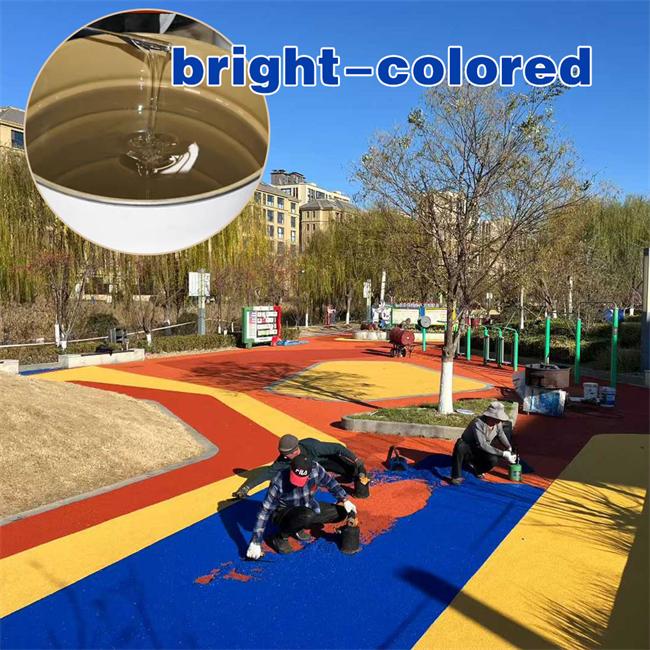
UV Fading: Low-quality granules use inferior pigments. Within 6-12 months, the surface looks patchy and faded. This represents a significant aesthetic failure for government and municipal projects.
Bonding Failure: If the granules have high oil content or inconsistent shape, PU adhesive fails. The surface delaminates. This leads to costly warranty claims and repair work.
High Density/Low Coverage: Standard granules often have high specific gravity. You need more kilograms per square meter to achieve the required thickness, increasing material costs . High resilience granules often have a lower specific gravity (density), providing better coverage per ton.
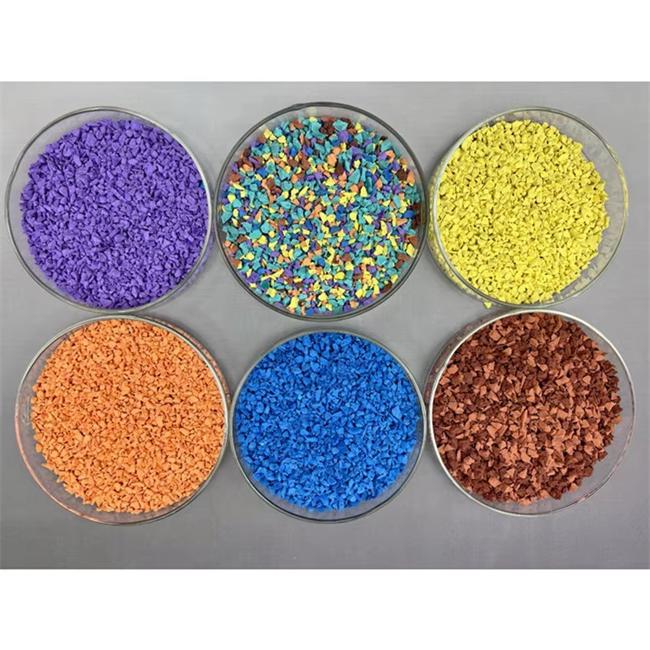
Applications: Where High Resilience Matters Most
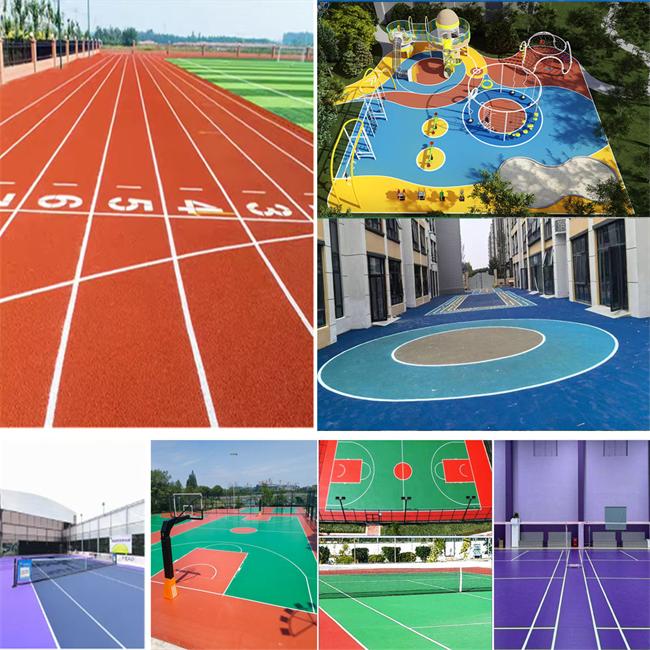
While EPDM is used across many sectors, high resilience variants are *critical* in specific applications:
1. Playground Contractors (Safety Surfacing)
Falls are the number one risk. High resilience ensures the critical fall height rating is maintained for the life of the surface. It protects children on impact while remaining slip-resistant .
2. Sports Surfacing (Athletic Tracks & Courts)
Athletes rely on the energy return of the surface. High resilience EPDM improves performance by returning energy to the runner while reducing stress on joints and ligaments .
3. Municipal Projects (Public Spaces)
These projects require surfaces that look new for years. UV stability and color retention are non-negotiable for city councils .
4. Landscape Companies
Used as a decorative and durable covering over compacted stone or asphalt, it prevents weed growth and provides a safe, accessible path .
How to Select the Right EPDM Granules: A Checklist for Engineers and Purchasers
Whether you are an architect specifying materials or a contractor ordering them, use this checklist to avoid engineering failures:
1. Performance Metrics
Tensile Strength: Should exceed 3.5 MPa (our specifications often exceed 4.5 MPa). This ensures durability under shear stress .
Abrasion Loss: Look for low abrasion values (tested via ISO 9352). This indicates the granules won't powder over time .
Compression Recovery: Seek a recovery rate of 95%+. This guarantees the "spring" remains intact for years.
2. Technical Specifications (The "Engineering View")
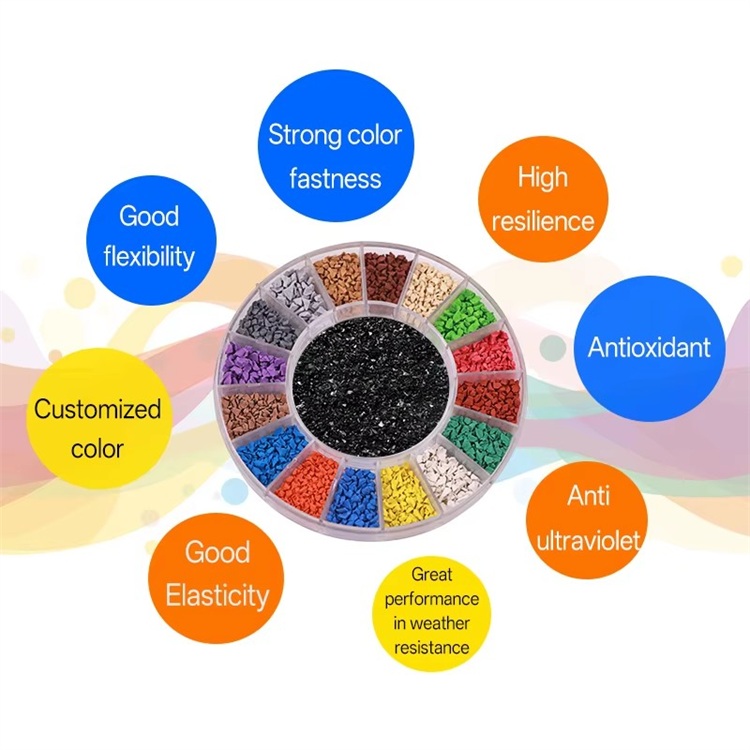
Color Stability: The material should include UV-resistant additives that prevent fading. We utilize high-quality pigments that maintain color fastness.
Shape & Density: Angular-shaped granules provide better mechanical interlock with the PU binder and improve drainage . Lower bulk density (e.g., ≤680 g/L) provides better economic coverage.
3. Environmental Compliance
Certifications: Look for RoHS, CE, and ISO 9001/14001 compliance .
Heavy Metals: Ensure heavy metal content (Pb, Cd, Cr, Hg) is non-detectable to comply with safety standards for schools and playgrounds .
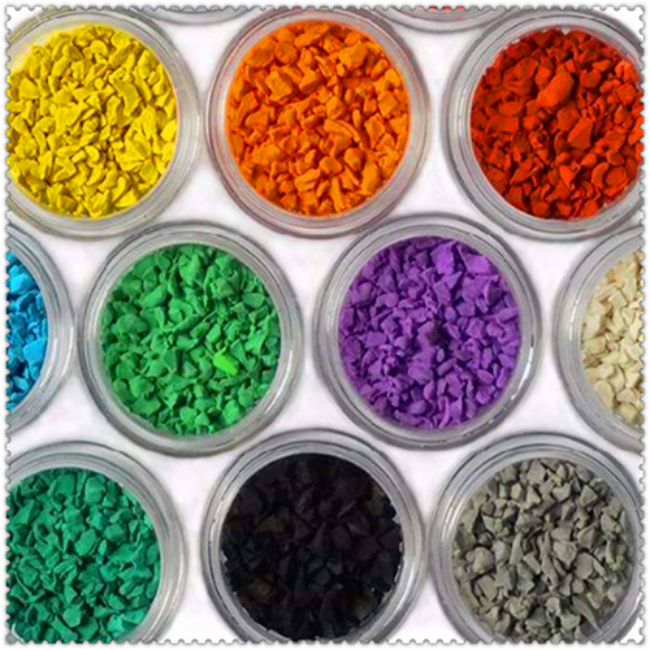
Practical Tips for Contractors and Installers
Adhesive Compatibility: Ensure the EPDM granules are compatible with the polyurethane binder you are using. Low-quality granules contain plasticizer oils that migrate into the PU, preventing proper curing.
Weather Conditions: Avoid installation in rainy or high-humidity conditions (humidity >85%). The binder needs a dry environment to cure properly (ideally 10°C to 35°C) .
Mixing Ratios: Work in small batches to prevent the adhesive from skinning over before you can spread the material .
"No MOQ" Advantage: A significant pain point for contractors is the Minimum Order Quantity (MOQ). Some suppliers require massive orders, locking you into high inventory costs. Seek suppliers who offer no MOQ, allowing you to purchase exactly what the job requires.
FAQ: Addressing the Specific Concerns of Importers and Distributors
Q1: How can I guarantee the color consistency across multiple batches?
A: Color inconsistency is a major issue in our industry. We avoid this by using proprietary pigment formulations and tight production control. For each batch, we maintain strict color standards to ensure uniformity between batches, crucial for large-scale projects.
Q2: How long will the color actually last?
A: Our specific sulfur-free EPDM granules provide color stability up to 3-5 times longer than standard commercial alternatives. The surface remains vibrant without significant fading, even in regions with harsh, direct sunlight .
Q3: Does the product have a "rubber smell"?
A: The primary cause of that distinct rubber smell is the sulfur used in traditional vulcanization. As our product is sulfur-free and uses an advanced vulcanizing system that does not degrade into sulfuric acid, the granules are effectively odorless .
Q4: Are these granules safe for indoor applications?
A: Yes. Because of their extreme purity and lack of sulfur, they can meet stringent indoor air quality requirements and even approach food-grade safety standards regarding toxicity and heavy metals.
Q5: Can you handle urgent large-volume orders?
A: As a manufacturer with over 25 years of experience and multiple advanced production lines, we are set up for rapid scaling. We maintain an average lead time of 15 working days, ensuring that project deadlines are consistently met .
Q6: What does "High Resilience" mean for my project specifications?
A: It means the surface meets critical fall height requirements and provides energy return for athletes for a longer period. It reduces the risk of injury and maintains performance over the long term.
Why High Resilience is the Future of Safety Surfacing
The shift from traditional SBR or generic EPDM to high resilience, sulfur-free variants is driven by liability and performance.
For government procurement, it is about longevity and public safety. For sports facility owners, it is about athlete performance and minimizing downtime. For playground builders, it is about the safety of children.
Advanced sulfur-free EPDM ensures the polymer structure doesn't degrade in harsh weather, keeping the surface "alive" and responsive for decades rather than years. This is more than an upgrade—it is a necessity for any project that values safety and sustainability.
Choosing the right EPDM rubber granules is not a decision to be made lightly. Whether you are a contractor managing a high-stakes sports facility project, a landscape architect designing a public park, or a purchasing manager optimizing supply chains, the technical specifics matter.
High resilience EPDM granules—specifically those with a sulfur-free formula—offer superior tensile strength, superior UV stability, and an odorless finish. By prioritizing these advanced materials, you ensure safety, protect your reputation, and reduce long-term maintenance costs.
For your next project, demand performance that lasts. Choose high resilience, sulfur-free EPDM.


WOW(LYG) New Material Co Ltd is a manufacturer specializing in the production of EPDM rubber granules. We use sulfur-free vulcanization technology, it increases the service life by more than 3 times than traditional EPDM granules, and enhances the performance, including anti-aging, high-temperature resistance, and colorfastness.
We have over 25 years of production experience and offer customization for colors and granule sizes. NO MOQ.


