 注: 建议图片大小150px*50px

丨
注: 建议图片大小150px*50px Views: 0 Author: Site Editor Publish Time: 2026-09-15 Origin: Site


Choosing EPDM granules for a playground surfacing project starts with matching the granule size, color, density, and material performance to the actual site conditions — including expected foot traffic, climate, safety requirements, and the wet pour rubber flooring system being used.
For most playground projects in the USA, a common approach is to use larger EPDM granules, often around 1–4 mm, in the base layer for cushioning and shock absorption, and smaller granules, often around 0.5–2 mm, in the wearing course for a smoother, more durable, and visually consistent surface. However, the exact specification should be confirmed based on the project design, binder system, installer recommendation, and any applicable safety or performance requirements.
The right EPDM rubber granules should help create a playground surface that is durable, UV resistant, weather resistant, color stable, safe underfoot, and suitable for long-term outdoor use. At the same time, the granules must be compatible with the polyurethane binder, installation method, and performance expectations of the project.

Applications of EPDM Granules in Playground Surfacing Projects
EPDM granules are widely used in playground surfacing because they can be mixed with binder and poured in place to form a seamless, flexible, and impact-absorbing rubber surface. This makes them suitable for areas where safety, durability, and design flexibility matter.
Common playground applications include:
Playground safety surfacing under swings, slides, climbing frames, and activity zones
Wet pour rubber flooring for schools, parks, daycare centers, and community playgrounds
Themed play areas using different colors to create patterns, games, animals, or learning zones
Toddler play zones where a smoother, softer, and more consistent surface is preferred
High-traffic play areas where the surface must resist daily use, weather exposure, and cleaning
Accessible playground areas where a firm, even, and wheelchair-friendly surface is important
EPDM granules help solve several common playground surfacing problems. A poorly chosen granule may lead to uneven color, weak shock absorption, surface wear, poor binder adhesion, or reduced durability in strong sunlight and changing weather. Selecting the correct granule size and specification helps improve surface consistency, safety performance, and long-term appearance.
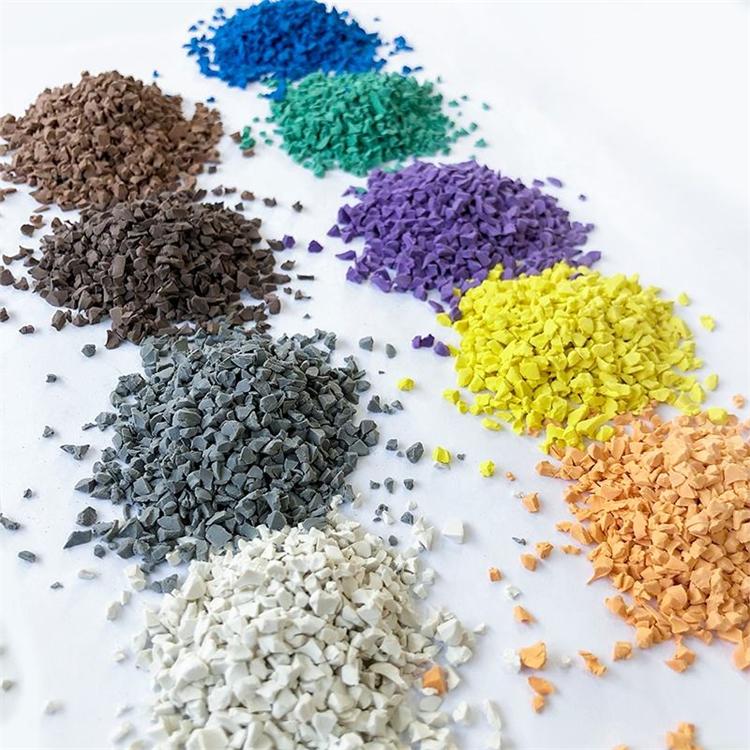
Advantages of EPDM Granules for Playground Projects
EPDM rubber granules are popular in playground surfacing because they offer a practical balance of safety, durability, and design flexibility.
Shock absorption and safety support
Playground surfaces need to reduce impact and provide a safer environment for children. EPDM granules, when combined with the right binder and installed at the correct depth, can help create a cushioned surface suitable for play areas.
UV and weather resistance
Outdoor playgrounds in the USA are exposed to strong sunlight, heat, rain, and temperature changes. EPDM granules are commonly chosen because they can resist UV exposure and outdoor weathering better than many alternative rubber materials.
Color stability and design flexibility
Playground projects often use color to improve safety, wayfinding, and visual appeal. EPDM granules are available in a wide range of colors, making it easier to create bright, themed, or patterned surfaces.
Seamless and flexible surfacing
Wet pour EPDM flooring forms a continuous surface without loose material. This helps reduce trip hazards and makes the surface more suitable for wheelchairs, strollers, and children’s active play.
Durability for daily use
Playgrounds are high-use environments. The right EPDM granules should help the surface resist foot traffic, play equipment movement, cleaning, and long-term outdoor exposure.
Customizable appearance
Different projects may require different colors, particle sizes, or layer designs. EPDM granules can be selected to support both performance and visual requirements.
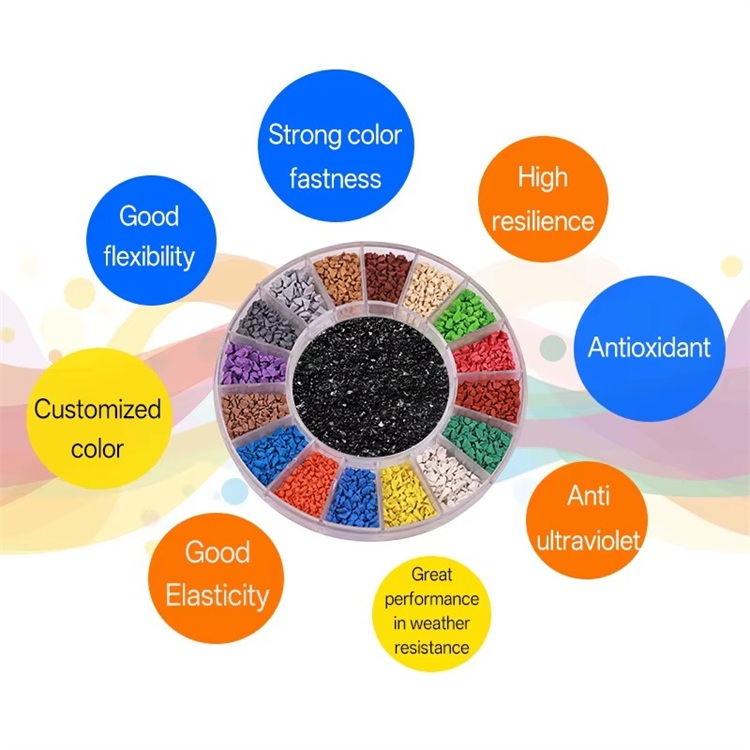
How to Choose EPDM Granules for Your Playground Project
When selecting EPDM granules for a playground surfacing project, buyers, contractors, and installers should focus on practical performance rather than color alone.
Match granule size to the layer function
Larger EPDM granules are often used in the base layer because they can help improve cushioning and shock absorption. Smaller granules are usually preferred in the top layer because they create a smoother, more uniform, and visually refined surface.
For playground projects, the exact particle size should be confirmed with the installer or system designer. Different binder systems, layer thicknesses, and safety requirements may affect the best granule size.
Choose colors based on design and UV exposure
Bright colors are often used in playgrounds to create attractive and engaging play areas. However, color selection should also consider long-term UV exposure. For projects in sunny or high-heat regions, color stability becomes more important.
If the playground includes themed designs, school logos, or activity markings, choose an EPDM granule supplier that can provide consistent color batches and clear color samples.
Check material consistency and particle shape
Consistent granule size helps the surface cure evenly and look uniform after installation. Irregular granules may affect binder coverage, surface texture, or visual appearance.
For wet pour playground flooring, the granules should be clean, well-graded, and suitable for mixing with the specified binder.
Consider durability and outdoor performance
Playground surfacing must perform well over time. Important factors include:
UV resistance
Weather resistance
Color retention
Elasticity
Resistance to wear and foot traffic
Compatibility with the binder system
EPDM granules with better UV and oxidation resistance are usually more suitable for outdoor playgrounds that receive strong sunlight and frequent use.
Confirm compatibility with the installation system
EPDM granules do not work in isolation. Their performance depends on the binder type, mixing ratio, installation thickness, base preparation, curing conditions, and workmanship.
Before purchasing, confirm with the installer or system provider that the selected EPDM granule size and specification are suitable for the project.
Request samples before large orders
For playground projects, color and granule appearance should be checked before full production. Requesting samples helps buyers and contractors confirm:
Color tone
Granule size
Particle shape
Cleanliness
Visual consistency
This is especially important for projects with strict design requirements or public-facing installations.
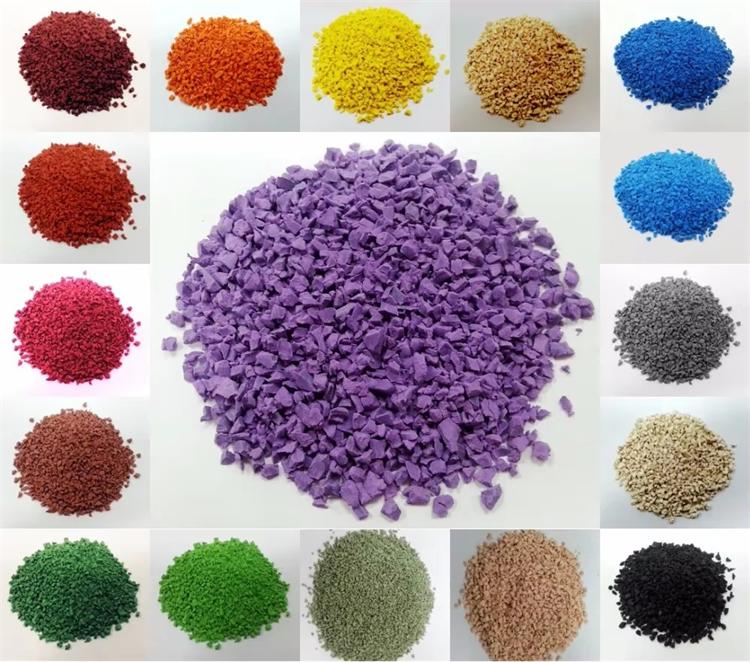
EPDM Granules Custom Options for Playground Surfacing
Playground projects often require more than one standard option. Different sites may need different colors, particle sizes, layer designs, or performance characteristics.
Our EPDM rubber granules are produced with sulfur-free technology, which helps reduce odor and supports better long-term color and material stability. Because the granules do not contain sulfur, they are less likely to produce sulfur-related odor issues during storage, installation, or outdoor use.
For playground surfacing projects, we can support customization based on:
Color for themed play areas, school projects, parks, and safety zones
Particle size for base layers, wearing courses, or specific wet pour systems
Granule specification based on project design and installer requirements
Order quantity with flexible minimum order options
Production support for projects that need consistent color batches and reliable supply
If you are planning a playground project and need EPDM granules with a specific color, particle size, or specification, send us your requirements and we can help recommend a suitable option.
FAQ
What EPDM granule size is best for playground surfacing?
There is no single best size for every project. A common approach is to use larger granules, such as 1–4 mm, in the base layer for cushioning, and smaller granules, such as 0.5–2 mm, in the top layer for a smoother finish. The final choice should be confirmed with the installer, binder system, and project specification.
Can EPDM granules be used for outdoor playgrounds in hot and sunny climates?
Yes, EPDM rubber granules are commonly used for outdoor playgrounds because they offer good UV resistance and weather resistance. In hot and sunny climates, color stability and oxidation resistance become especially important, so the granule specification should be checked before installation.
Are EPDM granules suitable for wet pour playground flooring?
Yes, EPDM granules are widely used in wet pour rubber flooring systems. They are mixed with binder and poured in place to form a seamless, flexible, and impact-absorbing surface. Compatibility with the binder and installation method should always be confirmed.
How do I check if EPDM granules are suitable for a playground project?
Check the granule size, color consistency, particle shape, cleanliness, UV resistance, and compatibility with the binder system. For public playgrounds, also confirm that the surface design meets the required safety and performance expectations.
Will EPDM granules fade in sunlight?
EPDM granules generally offer good color stability, but long-term color retention depends on the pigment, material formulation, UV exposure, climate, installation quality, and maintenance. For projects with strong sunlight, choose granules with good UV and oxidation resistance.
Can I order custom colors for playground designs?
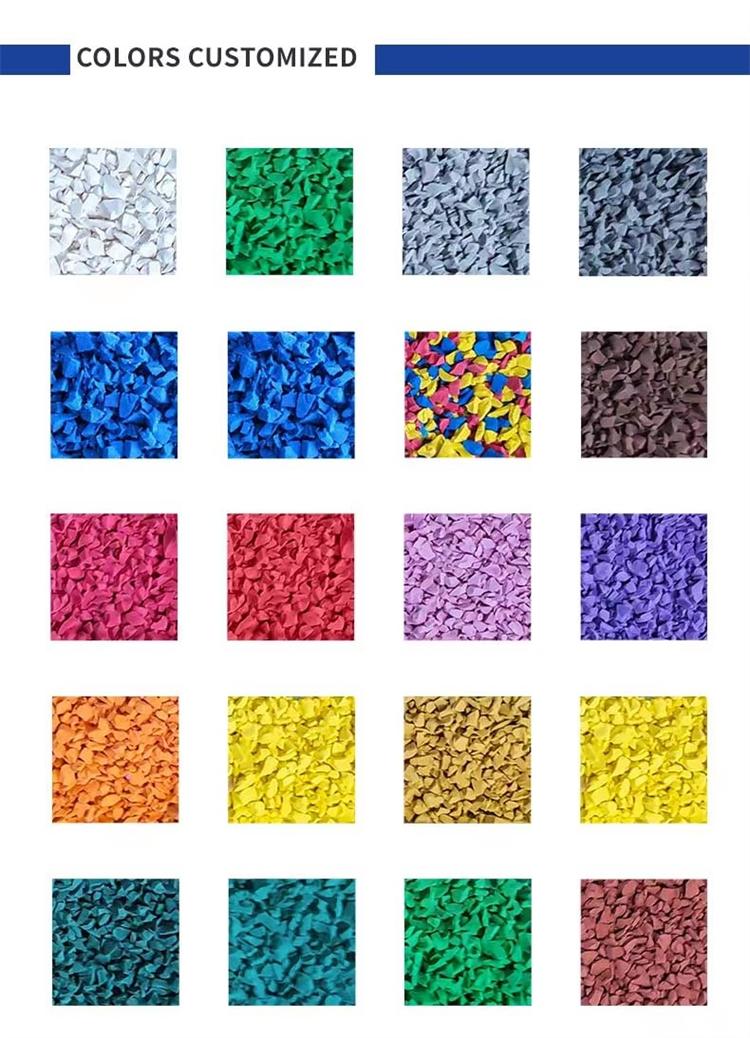
Yes, custom colors are often needed for playground projects, especially for themed areas, schools, parks, and activity zones. If you have a specific color requirement, it is best to send a color sample, Pantone code, or reference image so the supplier can match it accurately.
How much EPDM granule is needed for a playground project?
The amount depends on the playground area, layer thickness, granule size, binder ratio, and installation system. For accurate quantity planning, confirm the design thickness and mix ratio with the installer before ordering.
Should I request samples before placing a bulk order?
Yes. For playground projects, requesting samples is recommended. Samples help confirm color, granule size, particle shape, and overall appearance before full production or large-scale installation.
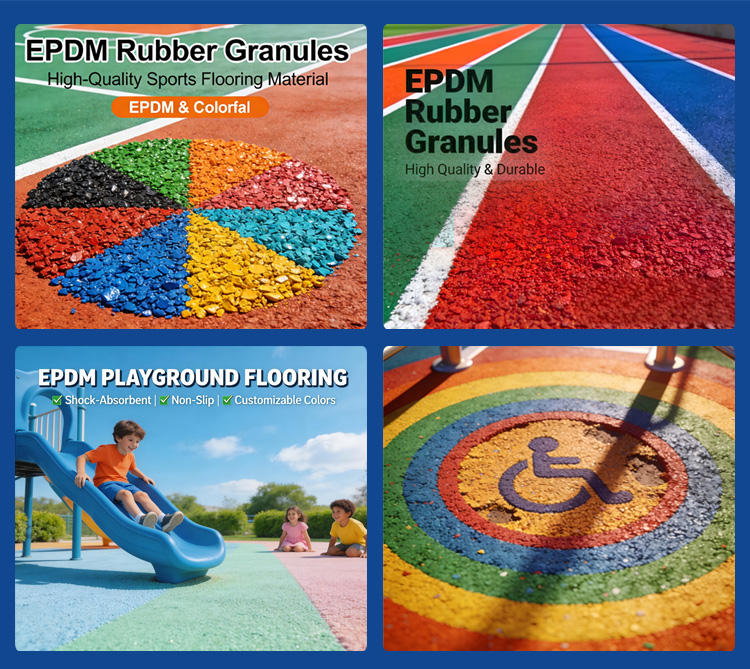
Choosing EPDM granules for playground surfacing projects in the USA is not just about picking a color. The right choice depends on granule size, color stability, UV resistance, weather resistance, shock absorption, installation system, and long-term outdoor performance.
For playgrounds, schools, parks, and community play areas, EPDM rubber granules should be selected to support both safety and visual design. Larger granules are often suitable for base layers, while smaller granules help create a smoother and more consistent wearing surface.
If you are sourcing EPDM granules for a playground surfacing project and need help choosing the right particle size, color, or specification, contact us with your project details. We can provide product recommendations, color options, and customized EPDM rubber granule solutions based on your application.

WOW(LYG) New Material Co Ltd is a manufacturer specializing in the production of EPDM granules. We use sulfur-free vulcanization technology, it increases the service life by more than 3 times than traditional EPDM granules, and enhances the performance, including anti-aging, high-temperature resistance, and colorfastness.
We have over 25 years of production experience and offer customization for colors and granule sizes. NO MOQ.


