 注: 建议图片大小150px*50px
丨
注: 建议图片大小150px*50px Views: 0 Author: Site Editor Publish Time: 2026-08-29 Origin: Site


Choosing EPDM granules for a playground comes down to matching the granule size, color, hardness, density, and material performance to the actual use of the area. For most playground surfacing projects, the goal is not simply to pick a color, but to select EPDM rubber granules that can support impact safety, long-term weather exposure, color stability, and consistent installation performance.
A good starting point is to define the playground's use first: is it a toddler zone, a primary play area, a school playground, a multi-use sports space, or a wet pour rubber surface around play equipment? Then check whether the granule size, binder compatibility, hardness, and color stability meet the project's safety, design, and durability requirements.

What Makes EPDM Granules Suitable for Playgrounds?
EPDM rubber granules are widely used in playground surfacing because they can be combined with a binder to form a seamless, shock-absorbing surface. This makes them suitable for areas where children run, jump, climb, and fall.
The main performance factors to consider are:
Impact absorption – important for reducing injury risk in play zones.
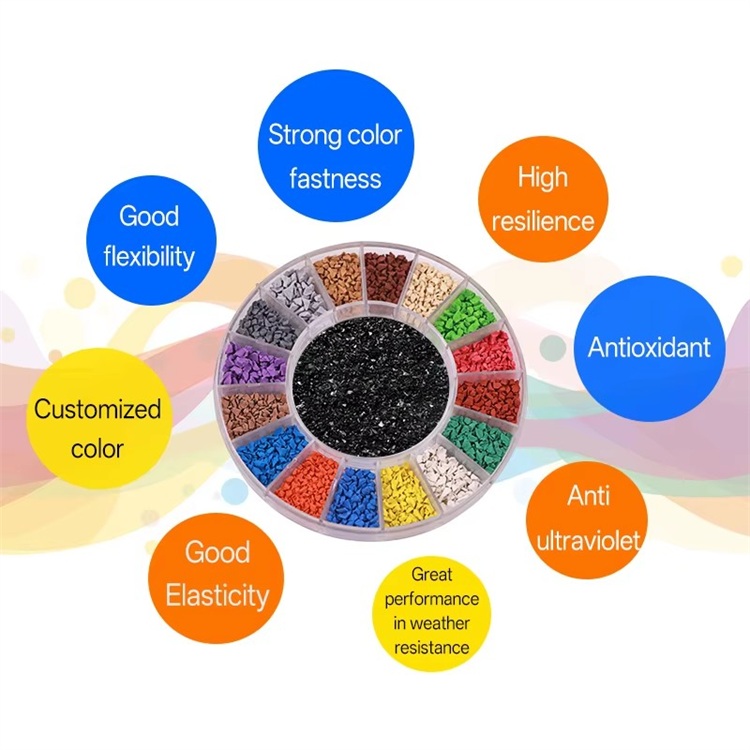
Weather resistance – playgrounds are exposed to sunlight, rain, heat, and seasonal temperature changes.
UV and color stability – bright playground colors should not fade quickly.
Durability – the surface must resist wear from foot traffic, play equipment, and maintenance.
Installation consistency – granules should work well with the chosen binder and application method.
Odor and environmental suitability – especially important for schools, nurseries, and indoor-outdoor play areas.
EPDM granules are not a single universal product. Different projects may need different particle sizes, colors, hardness levels, and layer structures.
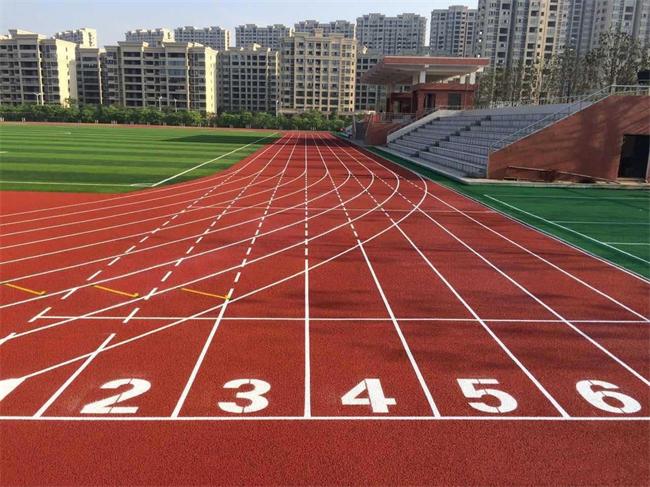
Key Factors to Consider When Selecting Playground EPDM Granules
Granule Size and Layer Structure
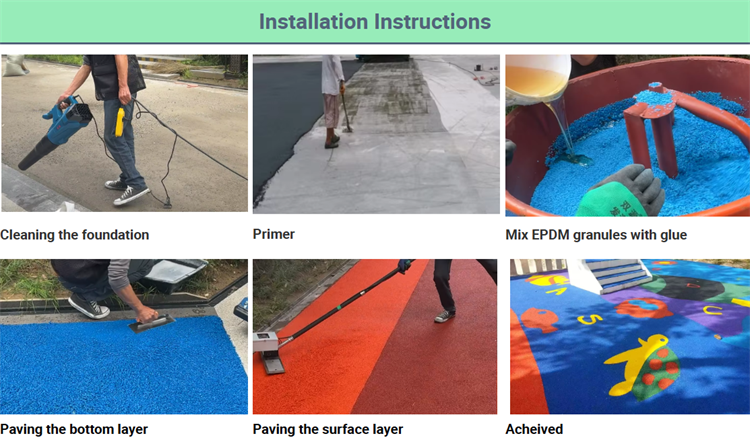
Most wet pour playground systems use more than one layer:
Bottom layer / base layer – usually uses larger EPDM granules to provide thickness, cushioning, and shock absorption.
Top layer / wearing course – usually uses smaller EPDM granules to create a smoother, more durable, and visually refined surface.
Larger granules are often better for building thickness and improving impact performance. Smaller granules are better for surface finish, color definition, and wear resistance.
If the project requires a thicker safety surface, the base layer design becomes more important. If the surface needs clear patterns, logos, or color zones, the top layer granule size and color consistency matter more.
Color and Design Requirements
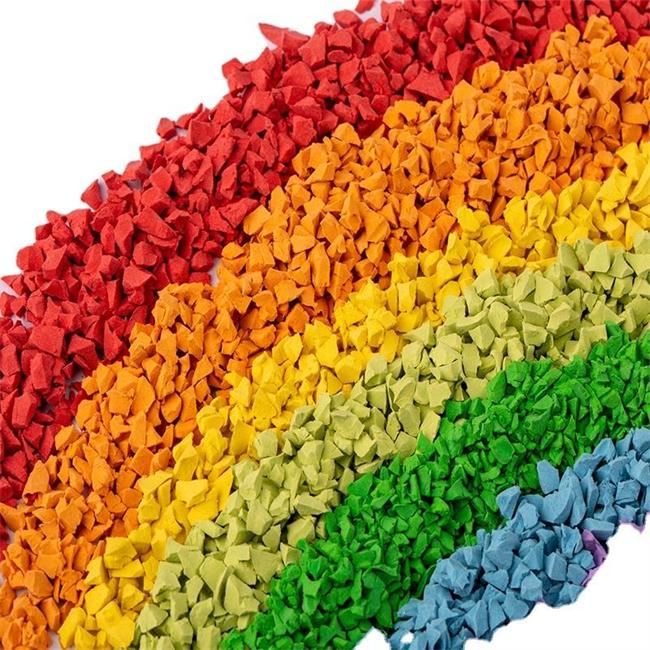
Playgrounds often use multiple colors to create zones, patterns, games, or themed designs. When choosing colors, consider:
Whether the color needs to stay bright under strong sunlight.
Whether the design includes small details, curves, or mixed-color patterns.
Whether the surface will be used by young children, where visual clarity and safety marking may matter.
Whether the same color needs to remain consistent across different delivery batches.
For projects with strict color matching, ask the supplier whether the color can be produced consistently and whether sample approval is available before bulk supply.
Hardness, Density, and Shock Absorption
Hardness and density affect how the surface feels underfoot and how it performs during impact. Softer surfaces may provide more cushioning, but the final performance depends on the full system, including granule size, layer thickness, binder type, and installation method.
For playgrounds, the surface should not be judged by granules alone. The contractor and designer should confirm whether the complete surfacing system meets the required safety and performance expectations for the specific project.
UV Resistance and Color Stability
Outdoor playgrounds are exposed to sunlight for long periods. EPDM granules with good UV resistance are more likely to maintain their appearance over time.
Color stability is especially important for:
School playgrounds
Nursery and kindergarten areas
Public parks
Sports and activity zones
Projects with branded colors or themed designs
If a project uses bright red, blue, green, yellow, or custom colors, it is worth checking how the material performs under prolonged sunlight and weather exposure.
Weather, Heat, and Outdoor Exposure
Playground surfaces may face high temperatures, heavy rain, freezing conditions, or strong sunlight depending on the region. EPDM granules used outdoors should be able to handle these environmental stresses without losing performance too quickly.
For hot climates, heat resistance becomes more important. For areas with heavy rainfall, drainage and installation quality also play a major role in long-term performance.
Odor, Safety, and Environmental Sensitivity
Playgrounds are used by children, so odor and material safety are common concerns. EPDM granules without sulfur-related odor issues are often preferred for sensitive environments such as schools, kindergartens, indoor play areas, and public recreation spaces.
If the project has strict environmental or hygiene requirements, ask the supplier whether the EPDM granules meet the relevant project specifications. Some EPDM granules can reach food-grade hygiene standards, which may be relevant for certain sensitive applications.
Practical Considerations for Contractors and Buyers
When purchasing EPDM granules for a playground, the decision should not be based on color or price alone. The following points help avoid installation problems and long-term performance issues.
Check Granule Size Consistency
Consistent particle size helps with mixing, spreading, compaction, and surface finish. Irregular granule sizes may affect the smoothness and appearance of the finished surface.
Ask the supplier:
What granule sizes are available?
Can the granules be supplied in consistent size ranges?
Are the granules suitable for the top layer, base layer, or both?
Confirm Color Stability Before Large Orders
For playgrounds with multiple colors, color consistency across batches is important. A small sample may look acceptable, but large areas can reveal differences if batch control is weak.
It is better to confirm color samples, approve reference colors, and check whether the supplier can maintain stable production for the full order.
Match Granules to the Binder and Installation System
EPDM granules must be compatible with the binder and installation method. Different binders, mixing ratios, weather conditions, and installer experience can all affect the final surface.
Before full installation, a test area is often useful to check:
Color appearance
Surface texture
Compaction behavior
Curing performance
Overall finish quality
Think About the Full Project Lifecycle
A playground surface is not just about initial appearance. It also needs to resist foot traffic, weathering, cleaning, and long-term UV exposure.
When comparing options, consider:
Expected lifespan
Maintenance needs
Color retention
Resistance to outdoor weathering
Availability of replacement granules for future repairs
How to Choose EPDM Granules by Playground Application
Toddler Play Areas
For toddler zones, the priority is a softer feel, strong safety performance, and low odor. Smaller top-layer granules with stable color and odor-free material are usually a better fit. These areas often have stricter environmental and hygiene expectations, so material safety should be confirmed before installation.
School Playgrounds
School playgrounds need durable surfaces that can handle heavy daily use, clear color zones for games and activities, and reliable long-term performance. Consistent granule size, UV-resistant colors, and a stable supply chain are important for projects of this scale.
Multi-Use Sports Areas
When a playground area also serves as a sports or activity zone, wear resistance and surface performance become more important. The granules should have a strong structure, suitable hardness, and the ability to form a stable surface under frequent use.
Themed Playgrounds
Themed playgrounds often require custom colors, fine top-layer granules, and strong batch-to-batch color consistency. The design may include detailed patterns, logos, or color transitions, so granule size uniformity and color matching should be confirmed before bulk ordering.
Outdoor Public Parks
Public park playgrounds face the most demanding outdoor conditions. UV stability, heat resistance, and durable EPDM performance are the key priorities. These projects also benefit from materials that can maintain their appearance and performance over a longer service life.
FAQ
What size EPDM granules are best for playgrounds?
There is no single "best" size. Most playground systems use larger granules in the base layer for cushioning and smaller granules in the top layer for surface finish. The right size depends on the system design, required thickness, and surface appearance.
Can EPDM granules be used for wet pour playground surfaces?
Yes. EPDM rubber granules are commonly used in wet pour playground surfacing when mixed with a suitable binder. The final performance depends on granule size, binder type, layer thickness, installation method, and site conditions.
How do I choose EPDM granule color for outdoor playgrounds?
Choose colors based on design, safety marking, and long-term UV exposure. For outdoor playgrounds, color stability is important because sunlight can affect appearance over time. Bright colors should be checked for UV resistance before large-scale use.
Are EPDM granules safe for children's playgrounds?
EPDM granules are widely used in children's play areas, but safety depends on the complete surfacing system and project requirements. For sensitive environments, choose odor-free EPDM granules and confirm whether the material meets the project's environmental or hygiene specifications.
How thick should a playground EPDM surface be?
Thickness depends on the critical fall height of the play equipment, the base layer design, the granule size, and the safety requirements of the project. The installer or designer should determine the required thickness based on the actual equipment and safety standards.
Do EPDM granules fade in sunlight?
Color fading depends on the material formulation, pigment quality, UV exposure, climate, and installation system. EPDM granules with good UV and oxidation resistance are more likely to keep their color stable over time.
Can EPDM granules be customized by color and particle size?
In many cases, yes. Suppliers can often provide different particle sizes and colors depending on the project. For playgrounds with specific design requirements, it is better to confirm color samples, granule size range, and minimum order details before placing a bulk order.
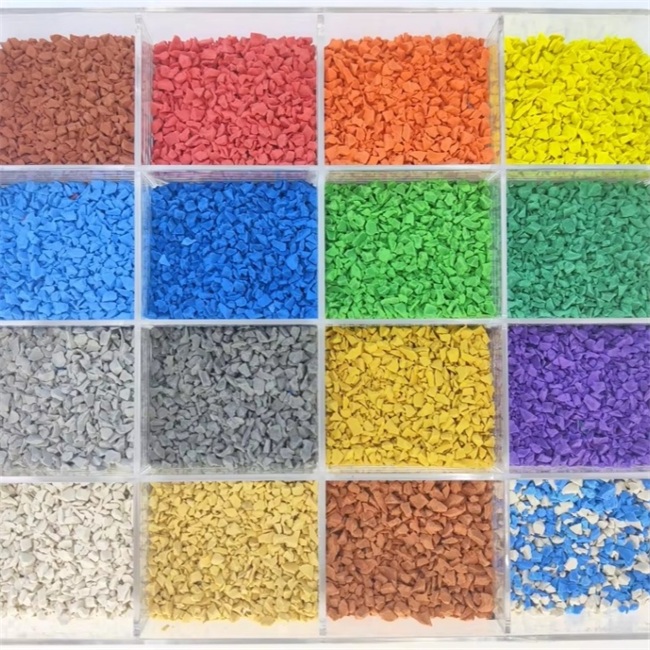
Final Checklist for Choosing Playground EPDM Granules
Before placing an order, it helps to confirm these points:
The playground use: toddler area, school, park, sports zone, or themed play space.
The required granule size for the top layer and base layer.
The color design and whether batch-to-batch color consistency is needed.
The expected UV, heat, and weather exposure.
Whether odor-free or environmentally sensitive material is required.
Whether the granules are compatible with the binder and installation method.
Whether the supplier can provide samples, consistent supply, and technical support.
Choosing EPDM granules for playgrounds is not only about appearance. The right granule size, color stability, material performance, and installation compatibility all affect how the surface performs over time.
If you are planning a playground project and need EPDM rubber granules in specific colors, particle sizes, or specifications, send us your requirements and we can help you select a suitable option.

WOW(LYG) New Material Co Ltd is a manufacturer specializing in the production of EPDM rubber granules. We use sulfur-free vulcanization technology, it increases the service life by more than 3 times than traditional EPDM granules, and enhances the performance, including anti-aging, high-temperature resistance, and colorfastness.
We have over 25 years of production experience and offer customization for colors and granule sizes. NO MOQ.


