 注: 建议图片大小150px*50px
丨
注: 建议图片大小150px*50px Views: 0 Author: Site Editor Publish Time: 2026-08-31 Origin: Site


Choosing EPDM granules for running track comes down to matching the particle size, color stability, weather resistance, elasticity, and overall specification to the track's intended use, climate, and construction system. For most running track projects, the goal is not simply to select a visually appealing color, but to choose EPDM rubber granules that can maintain consistent performance under UV exposure, temperature changes, foot traffic, and long-term outdoor use.
A practical way to make the right choice is to evaluate five factors first: application requirements, particle size, color stability, material performance, and supplier reliability. If the granules are too fine, too coarse, inconsistent in size, or unstable in color, the finished surface may look uneven, age faster, or fail to meet the performance expectations of the project.

What to Consider When Choosing EPDM Granules for Running Tracks
Running tracks are exposed to sunlight, rain, temperature shifts, repeated foot traffic, and maintenance activities. That means the EPDM granules used in the surface system need to balance appearance, durability, safety, and workability.
The most important selection factors include:
Particle size – Affects surface texture, binder consumption, compaction, and visual uniformity. Check for consistent granule size range, low fines, and suitability for the system.
Color stability – Determines how well the track keeps its appearance over time. Look for UV resistance, oxidation resistance, and long-term color retention.
Elasticity and tensile strength – Influences shock absorption, surface resilience, and durability. Evaluate the tensile strength range, elasticity, and performance under stress.
Weather resistance – Important for outdoor tracks in hot, humid, or high-UV climates. Check resistance to UV, heat, rain, and temperature variation.
Density and granule shape – Affects coverage, binder demand, and surface finish. Look for uniform shape, appropriate bulk density, and clean particle structure.
Application match – Ensures the granules suit the specific track or sports surfacing system, whether it is a running track, wet pour surface, playground, or multi-use sports area.
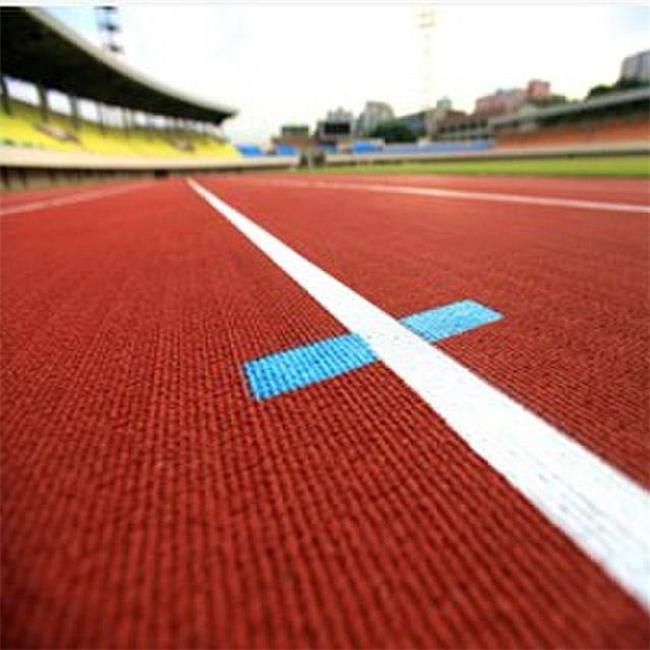
For running tracks, color consistency is especially important because large surface areas make any color variation more visible. Performance consistency is equally important, because the surface must remain stable under regular training and competition use.
How Particle Size Affects Running Track Performance
Particle size is one of the most practical factors when choosing EPDM granules. It influences how the granules mix with binder, how the surface is laid, and how the finished track looks and performs.
Smaller Granules
Smaller EPDM granules can help create a smoother, more uniform surface finish. They are often useful where a finer texture or more consistent visual appearance is required. However, very fine particles may increase binder demand, so the particle size should be matched to the system design.
Larger Granules
Larger granules can contribute to better surface texture and may be suitable for applications where a more structured surface is needed. The choice depends on the track system, expected use, and installation method.
Consistent Size Distribution
For running tracks, consistent granule size is more important than simply choosing "small" or "large." Irregular particle sizes can lead to uneven texture, inconsistent binder coverage, or visual differences across the surface.
When evaluating EPDM rubber granules, ask for the particle size range and check whether the granules are clean, uniform, and suitable for the intended surface system.

Why Color Stability Matters for Running Tracks
Running tracks are usually large outdoor surfaces, so color is not only an aesthetic choice but also part of the project's visual identity. A track that fades unevenly or changes color after exposure to sunlight can look poorly maintained, even if the surface is still functional.
When choosing EPDM granules, color stability should be evaluated based on:
UV resistance – important for outdoor tracks exposed to strong sunlight.
Oxidation resistance – helps the surface resist gradual color change over time.
Heat resistance – relevant in hot climates where surface temperatures can rise significantly.
Color consistency between batches – important for large projects that may require multiple deliveries.
For running tracks, it is better to choose granules that are designed for outdoor sports surfaces rather than selecting color alone without checking long-term performance.

How Climate and Installation Environment Influence the Choice
The local climate should not be ignored when selecting EPDM granules. A running track in a hot, sunny region needs materials that can resist UV exposure and high surface temperatures. A track in a humid or rainy area needs good weather resistance and stable performance after repeated wet-dry cycles.
Key environmental factors include:
High UV exposure – requires strong color and weather resistance.
High temperatures – requires heat-resistant granules that do not degrade quickly.
Heavy rainfall or humidity – requires stable performance in outdoor conditions.
Frequent use – requires durable granules that maintain elasticity and surface integrity.
This is why the same EPDM granules may not be equally suitable for every project. The correct choice depends on the combination of climate, usage intensity, surface system, and performance expectations.
Practical Considerations for Engineers, Contractors, and Purchasers
From a project or procurement perspective, choosing EPDM granules is not only about material properties. It is also about ensuring that the product can be delivered consistently and installed correctly.
Match the Granules to the Surface System
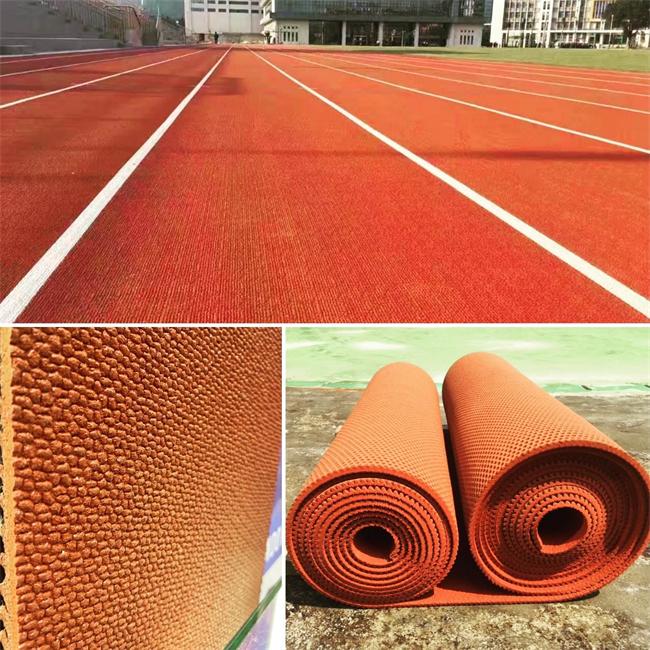
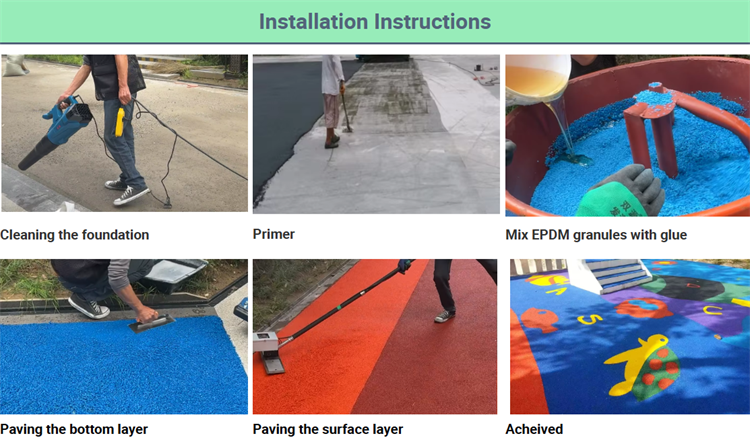
Different running track and wet pour systems may require different particle sizes, binder ratios, and layer structures. Always confirm that the EPDM granules are compatible with the contractor's installation method.
Check Batch Consistency
For large running tracks, multiple batches may be needed. Inconsistent color, particle size, or density between batches can create visible differences on the finished surface.
Evaluate Durability, Not Just Initial Appearance
A fresh installation may look good, but the real test is how the surface performs over time. For running tracks, long-term UV resistance, elasticity retention, and color stability are more important than short-term visual appeal.
Confirm Performance Claims with Real Specifications
If a supplier provides performance data, check whether it is based on the specific granule size, formulation, and application. Performance can vary depending on material composition, particle size, and installation conditions.
Consider Maintenance and Replacement Needs
Running tracks require periodic inspection and maintenance. Choosing EPDM granules with stable color and consistent particle quality can make future repairs and resurfacing easier to match.
How to Choose EPDM Granules by Application
Running Tracks
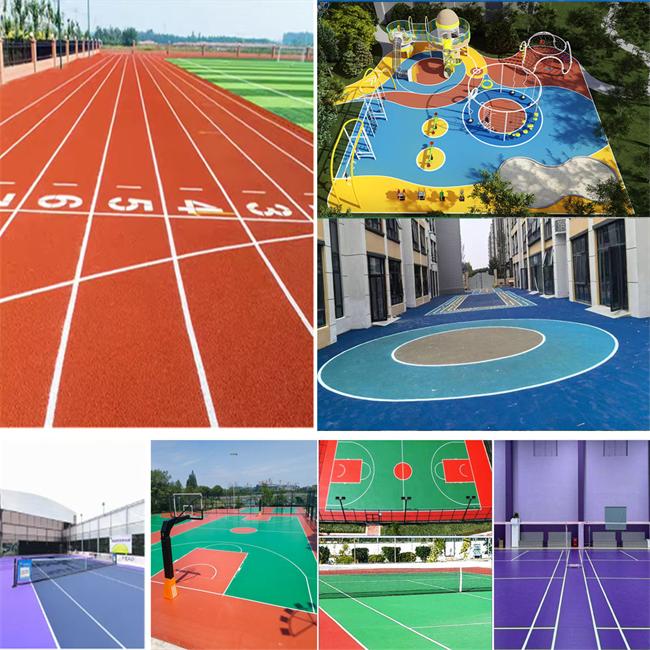
For running tracks, prioritize color stability, UV resistance, elasticity, and consistent particle size. The surface should remain visually uniform and physically stable under regular training use.
Wet Pour Sports Surfacing
For wet pour applications, particle size and shape affect how the granules bond with the binder. Uniform granules help create a more even surface with predictable coverage.
Playground and Multi-Use Areas
For playgrounds, safety, shock absorption, color variety, and weather resistance are often important. The granules should be suitable for the specific fall-height and safety requirements of the project.
Outdoor Fitness and Recreational Tracks
For outdoor fitness tracks, durability under frequent foot traffic and resistance to sunlight and rain are key. The material should maintain performance without excessive fading or surface breakdown.
EPDM Granules Selection Checklist
Before placing an order, use this checklist to reduce the risk of choosing the wrong product:
Confirm the application: running track, playground, wet pour sports surfacing, or multi-use area.
Specify the particle size range required by the installer or system design.
Check color stability, especially for outdoor projects with strong sunlight.
Ask about UV resistance, heat resistance, and oxidation resistance.
Confirm elasticity and tensile strength where performance is critical.
Request batch consistency information for large-area projects.
Verify whether color, particle size, or specification customization is available.
Ensure the supplier can support delivery continuity, especially for phased projects.
This approach helps avoid common problems such as uneven color, inconsistent texture, poor weather performance, or mismatched materials during installation.

FAQ
What is the most important factor when choosing EPDM granules for running tracks?
The most important factor is choosing granules that match the track's application, climate, surface system, and long-term performance needs. Particle size, color stability, UV resistance, and elasticity should all be considered together, not separately.
Does particle size affect the running track surface?
Yes. Particle size affects surface texture, binder consumption, visual uniformity, and installation behavior. Consistent particle size is usually more important than simply choosing very fine or very large granules.
How can I judge the color stability of EPDM granules?
Color stability depends on UV resistance, oxidation resistance, heat resistance, and formulation quality. For outdoor running tracks, choose granules that are designed to resist fading and color change under sunlight and weather exposure.
Are darker or brighter colors more likely to fade?
Color fading depends on pigment quality, UV exposure, formulation, and environmental conditions. It is not accurate to assume that all dark or bright colors will fade at the same rate. For large projects, batch-to-batch color consistency is especially important.
Can the same EPDM granules be used for running tracks and playgrounds?
Sometimes, but not automatically. Running tracks and playgrounds may have different requirements for particle size, shock absorption, color, safety, and surface performance. The granules should be selected based on the specific application.
How do I avoid color differences on large running track projects?
Order sufficient material from consistent batches, confirm color samples before installation, and discuss batch matching with the supplier. For large areas, planning material delivery in advance can reduce the risk of visible color variation.
What should I ask an EPDM granule supplier before purchasing?
Ask about particle size range, color options, UV and weather resistance, elasticity or tensile strength where relevant, batch consistency, customization options, minimum order requirements, and delivery capacity for your project.

Choosing EPDM granules for running tracks is a balance between appearance, durability, installation requirements, and long-term outdoor performance. The right granules should support a uniform surface finish, stable color, good elasticity, and reliable resistance to UV, heat, and weather exposure.
For project teams and purchasers, the safest approach is to define the application first, then select particle size, color, and performance specifications based on the track system and local environment. If you are planning a running track, wet pour sports surface, or outdoor surfacing project and need EPDM rubber granules with specific color, particle size, or performance requirements, contact us to discuss your project specifications and available options.

WOW(LYG) New Material Co Ltd is a manufacturer specializing in the production of EPDM rubber granules. We use sulfur-free vulcanization technology, it increases the service life by more than 3 times than traditional EPDM granules, and enhances the performance, including anti-aging, high-temperature resistance, and colorfastness.
We have over 25 years of production experience and offer customization for colors and granule sizes. NO MOQ.


