 注: 建议图片大小150px*50px
丨
注: 建议图片大小150px*50px Views: 0 Author: Site Editor Publish Time: 2026-08-31 Origin: Site


Choosing EPDM granules for sports surfaces comes down to matching five key factors to the specific application: granule size, color stability, material composition, performance requirements, and installation system. For wet pour playgrounds and multi-use games areas, 1–4 mm granules are commonly used for both base and wear layers. Running tracks may require tighter control over particle size and color consistency. Outdoor surfaces should prioritize UV resistance, color retention, and long-term durability, while indoor or shaded areas may place more emphasis on elasticity, shock absorption, and surface finish.
The right EPDM rubber granules should support the intended use of the sports surface, remain visually stable over time, and work properly with the chosen binder and installation method.

Why Granule Selection Matters for Sports Surfaces
EPDM granules are not a one-size-fits-all material. The same product may work well for a playground landing zone but be less suitable for a running track, training area, or multi-sport court where performance, appearance, and wear resistance matter more.
The main reasons granule selection matters are:
Performance consistency: Uniform granules help create a more even surface with predictable shock absorption and elasticity.
Visual appearance: Color choice affects design, safety zoning, branding, and long-term appearance.
Durability: Outdoor sports surfaces face sunlight, rain, temperature changes, and repeated foot traffic.
Installation quality: Granule size and shape influence how well the material mixes with binder and how smoothly it can be installed.
Project requirements: Different clients, regions, and surface systems may have different expectations for safety, performance, and maintenance.
If the granules do not match the application, the surface may look uneven, fade faster, wear unevenly, or require more maintenance than expected.
Key Factors to Consider When Choosing EPDM Granules
Application Type
The first step is to define where the EPDM surface will be used.
Common sports surface applications include:
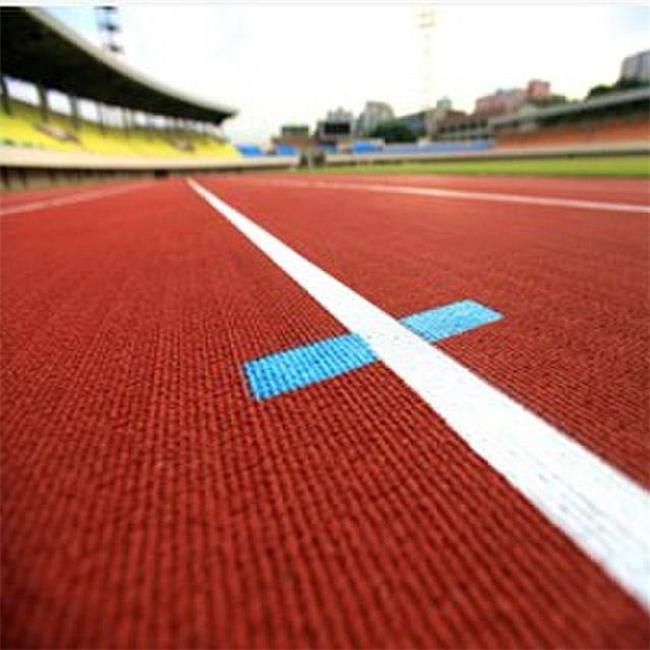
Running tracks
Playground safety surfaces
Multi-use games areas
Fitness and outdoor gym areas
School sports zones
Walking and activity paths
Wet pour rubber surfacing
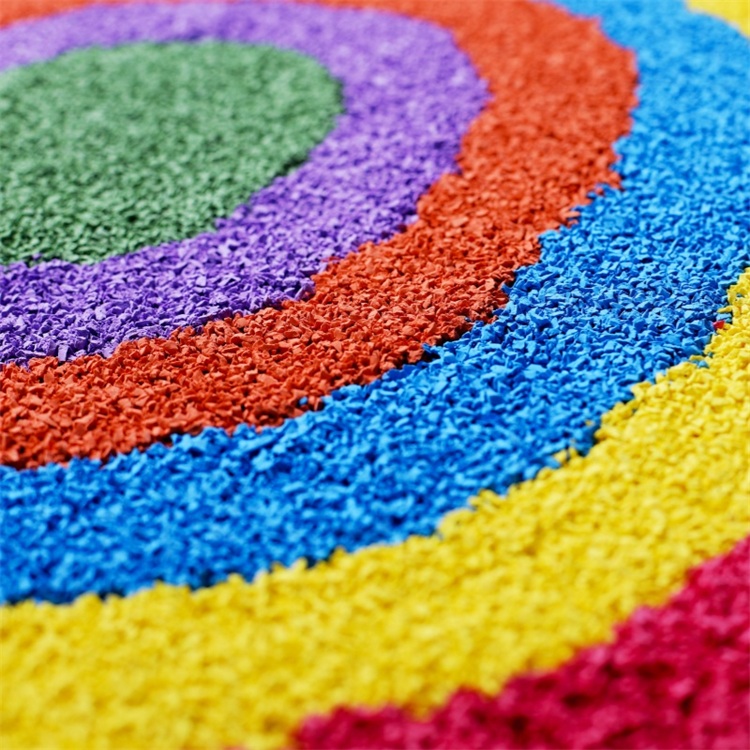
A playground surface may need strong shock absorption and clear color zoning for safety. A running track may need consistent elasticity, smoothness, and color uniformity. A multi-use games area may need a balance between durability, appearance, and performance.
Particle Size
Particle size affects texture, surface smoothness, binder consumption, and installation behavior.
Finer granules can help create a smoother surface finish and are often used where visual consistency matters.
Medium granules are common in wet pour systems because they balance performance, texture, and workability.
Larger granules may be used in base layers or specific shock-absorbing applications.
For wet pour sports surfaces, 1–4 mm EPDM granules are widely used, but the ideal size depends on the surface layer, binder system, design thickness, and performance requirements.
Color and Color Stability
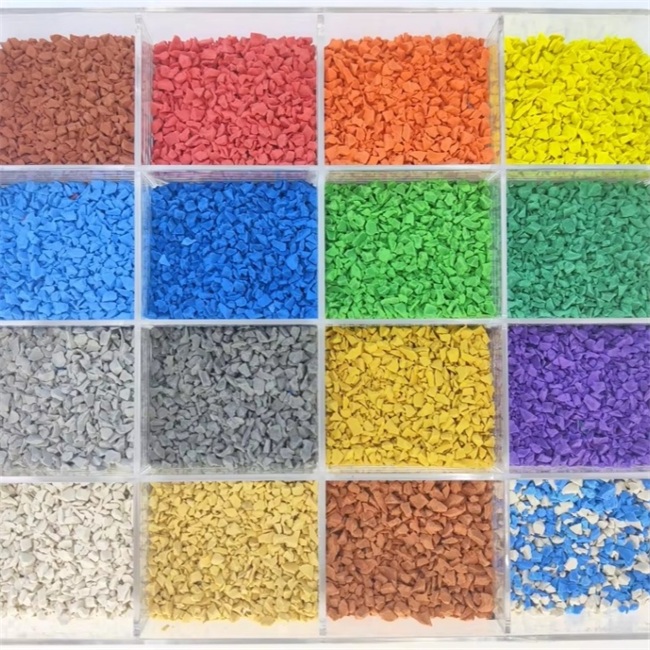
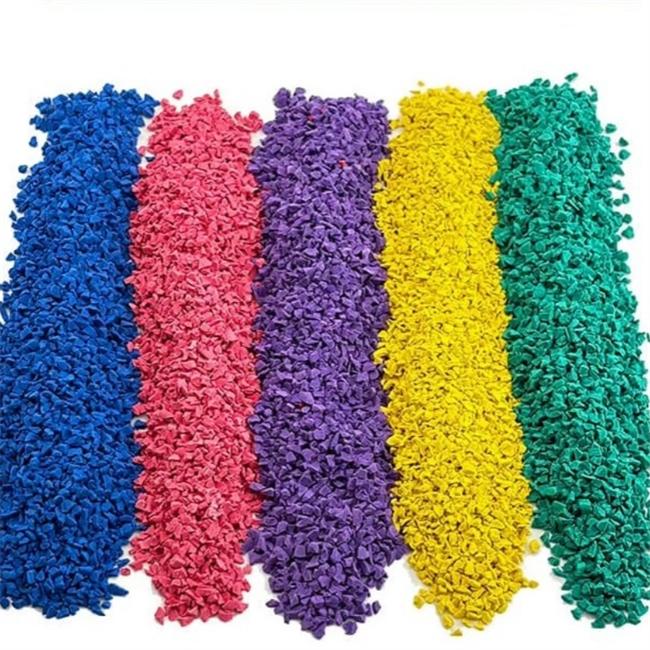
Color is more than aesthetics. On sports surfaces, it can help define play areas, improve visibility, support branding, and make the surface easier to inspect for wear.
For outdoor sports surfaces, color stability is especially important. Strong sunlight, heat, rain, and repeated use can affect how a color looks over time. EPDM granules with better UV resistance and oxidation resistance are more likely to maintain their appearance after long-term exposure.
When choosing colors, consider:
Whether the surface is indoors or outdoors
Expected sunlight exposure
Whether bright or dark colors will be used
Whether the design includes multiple colors or logos
How important long-term color retention is to the project
If color matching is important, it is better to confirm the exact shade, batch consistency, and expected outdoor performance before placing a large order.
Material Composition
Not all EPDM granules are produced in the same way. Material composition can affect odor, durability, elasticity, weather resistance, and long-term performance.
One important factor is whether the EPDM granules contain sulfur. Sulfur-free EPDM granules are often preferred for projects where odor control matters, such as schools, playgrounds, indoor sports areas, and spaces close to public use. Because they do not contain sulfur, these granules are less likely to produce strong rubber odors, especially in hot or sunny conditions.
Sulfur-free EPDM granules may also offer advantages in molecular stability, oxidation resistance, and long-term performance retention. However, the exact performance depends on the formulation, granule size, binder system, installation quality, and environmental conditions.
Elasticity and Shock Absorption
Sports surfaces often need to balance cushioning, rebound, and stability.
Playgrounds usually require good shock absorption for fall protection.
Running tracks need consistent elasticity for training comfort.
Multi-use areas need durable surfaces that can handle different types of movement and footwear.
EPDM granules with better elasticity can contribute to a more comfortable surface, but the final performance also depends on layer thickness, binder ratio, base preparation, and installation quality.
Weather and UV Resistance
Outdoor sports surfaces are exposed to sunlight, rain, heat, and temperature changes. EPDM is widely used because it generally offers good weather resistance and flexibility.
For outdoor projects, pay attention to:
UV resistance
Color retention
Oxidation resistance
Heat resistance
Resistance to rain and moisture
Long-term surface stability
A surface that looks good at installation but fades, cracks, or becomes brittle over time will not meet long-term project expectations.
Safety and Environmental Considerations
For schools, playgrounds, sports clubs, and public recreation areas, safety and environmental factors often matter as much as performance.
EPDM granules with low odor and fewer volatile concerns are easier to specify for sensitive environments. Some EPDM granules can meet stricter hygiene standards, which may be relevant for projects with children, indoor use, or higher safety requirements.
Always confirm the specific test reports and compliance documents required for your region and project.
Practical Considerations for Buyers, Engineers, and Contractors
For Buyers and Procurement Teams
When purchasing EPDM granules, focus on consistency and specification clarity.
Ask for:
Granule size range
Color samples or color codes
Material composition details
Sulfur-free or low-odor options if required
UV and weather resistance information
Batch-to-batch color consistency
Minimum order quantity and lead time
Whether custom colors or particle sizes are available
For large projects, batch consistency is especially important. Different batches should match closely in color and particle size to avoid visible differences after installation.
For Engineers and Designers
Engineers should match the EPDM granules to the surface system rather than choosing a granule first and adapting the design later.
Important design questions include:
What is the main use of the surface?
Will it be installed indoors or outdoors?
What thickness is required?
What binder system will be used?
What level of shock absorption or elasticity is needed?
What colors or design patterns are required?
What maintenance access is available?
The granule specification should support the design, not compromise it.
For Contractors and Installers
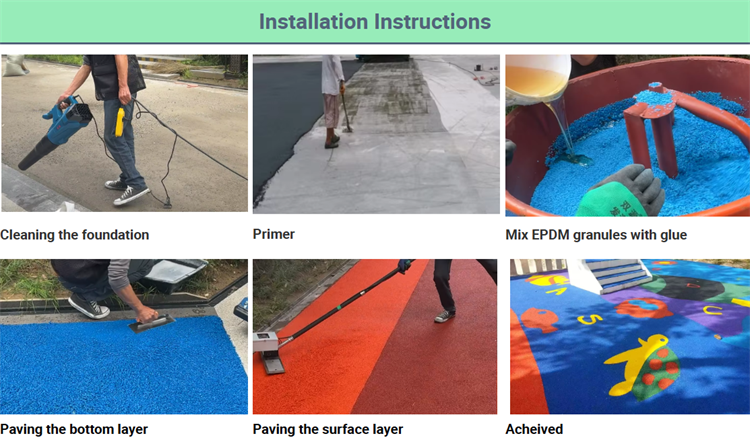
Installation quality has a major impact on the final surface. Even well-selected EPDM granules can underperform if the base is unstable, the binder ratio is incorrect, or the weather conditions are not suitable.
Contractors should check:
Granule cleanliness and particle uniformity
Mixing ratio with binder
Working time and curing conditions
Temperature and humidity during installation
Base preparation and drainage
Color separation for multi-color designs
Surface finishing and edge details
It is also useful to test a small area first, especially when using new colors, unfamiliar granule sizes, or different binder systems.
How to Match EPDM Granules to Common Sports Surface Applications
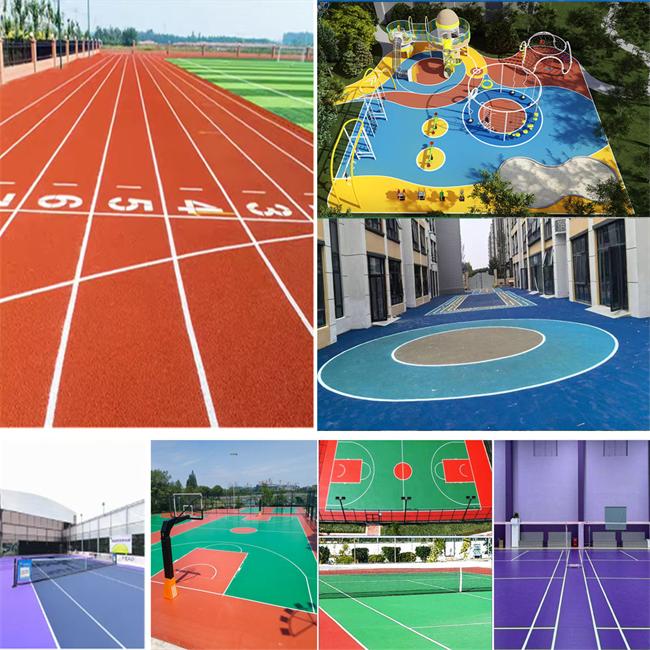
Playground Safety Surfaces
For playgrounds, the priority is usually safety, shock absorption, color clarity, and long-term durability.
Recommended focus:
1–4 mm EPDM granules for wet pour systems
Good color contrast for play zones and safety areas
Low-odor or sulfur-free granules for child-friendly environments
Strong UV and weather resistance for outdoor use
Consistent granule size for even installation
Running Tracks
Running tracks require more consistent performance across the surface.
Recommended focus:
Uniform granule size
Stable elasticity
Good color retention
Smooth surface finish
Durable performance under repeated foot traffic
The exact specification should be confirmed with the track system designer, as running track requirements can vary significantly.
Multi-Use Games Areas
Multi-use games areas need a balance between durability, appearance, and performance.
Recommended focus:
Durable granules that can handle frequent use
Clear line marking and color zoning
Good shock absorption without excessive softness
Resistance to abrasion and weather exposure
Consistent color across large surface areas
Outdoor Fitness and Activity Areas
For outdoor gyms, walking paths, and fitness zones, comfort and durability are both important.
Recommended focus:
Comfortable underfoot performance
Slip-resistant surface texture
Weather resistance
Color stability in sunny areas
Easy maintenance and repair options
EPDM Granules Selection Checklist
Before ordering EPDM granules for a sports surface, use this checklist to confirm the specification.
The application type is clearly defined
The granule size range matches the surface system
The color has been confirmed with a sample
UV resistance and color stability are suitable for the site
The material composition meets project requirements
Low-odor or sulfur-free granules are considered if needed
Elasticity and shock absorption match the intended use
The binder system is compatible with the chosen granules
Batch consistency is confirmed for large projects
Installation conditions and thickness requirements are understood
Maintenance expectations are realistic for the environment
Custom colors, sizes, or specifications are confirmed with the supplier if required
FAQ
What EPDM granule size is best for sports surfaces?
For many wet pour sports surfaces, 1–4 mm EPDM granules are commonly used. Finer granules may give a smoother finish, while larger granules may be used in base layers or specific shock-absorbing applications. The best size depends on the surface system, layer thickness, binder, and performance requirements.
Can EPDM granules be used for outdoor running tracks?
Yes, EPDM granules are widely used in outdoor sports surfaces, including running tracks. However, running tracks usually require consistent granule size, stable elasticity, good color retention, and a compatible installation system. The final specification should be confirmed with the track system designer.
How do I choose EPDM granule colors for outdoor sports surfaces?
Choose colors based on the project design, safety zoning, sunlight exposure, and long-term appearance requirements. For outdoor use, prioritize colors with good UV resistance and color stability. If the design includes multiple colors, confirm batch consistency before installation.
Are sulfur-free EPDM granules better for playgrounds?
Sulfur-free EPDM granules are often a good choice for playgrounds and child-friendly areas because they are less likely to produce strong rubber odors. They may also offer better oxidation resistance and long-term performance stability. However, the final choice should depend on the project’s safety, odor, performance, and compliance requirements.
How can I check EPDM granule quality before purchasing?
You can check granule quality by reviewing the granule size range, color consistency, material composition, UV resistance, odor level, and supplier documentation. For large projects, request color samples, batch information, and installation recommendations. A small test area can also help confirm mixing, curing, and finish quality.
Do EPDM granules fade over time?
All outdoor materials can be affected by sunlight and weather exposure. High-quality EPDM granules with good UV resistance and oxidation resistance generally retain color better than lower-stability alternatives. The actual fading rate depends on climate, sunlight intensity, color choice, installation quality, and maintenance.
Can EPDM granules be customized by color or particle size?
Many suppliers can offer custom colors and particle sizes, especially for project-based orders. If your project requires a specific color code, logo area, granule size, or performance specification, confirm the details with the supplier before production.
Choosing EPDM granules for sports surfaces is not just about selecting a color or particle size. The right choice depends on the application, installation system, expected weather exposure, safety needs, and long-term performance requirements.
For playgrounds, running tracks, multi-use games areas, and outdoor fitness surfaces, the most important factors are granule size consistency, color stability, material composition, elasticity, and compatibility with the binder system. Paying attention to these details before ordering helps reduce installation problems and improves the long-term appearance and performance of the surface.

If you are selecting EPDM granules for a specific sports surface project, send us your application, preferred granule size, color requirements, and estimated quantity. We can help you choose a suitable EPDM granule specification based on your project needs.
WOW(LYG) New Material Co Ltd is a manufacturer specializing in the production of EPDM granules. We use sulfur-free vulcanization technology, it increases the service life by more than 3 times than traditional EPDM granules, and enhances the performance, including anti-aging, high-temperature resistance, and colorfastness.
We have over 25 years of production experience and offer customization for colors and granule sizes. NO MOQ.


