 注: 建议图片大小150px*50px
丨
注: 建议图片大小150px*50px Views: 0 Author: Site Editor Publish Time: 2026-07-31 Origin: Site


For playground contractors, sports surfacing installers, and global purchasing managers, finding a reliable rubber surfacing supplier is the most critical step in ensuring project success. The market is flooded with options, but the reality is often frustrating: fading colors after just one season, strong chemical odors that fail safety inspections, and inconsistent batch quality that ruins a flawless installation.
As an industry veteran with over 25 years of experience in EPDM manufacturing, I understand that your reputation depends on the materials you choose. This guide is designed to help engineers, architects, and importers navigate the technical complexities of EPDM rubber granules, avoid common procurement pitfalls, and select a partner who delivers true value and performance.

Understanding EPDM Rubber Granules: More Than Just Color
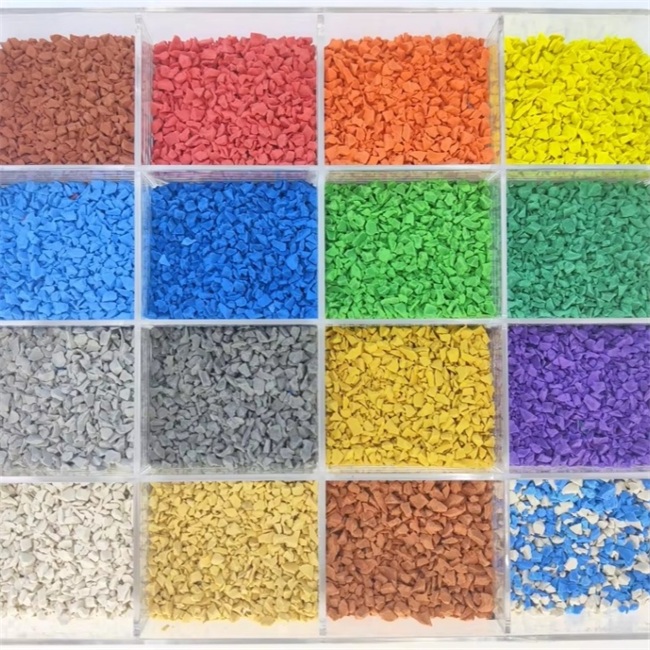
EPDM (Ethylene Propylene Diene Monomer) granules are the premier choice for impact-absorbing surfaces in playgrounds, sports tracks, and municipal landscapes. Unlike standard rubber, high-quality EPDM is a virgin synthetic rubber known for its exceptional weather resistance and elasticity.
However, not all EPDM is created equal. The performance of your rubber surfacing relies heavily on the chemical composition of the granules. While standard market options often struggle with degradation, advanced manufacturing techniques have revolutionized what these granules can achieve.
Why Top Contractors Are Switching to Sulfur-Free EPDM Technology
If you have ever dealt with a playground that smells like burning tires under the summer sun, you know the pain of customer complaints. The secret to eliminating this lies in the chemical structure.
Traditional EPDM often contains sulfur, which can decompose under high temperatures and strong UV exposure, releasing sulfuric compounds and causing unpleasant odors. By utilizing advanced sulfur-free technology, premium suppliers produce granules that are completely odorless. This innovation offers massive benefits for your projects:
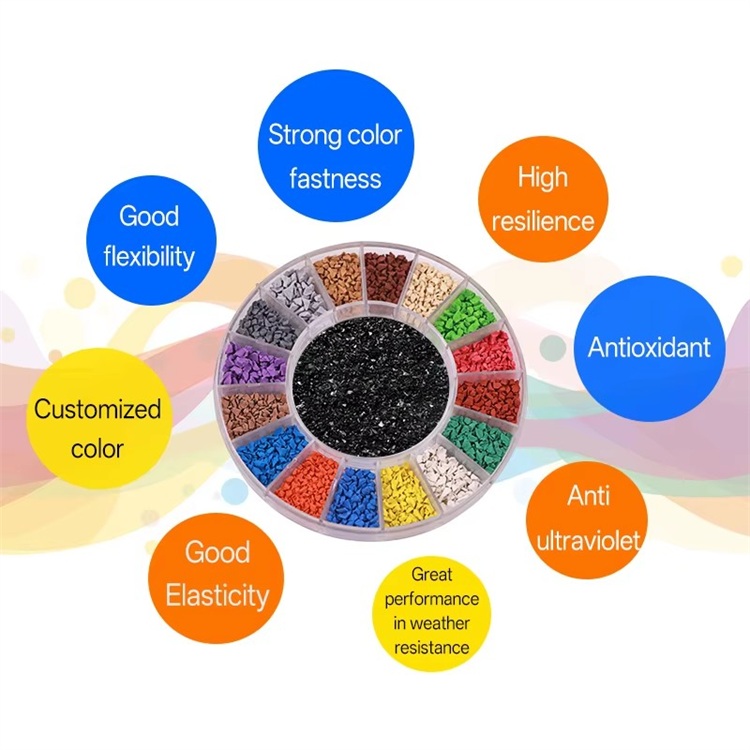
Unmatched Durability: Without sulfur compromising the molecular structure, the lifespan of the surfacing is extended by over three times compared to standard alternatives.
Superior Elasticity: The tensile strength and elasticity are boosted by 2 to 3 times, reaching an impressive 4–7 MPa. This ensures the surface remains resilient against heavy foot traffic and impact.
Enhanced Safety & Eco-Friendliness: Sulfur-free EPDM is non-toxic and can even meet food-grade hygiene standards, making it the safest choice for kindergartens and children's play areas.
Visual Longevity: The material boasts superior antioxidant properties, keeping colors vibrant and preventing the "chalky" fading effect common in lower-grade rubbers.
Critical Factors When Selecting a Rubber Surfacing Supplier
When evaluating potential partners, purchasing managers and engineers must look beyond the price tag. Here is what truly matters for long-term project viability:
1. Technical Customization and Flexibility
Every project has unique aesthetic and functional requirements. A top-tier supplier should offer full customization for both color and granule size. Whether you need specific粒径 (granule sizes) for a running track or a custom color blend for a landscape design, the supplier must have the advanced production lines to deliver exactly what you need without rigid constraints.
2. Physical Properties and Density
High-quality granules should have a low bulk density and a distinct, three-dimensional angular shape. This "菱角立体感" (angular立体 structure) ensures better interlocking with the PU binder, creating a stronger, more durable surface that resists loosening over time.
3. Zero MOQ and Supply Chain Reliability
For many contractors and smaller distributors, high Minimum Order Quantities (MOQ) are a major barrier. A truly customer-centric supplier understands the flexibility required in the construction industry. Offering no MOQ allows you to order exactly what you need for a specific repair or small installation, reducing waste and storage costs.
Practical Tips for Quality Control and Installation
To ensure your rubber surfacing project stands the test of time, follow these practical guidelines during procurement and installation:
Conduct the "Smell Test": High-quality, sulfur-free EPDM should have absolutely no pungent odor. If the sample smells strongly of chemicals or tires, reject it immediately.
Check the Elasticity: Take a few granules and try to stretch or crush them. Premium EPDM will show high resilience and return to its shape, whereas inferior products filled with excessive calcium carbonate will crumble into powder.
Verify the Binder Compatibility: Ensure the granules are compatible with high-quality PU glue. The angular shape of premium granules provides a larger surface area for the glue to grip, preventing delamination.
Request Technical Data Sheets (TDS): Always ask for detailed specifications regarding tensile strength, UV resistance ratings, and density. A transparent supplier will provide this data without hesitation.
Frequently Asked Questions (FAQ)
Q1: Why do some EPDM surfaces fade or turn white after a year?
This is usually caused by low-quality pigments and a lack of UV stabilizers. Premium sulfur-free EPDM uses high-grade, food-safe pigments that are mixed throughout the entire granule, not just coated on the outside. This ensures the color remains vibrant for years, even under intense sunlight.
Q2: Is there a Minimum Order Quantity (MOQ) for custom colors?
With advanced manufacturing capabilities, many top suppliers now offer no MOQ policies. This means you can order custom colors and specific granule sizes for small batches or large-scale projects alike, providing maximum flexibility for your business.
Q3: How can I ensure the rubber surfacing is safe for children?
Look for suppliers who explicitly state their products are sulfur-free and meet food-grade hygiene standards. Sulfur-free technology eliminates the risk of harmful acidic decomposition, ensuring the surface is non-toxic, odorless, and safe for sensitive environments like schools and playgrounds.
Q4: What is the ideal granule size for playground safety surfaces?
For standard playground safety surfacing, a granule size of 1-3mm or 2-4mm is typically recommended. The angular shape of high-quality granules ensures excellent compaction and shock absorption, meeting international safety standards for fall heights.
Q5: Can EPDM granules be used for indoor sports courts?
Yes, absolutely. Because high-quality EPDM is odorless and eco-friendly, it is perfect for indoor applications where ventilation might be limited. Its superior elasticity also provides excellent shock absorption for basketball courts and gymnasiums.
Q6: How does sulfur-free EPDM compare to recycled rubber?
While recycled rubber (SBR) is cheaper, it lacks the UV resistance, color consistency, and longevity of virgin EPDM. Sulfur-free EPDM offers a lifespan 3 times longer than standard options, making it a more cost-effective choice in the long run due to lower maintenance and replacement costs.

Choosing the right rubber surfacing supplier is about more than just buying rubber; it is about securing the longevity, safety, and aesthetic appeal of your construction projects. By prioritizing sulfur-free technology, demanding high elasticity (4-7 MPa), and partnering with a manufacturer that offers flexible MOQ and custom solutions, you can deliver superior results that satisfy even the most demanding clients. Don't let inferior materials compromise your hard work—invest in quality EPDM that stands the test of time.

WOW(LYG) New Material Co Ltd is a manufacturer specializing in the production of EPDM rubber granules. We use sulfur-free vulcanization technology, it increases the service life by more than 3 times than traditional EPDM granules, and enhances the performance, including anti-aging, high-temperature resistance, and colorfastness.
We have over 25 years of production experience and offer customization for colors and granule sizes. NO MOQ.


