 注: 建议图片大小150px*50px

丨
注: 建议图片大小150px*50px Views: 0 Author: Site Editor Publish Time: 2026-09-16 Origin: Site


Choose UV- and weather-resistant EPDM granules for Mexico by prioritizing granule size matched to your application (1–3mm for fine finishes, 2–4mm for high-traffic outdoor surfaces), verifying EPDM polymer content (typically 18–22% for balanced performance), and confirming color stability under prolonged UV exposure. Mexico's intense solar radiation—particularly in northern and coastal regions—means standard granules may fade prematurely; selecting granules with demonstrated UV stability and appropriate particle sizing prevents costly color degradation and surface failure.
Why Mexico's Climate Demands More From EPDM Granules
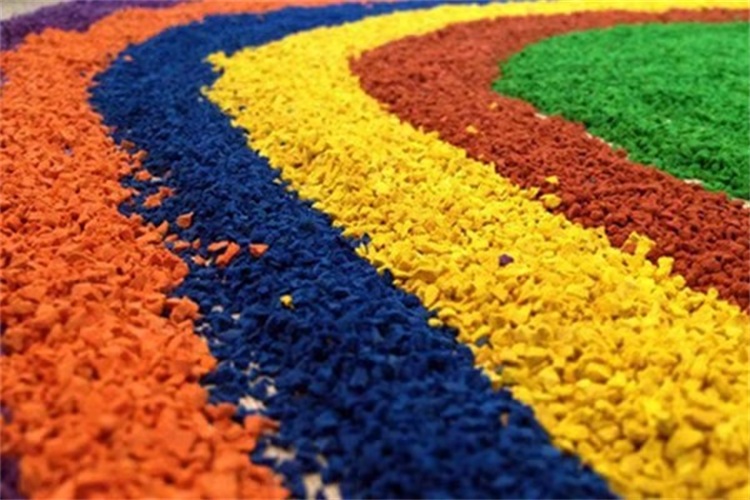
Mexico presents a challenging environment for outdoor rubber surfaces. High-altitude regions like Mexico City receive intense ultraviolet radiation year-round, while coastal areas in Quintana Roo and Baja California combine salt air with extreme solar exposure. Inland northern states such as Chihuahua and Sonora regularly exceed 40°C, accelerating the breakdown of inferior rubber compounds.
Standard EPDM granules rely on their saturated polymer backbone for basic weather resistance. However, not all EPDM granules perform equally under sustained UV stress. The difference lies in formulation, polymer content, and the stability of color pigments. For projects in Mexico, "UV-resistant" must mean more than a marketing claim—it requires verifiable performance under conditions that mimic years of intense sun exposure.
Applications of EPDM Granules in Mexican Projects
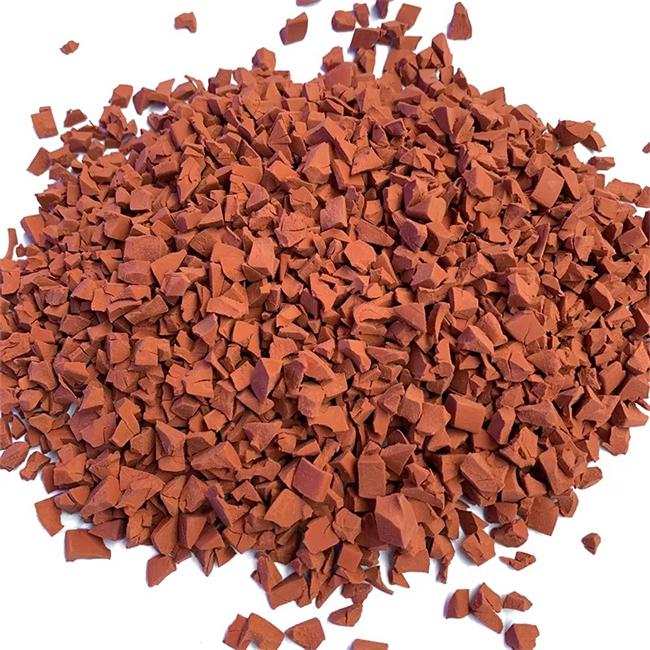
EPDM granules serve several distinct outdoor applications across Mexico, each with different performance demands.
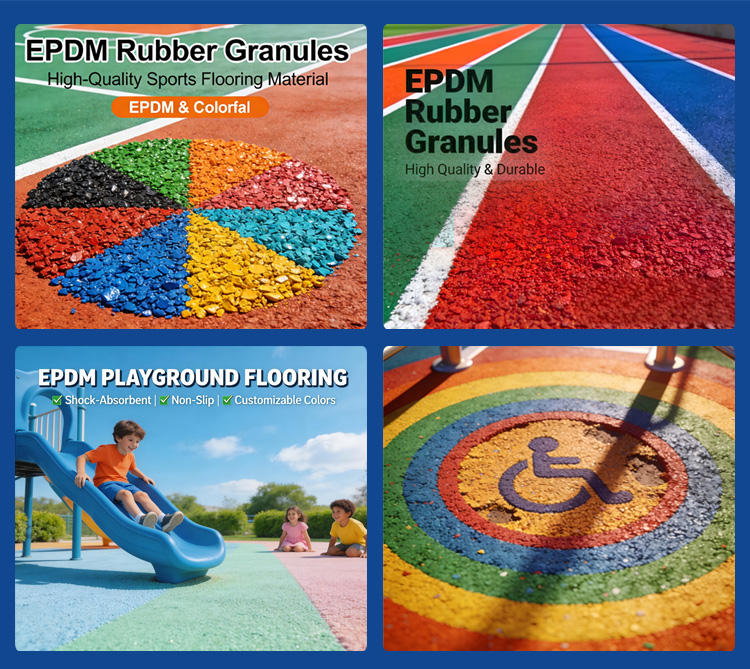
Playground Safety Surfaces require impact attenuation meeting safety standards like DIN EN 1177 or ASTM F1292. The granules must remain elastic under heat and resist compression set from constant foot traffic. Mexican municipal playgrounds, school yards, and park installations increasingly specify EPDM wet-pour systems for their safety record and low maintenance.
Running Tracks and Sports Courts demand consistent elasticity and grip. Athletic facilities in Guadalajara, Monterrey, and Mexico City use EPDM granules combined with polyurethane binders to create seamless surfaces that tolerate temperature fluctuations without cracking.
Artificial Turf Infill benefits from EPDM granules that stay cool under sun exposure, unlike crumb rubber alternatives. Landscape and sports turf projects in resort areas prefer EPDM for its color retention and lack of odor.
Rooftop and Landscape Surfaces in urban Mexican environments require lightweight, UV-stable granules that won't degrade under reflected heat and sunlight. Here, density and particle shape matter for both adhesion and long-term appearance.
The common thread across these applications: the granules must maintain color and physical properties under conditions that would degrade lower-grade materials within one or two seasons.

Advantages of EPDM Granules for Mexican Conditions
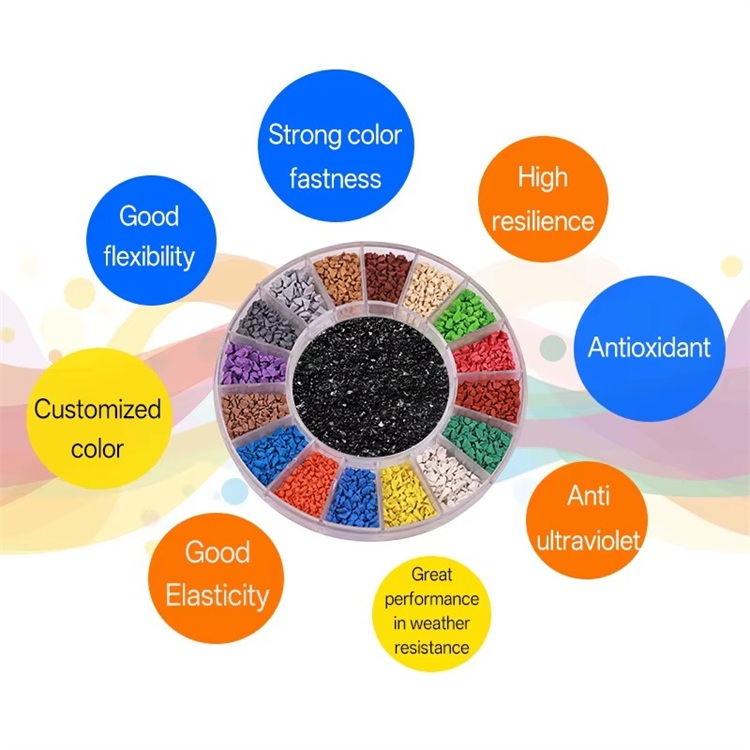
UV and Ozone Resistance — EPDM's polymer structure lacks the double bonds in its main chain that make SBR and natural rubber vulnerable to UV and ozone attack. For Mexico's solar intensity, this inherent stability extends service life significantly when combined with proper pigments. Color fastness is particularly critical—faded playgrounds and tracks create both aesthetic and liability concerns.
Thermal Stability — EPDM granules tolerate the temperature swings common across Mexican regions, from cool highland mornings to intense afternoon heat. Unlike some elastomers that become brittle or tacky at temperature extremes, EPDM maintains consistent hardness and elasticity within its designed range.
Elasticity and Impact Absorption — For playgrounds and sports surfaces, EPDM provides the resilience needed for safety and performance. Granule hardness typically ranges from 60 ± 5 Shore A, with tensile strength varying by formulation. Higher polymer content generally correlates with better elastic recovery.
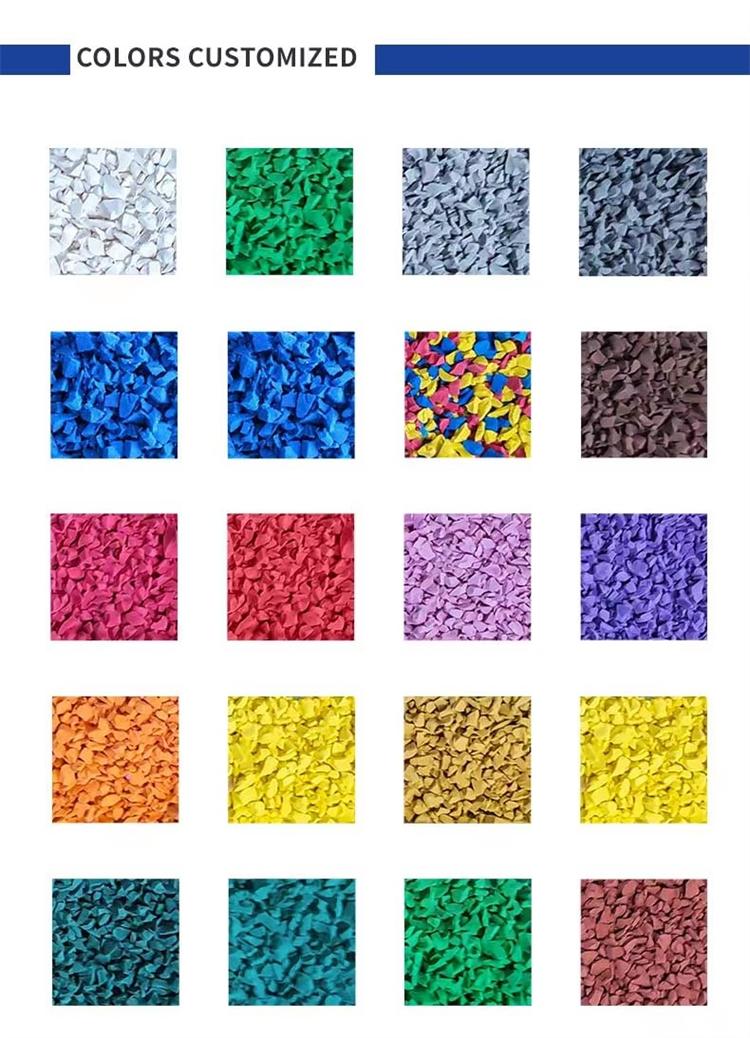
Color Options Without Compromise — Modern EPDM granules are available in a wide spectrum: oxide red, green, blue, grey, beige, and custom colors for design flexibility. The key for Mexican projects is choosing pigment systems proven to resist UV fading, not just granules that start colorful but lose vibrancy within months.
Low Maintenance Demand — EPDM surfaces resist rot, fungal growth, and water absorption, reducing cleaning and repair frequency compared to natural turf or some synthetic alternatives. For municipal and commercial installations, this lowers total ownership cost.
Customizing EPDM Granules for Your Mexican Project
Selecting the right EPDM granules requires matching specifications to your specific application and climate zone.
Granule Size Selection
Particle size directly affects surface texture, safety performance, and appearance. For fine surface layers and artificial turf infill, granules in the 0.5–1.5 mm range are commonly used. Playground surfaces and detail work typically call for 1–3 mm granules. High-traffic areas and running track base layers often use 2–4 mm granules. Smaller granules create smoother, denser surfaces but may offer less drainage. Larger granules provide texture and slip resistance but require more binder.
EPDM Content and Performance
EPDM polymer content in the granule influences elasticity, durability, and cost. Common ranges include 18%, 22%, and higher percentages. Higher content generally means better resilience and aging resistance. For Mexican projects facing intense UV, erring toward higher polymer content typically provides better long-term value, though it affects unit cost.
Color and Pigment Stability
Not all colored granules resist fading equally. Certain pigments—particularly iron oxide-based reds and some organic greens—demonstrate superior UV stability. Lighter pastel colors and some blues may fade faster under Mexico's sun. For high-exposure installations, consider UV-stabilized color formulations or verify color fastness testing with your supplier.
Density and Bulk Considerations
EPDM granule density typically falls between 1.55–1.62 g/cm³ depending on formulation. Lower density means more volume per kilogram, which can reduce material cost for a given surface area. However, density should not come at the expense of polymer content or physical properties.
Supplier Verification for Mexican Projects
When sourcing EPDM granules for Mexico, request technical data sheets with polymer content and hardness, color fastness test results if UV exposure is a concern, sample granules for visual inspection of size consistency and dust content, and references from similar climate projects. Supply stability matters—importing from overseas introduces logistics variables that local or regional sourcing may avoid.
FAQ
How long will EPDM granules last under Mexico's UV conditions?
Service life depends on granule quality, binder system, surface thickness, and exposure level. High-quality EPDM with stable pigments in a properly installed system can maintain acceptable color and performance for many years. However, lower-grade granules or thin installations may show noticeable fading or hardening within 2–3 years in high-UV regions. Always verify UV stability claims with test data rather than accepting generic "UV-resistant" labels.
Can I use standard EPDM granules for a playground in Cancún or Los Cabos?
Coastal installations face combined UV, salt air, and humidity. While standard EPDM granules with adequate polymer content can perform well, the color stability question is critical. Specifying granules with verified UV performance reduces risk of premature fading. Binder selection also matters in humid coastal environments.
What granule size should I use for a running track in Mexico?
Running track surface layers typically use granules in the 1–3 mm range, while base layers may use larger sizes for drainage and elasticity. The specific system design—full EPDM vs. composite construction—determines the exact specification. Consult your surface system provider for layer-specific requirements.
How do I verify EPDM content in granules before purchasing?
Request a technical data sheet stating polymer content by percentage. Reputable suppliers provide this information. Be cautious of suppliers who cannot or will not specify EPDM content—it is a fundamental specification that affects both performance and price. Ash content testing can also indicate filler levels.
Does granule color affect UV performance in Mexico?
Yes. Pigment chemistry varies significantly in UV stability. Iron oxide reds and certain greens tend to hold color well. Some blues, yellows, and pastel shades are more susceptible to fading. For high-sun projects, verify color fastness performance with your supplier, particularly for visible accent colors.
Can I mix EPDM granule sizes for a custom surface texture?
Some installers blend sizes to achieve specific texture or drainage characteristics. However, mixing sizes inconsistently can create uneven wear and appearance. For predictable results, specify a narrow size range rather than relying on blended material.
What questions should I ask a supplier about EPDM granules for Mexican projects?
Ask about EPDM polymer content, UV or color fastness test data, available granule sizes and customization options, experience supplying similar climate projects, lead time and minimum order quantity, and whether samples are available for evaluation.
Choosing UV- and weather-resistant EPDM granules for Mexico comes down to matching granule specifications—size, polymer content, and pigment stability—to your specific application and climate exposure. For projects in high-sun regions, the cost difference between adequate and superior UV performance is often recovered through longer color life and delayed surface replacement.
If you are sourcing EPDM rubber granules for a playground, running track, or landscape project in Mexico and need specific granule sizes, colors, or polymer content, contact us to discuss your requirements. We can provide technical data, samples, and supply options tailored to your installation timeline.

WOW(LYG) New Material Co Ltd is a manufacturer specializing in the production of EPDM granules. We use sulfur-free vulcanization technology, it increases the service life by more than 3 times than traditional EPDM granules, and enhances the performance, including anti-aging, high-temperature resistance, and colorfastness.
We have over 25 years of production experience and offer customization for colors and granule sizes. NO MOQ.


