 注: 建议图片大小150px*50px
丨
注: 建议图片大小150px*50px Views: 0 Author: Site Editor Publish Time: 2026-07-17 Origin: Site


If you’re selecting materials for an outdoor playground, athletic track, or municipal fitness trail project, the weather resistance of EPDM granules is surely one of your top concerns. As a contractor, procurement manager, or designer, your concern goes far beyond simply “how long will this material last”— —what you really want to know is: Will it fade, chalk, or crack under intense sunlight, acid rain, and frequent use? If problems arise just two years after installation, who will be held responsible? In today’s article, drawing on 20 years of industry experience, I’ll reveal the full truth about the weather resistance of EPDM granules and explain how to choose the right product and avoid pitfalls.
What Are EPDM Granules? Why Is Weather Resistance So Critical?
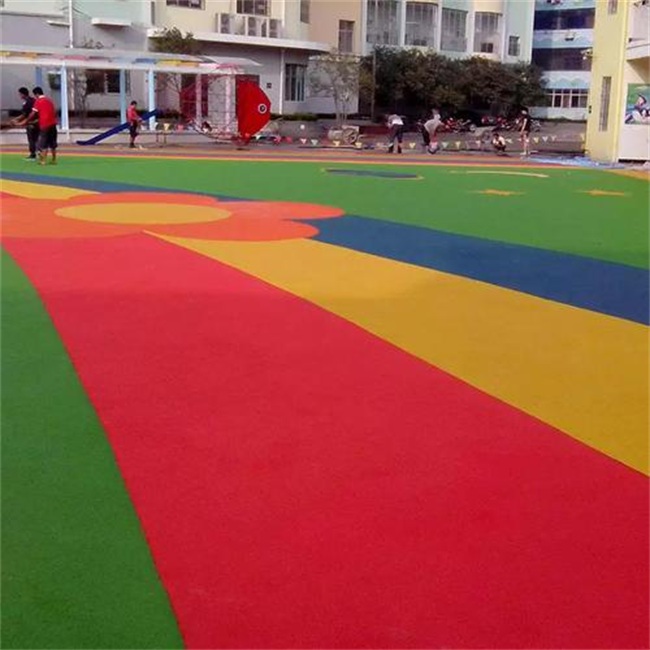
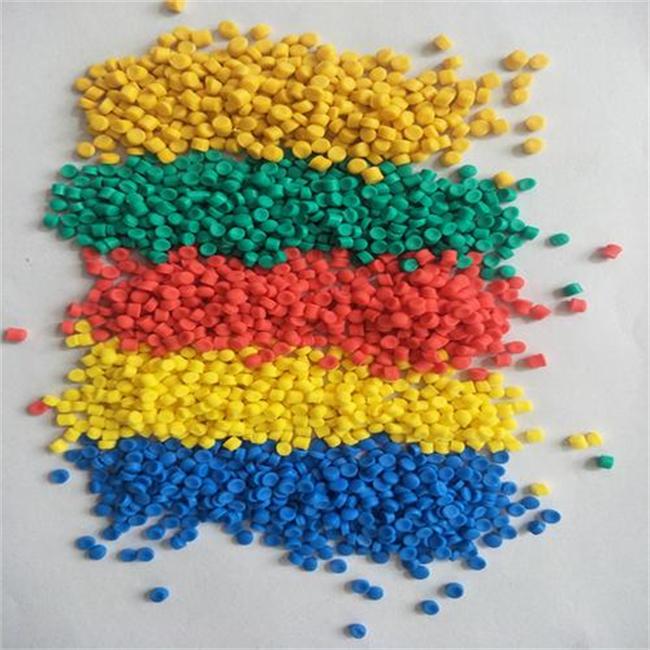
EPDM (ethylene-propylene-diene monomer) granules are synthetic rubber granules produced through a terpolymerization of ethylene, propylene, and a non-conjugated diene. They are currently the most widely used surface material for sports fields and children’s playgrounds worldwide.
However, the quality of EPDM granules on the market varies wildly, and weather resistance is the key indicator that distinguishes the good from the bad. Weather resistance refers to a material’s ability to maintain its original physical properties and color under long-term exposure to natural environmental factors such as UV radiation, temperature fluctuations, moisture, and ozone. Simply put: weather resistance determines how many years the surface will last, how good it looks, and whether it’s safe.

The 6 Most Common Weather Resistance Concerns for Buyers (with Real-World Solutions)
Based on extensive customer feedback and on-site case studies, here are the most common challenges we’ve encountered:
Challenge 1: Color Fading—Vibrant and eye-catching when first installed, but dull and whitish after a year
This is the most common complaint. Traditional EPDM granules use a sulfur vulcanization process; sulfur bonds are prone to breaking under UV exposure, causing the pigment carrier to degrade and the color to fade. Additionally, if manufacturers use low-quality color pigments, the UV resistance itself fails to meet standards.
Challenge 2: Pungent Odors After Exposure to High Temperatures and Direct Sunlight
Many outdoor surfaces emit unpleasant odors during the hot summer months, a problem rooted in sulfur-based formulations. High temperatures and intense UV radiation cause the sulfur vulcanization system to break down, releasing gaseous sulfur compounds.
Challenge 3: Granule Powdering and Shedding
Granules with poor weather resistance develop fine surface cracks over time, eventually leading to powdering and shedding. This not only affects aesthetics but also causes a sharp decline in slip resistance—significantly increasing the risk of athletes slipping during sudden stops.
Challenge 4: Reduced elasticity and loss of shock absorption
One of the core functions of EPDM granules is shock absorption. When materials with poor weather resistance are exposed to UV rays and ozone, their molecular chains break down, leading to a significant reduction in resilience and elongation at break, rendering their protective function virtually nonexistent.
Challenge 5: Inconsistent Color Across Batches, Leading to a “Patchwork” Effect During Repairs
This is a hidden challenge. There are noticeable color differences between granules from different batches. Once localized damage requires repair, the newly laid area will look completely different from the existing surface, severely affecting the overall appearance.
Challenge 6: Suppliers Cannot Clearly Specify Weather Resistance Metrics
Many suppliers merely claim, “Our product has good weather resistance,” but cannot provide third-party test reports, or the data in the reports is not quantifiable. Professional procurement requires specific performance retention rate data, not vague verbal promises.
Scientific Evaluation Standards for EPDM Granule Weather Resistance
According to the recently released group standard “Highly Eco-Friendly and Weather-Resistant EPDM Granule Materials” (T/ACCEM 703-2025), weather resistance has clear quantitative indicators:
Key Indicator—Performance Retention Rate ≥ 90%
After accelerated aging tests, the performance retention rates for the following three properties of the granules must be no less than 90%:
- Performance retention rate for tensile strength at 300% elongation (reflecting the material’s durability under tensile stress)
- Performance retention rate for tensile strength (reflecting the material’s ability to resist fracture)
- Elongation at break retention rate (reflecting the material’s flexibility and crack resistance)
The practical significance of these data is that, after simulating long-term outdoor exposure, the granules retain at least 90% of their original mechanical properties. If a supplier cannot provide this test data, it indicates that the product’s weather resistance has not been verified.

Core Factors Determining the Weather Resistance of EPDM Granules
1. Vulcanization System: Sulfur-free vs. sulfur-based—this is the fundamental difference
EPDM granules produced using traditional sulfur vulcanization processes have inherent defects when exposed to outdoor environments. The bond energy of sulfur cross-links is relatively low, making them prone to breaking under the influence of UV radiation and thermal oxidation, which accelerates material aging and releases sulfur-containing gases that cause unpleasant odors.
The sulfur-free peroxide vulcanization system uses peroxides as cross-linking agents, resulting in carbon-carbon cross-links with higher bond energy and a more stable molecular structure. EPDM granules produced using the sulfur-free process have a weathering resistance lifespan 3 to 5 times longer than comparable products, and their UV resistance is more than 5 times higher than that of sulfur-cured products. Furthermore, they do not decompose into sulfuric acid compounds when exposed to high temperatures and sunlight, ensuring they are truly odorless.
2. EPDM Rubber Content and Third Monomer (ENB) Content
The rubber content of EPDM granules directly determines their weather resistance. A high rubber content (typically ≥20%) means more active ingredients to resist aging. At the same time, the ENB (ethylene naphthalenebis(1,2-dihydroxy)) content affects vulcanization efficiency; industry standards recommend maintaining it between 3.0% and 5.0%.
3. Pigment Quality and Dispersion Process
Color weather resistance depends on the UV resistance rating of the pigment itself and the uniformity of its dispersion within the rubber matrix. High-quality brands use imported, highly weather-resistant color pigments, ensuring consistent color throughout the granules—they do not whiten or fade even after prolonged exposure to sunlight.
4. Bulk Density and Granule Morphology
Granules with low bulk density and well-defined, angular shapes have a moderate specific surface area, enabling stronger adhesion to the binder and reducing the likelihood of detachment. Poor-quality granules are irregular in shape and produce excessive dust, which not only compromises construction quality but also accelerates surface wear and chalking.

How to Select the Correct Granule Size for Your Project
Different applications require EPDM granules of different particle sizes:
- 0.5–1.5 mm (fine granules): Suitable for surface spraying using the spray-coating process. When mixed with adhesive, they form a fine, slip-resistant surface, ideal for children’s play areas or venues requiring a refined underfoot feel. They offer excellent cushioning but have relatively lower abrasion resistance.
- 1–3 mm (medium-grain): The most versatile size, balancing elasticity, slip resistance, and wear resistance. Suitable for mainstream applications such as fitness trails and school playgrounds.
- 2–4 mm (coarse-grain): Often used for the base layer of running tracks to enhance drainage and overall elasticity. Best results are achieved when combined with fine-grain granules—using coarse-grain granules in the base layer to increase structural strength and fine-grain granules in the top layer to ensure a comfortable feel underfoot.
Professional Installation Recommendations: Use 2–4 mm granules for the base layer to enhance drainage and cushioning, and 1–2 mm fine granules for the surface layer to improve slip resistance and underfoot comfort. The total thickness should be no less than 13 mm to meet national standards.
Purchasing Pitfall Guide—6 Essential Questions to Ask Suppliers
Based on years of international trade experience, here are the key questions you must confirm with suppliers before purchasing:
Q1: What vulcanization system do you use for your EPDM granules?
→ The answer should clearly state “peroxide-free vulcanization.” If the supplier is evasive, immediately place them on the shortlist.
Q2: Can you provide a third-party weather resistance test report certified by CNAS or CMA?
→ The report must include performance retention data for tensile strength at 300% elongation, tensile strength, and elongation at break, all of which must be ≥90%.
Q3: What is the rubber content? What is the ideal range for ENB content?
→ The rubber content should be ≥20%, and the ideal range for ENB content is between 3.0% and 5.0%.
Q4: How do you ensure color consistency between batches?
→ Reputable manufacturers should have a standardized color-matching system and batch sample retention management, and provide color difference control standards (typically ΔE < 1.5).
Q5: What is the minimum order quantity (MOQ)? What is the lead time?
→ An excessively high MOQ may create financial pressure for the project, while unstable lead times can affect construction progress. Prioritize suppliers with flexible minimum order requirements and sufficient production capacity.
Q6: Do your products emit any odors at high temperatures? Have VOC tests been conducted?
→ Sulfur-free products should not emit a pungent odor at high temperatures. Request VOC and heavy metal test reports to ensure compliance with environmental standards.

Why are more and more international projects choosing EPDM granules?
1. All-weather adaptability: EPDM material maintains stable performance under various climatic conditions and can be used in regions ranging from extreme cold to high heat without affecting construction or usage efficiency.
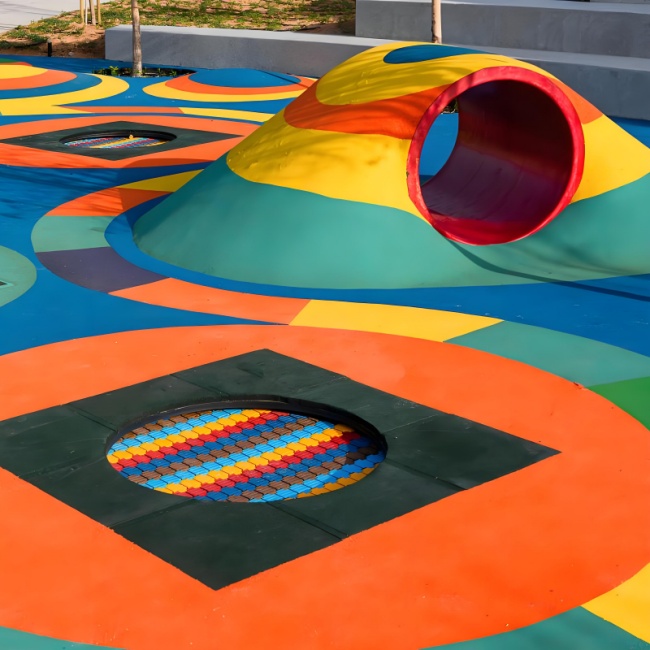
2. Color and Design Flexibility: Customizable in a variety of colors and patterns to meet landscape design needs, with colors that remain vibrant over time.
3. Low Maintenance Costs: The smooth, seamless surface requires only water and a neutral detergent for daily cleaning, eliminating the need for frequent maintenance.
4. Safe and Eco-Friendly: Sulfur-free products meet food-grade hygiene standards and are suitable for sensitive locations such as kindergartens and senior living facilities.
5. Fully Mechanized Installation: The mechanical spraying process ensures a short installation cycle and uniform, controllable thickness, effectively reducing labor costs and on-site quality risks.
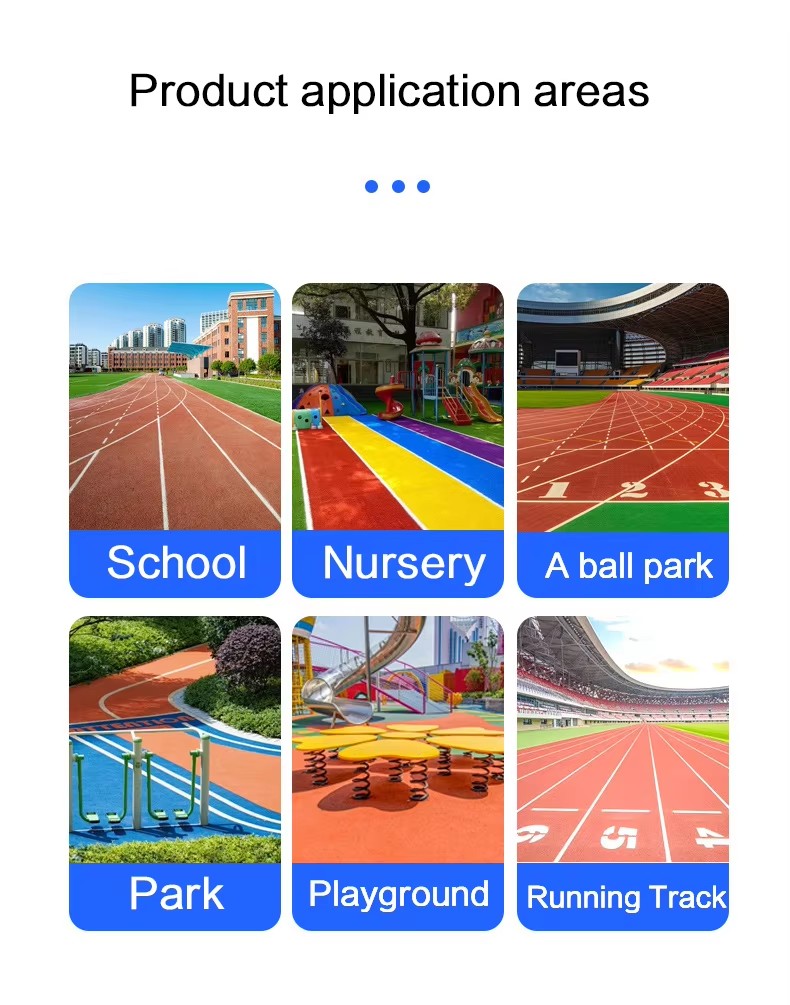
The weather resistance of EPDM granules is not an abstract concept, but rather a set of quantifiable and verifiable technical indicators. As a purchaser or contractor, selecting EPDM granules with excellent weather resistance essentially reduces long-term maintenance costs, avoids construction quality disputes, and ensures end-user safety.
Key Procurement Recommendations:
- Prioritize products manufactured using a sulfur-free peroxide curing process
- Request third-party weather resistance test reports (performance retention rate ≥90%)
- Confirm rubber content ≥20% and ENB content between 3.0% and 5.0%
- Select the appropriate particle size combination based on the project
- Ensure minimum order quantities and delivery schedules align with project timelines

Our Advantages in This Area: With over 25 years of industry experience and a full suite of advanced production lines, our company utilizes patented sulfur-free technology in all products. These products are odorless, feature a stable molecular structure, and offer a service life extended by more than three times, with tensile strengths reaching 4–7 MPa and performance retention rates increased by more than five times. We support customization of various colors and particle sizes, have no minimum order quantity requirements, and can quickly respond to all types of order requests, ensuring project quality and schedule compliance from the source.


WOW(LYG) New Material Co Ltd is a manufacturer specializing in the production of EPDM rubber granules. We use sulfur-free vulcanization technology, it increases the service life by more than 3 times than traditional EPDM granules, and enhances the performance, including anti-aging, high-temperature resistance, and colorfastness.
We have over 25 years of production experience and offer customization for colors and granule sizes. NO MOQ.


