 注: 建议图片大小150px*50px
丨
注: 建议图片大小150px*50px Views: 0 Author: Site Editor Publish Time: 2026-07-29 Origin: Site


EPDM Rubber Granules for Contractors
For playground contractors, sports surfac installers, and municipal project managers, specifying a reliable impact absorbing surface is critical for both safety compliance and long-term project viability. While traditional rubber mats or poured-in-place systems have their place, EPDM (Ethylene Propylene Diene Monomer) rubber granules have emerged as the industry standard for creating durable, seamless, and highly shock-absorbent surfaces.
However, sourcing high-quality EPDM granules remains a significant challenge. Procurement managers and engineers frequently encounter issues like premature fading, inconsistent granule sizing, and poor bonding with polyurethane (PU) binders. This guide cuts through the marketing noise, offering a technical deep dive into EPDM granules to help contractors, importers, and architects make informed purchasing decisions and avoid costly project failures.

What is an EPDM Impact Absorbing Surface?
An impact absorbing surface made from EPDM granules is a seamless, elastic surfacing system created by mixing high-quality三元乙丙橡胶 (EPDM) granules with a single-component polyurethane binder. The mixture is then troweled or poured over a stable base (such as asphalt or concrete) to cure into a resilient, porous, and shock-absorbing layer.
Unlike prefabricated rubber tiles, this system offers complete design flexibility. It is widely used in playgrounds, running tracks, and sports courts because it effectively reduces the severity of injuries from falls while providing excellent drainage and weather resistance.

Key Applications for EPDM Granules
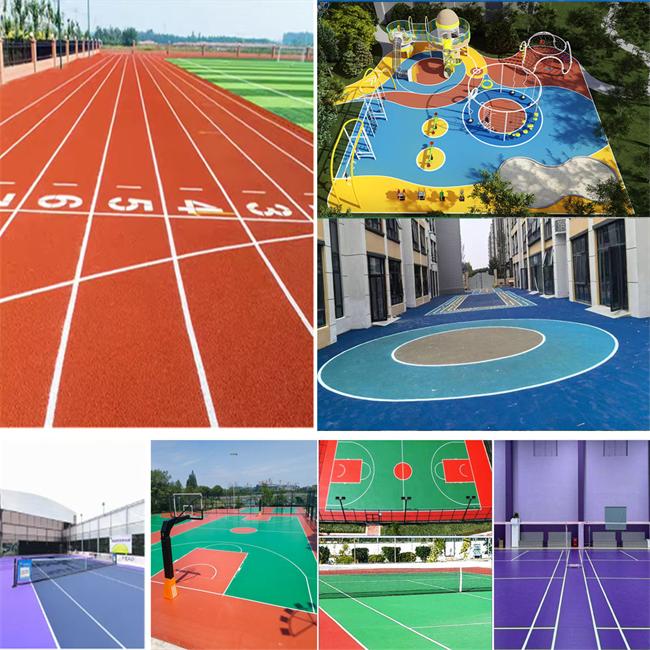
EPDM granules are highly versatile and are specified by architects and engineers for a wide range of commercial and public projects:
Playgrounds and Daycares: Providing critical fall-height protection for children.
Sports Surfacing: Used in basketball courts, tennis courts, and running tracks for shock absorption and energy return.
Public Walkways and Parks: Creating durable, non-slip paths for municipal landscape projects.
Fitness Zones: Outdoor gym areas and cross-fit zones requiring high-impact resistance.
Pool Decks and Splash Pads: Utilizing the material's excellent water permeability and slip resistance.
Why Choose EPDM for Impact Absorption?
When specifying materials for a project, contractors and purchasing managers must balance safety, aesthetics, and lifecycle costs. EPDM granules offer distinct advantages:
Superior Shock Absorption: EPDM surfaces can be engineered to absorb significant impact, reducing the risk of fractures and head injuries during falls.
Seamless and Customizable: The material can be poured to create seamless surfaces with custom colors, logos, and game lines, eliminating trip hazards found in tiled systems.
All-Weather Durability: High-quality EPDM resists UV radiation, ozone, and extreme temperature fluctuations without becoming brittle in winter or soft in summer.
Low Maintenance: The porous nature allows for excellent drainage, meaning the surface can be used shortly after rain. It also resists mold and mildew growth.
How to Choose High-Quality EPDM Granules
Selecting the right EPDM granules is the most critical step in ensuring the longevity of an impact absorbing surface. Here is what engineers and buyers need to look for:
The "Sulfur-Free" Advantage
One of the most common failures in EPDM surfacing is premature degradation and unpleasant odors caused by sulfur content. Traditional rubber processing often uses sulfur for vulcanization. However, under high temperatures and intense UV exposure, this sulfur can break down into sulfuric acid, which degrades the rubber matrix and causes a strong, unpleasant smell.
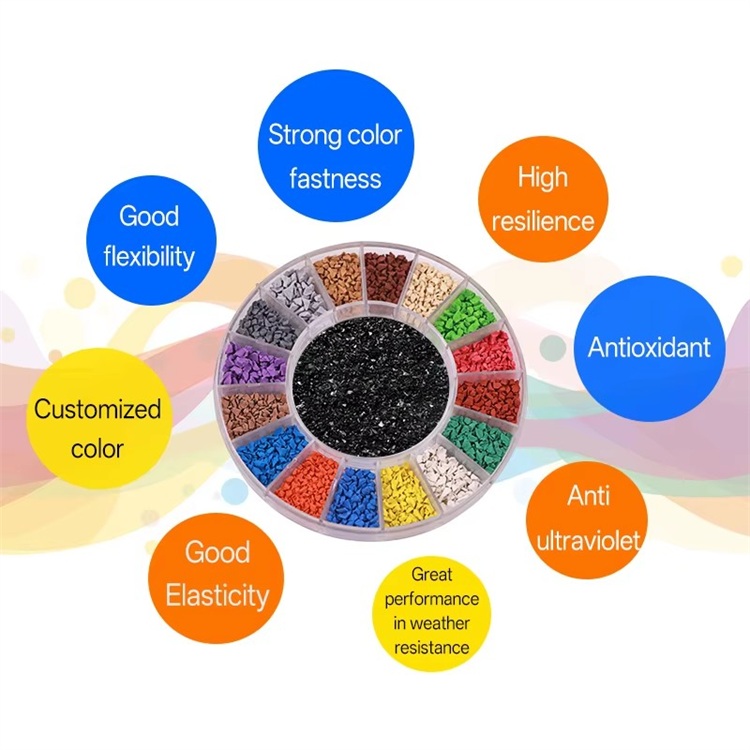
By utilizing advanced sulfur-free technology, premium EPDM granules maintain a highly stable molecular structure. This not only eliminates odor but also significantly enhances the material's resistance to aging, ensuring the surface remains vibrant and elastic for years.
Tensile Strength and Elasticity
For high-traffic areas, the mechanical properties of the granule are paramount. Standard EPDM granules may lack the necessary tensile strength, leading to tearing under heavy use. High-performance EPDM granules boast a tensile strength of 4 to 7 MPa (Megapascals), which is 2 to 3 times higher than standard market options. This superior elasticity ensures the surface retains its shape and shock-absorbing properties even under constant stress.
Color Stability and Aesthetics
Fading is a major concern for landscape companies and municipal contractors. Low-quality pigments will fade rapidly under sunlight. Premium EPDM granules use high-grade, UV-stable pigments that are mixed throughout the entire granule (solid color), not just coated on the surface. This ensures that even as the surface wears over time, the color remains consistent and vibrant.
Granule Geometry and Density
The physical shape of the granule affects both the aesthetic finish and the installation process. High-quality EPDM granules feature a low bulk density and a distinct, angular geometry (strong three-dimensional feel). This shape allows for better interlocking between granules and a more uniform distribution of the PU binder, resulting in a stronger, more cohesive surface.

Practical Tips: Avoiding Common Procurement Mistakes
To ensure project success, avoid these common pitfalls when sourcing EPDM granules:
Ignoring Binder Compatibility: The EPDM granule is only half the equation. Ensure your granule supplier provides technical data sheets (TDS) that specify the exact mixing ratio and compatibility with your chosen PU binder. Poor compatibility leads to delamination.
Focusing Solely on Price: Cheap EPDM granules often contain high levels of fillers (like calcium carbonate) or recycled rubber. This reduces the rubber content, leading to brittle surfaces that crack and fade within a year. Always ask for the rubber content percentage.
Overlooking Certifications: For public projects, especially schools and playgrounds, safety is non-negotiable. Ensure the granules meet international safety standards (such as EN 1177 for critical fall height) and environmental standards (like REACH or RoHS) to avoid liability issues.
Inconsistent Batch Colors: If ordering for a large project, ensure the supplier has the capacity to produce the entire required volume in a single batch or has strict quality control to ensure color consistency across different batches.

Why More Projects Are Switching to Advanced EPDM
The construction and landscaping industries are increasingly moving away from traditional materials due to the superior lifecycle performance of advanced EPDM granules. The shift is driven by the need for materials that offer:
Extended Lifespan: Sulfur-free, high-tensile EPDM can last 3 times longer than standard rubber, reducing replacement costs.
Food-Grade Safety: Advanced formulations are free from heavy metals and toxic chemicals, making them safe for children's playgrounds and even meeting food-grade hygiene standards.
Supply Chain Flexibility: Leading manufacturers now offer flexible Minimum Order Quantities (MOQ) and custom color matching, allowing contractors to order exactly what they need without excessive waste or long lead times.

FAQ (Frequently Asked Questions)
Q1: What is the recommended thickness for an impact absorbing EPDM surface?
A: The thickness depends on the critical fall height of the equipment above it. Generally, a 30mm thickness is standard for playgrounds, but for higher equipment, 40mm to 50mm may be required to meet safety standards like ASTM F1292 or EN 1177.
Q2: How do I prevent my EPDM surface from fading?
A: Fading is usually caused by low-quality pigments or high filler content. To prevent this, specify EPDM granules that use UV-stable, solid-color pigments and have a high rubber content (minimum 15-20% virgin EPDM). Sulfur-free granules also resist oxidation, which contributes to color retention.
Q3: Can EPDM granules be installed over existing concrete?
A: Yes, EPDM can be installed over asphalt or concrete. However, the base must be clean, dry, and free of cracks. A primer is often applied to ensure a strong bond between the concrete and the new rubber surface.
Q4: What is the difference between EPDM and SBR granules?
A: EPDM (Ethylene Propylene Diene Monomer) is a virgin synthetic rubber known for its excellent color stability and UV resistance, making it ideal for the top layer of a surface. SBR (Styrene Butadiene Rubber) is typically made from recycled tires, is black, and is cheaper, often used as a base layer for cushioning but lacks the aesthetic and weathering properties of EPDM.
Q5: How long does an EPDM impact absorbing surface last?
A: A professionally installed EPDM surface using high-quality, sulfur-free granules can last between 8 to 12 years, depending on usage intensity and maintenance. Lower quality installations may fail within 3 to 5 years.
Q6: Is EPDM rubber environmentally friendly?
A: Yes, high-quality EPDM is non-toxic, lead-free, and recyclable. Advanced manufacturing processes ensure the granules are free from harmful chemicals, making them safe for use in sensitive environments like schools and parks.

Selecting the right impact absorbing surface is a critical decision that affects the safety of users and the reputation of your contracting business. By understanding the technical differences—specifically the benefits of sulfur-free, high-tensile EPDM granules—contractors and procurement managers can specify materials that offer superior durability, safety, and aesthetic appeal.
WOW(LYG) New Material Co Ltd is a manufacturer specializing in the production of EPDM rubber granules. We use sulfur-free vulcanization technology, it increases the service life by more than 3 times than traditional EPDM granules, and enhances the performance, including anti-aging, high-temperature resistance, and colorfastness.
We have over 25 years of production experience and offer customization for colors and granule sizes. NO MOQ.


