 注: 建议图片大小150px*50px
丨
注: 建议图片大小150px*50px Views: 0 Author: Site Editor Publish Time: 2026-08-08 Origin: Site


Selecting the right paving granules for sports fields is one of the most consequential material decisions a contractor, engineer, or project owner will make during the specification phase. Unlike decorative surfacing where aesthetics alone may suffice, sports field applications demand a precise balance of shock absorption, energy return, UV stability, color consistency, and long-term weathering resistance. A poor granule choice does not simply affect appearance — it can compromise athlete safety, accelerate surface degradation, and lead to costly premature replacement.
EPDM rubber granules have become the preferred aggregate in poured-in-place (PIP) rubber surfacing, wet pour playground systems, running tracks, multi-use games areas (MUGAs), and recreational sports courts precisely because they offer tunable performance characteristics that SBR or other recycled rubber alternatives cannot match. However, not all EPDM granules are manufactured to the same standard, and the gap between premium virgin EPDM and lower-grade compounded alternatives is often invisible until after installation and exposure.
This guide is written for procurement managers, sports surfacing contractors, landscape architects, municipal buyers, and importers who need to understand what to specify, what to test, and what to ask before committing to a bulk order. It covers material selection, technical parameters, common procurement risks, and practical manufacturer-level insights drawn from over 25 years of EPDM granule production experience.
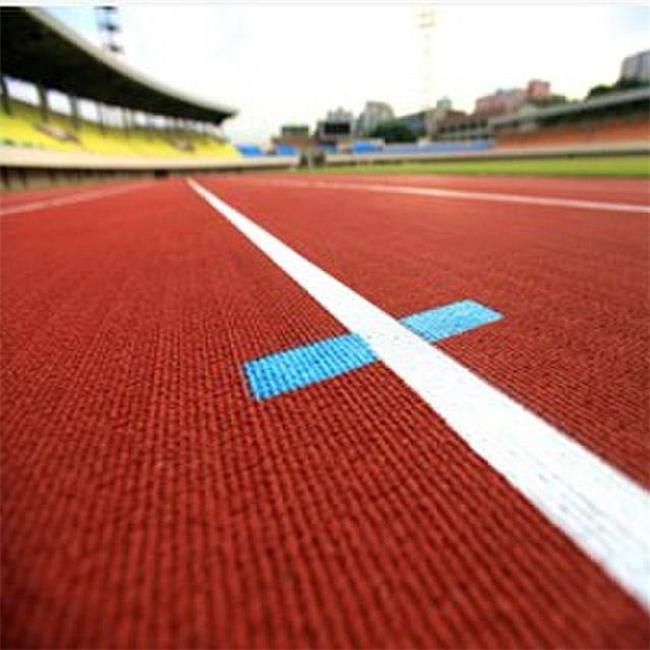
What Are Paving Granules for Sports Fields?
Paving granules for sports fields are colored EPDM (Ethylene Propylene Diene Monomer) rubber granules used as the visible wear-layer aggregate in poured rubber surfacing systems. They are mixed with a polyurethane (PU) binder on-site and troweled or screeded into place to form a seamless, resilient, and impact-absorbing surface.
The term "paving granules" in this context refers specifically to the top-course EPDM granules that define the surface color, texture, drainage characteristics, and performance profile of the finished installation. In a typical wet pour system, these granules are laid over a base layer — often composed of larger SBR rubber granules mixed with binder — to create a two-layer system that balances cost, cushioning, and surface durability.
EPDM granules differ fundamentally from SBR (Styrene-Butadiene Rubber) granules in several ways that matter for sports applications:
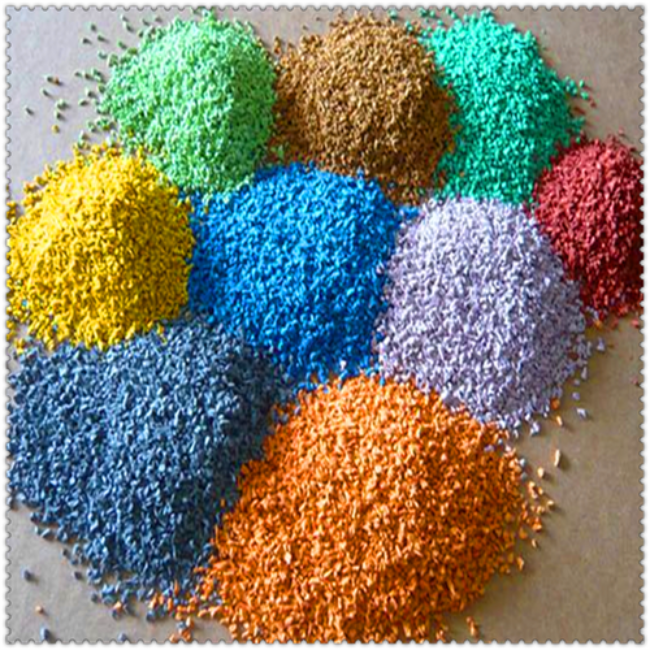
Color range: EPDM can be produced in virtually any color, including custom RAL and Pantone matches, while SBR is typically limited to black or dark tones.
UV resistance: High-quality virgin EPDM retains color significantly longer under direct sunlight compared to SBR or low-grade compounded rubber.
Odor profile: Sulfur-free EPDM formulations produce no noticeable odor, even under high temperatures — a critical factor for schools, kindergartens, and indoor-adjacent installations.
Elasticity: Premium EPDM granules exhibit tensile strength in the range of 4–7 MPa, providing superior resilience and resistance to granule breakdown under foot traffic.

Applications in Sports and Recreational Surfacing
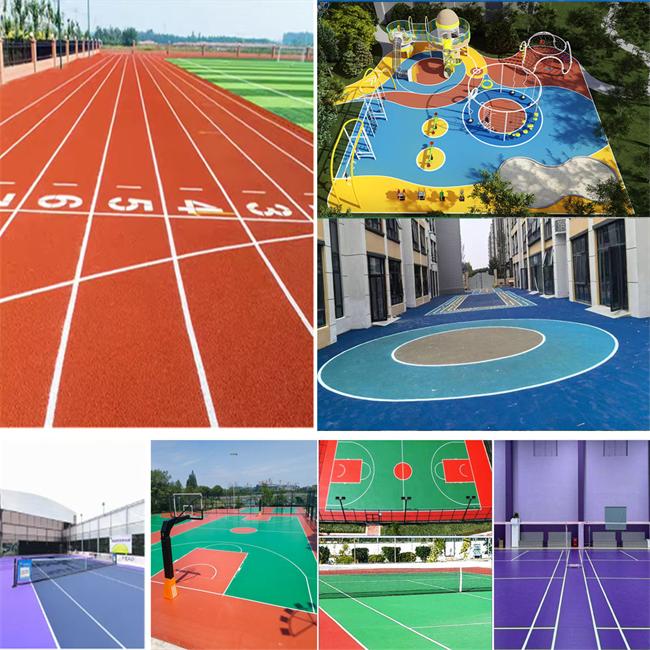
EPDM paving granules are specified across a wide range of outdoor sports and recreational environments. The most common applications include:
Running tracks — both full athletic tracks and jogging paths where shock absorption and consistent surface friction are required.
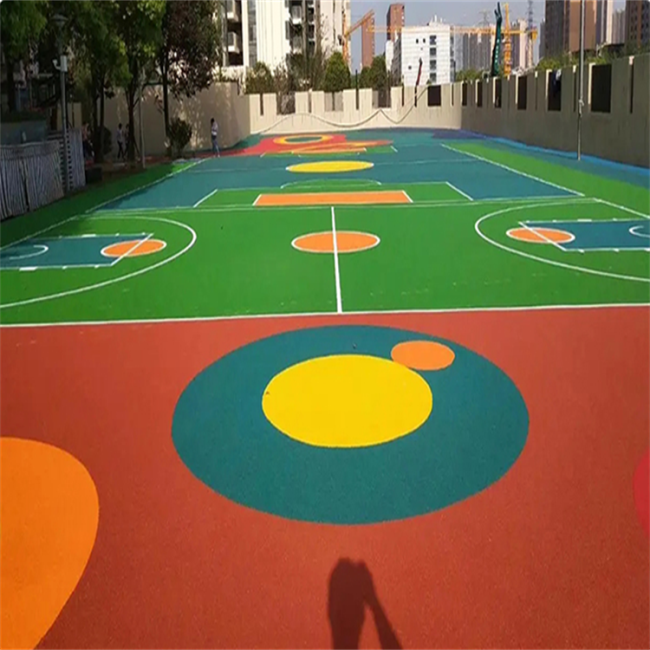
Multi-Use Games Areas (MUGAs) — school and municipal courts where multiple sports share the same surface and color-coded zoning is essential.
Tennis and basketball courts — where color contrast, ball response, and player comfort must all be considered.
Playground safety surfacing — particularly beneath climbing frames, swings, and slides where critical fall height (CFH) compliance is mandatory.
Walking paths and fitness trails — in parks, residential developments, and commercial properties.
Splash pads and water play areas — where slip resistance, drainage, and chemical resistance are priorities.
Senior living and rehabilitation areas — where fall mitigation and underfoot comfort are paramount.
The versatility of EPDM granules lies in the ability to control granule size, color, and layer thickness to match the specific performance requirements of each application. A kindergarten splash pad, for example, may prioritize bright colors and maximum shock absorption, while a municipal running track may prioritize durability, colorfastness, and IAAF-compliant performance characteristics.
Benefits of EPDM Paving Granules for Sports Fields
When correctly specified and installed, EPDM paving granules deliver measurable advantages over alternative surfacing materials:
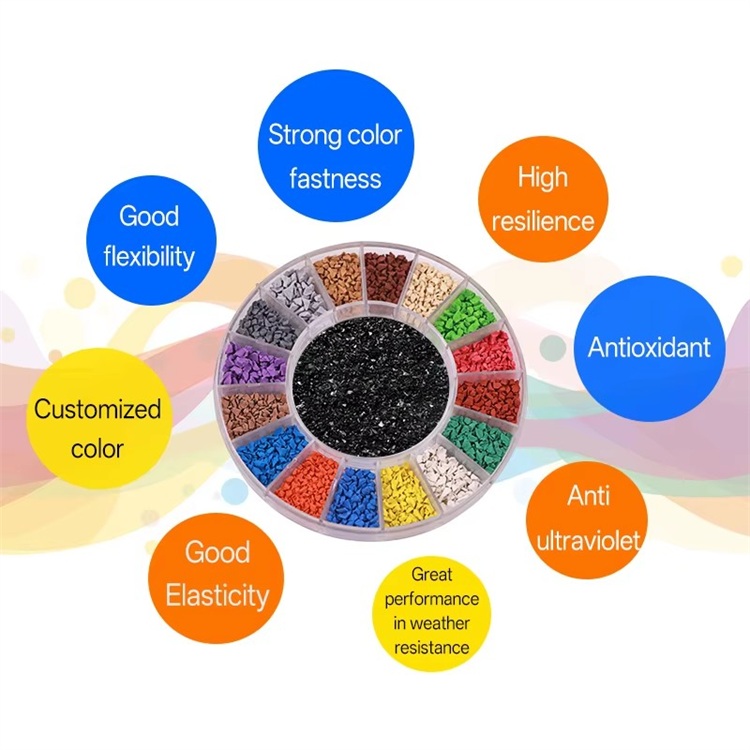
Superior UV and weathering resistance. Premium EPDM granules resist fading and chalking even after prolonged exposure to direct sunlight, rain, and temperature cycling. This is particularly important in regions with intense solar radiation, including the Middle East, Southern Europe, Australia, and the southern United States.
Sulfur-free formulation eliminates odor. Our EPDM granules are produced without sulfur compounds, meaning they do not decompose into sulfuric acid under high temperatures or strong UV exposure. This eliminates the chemical odor commonly associated with lower-grade rubber surfacing — a frequent complaint in school and playground environments.
Extended service life. The absence of sulfur stabilizes the molecular structure of the EPDM compound, which in practice translates to a service life that can exceed conventional EPDM by a factor of three or more under equivalent conditions. This is not merely a marketing claim — it reflects the fundamental chemistry of sulfur-free crosslinking versus traditional sulfur-cured systems.
Higher elasticity and tensile strength. Our granules achieve tensile strength in the 4–7 MPa range, representing a two- to three-fold improvement over standard EPDM compounds. Higher tensile strength means the granules resist fragmentation under repeated impact, maintaining surface integrity and reducing loose granule loss over time.
Enhanced color vibrancy and oxidation resistance. The antioxidant properties built into our formulation help preserve color saturation throughout the product's lifespan. This matters for sports fields where color-coded zones — such as running lanes, court boundaries, and safety areas — must remain clearly distinguishable.
Environmental safety. Our EPDM granules meet food-grade hygiene standards, making them suitable for installations where children's direct contact with the surface is expected, including playgrounds, splash pads, and kindergarten outdoor areas.
Low bulk density with strong angular geometry. The granules maintain a three-dimensional angular shape that promotes effective binder adhesion and mechanical interlock within the cured matrix, contributing to overall surface cohesion.
Common Challenges and How to Avoid Them
Even with high-quality EPDM granules, sports field installations can underperform if common pitfalls are not addressed during specification and procurement.
Color inconsistency between batches. This is one of the most frequent complaints in the industry. When granules from different production batches vary in shade, the finished surface can display visible patching — especially problematic on large sports courts. The solution is to work with a manufacturer that maintains strict batch-to-batch color control and can provide reference samples for approval before bulk shipment.
Premature fading or chalking. This typically indicates the use of low-grade fillers, insufficient UV stabilizers, or recycled rubber blended into the EPDM compound. Specifying virgin EPDM with documented UV stability testing is essential for any project with a multi-year performance expectation.
granule breakdown under traffic. If granules fracture easily during mixing or under foot traffic, the surface will develop a rough, degraded texture over time. Tensile strength and elongation data should be reviewed before purchase — granules with tensile strength below 3 MPa are generally unsuitable for high-traffic sports applications.
Odor complaints post-installation. Sulfur-containing EPDM can emit a noticeable chemical smell, particularly in warm climates. For schools, playgrounds, and enclosed or semi-enclosed areas, specifying sulfur-free EPDM is not optional — it is a health and comfort requirement.
Incorrect granule size selection. Using granules that are too large for the intended layer thickness, or too fine for adequate drainage, will compromise both performance and aesthetics. granule size must be matched to the system design, binder ratio, and application type.
Binder ratio miscalculation. The relationship between EPDM granule surface area and PU binder quantity directly affects surface durability. Too little binder leads to granule loosening; too much creates a stiff, less resilient surface. Manufacturers should provide recommended binder ratios for their specific granule products.
How to Choose Paving Granules for Sports Fields
Selecting the right EPDM paving granules requires evaluating several interdependent factors:
1. Define the performance requirements first. Before choosing a granule specification, determine the critical fall height (if applicable), expected traffic intensity, climate conditions, and color design requirements. A kindergarten playground in a tropical climate has very different requirements from an outdoor basketball court in Northern Europe.
2. Match granule size to the application. Common size ranges include 0.5–1.5mm for fine-textured top coats, 1–3mm and 1–4mm for standard sports surfacing, and 2–4mm for heavy-duty applications requiring greater depth and drainage. The granule size affects surface texture, binder consumption, and overall thickness requirements.
3. Verify the EPDM content and formulation. Not all "EPDM granules" are created equal. Some products contain significant proportions of recycled rubber or mineral fillers that reduce cost but compromise performance. Request technical data sheets (TDS) and, where possible, independent test reports confirming EPDM content, tensile strength, elongation, and UV resistance.
4. Confirm color stability data. Ask the manufacturer for accelerated weathering test results or real-world exposure data. A supplier confident in their product will provide this documentation without hesitation.
5. Evaluate the supplier's production capability. Consistent supply of the same color and specification over multiple orders — potentially spanning months or years — requires a manufacturer with stable raw material sourcing, controlled production processes, and adequate production capacity.
6. Consider logistics and packaging. For international buyers, packaging format (bulk bags, palletized bags, container loading optimization) and lead times are practical concerns that affect project scheduling and total landed cost.
Technical Specifications
Our EPDM paving granules are produced to meet the demands of demanding sports and recreational surfacing applications. The following parameters reflect our standard production capabilities:
Material: Virgin EPDM rubber, sulfur-free formulation
Tensile strength: 4–7 MPa (2–3× improvement over standard EPDM)
Elasticity: 2–3× higher than conventional compounds
Performance retention: 5× improvement in long-term performance maintenance
Odor: Virtually odorless — no sulfuric acid decomposition under heat or UV
Environmental standard: Food-grade hygiene compatible
UV stability: Excellent — formulated with enhanced antioxidant and UV-resistant additives
granule geometry: Angular, three-dimensional structure with low bulk density for optimal binder adhesion
Available granule sizes: 0.5–1.5mm, 1–3mm, 1–4mm, 2–4mm, and custom ranges upon request
Color options: Full RAL color matching, Pantone matching, custom color development from client samples, and multi-color combinations
Packaging: Customizable — standard bulk bags, palletized packaging, or client-specified formats
Shipping: Full container load (FCL) and less-than-container load (LCL) supported

Why Global Buyers Choose Our EPDM Granules
With over 25 years of dedicated EPDM granule manufacturing experience and a complete set of advanced production lines, we serve contractors, distributors, brand owners, and OEM buyers across Europe, North America, Australia, the Middle East, and other international markets.
Our competitive advantages are rooted in manufacturing discipline rather than marketing claims:
Single-product focus. We produce only EPDM colored rubber granules. This specialization means our entire production infrastructure, quality control systems, and R&D efforts are directed at one material — resulting in consistently higher quality than diversified manufacturers.
No minimum order quantity. Whether you need a single bag for a sample project or multiple containers for a national rollout, we accommodate orders of any size.
Full color customization. We match RAL codes, Pantone references, or physical samples provided by the client. Color approval samples are available before production begins.
Flexible granule size production. Standard and custom size ranges are available, allowing contractors to specify exactly what their system design requires.
Private label and OEM support. Brand owners and distributors can leverage our production capability under their own brand identity, with custom packaging and labeling.
Rigorous quality control. Every batch is tested for color consistency, granule size distribution, tensile strength, and elongation before release.
Reliable supply chain. With established production capacity and raw material partnerships, we maintain stable lead times even during periods of high demand.
Manufacturer Insights: Professional Advice for Buyers
Drawing from decades of production experience and feedback from international clients, here are practical recommendations for procurement professionals and contractors:
On granule size selection: For standard sports field top coats, 1–3mm and 1–4mm offer the best balance of surface smoothness, binder efficiency, and drainage. Finer grades (0.5–1.5mm) are better suited to thin decorative coatings or areas requiring a smoother finish. Coarser grades (2–4mm) work well in high-traffic zones or deeper pour applications where structural integrity is the priority.
On color selection: Lighter colors reflect more heat and stay cooler underfoot — an important consideration for playgrounds and barefoot areas in warm climates. Darker colors absorb more heat but can provide better contrast for line markings. Plan your color palette with both aesthetics and thermal performance in mind.
On custom color timing: If your project requires a non-standard color, initiate the color matching process early. Custom color development, sample approval, and production scheduling typically require additional lead time compared to standard stock colors.
On cost control: The most effective way to control costs is not to negotiate granule price in isolation, but to optimize the total system — correct granule size selection reduces binder waste, consistent quality reduces rework, and reliable supply prevents project delays. A slightly higher granule cost that prevents surface failure is always cheaper than a premature replacement.
On quality verification: Always request a pre-shipment sample from the actual production batch — not a "golden sample" from a previous order. Batch-specific samples are the only reliable way to confirm color and quality before committing to a full shipment.
On long-term supplier relationships: The greatest procurement risk in EPDM granules is inconsistency over time. Establishing a relationship with a manufacturer who can guarantee repeatable quality across multiple orders — potentially over several years — is more valuable than choosing the lowest single-order price.

FAQ
What size EPDM granules should I choose for a sports field?
For most sports field applications, 1–3mm or 1–4mm provides the optimal balance of surface texture, drainage, and binder efficiency. Finer grades (0.5–1.5mm) suit thin decorative layers, while 2–4mm is better for heavy-duty or deeper-pour applications.
Will EPDM paving granules fade over time?
High-quality virgin EPDM with proper UV stabilizers resists fading significantly better than SBR or compounded alternatives. Our sulfur-free formulation includes enhanced antioxidant protection, maintaining color vibrancy throughout an extended service life.
How much PU binder is needed per square meter?
Binder consumption depends on granule size, layer thickness, and desired surface density. As a general reference, top-coat applications using 1–3mm granules typically require approximately 15–25% binder by weight of granules. We provide specific binder ratio recommendations with our technical data sheets.
How long does an EPDM sports surface last?
A properly specified and installed EPDM wet pour surface using premium granules can perform effectively for 8–15 years or more, depending on traffic intensity, climate, maintenance practices, and base layer quality. Our sulfur-free formulation is engineered to extend this range through superior molecular stability.
Can you match a specific color for our project?
Yes. We support full RAL color matching, Pantone matching, and custom color development from physical samples provided by the client. Color approval samples are produced before bulk manufacturing begins.
Is there a minimum order quantity?
No. We have no minimum order quantity (MOQ). Orders of any size are accepted, from single-bag samples to full container loads.
What certifications are available?
Our EPDM granules meet food-grade hygiene standards and are produced to international quality benchmarks. Specific certification documentation can be provided upon request to support your project's compliance requirements.
Can EPDM granules be used in hot climates?
Yes. Our sulfur-free formulation is specifically designed to resist thermal degradation, odor emission, and UV-induced breakdown — making it well-suited for installations in the Middle East, Australia, Southern Europe, and other high-temperature regions.
How do I verify the quality of EPDM granules before purchasing?
Request a pre-shipment sample from the actual production batch, review the TDS for tensile strength and elongation data, confirm EPDM content and formulation details, and verify that the manufacturer maintains documented batch-to-batch quality control. We welcome sample requests from prospective buyers.

Paving granules for sports fields are not a commodity product — they are a performance-critical component that directly determines the safety, durability, aesthetics, and long-term value of the finished surface. The decisions made during specification and procurement — granule size, EPDM quality, color stability, formulation chemistry, and supplier reliability — have consequences that persist for years after installation.
As a dedicated EPDM colored rubber granule manufacturer with over 25 years of production experience, we understand that our role is not simply to supply material, but to provide the technical consistency, customization capability, and quality assurance that enable contractors, engineers, and project owners to deliver surfaces that perform as intended.
If you are evaluating EPDM paving granules for an upcoming sports field, playground, or recreational surfacing project, we welcome the opportunity to provide product samples, technical documentation, and project-specific guidance. Contact us to discuss your requirements.

WOW(LYG) New Material Co Ltd is a manufacturer specializing in the production of EPDM rubber granules. We use sulfur-free vulcanization technology, it increases the service life by more than 3 times than traditional EPDM granules, and enhances the performance, including anti-aging, high-temperature resistance, and colorfastness.
We have over 25 years of production experience and offer customization for colors and granule sizes. NO MOQ.


