 注: 建议图片大小150px*50px
丨
注: 建议图片大小150px*50px 


Red EPDM rubber granules are among the most widely specified materials for premium playground surfacing, running tracks, and poured-in-place rubber systems worldwide. As a contractor, engineer, or procurement professional, you need more than a basic product description—you need to understand what separates high-performance EPDM from budget alternatives, how to specify the right material for each project, and how to avoid costly mistakes.
EPDM stands for Ethylene Propylene Diene Monomer, a synthetic rubber known for exceptional weatherability, UV resistance, and color stability. Red EPDM granules, specifically, are the top-layer material that creates the vibrant, durable surfaces found on children's playgrounds, athletic tracks, and recreational areas across Europe, North America, Australia, and the Middle East.
This guide addresses what contractors, engineers, and importers actually need to know—from material selection and quality assessment to installation best practices and supplier evaluation.
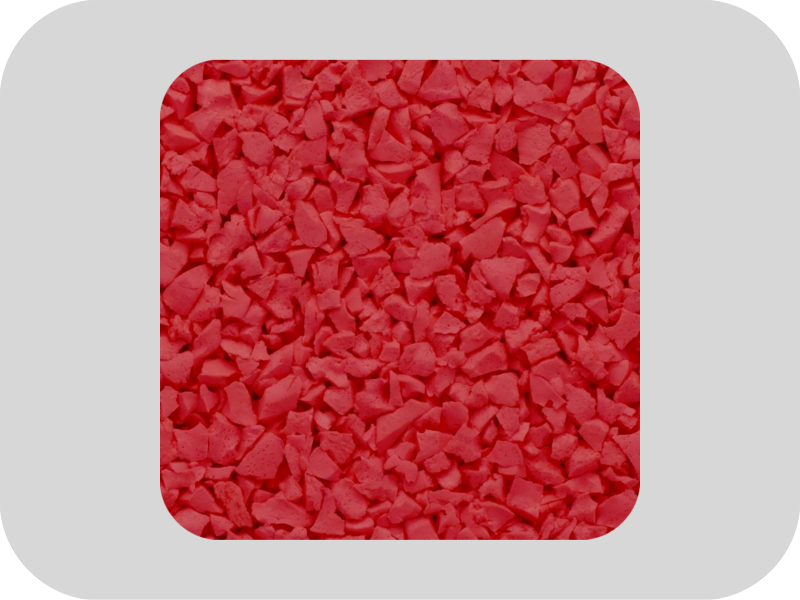
What Is Red EPDM?
Red EPDM rubber granules are vulcanized granules manufactured from virgin EPDM synthetic rubber, combined with high-quality inorganic pigments and UV stabilizers. Unlike SBR (Styrene-Butadiene Rubber) granules, which are typically made from recycled tire rubber, EPDM is engineered as a premium material specifically for exposed, visible surfaces.
Key characteristics include:
- Excellent chemical stability and resistance to ozone, oxidation, and weathering
- Vibrant, long-lasting color that resists fading under UV exposure
- High elasticity for impact absorption and safety
- Non-toxic and safe for children and pets
- Available in multiple granule sizes for different applications
The "red" color is the most commonly specified EPDM option globally, widely used for running tracks and playground safety surfacing due to its visibility, aesthetic appeal, and heat reflectance compared to darker colors.

Applications
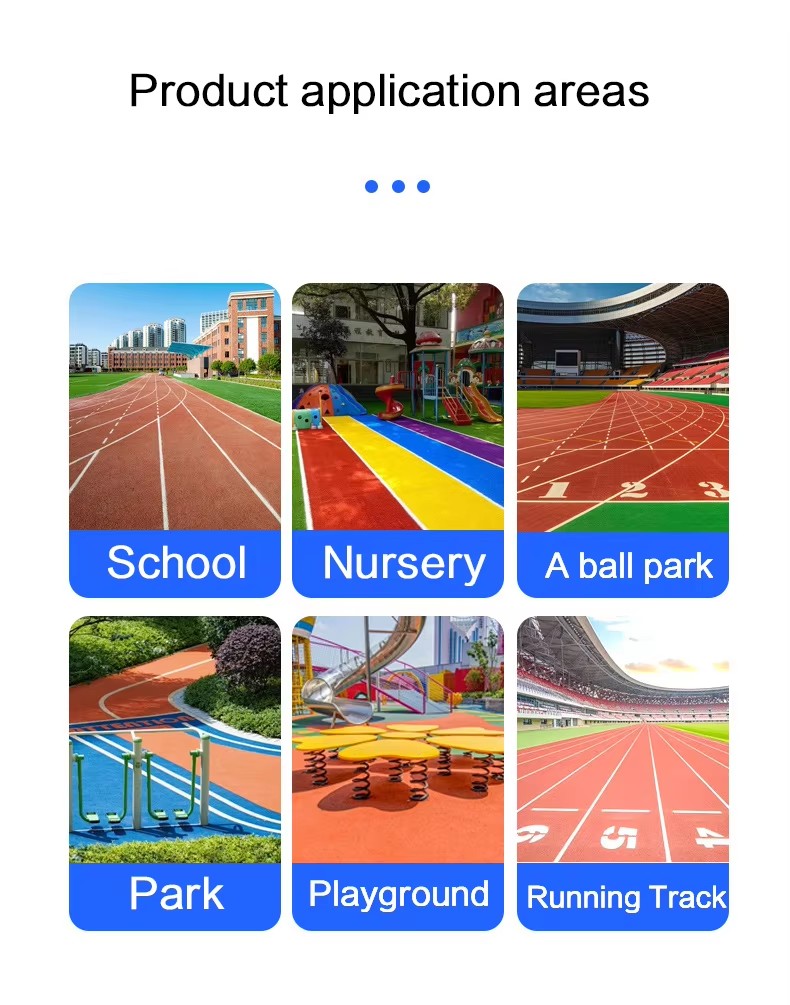
Red EPDM granules serve as the wearing course in various surfacing systems:
Poured-in-Place (PIP) Rubber Surfacing: The EPDM layer is mixed with polyurethane binder and troweled onto a rubber shock pad or base layer, creating a seamless, permeable surface.
Wet Pour Playground Surfacing: A popular system for children's playgrounds, where EPDM granules form the top layer over an SBR or EPDM shock-absorbing base. This provides Critical Fall Height (CFH) protection compliant with safety standards like EN 1177 and ASTM F1292.
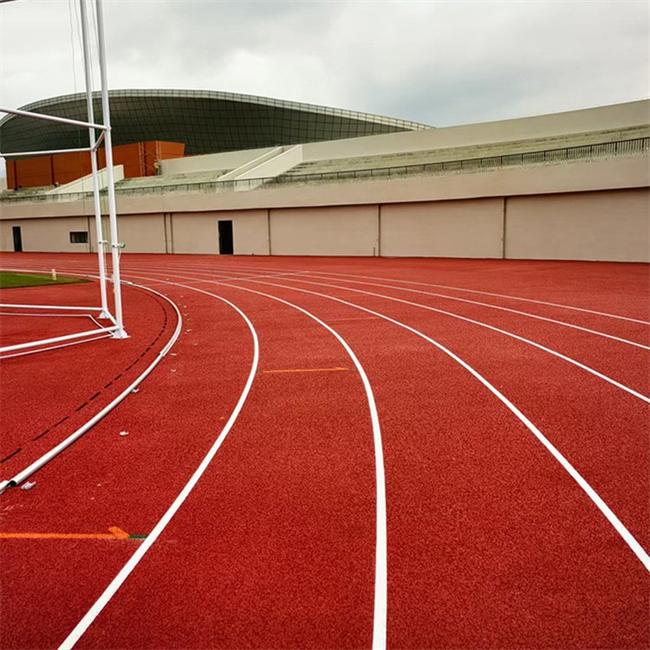
Running Tracks: The red EPDM surface layer provides athletes with the right combination of grip, shock absorption, and energy return for competitive running events.
Sports Surfacing: Used for multi-purpose courts, tennis courts, basketball courts, and recreational areas.
Splash Pads and Water Play Areas: EPDM's slip-resistant properties and excellent water permeability make it ideal for wet environments.
Walking Paths, Parks, and Schools: Red EPDM creates attractive, durable surfaces for high-traffic pedestrian areas.
Benefits of Red EPDM Over Alternatives
EPDM vs. SBR: Critical Distinction
This is perhaps the most important decision in any surfacing project. EPDM and SBR are not interchangeable, and understanding the differences prevents specification errors.
EPDM is manufactured from virgin synthetic rubber and offers excellent UV and color stability, making it ideal for top-layer applications with a long service life. In contrast, SBR is made from recycled tire rubber, which fades and degrades under sunlight and is typically limited to dark colors. While EPDM costs more, its superior performance characteristics make it the only choice for exposed surfaces, whereas SBR is best suited for concealed base layers where color stability is not required.
Performance Advantages
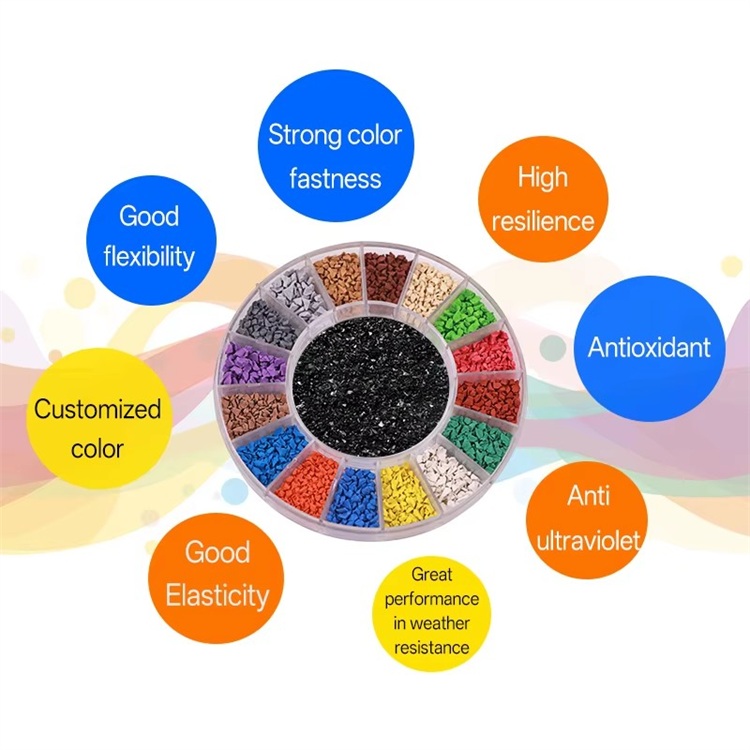
Color Longevity: High-quality red EPDM granules maintain their vibrant appearance for over 8 years under normal weather conditions without significant fading. Premium-grade products with UV-stabilized pigments outperform standard EPDM or TPV alternatives.
Environmental Resistance: EPDM's saturated molecular backbone provides superior resistance to ozone and oxidation, making it suitable for all climates—from the heat of the Middle East to the freeze-thaw cycles of northern Europe.
Safety and Hygiene: EPDM granules are non-toxic, heavy metal-free, and chemically stable even under high temperatures. The material does not release harmful substances, making it safe for children's environments.
Elasticity and Shock Absorption: With a Shore A hardness typically in the range of 55 to 65 and an elongation at break exceeding 160 percent, EPDM provides excellent impact attenuation and resilience.
Common Challenges and Solutions
Color Fading
The Challenge: Some EPDM products fade within 12 to 24 months of installation, turning pink, gray, or losing vibrancy entirely.
The Solution: Specify EPDM manufactured with high-quality inorganic pigments and UV stabilizers. Quality products from reputable manufacturers demonstrate color stability exceeding 8 years. Confirm the supplier's pigment source and ask for accelerated aging test reports.
Inconsistent Color Between Batches
The Challenge: Different production batches can show noticeable color variation, resulting in a patchy appearance.
The Solution: Work with manufacturers who maintain strict color control systems. Reputable suppliers measure color values using spectrophotometers and maintain color difference tolerances to ensure batch-to-batch consistency. Request a color sample before placing bulk orders for large projects.
Premature Granule Loss or "Pitting"
The Challenge: Poor-quality EPDM granules become loose, creating an uneven surface and requiring costly repairs.
The Solution: This often results from insufficient binder coverage or poor granule-to-binder adhesion. Ensure the project spec includes the correct binder ratio, typically 12 to 15 percent by weight, and that the installation contractor has the experience to achieve proper saturation. Some manufacturers produce granules with surface treatments that enhance binder adhesion.
Material Waste and Cost Overruns
The Challenge: Underestimating material quantities or using inefficient application methods increases costs.
The Solution: Understand the relationship between granule size and coverage. The bulk density of EPDM granules typically ranges from 650 to 750 kilograms per cubic meter. Coverage rates vary by granule size and installation thickness. High-density granules yield lower coverage per kilogram, increasing material costs. Lighter materials with the same performance characteristics may provide up to 45 percent more surface coverage per kilogram.
Low-Quality or Recycled Content
The Challenge: Some suppliers offer "EPDM" that contains recycled rubber or lower polymer content, compromising performance and lifespan.
The Solution: Specify EPDM content percentage, typically 13 to 20 percent for quality products, and request test certificates verifying material composition. A higher rubber polymer content directly correlates with better elasticity, UV resistance, and longevity.
How to Choose the Right EPDM Granules
Granule Size Selection
The correct granule size depends on the application. The 0.5 to 1.5 millimeter range is ideal for thin spray coatings and fine-textured surfaces. The 1.0 to 3.0 millimeter size is the most common specification for playground surfacing and running track top layers, providing optimal texture and durability. The 2.0 to 4.0 millimeter range is typically used for thicker wearing courses and sports surfaces, while 3.0 to 5.0 millimeter granules are sometimes specified for base layers or specialized applications.
For red EPDM used in running tracks, the 1 to 3 millimeter range is most commonly specified. For playground safety surfacing, both the 1 to 3 millimeter and 2 to 4 millimeter sizes are frequently used depending on the desired finish.
Key Technical Specifications
When evaluating EPDM products, request and verify these technical parameters. Tensile strength should be at least 2.2 MPa, with premium products achieving 4.0 MPa and above. Elongation at break should exceed 160 percent, with better products reaching significantly higher values. Shore A hardness typically falls between 55 and 65 for optimal performance.
Bulk density is a critical economic factor, with high-quality products typically ranging from 650 to 750 kilograms per cubic meter. Lower density materials provide more coverage per kilogram. Compression set after 22 hours at 70 degrees Celsius should be 15 percent or less, while elastic recovery should reach 92 percent or higher. For rubber polymer content, quality EPDM granules contain 13 to 20 percent, with higher values indicating better performance. Ash content should be 62 percent or lower.
Higher tensile strength and elongation values indicate better durability and flexibility. Lower ash content means higher rubber content and better performance.
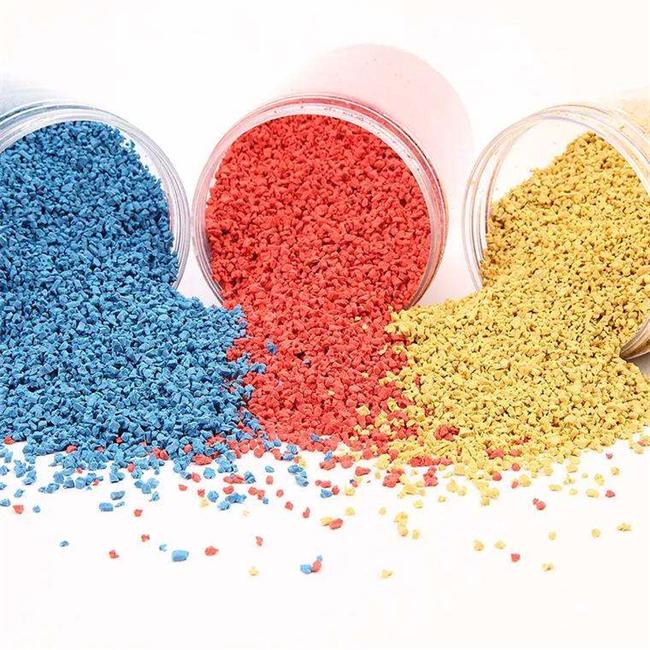
Why Global Buyers Choose Our EPDM Granules
As a dedicated EPDM manufacturer with over 25 years of industry experience, we provide red EPDM granules that consistently meet the demanding requirements of contractors, engineers, and importers worldwide.
Our quality advantages include:
Sulfur-Free Technology: Our EPDM granules use a peroxide vulcanization system. This eliminates sulfur compounds, which under high-temperature and strong UV exposure can decompose into sulfuric acid and cause unpleasant odors. The result is truly odor-free granules even under extreme conditions.
Superior Durability: The sulfur-free molecular structure significantly enhances stability and extends service life by over three times compared to conventional products. Tensile strength reaches 4 to 7 MPa, which is two to three times higher than industry standards.
Enhanced UV and Aging Resistance: Our proprietary formulation provides remarkable UV resistance, preventing discoloration and surface degradation even in regions with intense sunlight. Performance retention is improved by more than five times over standard EPDM.
Vibrant, Long-Lasting Colors: Advanced antioxidant systems and high-quality inorganic pigments ensure the red color remains vivid and stable over the product's entire service life. Our EPDM does not fade, chalk, or discolor under UV exposure, ozone, or weather conditions.
Environmental and Safety Compliance: Our EPDM granules are non-toxic, odorless, and meet food-grade hygiene standards, making them safe for children's playgrounds and sensitive environments.
Low Bulk Density and Distinctive granules: Our granules feature low density and a characteristic angular shape that creates excellent interlocking and surface texture when installed. This provides superior aesthetics, better binder coverage efficiency, and stable laying results.
Customization Capabilities:
- Color: Support for RAL, Pantone, and custom color matching
- granule Size: 0.5-1.5 mm, 1-3 mm, 1-4 mm, 2-4 mm, and other specifications
- Packaging: Custom packaging options for your convenience
- OEM/ODM/Private Label: We manufacture to your specifications, allowing you to brand the product as your own
Flexible Ordering: No minimum order quantity (MOQ) constraints. We support FCL (Full Container Load) and LCL (Less than Container Load) shipping options. We process orders quickly, ensuring reliable delivery schedules.
Global Export Capability: With extensive experience exporting to Europe, North America, Australia, the Middle East, and other international markets, we understand the documentation, certification, and logistics requirements for smooth international transactions.
Quality Assurance: Our full production line features advanced equipment, and our testing processes ensure every batch meets consistent standards. We provide TDS (Technical Data Sheets), MSDS (Material Safety Data Sheets), and test certificates upon request.
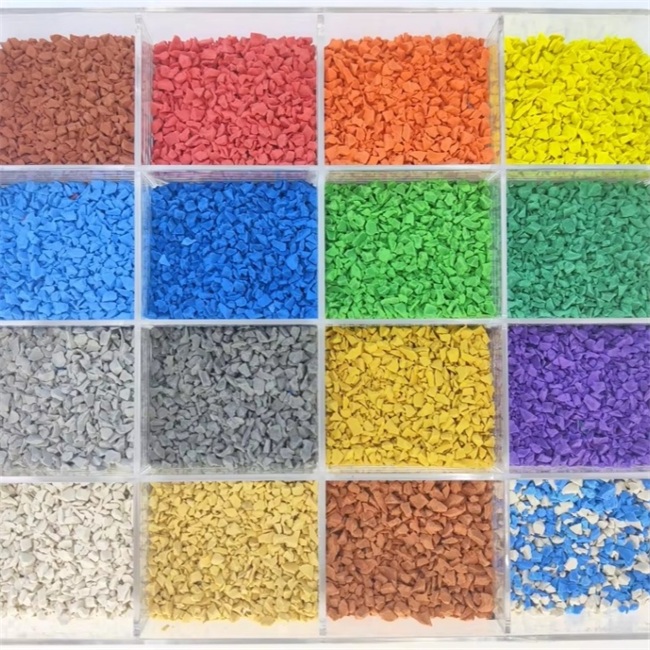
Manufacturer Insights
From our perspective as a dedicated EPDM producer, here is what matters most when selecting materials for your projects:
Color Stability Is Non-Negotiable: The most common failure point in EPDM installations is fading. Always verify the source of pigments and UV stabilization. Lower-cost materials often use inferior pigments that degrade within 12 to 24 months. Specifying high-quality, UV-stabilized EPDM prevents warranty claims and costly replacements.
EPDM Content Matters: A high rubber polymer content directly correlates with performance. Look for products with a minimum of 13 percent EPDM content, with some quality products achieving 20 percent or more. Lower polymer content typically means more filler, such as calcium carbonate, which reduces elasticity, UV resistance, and lifespan.
Buy for the Whole System, Not Just the Price: Contractors often make the mistake of optimizing for lowest material cost per kilogram, but this can increase installation waste and reduce coverage. Products with higher density cost more per kilogram but also cover more surface area. Compare cost per square meter, not cost per kilogram.
Request and Verify Documentation: Always ask for TDS, MSDS, and test reports for each batch. If your supplier cannot provide these, it is a red flag. Testing parameters should include tensile strength, elongation, hardness, and color fastness.
Sulfur-Free Technology Is a Differentiator: The use of sulfur in conventional vulcanization can lead to odor issues over time as sulfur compounds degrade. Peroxide-cured EPDM, which is sulfur-free, is odorless, more stable, and longer-lasting. This is particularly important for climate conditions with prolonged, high-intensity UV exposure.
Match granule Size to Application: Do not use the same granule size for every project. Track surfaces require finer granules in the 1 to 3 millimeter range for speed and traction, while playground safety surfaces benefit from slightly coarser granules in the 2 to 4 millimeter range for improved drainage and impact attenuation.

Frequently Asked Questions
Q: What is the difference between EPDM and SBR granules?
A: EPDM is a virgin synthetic rubber used for visible top layers; it offers excellent color stability, UV resistance, and durability over 8 years or more. SBR is made from recycled tires and is used as an economical base layer or infill, but it fades and degrades when exposed to sunlight.
Q: How long does the red color last?
A: With high-quality EPDM granules, the red color remains vibrant for over 8 years under normal weather conditions without significant fading. Premium products using UV-stabilized pigments can perform even longer.
Q: What granule size should I choose for a running track?
A: For most running track applications, the 1 to 3 millimeter granule size is recommended, providing optimal texture, traction, and durability.
Q: How much polyurethane binder is required for EPDM installation?
A: Typically, binder content ranges from 12 to 15 percent of total weight, but this varies based on granule size, application method, and specific product characteristics. Always follow the manufacturer's recommendations for optimal results.
Q: Can you customize red EPDM colors?
A: Yes. We support RAL and Pantone color matching, as well as custom color development from your samples. This ensures exact color matching for projects requiring specific brand or aesthetic requirements.
Q: What certifications are available for your EPDM products?
A: We provide TDS and MSDS documentation, and our products meet international standards for playground safety, sports surfacing, and environmental compliance. Specific certifications can be discussed based on your project requirements.
Q: How do I know if I am buying genuine EPDM or recycled material?
A: Request test certificates verifying rubber polymer content. Genuine EPDM should show a minimum of 13 to 20 percent polymer content. Recycled or low-quality materials will have higher ash content and lower tensile strength. Quality suppliers provide this documentation readily.
Q: Can EPDM granules be used in extreme climates?
A: Yes. Quality EPDM maintains its properties across a wide temperature range and resists UV, ozone, and moisture degradation. This is why it is a preferred material in both hot Middle Eastern regions and cold northern European climates.
Q: Do you offer OEM or private label options?
A: Yes, we support OEM, ODM, and private label services. You can brand our high-quality EPDM granules as your own product, with custom packaging and labeling options.

Red EPDM rubber granules remain the industry standard for high-quality playground surfacing, running tracks, and sports surfaces worldwide. The key to successful specification and installation lies in understanding material differences—particularly between EPDM and SBR—and in selecting a manufacturer with proven quality, customization capabilities, and global export experience.
For contractors, purchasing managers, and engineers, the decision should focus on the critical factors: color stability, UV resistance, polymer content, batch-to-batch consistency, and the supplier's ability to meet project-specific requirements. Material cost per kilogram is far less important than the material cost per square meter and the service life of the installed surface.
Working with a dedicated EPDM manufacturer ensures you receive products that deliver superior performance, durability, and aesthetics. Our over 25 years of industry experience, sulfur-free technology, comprehensive customization capabilities, and commitment to quality make us a reliable partner for projects of any scale. We invite you to reach out for samples, TDS and MSDS documentation, or a customized quote.

Choose a partner who understands your project needs and provides consistent, high-performance EPDM granules that deliver results.
WOW(LYG) New Material Co Ltd is a manufacturer specializing in the production of EPDM rubber granules. We use sulfur-free vulcanization technology, it increases the service life by more than 3 times than traditional EPDM granules, and enhances the performance, including anti-aging, high-temperature resistance, and colorfastness.
We have over 25 years of production experience and offer customization for colors and granule sizes. NO MOQ.


