 注: 建议图片大小150px*50px
丨
注: 建议图片大小150px*50px Views: 0 Author: Site Editor Publish Time: 2026-08-26 Origin: Site


When specifying EPDM rubber granules for wet pour playground surfacing, running tracks, or poured-in-place rubber systems, one of the most common questions contractors and procurement professionals face is: What is the difference between red and blue EPDM granules?
While both colors are among the most popular choices globally—red has long been the standard for running tracks, while blue is increasingly favored for playgrounds and recreational areas—the selection involves more than aesthetic preference. The choice between red vs blue EPDM granules affects everything from UV stability and binder compatibility to cost efficiency and long-term color retention.
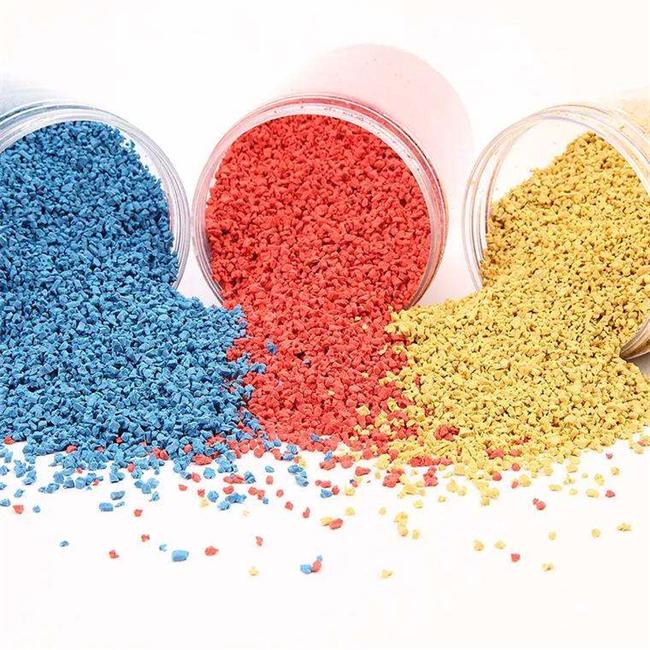
What Are Colored EPDM Rubber Granules?
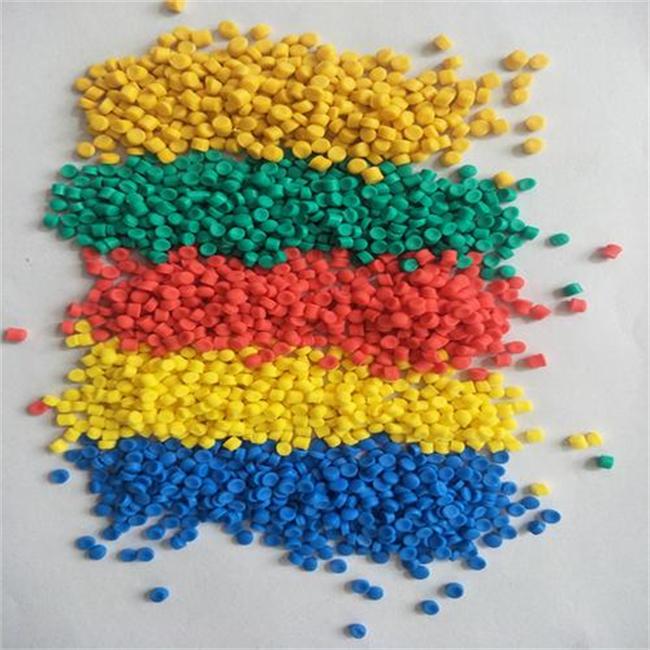
EPDM (Ethylene Propylene Diene Monomer) rubber granules are high-performance synthetic rubber granules used as the top wear layer in wet pour surfacing systems and running track constructions. These granules are manufactured from virgin EPDM polymer compounds—not recycled tire rubber—and are available in a wide spectrum of colors for creating attractive, durable, and safe recreational surfaces.
The most common applications for colored EPDM granules include wet pour playground surfacing for impact-absorbing safety surfaces, poured-in-place (PIP) rubber systems, athletic running tracks with IAAF-certified surfaces, multi-sport courts and recreational areas, walking paths and landscape surfacing, splash pads and water play areas, as well as school and kindergarten playgrounds.
Typical wet pour system consists of two layers: an SBR rubber sub-base layer that provides impact absorption and shock attenuation, topped with a colored EPDM wear layer that offers UV resistance, color vibrancy, and a decorative finish. The EPDM top layer is mixed with a polyurethane binder and troweled to a thickness of approximately 10 to 15 millimeters for playground applications.
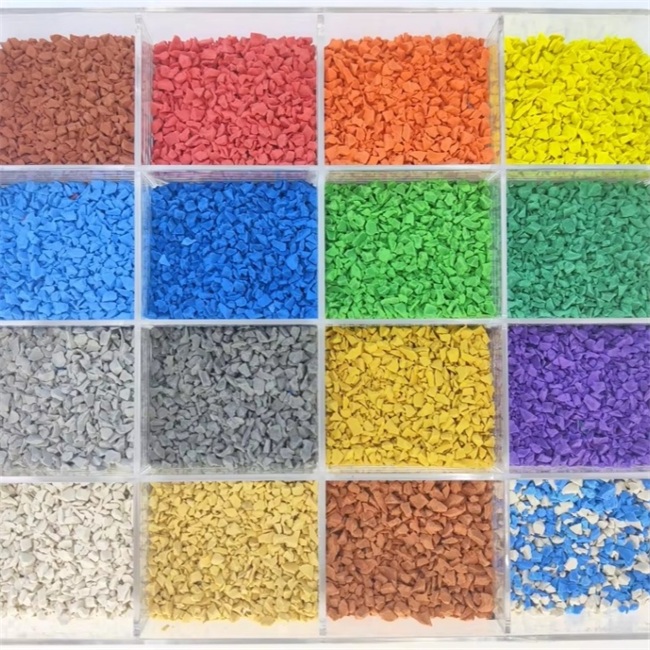
Red vs Blue EPDM Granules: Key Differences
UV Stability and Color Fading
Red EPDM granules generally exhibit better UV stability compared to blue, particularly for darker red shades. Industry testing shows that red pigments typically achieve higher UV resistance ratings, often reaching Grey Scale 4 to 5 after 1,000 hours of UV exposure. This makes red a reliable choice for outdoor installations with high sun exposure.
Blue EPDM granules—especially bright and light blue shades—are more susceptible to fading under prolonged UV exposure. The pigment chemistry used to create vibrant blue tones is intrinsically less UV-resistant than the iron oxide-based pigments commonly used in red granules. When specifying blue EPDM, it is critical to request high-quality pigments with UV stabilizers and to confirm the granules meet rigorous UV testing standards such as EN 14836:2005, which tests artificial weathering with UVA-340nm.
Manufacturer Insight: Regardless of color, the most important factor in UV stability is the quality of the pigment and the manufacturer's compounding process. At our facility, we incorporate advanced antioxidant systems and UV stabilizers into all our EPDM formulations to deliver superior fade resistance across the entire color spectrum.
Binder Compatibility and Yellowing Risk
Frequently overlooked factor in choosing between red and blue EPDM granules is the interaction between the colored granules and the polyurethane binder. The choice of binder—aromatic (non-UV-stable) or aliphatic (UV-stable)—directly impacts the final surface appearance.
Aromatic binders, while more economical, are prone to yellowing when exposed to sunlight. This yellowing effect is particularly noticeable with lighter and brighter colors. However, when using red EPDM, especially shades like RAL 3016 or RAL 3017, the yellowing effect from aromatic binders is significantly less visible, making red a more forgiving choice when budget constraints dictate the use of standard binders.
Blue EPDM, particularly bright blue (RAL 5012) and turquoise (RAL 5018), is incompatible with aromatic binders due to the high visibility of yellowing. To maintain color integrity, aliphatic (UV-stable) binders are essential for blue applications. This adds to material costs and should be factored into the project budget.
Manufacturer Insight: Always confirm the binder type with your EPDM supplier before ordering. We recommend aliphatic binders for all outdoor projects to guarantee long-term color stability. For our clients specifying blue EPDM, we clearly communicate the binder requirements to prevent costly installation errors.
Cost Considerations
Red EPDM granules are generally the most cost-effective colored option because iron oxide pigments for red are more affordable than organic or complex inorganic pigments used for blue, red granules work reliably with standard aromatic binders which reduces overall system costs, and red is the most widely produced color benefiting from economies of scale.
Blue EPDM granules command a premium price due to the higher cost of high-quality UV-stable blue pigments, the requirement for aliphatic UV-stable binders, and the more complex compounding requirements needed to achieve consistent color and performance.
For a typical 1000 square meter wet pour playground with a 13 millimeter wear layer, a red EPDM system using standard aromatic binder would have a lower overall material cost, while a blue EPDM system requiring aliphatic binder would cost approximately 25 to 35 percent more in material expenses. This significant cost difference should be carefully evaluated against the project budget and aesthetic requirements.
Technical Performance Comparison
When evaluating UV resistance, red EPDM granules deliver excellent performance with a Grey Scale rating of 4 to 5, while blue EPDM granules provide good performance that requires higher-quality pigments to achieve comparable results.
Regarding binder requirements, red EPDM works successfully with either aromatic or aliphatic binders, whereas blue EPDM strongly requires aliphatic UV-stable binders to prevent discoloration and yellowing over time.
For color stability, red EPDM maintains high stability across various environmental conditions, while blue EPDM offers moderate to high stability that depends heavily on the quality of the pigments and manufacturing process.
In terms of relative cost, red EPDM is the more economical choice with lower material expenses, while blue EPDM commands a premium price due to its more expensive pigment chemistry and binder requirements.
For common applications, red EPDM is traditionally used for running tracks, athletic surfaces, and sports facilities, while blue EPDM is increasingly popular for playgrounds, splash pads, landscape surfacing, and recreational areas.
Popular RAL colors for red include RAL 3016 and RAL 3017, while blue specifications commonly include RAL 5010, RAL 5012, RAL 5015, and RAL 5018.
Pigment types differ significantly, with red utilizing iron oxide inorganic pigments that are naturally UV-stable, while blue requires organic or complex inorganic pigments that demand additional stabilization.
Industry standard sizes for both colors typically include 1 to 3 millimeters, 1 to 4 millimeters, and 2 to 4 millimeters, though custom specifications are available from specialized manufacturers.
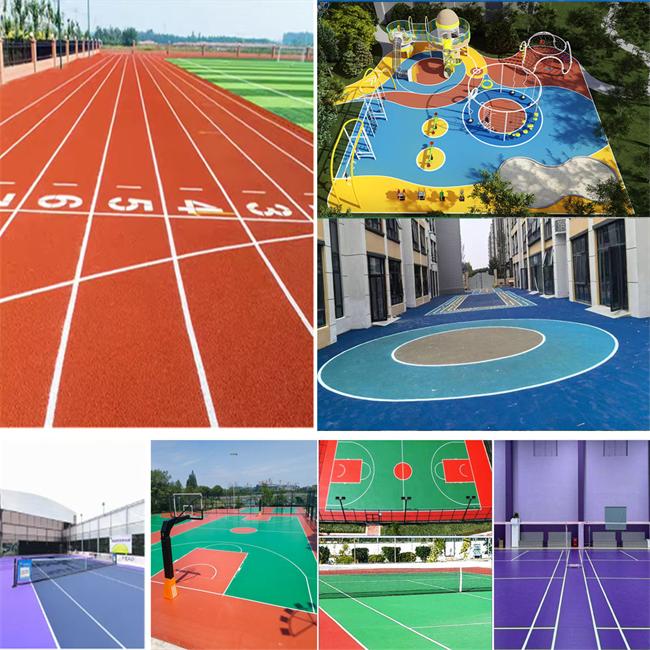
How to Choose Between Red and Blue EPDM Granules
Application-Specific Recommendations
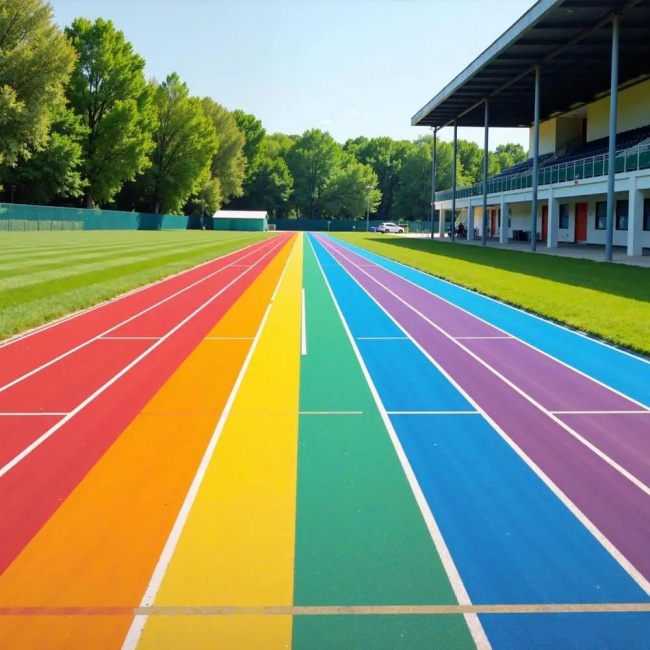
For running tracks and athletic surfaces, red EPDM remains the industry standard. The excellent UV stability and compatibility with standard binders make red the most reliable choice for high-performance sports surfaces. Many track systems incorporate red EPDM as the top layer for both functional and traditional aesthetic reasons.
For playgrounds and recreational areas, blue EPDM is increasingly popular for creating visually engaging, safe environments for children. When specifying blue, always request UV-stable high-quality blue granules, confirm the binder type with your supplier as aliphatic is essential, budget for premium materials, and request UV test reports from your supplier.
For mixed-color designs, combining red and blue or other colors can create visually dynamic patterns, shapes, and even logos on playground surfaces. However, mixing colors requires careful planning to ensure consistent performance across all color zones. Work with an experienced EPDM manufacturer that can guarantee color consistency across batches.
Climate and Environmental Factors
In high UV exposure environments such as Australia, the Middle East, and Mediterranean regions, red EPDM is the safer choice. If blue is preferred, ensure the highest UV stability certification is provided.
In moderate UV climates including Northern Europe and the United Kingdom, both red and blue perform well with the correct binder selection.
In high-temperature environments, both colors perform similarly, so the focus should be on UV stability rather than color choice.

Common Mistakes When Choosing EPDM Granule Colors
Ignoring Binder Compatibility
The most expensive mistake is choosing bright blue EPDM with a standard aromatic binder, resulting in yellowing within months of installation. Always match the binder to the granule color.
Prioritizing Price Over Quality
Cheap blue EPDM granules often use inferior pigments that fade rapidly. While red is more forgiving, low-quality red granules can also underperform. Always request UV test reports.
Failing to Request Batch Color Samples
Color consistency across multiple batches is essential for large projects or phased installations. Reputable manufacturers can provide batch samples and color matching documentation.
Overlooking the Substrate and System Compatibility
The performance of the EPDM wear layer depends on the entire system including the SBR sub-base, binder selection, and installation technique. Do not focus solely on the top layer color.

Why Global Buyers Choose Our EPDM Granules
As a specialized EPDM manufacturer with a single-minded focus on producing premium colored rubber granules, our expertise is concentrated on what matters most: material quality, color consistency, and performance reliability.
Manufacturer-First Quality Control
Our sulfur-free technology means our EPDM granules contain no sulfur, preventing the release of sulfuric acid under high temperatures and UV exposure. This eliminates odors and extends service life by over three times compared to conventional EPDM products.
Our molecular stability formulation delivers tensile strength of 4 to 7 megapascals, which is two to three times higher than standard EPDM. This superior elasticity and durability ensures performance retention is increased by five times.
Color Customization Capabilities
We offer comprehensive color services including RAL color matching for all standard RAL shades, Pantone matching for brand-specific colors, and custom color development where we match your physical sample. All colors are available including red, green, blue, yellow, orange, purple, grey, and more. Every batch is tested for color accuracy to guarantee consistency across your entire project.
Flexible Specifications
Our customizable grain sizes range from 0.5 to 1.5 millimeters, 1 to 3 millimeters, 1 to 4 millimeters, 2 to 4 millimeters, and any custom specification you require. We offer flexible packaging options including 25 kilogram PE bags, 1,000 kilogram big bags, or custom packaging solutions. Notably, we have no minimum order quantity, allowing you to start small and scale up as your projects grow.
Global Export Experience
With twenty-five plus years of industry experience and full production lines, we serve clients across Europe, North America, Australia, the Middle East, and beyond. We support OEM and ODM projects, private label branding, mixed container shipments, FCL and LCL logistics, rapid delivery within 10 to 15 working days typically.

Manufacturer Insights
How to Choose the Correct Granule Size
For wet pour playground wear layers, 1 to 3 millimeter or 1 to 4 millimeter granules are standard and provide excellent coverage and surface finish. Running tracks typically use 2 to 4 millimeter granules for enhanced durability and traction. For specialized applications such as splash pads or indoor facilities, smaller sizes around 0.5 to 1.5 millimeters may be preferred for smoother finishes.
When to Choose Custom Colors
Custom colors become necessary when you need to match existing facilities, comply with brand identity requirements, or create unique design themes for recreational spaces. We recommend requesting physical samples before committing to custom color production, as monitor displays rarely represent exact shade accuracy.
How to Control Procurement Costs
Beyond selecting red versus blue, cost control strategies include ordering full container loads rather than LCL shipments to reduce freight costs, planning projects in advance to avoid expedited production fees, and consolidating multiple project requirements into single orders for better pricing. Discussing your annual procurement volume with your supplier can also unlock volume discounts.
Critical Parameters to Verify
Always confirm the UV stability rating and test method used. Verify EPDM content percentage and ensure it meets your performance requirements. Request tensile strength and elongation test reports. Confirm compliance with relevant safety standards for your target market. Ask about color consistency between batches and request batch samples. Verify the supplier's quality control procedures and testing frequency.
How to Choose a Long-Term Supplier Partner
Look beyond price to evaluate the supplier's production capacity and ability to scale with your business growth. Assess their track record with international customers and export experience. Verify their quality control systems and certifications. Evaluate their responsiveness to technical inquiries and willingness to provide documentation. Consider their flexibility for custom requirements and lead times. A reliable long-term partner demonstrates consistent quality, transparent communication, and genuine interest in solving your problems rather than simply taking orders.
FAQ
What is the difference between red and blue EPDM granules?
The primary differences are in UV stability, binder compatibility, and cost. Red EPDM offers better inherent UV stability and works with standard aromatic binders, while blue EPDM requires premium aliphatic binders to prevent yellowing and is generally more expensive.
Which color is better for outdoor playgrounds?
Both colors are suitable for outdoor playgrounds. Red is more UV-stable and cost-effective. Blue offers vibrant, visually appealing playgrounds but requires higher-quality materials and UV-stable binders. The choice depends on your design vision, climate, and budget.
Can blue EPDM granules fade?
Yes, all colored EPDM granules can fade over time. Blue pigments are more susceptible to UV fading than red. To minimize fading, choose high-quality blue EPDM with UV stabilizers and use aliphatic UV-stable binders. Request UV test reports to verify performance.
Do I need a special binder for blue EPDM?
Yes. Bright blue EPDM especially RAL 5012 and RAL 5018 requires aliphatic UV-stable polyurethane binders to prevent yellowing. Aromatic binders will cause visible yellowing that detracts from the surface appearance.
How long does EPDM surfacing last?
Quality EPDM surfacing with proper installation can last 10 to 15 years or more. Our sulfur-free EPDM technology extends service life by three times compared to standard EPDM, providing exceptional longevity and performance retention.
What size EPDM granules should I choose?
For wet pour playground wear layers, 1 to 3 millimeter or 1 to 4 millimeter granules are standard. Running tracks typically use 2 to 4 millimeter for durability. The optimal size depends on your specific application, desired finish, and installation method. Ask your supplier for recommendations based on your project.
Can you customize EPDM colors?
Yes. We offer full customization services for RAL, Pantone, and customer-supplied samples. All colors are available with matched performance characteristics, ensuring consistent quality across your entire project.
Do you provide samples before bulk orders?
Yes. We welcome sample requests so you can evaluate color, granule size, and quality. This is especially important for custom colors and large-scale projects.
What is the minimum order quantity?
We have no minimum order quantity. Whether you need a small sample batch or full container loads, we are ready to support your project requirements.
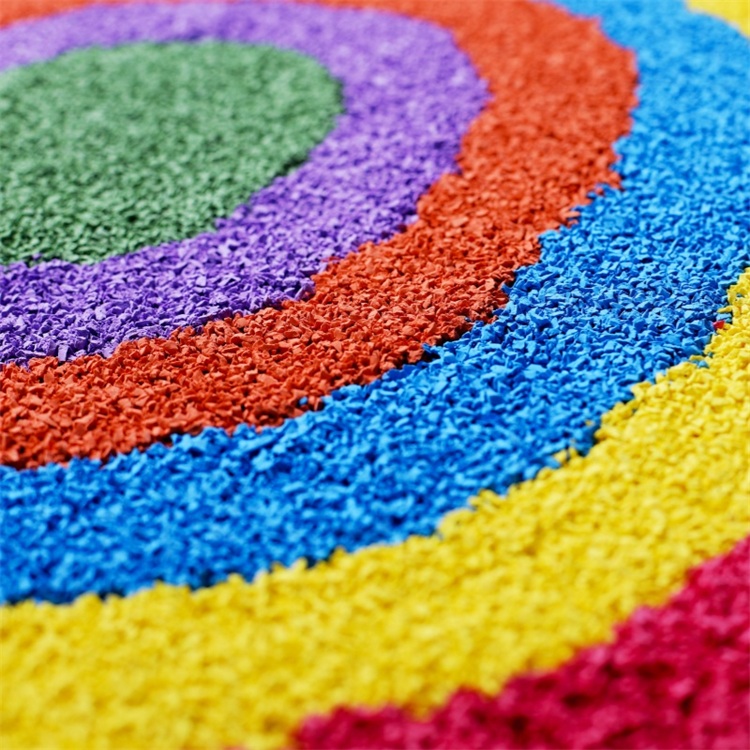
The choice between red and blue EPDM granules is not merely aesthetic—it has real implications for project cost, durability, and long-term appearance. Red EPDM offers superior UV stability, proven performance on running tracks and sports surfaces, and lower material costs. Blue EPDM enables modern, visually engaging playgrounds and recreational spaces but demands higher-quality materials, UV-stable binders, and a higher budget.
When making your decision, prioritize binder compatibility with aliphatic required for blue and aromatic possible for red, UV stability with verified test reports, supplier expertise from a specialized EPDM manufacturer with proven quality, and color consistency through batch samples for large projects.
As an EPDM manufacturer focused exclusively on producing premium colored granules, we bring twenty-five plus years of expertise to every project—ensuring your chosen color delivers lasting performance and vibrant aesthetics, whether you are building a playground, sports track, or recreational surface anywhere in the world.

Ready to discuss your specific requirements? Contact us to request samples or a customized quotation tailored to your project specification.
WOW(LYG) New Material Co Ltd is a manufacturer specializing in the production of EPDM rubber granules. We use sulfur-free vulcanization technology, it increases the service life by more than 3 times than traditional EPDM granules, and enhances the performance, including anti-aging, high-temperature resistance, and colorfastness.
We have over 25 years of production experience and offer customization for colors and granule sizes. NO MOQ.


