 注: 建议图片大小150px*50px
丨
注: 建议图片大小150px*50px Views: 0 Author: Site Editor Publish Time: 2026-07-19 Origin: Site


Why Your Rubber Safety Surfacing Project Succeeds or Fails Before Installation Begins
As a contractor, procurement manager, or specifier, you are not simply buying a material. You are buying long-term safety performance, liability protection, and a surface that must withstand years of UV exposure, heavy foot traffic, and extreme weather. Yet many projects fail not because of poor installation alone—but because the material itself was compromised from the start.
This guide addresses the real questions and concerns that professional buyers face when sourcing EPDM rubber safety surfacing. It draws on industry standards, proven procurement practices, and the latest technical innovations to help you make informed decisions that protect your investment and your reputation.

1. What Is Rubber Safety Surfacing?
Rubber safety surfacing is a unitary, impact-absorbing Surfacing system primarily made from EPDM (Ethylene Propylene Diene Monomer) rubber granules bound together with a polyurethane adhesive. It is installed either as a poured-in-place (PIP) system—where the wear layer and cushion layer are mixed and installed on-site—or as pre-formed rubber tiles.
The critical distinction for specifiers is that EPDM is a synthetic rubber with exceptional resistance to UV radiation, ozone, and weathering—making it the preferred material for outdoor applications where color retention and longevity are non-negotiable.

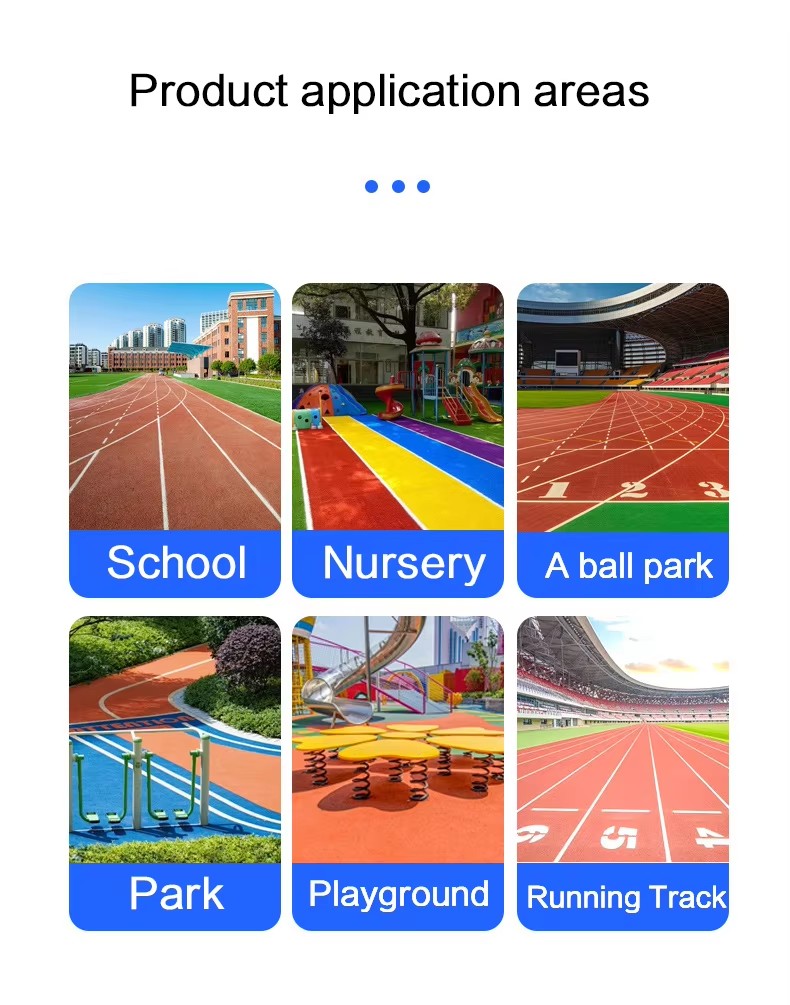
2. Key Applications: Where Rubber Safety Surfacing Is Specified
- Playgrounds and Childcare Facilities – Critical fall protection (critical fall height testing) for equipment zones
- Sports Courts and Athletic Tracks – Multi-game courts, tennis, basketball, and running tracks
- Municipal Parks and Public Spaces – High-traffic recreational areas requiring ADA compliance
- Commercial and Institutional Projects – Schools, hospitals, and senior living centers
- Water Parks and Pool Decks – Slip-resistant, non-porous surfaces
3. Why Choose EPDM Rubber Safety Surfacing?
The shift toward EPDM is driven by five measurable performance criteria that procurement managers should evaluate:
3.1 Critical Fall Height Compliance
For playgrounds, the surface must meet the required critical fall height (e.g., 2.4m or higher) based on the equipment height. A unitary EPDM system provides consistent impact attenuation when installed at the specified thickness—unlike loose-fill materials that can migrate or compact unevenly.
3.2 Accessibility (ADA Compliance)
Unitary rubber surfaces provide a firm, stable, and slip-resistant walking surface that meets ADA guidelines for wheelchair and crutch users—a legal requirement for public projects.
3.3 Drainage and Slip Resistance
Properly installed EPDM systems are porous, allowing water to drain through the surface rather than pooling. This is a critical factor in preventing slips and premature material degradation.
3.4 Customization Without Performance Loss
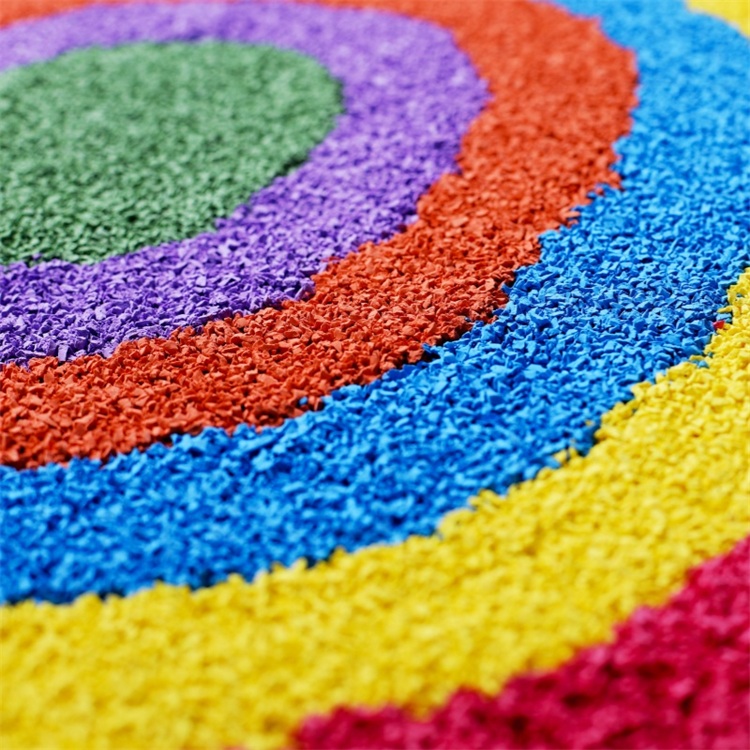
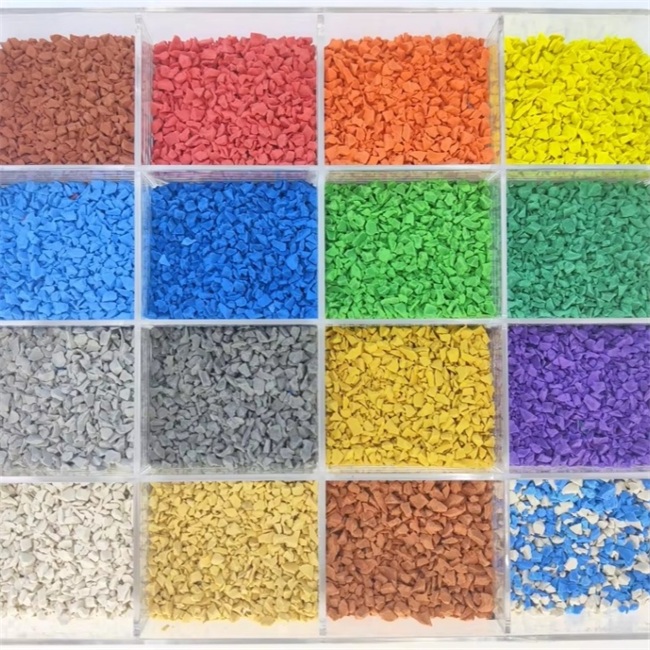
Unlike many surfacing options, EPDM allows for intricate color patterns, logos, and zones without compromising the material’s physical properties.

4. The Critical Advantage: What Sets High-Quality EPDM Apart
Not all EPDM is created equal. The chemical formulation of the rubber compound directly determines its lifespan, color stability, and environmental safety.
4.1 The Problem with Traditional Sulfur-Cured EPDM
Most EPDM granules on the market are cured using sulfur. While this is a cheaper manufacturing method, it introduces significant long-term performance issues:
- Odor Generation: Under high heat and UV exposure, sulfur compounds can break down, releasing sulfuric acid. This causes the characteristic "rubber smell" and can lead to air quality complaints—a serious concern for enclosed or semi-enclosed spaces.
- Accelerated Aging: The sulfur cross-links are less stable over time, leading to faster molecular breakdown, loss of elasticity, and surface cracking.
- Color Fading: The chemical degradation process is a primary driver of pigment breakdown, causing surfaces to fade or turn chalky within 1-2 years in harsh climates.
4.2 The Advanced Solution: Sulfur-Free EPDM Technology
The landscape has changed significantly with the introduction of advanced, sulfur-free (peroxide-cured) EPDM. Our material incorporates a proprietary technology (patent application 200810196555.2) that represents a generational leap in performance:
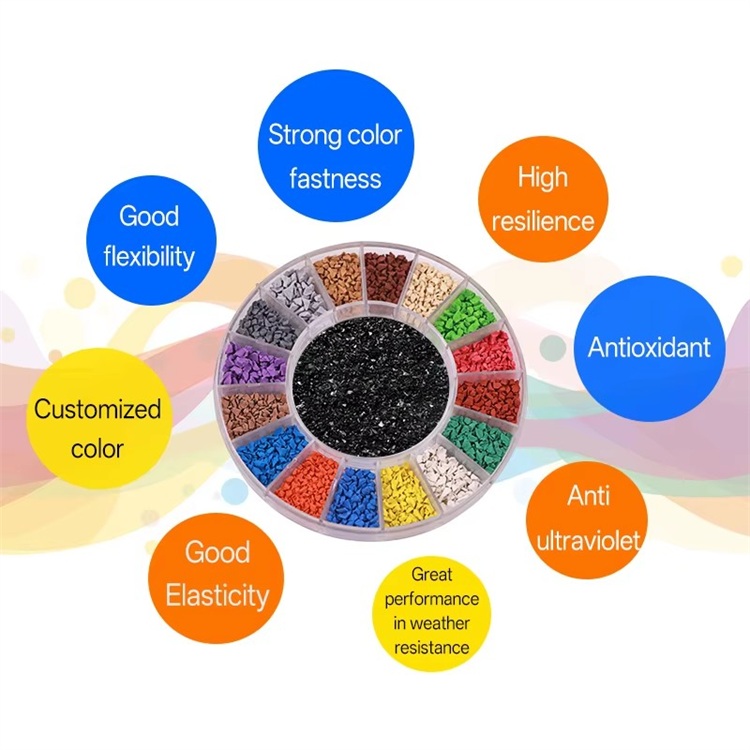
- Zero Odor: With no sulfur content, there is no sulfuric acid breakdown. This ensures the material remains odorless even under extreme heat and UV exposure, making it ideal for indoor applications, water parks, and high-temperature climates.
- 3x Longer Service Life: The stable molecular structure of the sulfur-free polymer network is far more resistant to environmental degradation. The lifespan is conservatively rated at three times that of standard sulfur-cured products.
- Enhanced Mechanical Properties: Tensile strength and elasticity are increased by 2–3 times, reaching 4–7 MPa. This means the surface can better withstand the shearing forces from sports activities and heavy equipment, resisting tearing and granule loss.
- Superior Color Retention: The polymer matrix encapsulates pigments far more effectively, resisting oxidation. This leads to vibrant, long-lasting colors that do not fade or chalk under intense UV radiation.
- Environmental Safety: The material is non-toxic and meets stringent standards, including EU RoHS and REACH compliance for hazardous substances. It is safe for use around children and in sensitive environments.
- Thermal Stability: Excellent resistance to high temperatures prevents softening, tackiness, or deformation during peak summer heat.
5. Technical Performance Parameters: What the Data Must Show
When evaluating EPDM granules, procurement managers and engineers should demand verified data for these key performance indicators (KPIs). This is not about checking boxes—it is about predicting real-world performance.
- Tensile Strength: High-quality EPDM should demonstrate ≥ 4 MPa. Values exceeding 6 MPa indicate superior durability.
- Elongation at Break: This measures elasticity. Values should exceed 550%; top-tier materials exceed 650%, allowing the surface to absorb impact without fracturing.
- Hardness (Shore A): Optimal performance is within the 55–70 range. Harder materials may lack shock absorption; softer materials may compress excessively and wear quickly.
- EPDM Content: This is the elephant in the room. Many "EPDM" granules contain as little as 13–15% actual rubber. For critical applications, an EPDM content of ≥ 22% is the benchmark for performance and longevity.
- Density: Look for a bulk density between 680–750 g/m³. Lower density provides more volume per kilogram, reducing material cost and improving the "fluffy," cushioned feel.

6. The Procurement Checklist: How to Avoid Common Costly Mistakes
6.1 Mistake: Evaluating Price Per Kilogram Instead of Cost Per Square Meter
A lower price per kilogram is often a trap. If a granule has a higher density, you need more kilograms to achieve the same installed thickness. A lighter, high-quality granule (with lower density) will yield more coverage per kilogram, reducing the total material cost.
6.2 Mistake: Trusting Generic Reports Without Verification
Many suppliers provide "laboratory reports" that bear little resemblance to their production material. Best Practice: Insist on testing that meets ASTM or EN standards. Demand to see testing for UVA 5000h aging to ensure color and physical properties are maintained long-term.
6.3 Mistake: Ignoring the "Fizz" Test
A quick field test to gauge polymer content and filler load:
- The Float Test: Drop a handful of granules into a glass of water. High-quality, high-polymer content granules should sink (or remain suspended). Low-quality granules with high calcium carbonate filler will float immediately.
- The Squeeze Test: Squeeze a granule tightly between your fingers. A high-quality granule will deform and spring back. A low-quality granule will crush into powder or crack.
6.4 Mistake: Overlooking the Binder Compatibility
The adhesive (PU binder) is as critical as the granule. Specifying a high-quality EPDM with a low-quality binder creates a "weakest link" scenario. Ensure the supplier recommends a binder with an appropriate viscosity and open time for your climate and installation schedule.
6.5 Mistake: Assuming All Custom Colors Are Equal
Mass-colored granules—where the pigment is distributed evenly through the polymer, not just on the surface—are critical for long-term color retention. This is why sulfur-free formulations with low oxidation characteristics are essential for maintaining bright colors in high-UV environments.

7. The Consultant's Perspective: Questions to Ask Your Supplier
Before signing a contract or issuing a purchase order, demand specific answers to the following questions:
1. "What is your minimum order quantity (MOQ)?
" Traditional suppliers often have high MOQs (e.g., 2–5 tons). We offer flexible order quantities with no MOQ, enabling you to bid on projects of any scale without carrying excess inventory.
2. "What are your physical test results for tensile strength, elongation, and density?"
We provide current test reports showing tensile strength up to 7 MPa—performance that surpasses the minimum standard for critical applications.
3. "Will this surface fade in 12 months?"
Our peroxide-cured, sulfur-free technology has proven to resist color fading for up to 5 times longer than standard sulfur-cured products.
4. "Can you guarantee color batch consistency?"
With over 25 years of industry experience and full control over the manufacturing process, we guarantee batch-to-batch consistency for large-scale, multi-phased projects.
8. Common FAQs from Professionals
Q: Is EPDM rubber safety surfacing worth the premium over other systems?
A: Yes, especially when the total cost of ownership is calculated. The extended lifespan (3x longer), minimal maintenance, and enhanced safety performance of high-quality EPDM make it a cost-effective solution over a 5-10 year period.
Q: How do weather conditions affect installation?
A: Temperature, humidity, and moisture all affect the cure time of PU binders. A professional contractor will monitor the dew point and adjust the catalyst ratio. High-quality EPDM offers more stable curing characteristics.
Q: What is the typical warranty for a rubber safety surfacing installation?
A: A comprehensive warranty covers material defects (e.g., fading, cracking) and workmanship. Our material's inherent resistance to aging allows for extended warranty offerings.
Q: How does the environmental impact compare to other surfacing materials?
A: Our sulfur-free manufacturing process produces a non-toxic, low-VOC product that is safer for installers and end-users and fully complies with international environmental directives (REACH, RoHS).
For contractors and procurement professionals, choosing an EPDM supplier is not just about price—it is about risk management. The risks of premature failure, color fading, odor complaints, and safety non-compliance can haunt a project for years.
Selecting a partner with advanced sulfur-free technology, proven quality control, and the flexibility to support your project—regardless of its size—is the most effective strategy for ensuring a successful, durable, and safe installation that reinforces your reputation for quality.

WOW(LYG) New Material Co Ltd is a manufacturer specializing in the production of EPDM rubber granules. We use sulfur-free vulcanization technology, it increases the service life by more than 3 times than traditional EPDM granules, and enhances the performance, including anti-aging, high-temperature resistance, and colorfastness.
We have over 25 years of production experience and offer customization for colors and granule sizes. NO MOQ.


