 注: 建议图片大小150px*50px
丨
注: 建议图片大小150px*50px 


Safety rubber surfacing has become the global standard for playgrounds, sports facilities, and recreational areas. For contractors, engineers, and procurement professionals, selecting the right EPDM rubber granules is critical to project longevity, user safety, and compliance.
As a dedicated EPDM manufacturer, we help partners worldwide navigate the complexities of material selection, color matching, and quality assurance. This guide covers everything from technical specifications to procurement strategies, ensuring your next project achieves the highest standards of safety and durability.

What Is Safety Rubber Surfacing?
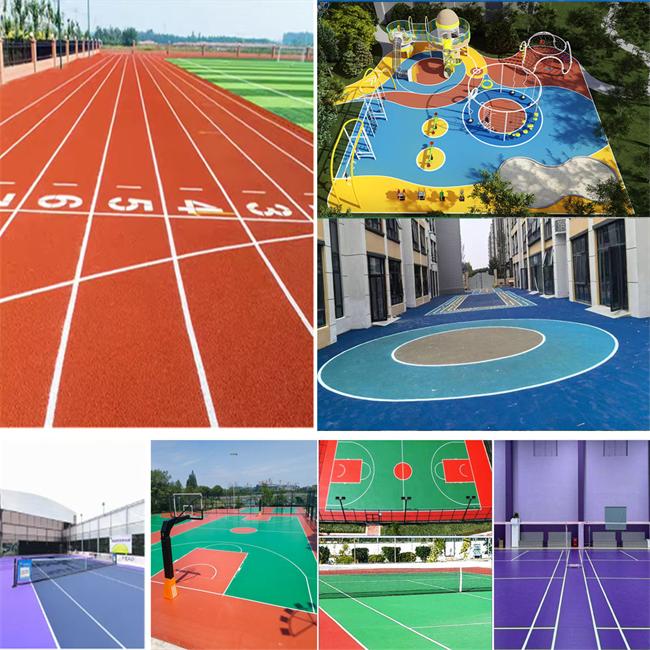
Safety rubber surfacing refers to impact-absorbing surfacing systems made from synthetic rubber, primarily used in areas where fall protection or joint relief is required. The most common systems include:
Wet Pour (Poured-in-Place): A seamless, permeable layer of EPDM granules mixed with polyurethane binder, installed on-site.
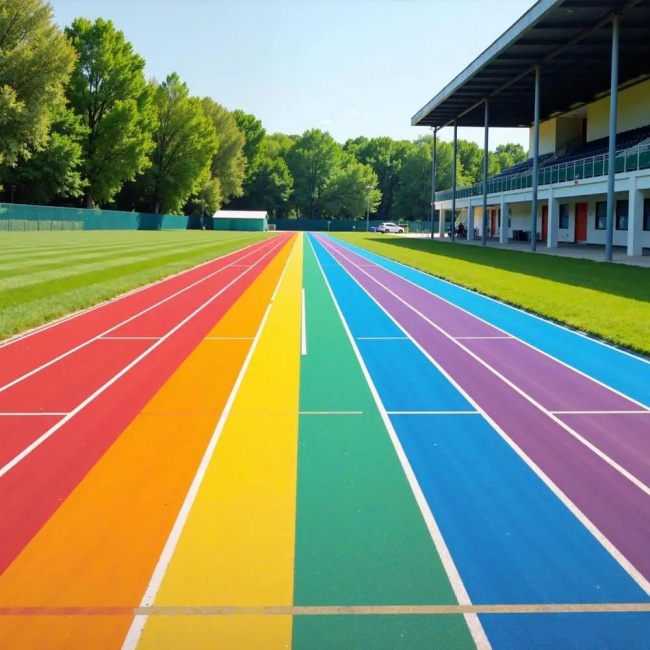
Running Tracks: Durable, athletic surfaces designed for shock absorption and energy return.
Safety Tiles: Pre-fabricated interlocking tiles made from recycled rubber or EPDM.
The key to superior safety surfacing lies in the raw material. Unlike SBR (recycled tire rubber), EPDM (Ethylene Propylene Diene Monomer) is a synthetic rubber chosen for its colorfastness, UV resistance, and consistent performance across extreme climates .

Applications: Where EPDM Safety Surfacing Excels
Our clients use EPDM granules in a variety of high-traffic environments. Understanding the specific demands of each application is key to selecting the correct product.
Playgrounds & Schools: Critical fall protection. Requires high elasticity and bright, stimulating colors.
Sports Facilities: Running tracks and courts require high tensile strength (typically 4–7 MPa) to withstand spikes and cleats.
Commercial & Municipal Projects: Shopping centers and public spaces require aesthetic appeal with high durability and low maintenance.
Splash Pads & Water Parks: Water-permeable surfaces that require slip resistance and zero water absorption to prevent bacterial growth.
Landscaping & Walkways: Durable paths that blend seamlessly with natural environments while providing wheelchair accessibility.
The Benefits of High-Quality EPDM Granules
Not all rubber granules are equal. High-quality EPDM offers distinct advantages over alternatives like SBR or lower-grade synthetic rubbers.
1. Color Stability: Premium granules resist fading even under intense UV radiation, maintaining a vibrant appearance for years.
2. Elasticity & Safety: Superior elongation ensures optimal impact absorption. The "bounce" is consistent, reducing injury risk.
3. Weather Resistance: Performs in freezing cold and scorching heat without becoming brittle or losing adhesion. This is often linked to "sulfur-free" technology, which prevents the release of sulfuric acid during aging, thus stabilizing the material for up to three times longer .
4. Environmental Compliance: Our products are designed to meet stringent global environmental standards, often reaching food-grade safety levels for children's environments.

Common Challenges in Procurement and Installation
When sourcing EPDM granules, professionals frequently encounter specific risks. Being aware of these ensures a smoother procurement process.
Inconsistent Color: Variations between batches require a complete re-pour and increase material waste. This is often the result of poor quality control in the mixing process.
UV Degradation & Chalking: Low-quality granules may develop a white powder on the surface due to oxidation caused by UV light, degrading the aesthetics and surface integrity.
High Binder Consumption: Irregular, flat granules often absorb more PU binder, inflating the overall project cost. Highly "angular" granules with a low bulk density typically require less binder to coat the surface area effectively .
Misleading Specifications: Confusing EPDM with recycled SBR, which is cheaper but lacks color retention and elasticity.
How to Choose the Right EPDM Rubber Granules
Selection depends on the specific engineering requirements of the project. Here is a structured approach:
1. Verify Size and Shape
The granule size directly affects the surface texture and durability.
1-3mm / 1-4mm: The most common range for playground safety surfacing and top layers, offering a smooth finish.
2-4mm: Used for running tracks and sports surfaces requiring higher traction.
0.5-1.5mm: Often used for fine finishes or to create artistic patterns in combination with other sizes.
Look for granules with strong three-dimensional "angularity" rather than flat, flaky shapes. Angular granules interlock better and require less binder .
2. Assess the Raw Polymer
Verify that the product is made from virgin EPDM or specifically formulated synthetic rubber, not recycled rubber powder with a painted surface. The absence of sulfur in the formulation is a key indicator of quality, as it prevents hardening and reduces long-term degradation.
3. Inspect the Binder Ratio
In wet-pour applications, the binder ratio typically ranges from 16% to 22% of the total mix. This ratio depends on the porosity and density of the granules.
Manufacturer Insights: Expert Advice for Contractors
Drawing on our extensive manufacturing experience, we offer the following practical advice for engineers and procurement managers:
Beware of "Too Good to Be True" Pricing: If the price of EPDM granules is 20-30% below the market average, it is likely SBR or a low-grade "fake EPDM" made from recycled material with added pigments. These degrade rapidly, often within 1-2 years, leading to costly re-pours.
Request a Sample Test: Always ask the supplier to send a small sample. A simple quality test involves placing a handful of granules in boiling water and observing if the water turns colored. If it does, the color is only surface-deep (coated), which will fade quickly.
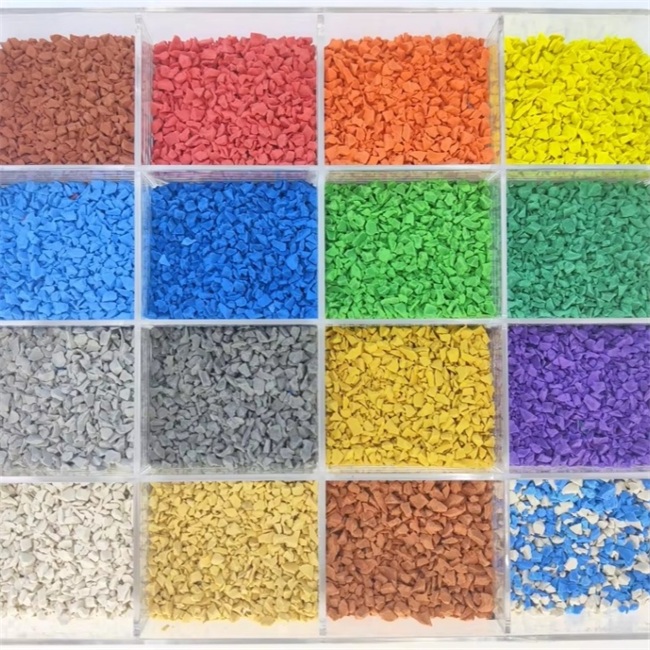
Plan for Color Matching: If a project requires a specific corporate or RAL color, confirm the supplier’s capability to match Pantone or RAL standards precisely before signing a contract. The supplier must have a dedicated color-matching lab to guarantee consistency across all batches.
Climate Considerations: For projects in high-humidity or rain-prone areas (like Southeast Asia or the UK), discuss the curing time of the PU binder with the installer, as humidity affects the chemical reaction.
Why Global Buyers Choose Our EPDM Granules
We operate as a specialized manufacturer focused solely on the production of EPDM granules. This specialization means we do not install surfacing, making us a pure material partner with no conflict of interest.
Global Export Expertise: We manage the complexities of international shipping, including full container loads and LCL (Less than Container Load), ensuring delivery to Europe, North America, Australia, and the Middle East.
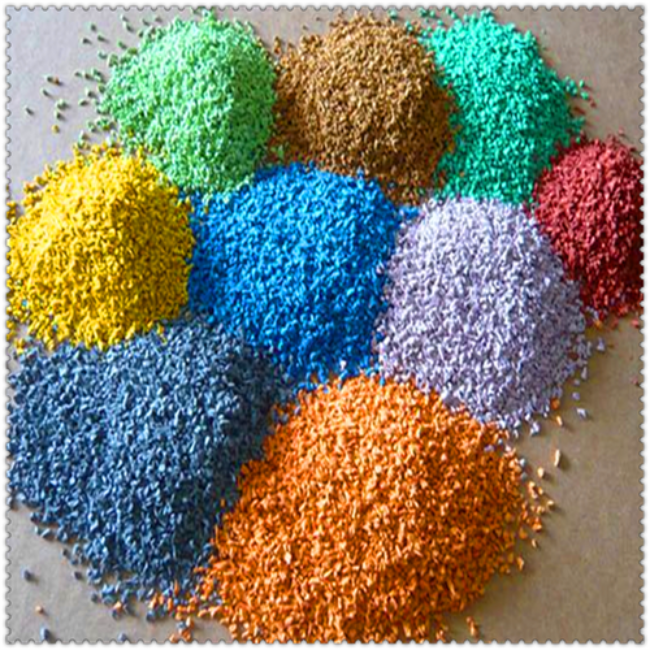
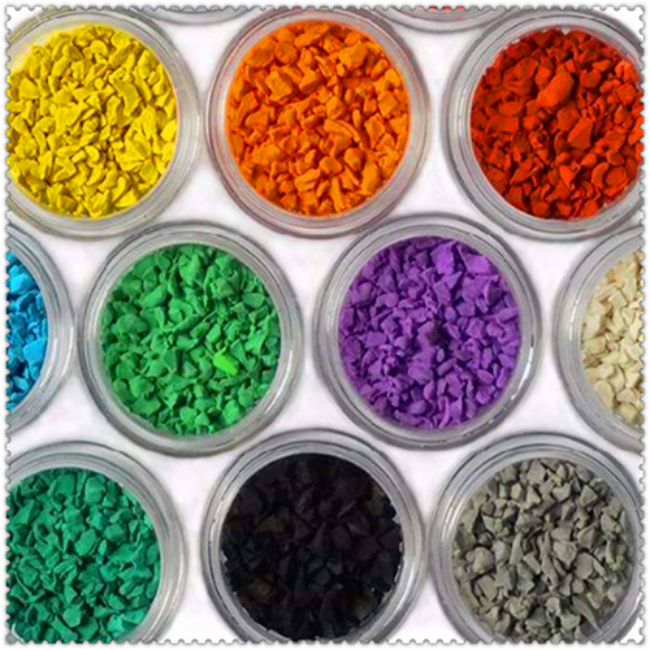
Unlimited Customization: We offer OEM, ODM, and Private Label services. We can color-match to any RAL or Pantone swatch or replicate a client's specific sample.
Flexible MOQ: We have no minimum order quantity (MOQ) for standard colors, allowing clients to test products before committing to large orders.
Technical Support: We provide comprehensive documentation including TDS, MSDS, COA, and SGS test reports, ensuring transparency and regulatory compliance.
Frequently Asked Questions (FAQ)
Q: Can you match a specific color standard like RAL or Pantone?
Yes. We have a dedicated color lab that specializes in matching RAL, Pantone, and custom customer samples. We provide free color swatches and reference chips for approval.
Q: How do I know if I am buying EPDM or SBR?
EPDM is solid in color throughout. SBR is usually black, often painted or coated. Cut a granule in half; if the inside is black or a different color to the outside, it is likely SBR or coated recycled rubber.
Q: What certifications do you provide?
We provide a comprehensive Compliance Package including Material Safety Data Sheets (MSDS), Technical Data Sheets (TDS), Certificates of Analysis (COA), and third-party testing via SGS. We can also produce tailored certificates for specific international market requirements.
Q: Does EPDM fade in direct sunlight?
High-quality EPDM granules are engineered with exceptional UV stability and oxidation resistance. They are designed to retain vibrant color for extended periods. Fading only occurs with low-quality materials or cheap pigments.
Q: What is the recommended granule size for a children’s playground (Wet Pour)?
For playground safety surfacing, a 1-3mm or 1-4mm top layer is standard. The base layer usually consists of larger recycled SBR (2-6mm) to provide shock absorption, with the EPDM top layer providing the durable, colorful finish.
Q: What is the typical lifespan of EPDM safety surfacing?
With proper installation and maintenance, high-quality EPDM surfacing can last 15 to 20 years. The sulfur-free technology used in premium products improves the molecular structure stability and extends the lifespan significantly compared to traditional materials.
Q: Do you have a minimum order quantity?
No. We offer flexible MOQs. We work with startups and test projects as small as 500kg, as well as large infrastructure projects requiring container-sized orders.
Q: Can you send samples for testing?
Yes. We strongly encourage customers to request samples for physical testing. We provide free samples of our granules, which can be mixed with binder on-site for a practical installation test.

Investing in high-quality Safety Rubber Surfacing requires understanding the materials, managing procurement risks, and working with a supplier that offers technical expertise and customization. By choosing a professional EPDM manufacturer with global export capability and a commitment to sulfur-free technology, you ensure that your project remains durable, vibrant, and safe for decades.
For specific inquiries regarding technical data sheets, color customization, or project costing, please contact our team directly.

WOW(LYG) New Material Co Ltd is a manufacturer specializing in the production of EPDM rubber granules. We use sulfur-free vulcanization technology, it increases the service life by more than 3 times than traditional EPDM granules, and enhances the performance, including anti-aging, high-temperature resistance, and colorfastness.
We have over 25 years of production experience and offer customization for colors and granule sizes. NO MOQ.


