 注: 建议图片大小150px*50px
丨
注: 建议图片大小150px*50px Views: 0 Author: Site Editor Publish Time: 2026-07-17 Origin: Site


When procurement managers, playground contractors, and landscape architects search for "Selecting Safe Surfaces for Kindergarten Playgrounds," they are rarely looking for a simple product definition. They are searching for answers to specific, high-stakes questions:
Will this surface protect children from serious fall injuries?
Will the colors fade within a year, making the playground look neglected?
Will the material emit odors in summer heat, raising complaints from parents and teachers?
Will the supplier deliver consistent quality across multiple batches for our municipal project?
These are not theoretical concerns. According to the U.S. Consumer Product Safety Commission (CPSC), emergency departments treat more than 200,000 children annually for playground-related injuries, with most injuries occurring when a child falls from equipment onto the ground . For kindergarten projects, the margin for error is zero.
This guide addresses the technical, procurement, and installation questions that determine whether a playground surfacing project succeeds or fails, written for the professionals who specify, purchase, and install these systems.

What Is EPDM Playground Surfacing?
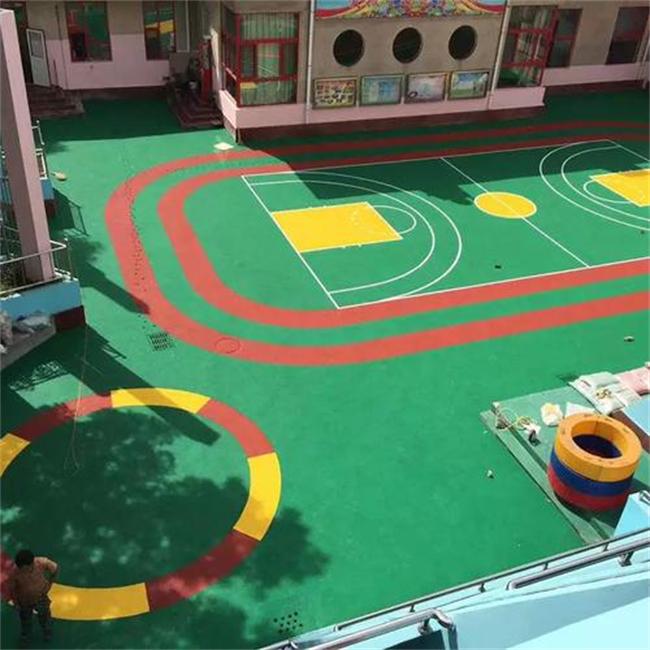
EPDM (Ethylene Propylene Diene Monomer) playground surfacing is a synthetic safety surface system typically installed as a two-layer construction: a shock-absorbing base layer (often made from SBR rubber) topped with a durable, colored EPDM wear surface . The material is mixed on-site with a polyurethane binder, troweled into place, and cures to form a seamless, impact-attenuating surface .
The critical distinction for kindergarten applications is that EPDM serves as both a safety system and a design element. Unlike loose-fill materials such as sand or wood chips, which require depths of 300mm to 450mm for adequate fall protection, EPDM systems achieve critical fall heights exceeding 1.4 meters with a 35mm total system thickness (20mm base layer + 15mm top layer) .

Why Kindergarten Playgrounds Require Engineered Safety Surfacing
Impact Attenuation Is Non-Negotiable
The CPSC and international standards require playground surfaces to absorb impact energy to prevent severe injuries. Hard surfaces like concrete or asphalt are strictly prohibited. Even grass, which appears soft, provides no meaningful shock absorption . Engineered rubber surfaces provide consistent, tested protection that loose-fill materials cannot guarantee.
EPDM Systems Meet Critical Fall Height Standards
EPDM wet-pour systems are tested to standards including ASTM F1292, DIN EN 1177, and GB/T 39025-2020 . A properly installed system with a 20mm SBR base and 15mm EPDM top layer achieves a critical fall height exceeding 1.4 meters, sufficient for most kindergarten equipment .
Accessibility Requirements
EPDM surfaces are fully accessible, providing a stable, wheelchair-friendly surface that creates accessible paths of travel within play equipment use zones . This meets inclusion requirements that loose-fill materials cannot satisfy.
The Procurement Professional's Real Concerns
Concern 1: Color Fading and UV Degradation
For contractors and purchasing managers, premature color fading is not merely aesthetic—it signals material failure. When a playground surface fades within months of installation, it reflects poorly on the contractor and forces early replacement.
Traditional EPDM Issue: Conventional EPDM formulations using sulfur-based vulcanization degrade under UV exposure. Sulfur compounds break down under high temperatures and UV radiation, releasing acids that cause discoloration and surface breakdown. This is why many playground surfaces look dull and washed out after a single summer.
Solution: EPDM produced with sulfur-free vulcanization technology maintains color stability significantly longer. In UV aging tests, high-quality EPDM achieves a colorfastness rating of 4–5 on the gray scale after 1000 hours of UVA exposure, with no cracking, peeling, or surface chalking . The molecular structure remains stable because no sulfur compounds are present to degrade under heat and UV.
Concern 2: Odor Issues in Hot Climates
Contractors installing surfaces in warm regions face a persistent problem: rubber odors intensify under direct sunlight, leading to complaints from parents, teachers, and facility managers. Some materials release sulfuric compounds when heated, producing a distinctive "tire smell" that is both unpleasant and concerning.
Traditional EPDM Issue: Sulfur-vulcanized rubber contains elemental sulfur and sulfur-bearing accelerators. Under high temperatures and UV exposure, these decompose, releasing sulfuric acid and other sulfurous compounds—the source of the odor.
Solution: Sulfur-free EPDM contains no sulfur accelerators, meaning no sulfuric compounds are released under heat or UV. This eliminates the odor problem while also extending the material's lifespan.
Concern 3: Material Consistency Across Batches
For importers and distributors handling large-volume orders, batch-to-batch consistency is critical. Inconsistent color, particle size, or compound quality creates installation problems and jeopardizes customer relationships.
Key Specification Checks:
- Particle size distribution should be uniform (specified in mm ranges, typically 1–3.5mm for top layers)
- Density specifications should be verified (low density reduces material usage per square meter, lowering costs)
- Ash content and polymer content should be tested and documented
Concern 4: Adhesive and Installation Failures
One of the most costly errors in wet-pour EPDM installation is adhesive failure—where the EPDM layer separates from the base, or the base layer separates from the substrate. This requires complete removal and reinstallation.
Proper Installation Requirements:
- Asphalt, concrete, or compacted gravel subsurfaces require proper preparation
- A geotextile fabric should be installed over gravel subsurfaces before surfacing installation
- Installation should be in one continuous pour with proper mixing ratios
- Cure time is temperature-dependent, typically 24–48 hours
The installer's experience is critical. Inexperienced installers may fail to achieve proper bonding, creating "hard spots" that compromise impact attenuation and fail ASTM testing requirements .
How to Select the Right EPDM Supplier
1. Verify the Vulcanization Process
Ask the supplier: Is your EPDM produced using sulfur-based or sulfur-free vulcanization? Sulfur-free technology ensures:
- No odor under high temperatures or UV exposure
- Extended service life (3x longer than conventional products)
- Superior color retention and UV resistance
- Higher tensile strength (4–7 MPa, 2–3 times conventional products)
2. Review Third-Party Test Reports
Require documentation showing:
- UV aging test results (1000 hours UVA340, no cracking or surface chalking, colorfastness 4–5)
- No acute skin irritation per GB/T21604-2008
- Impact attenuation testing per ASTM F1292 or DIN EN 1177
- Compliance with GB 36246-2018 for synthetic surface materials
- Heavy metals, phthalates, and VOC testing
3. Inspect Physical Properties
Evaluate the technical data sheet for:
- Tensile strength: ≥ 3.5 MPa minimum for quality materials
- Elongation: > 450% ensures flexibility and durability
- Density: Lower density indicates lighter material, less material consumption per square meter
- Particle shape: Irregular, angular particles provide better interlocking and adhesion
4. Evaluate Customization Capabilities
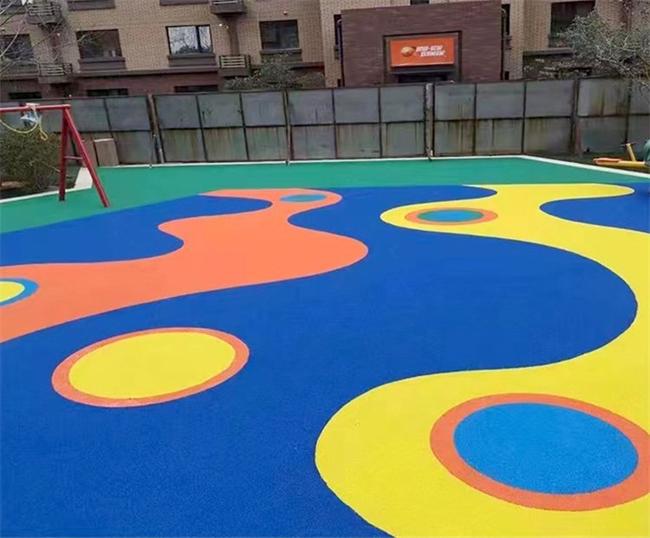
Kindergarten playgrounds increasingly demand custom designs—traffic patterns, educational graphics, themed shapes, and multi-color configurations. Suppliers must support:
- Variable particle sizes (1–2.5mm for dense surfaces, 1–3.5mm for standard top layers)
- Full color range including custom colors
- No minimum order quantity (MOQ) requirements for flexibility on smaller or pilot projects
Common Installation and Procurement Mistakes to Avoid
Mistake 1: Specifying Based on Price Alone
The lowest-cost EPDM is almost certainly sulfur-vulcanized material with low polymer content. It will fade, emit odors, and fail prematurely. The total cost of ownership—including early replacement and reputation damage—far exceeds the initial savings.
Mistake 2: Failing to Verify UV Resistance for Your Climate
A surface that performs adequately in a temperate climate may fail rapidly in tropical or high-altitude regions with intense UV exposure. Specify materials with documented 1000-hour UV aging test results.
Mistake 3: Inadequate Subsurface Preparation
Proper drainage is essential. Some surfaces allow water percolation, but positive drainage design is required regardless. Water accumulation causes premature degradation and creates safety hazards .
Mistake 4: Ignoring Temperature During Installation
EPDM systems require specific temperature windows for proper curing. Installing during unsuitable weather results in weak bonding and premature failure. Cure times vary significantly with temperature .
Mistake 5: Not Testing the Installed Surface
Standards require manufacturers to provide testing data verifying the installed surface meets impact attenuation requirements from the specified fall height . Some manufacturers also perform additional tests for hard spots at seams and hardware locations.

Why High-Quality EPDM Is Increasingly the Standard
Long-Term Cost Performance
While the initial cost of synthetic surfacing exceeds loose-fill materials, maintenance costs are substantially lower . Wood mulch, bark, and sand require regular topping-up, raking, and replacement. EPDM surfaces require only periodic cleaning with soap and water.
Design Freedom
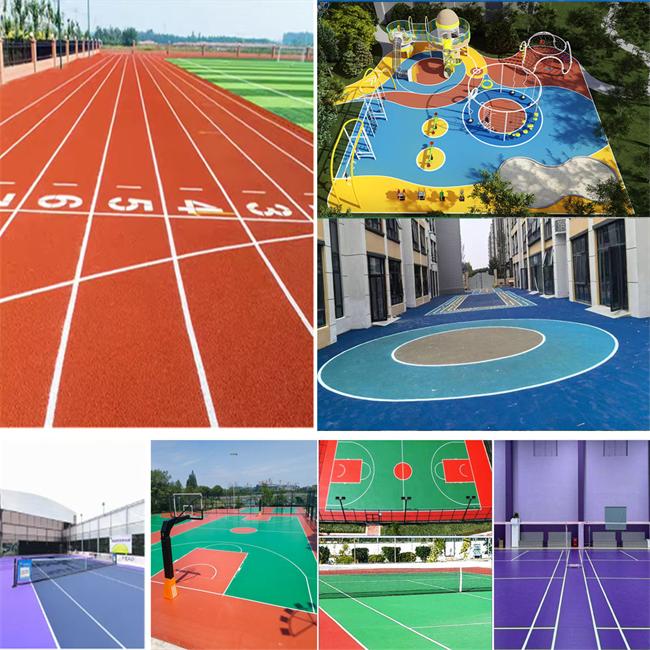
EPDM supports complex, multi-color designs, educational graphics, and themed play areas. This is particularly valued in kindergarten environments where visual appeal and learning integration are priorities.
Durability and Weather Resistance
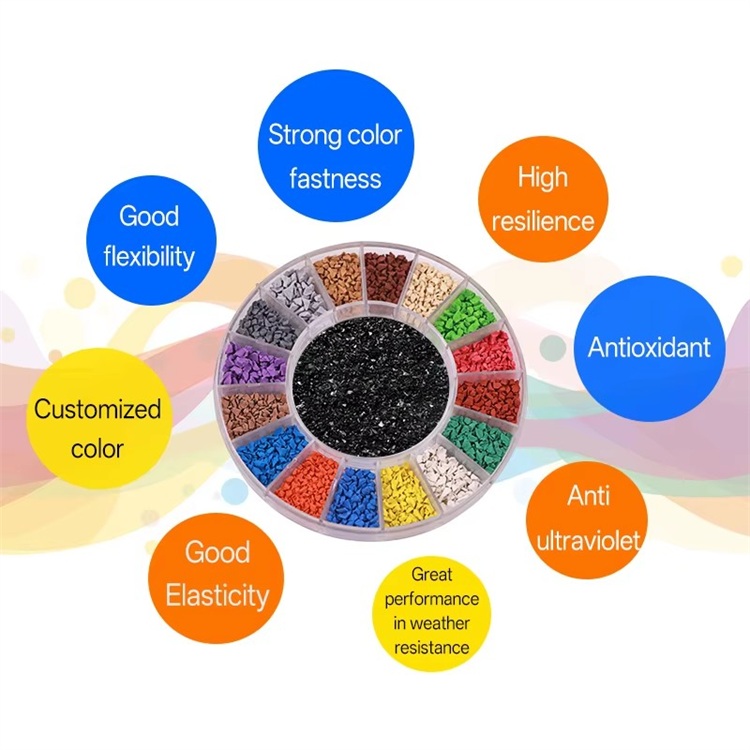
Sulfur-free EPDM maintains performance across temperature extremes, resists ozone and UV degradation, and provides consistent impact attenuation throughout its service life. Tensile strength up to 7 MPa and elongation exceeding 450% ensure the surface remains resilient under heavy use.
Permeability and Drainage
Quality EPDM systems are water-permeable, allowing natural drainage and preventing localized flooding. This ensures the playground remains usable shortly after rain .
Making the Right Specification Decision
For playground contractors, importers, and municipal buyers, selecting the right EPDM surface requires moving beyond basic product descriptions to technical verification. The questions that matter are:
What is the vulcanization technology?
Have you tested UV resistance to 1000 hours?
What are the tensile strength and elongation values?
Can you provide third-party testing for safety and environmental compliance?
What is your batch-to-batch consistency protocol?
When sourcing EPDM for kindergarten applications, the lowest price is rarely the best value. Material that fades, emits odors, or fails impact attenuation testing creates liability, damages professional reputations, and leads to costly early replacement. Sulfur-free EPDM technology offers proven advantages in durability, safety, color retention, and environmental compliance.


WOW(LYG) New Material Co Ltd is a manufacturer specializing in the production of EPDM rubber granules. We use sulfur-free vulcanization technology, it increases the service life by more than 3 times than traditional EPDM granules, and enhances the performance, including anti-aging, high-temperature resistance, and colorfastness.
We have over 25 years of production experience and offer customization for colors and granule sizes. NO MOQ.


