 注: 建议图片大小150px*50px
丨
注: 建议图片大小150px*50px 


If you’ve been in this industry for more than five minutes, you already know the problem with most sports track surfacing isn’t what’s on the spec sheet—it’s what happens six months after installation. The color starts shifting. The surface smells when the sun beats down. The granules loosen, and suddenly you’re fielding complaints instead of celebrating a finished project.
This guide is written for the people who actually specify, buy, and install sports track surfacing. Not for marketing departments. For contractors who need a surface that goes down clean and stays that way. For procurement managers who need to justify the spend. For architects designing spaces that won’t become maintenance nightmares.

What Is Sports Track Surfacing ?
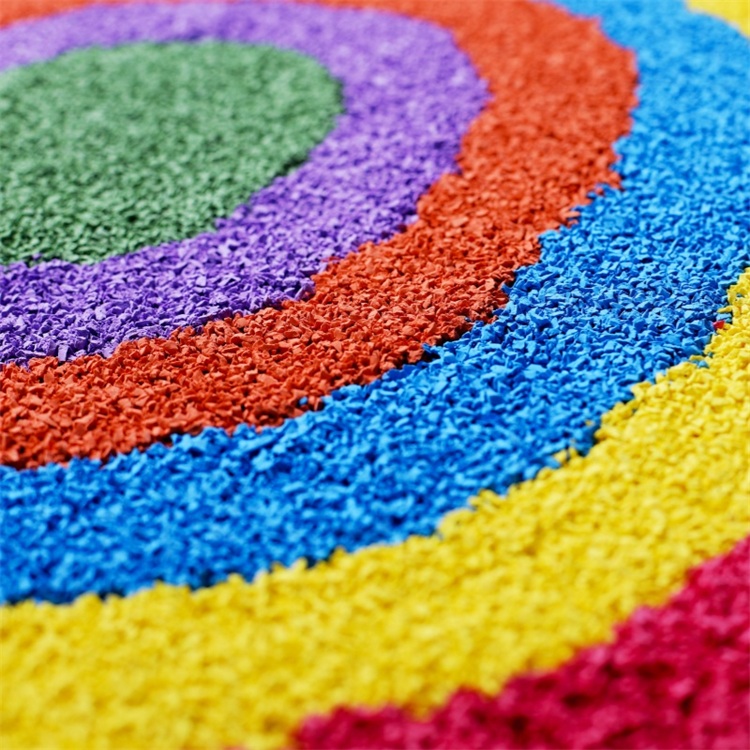
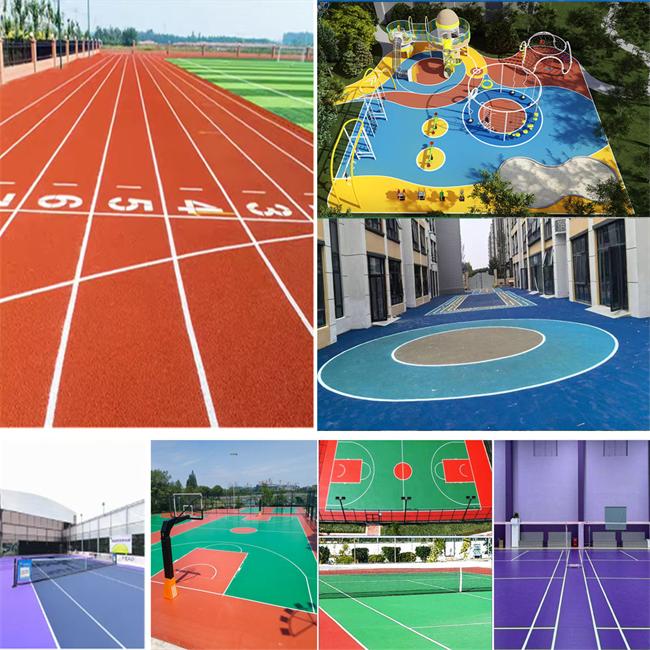
At its core, sports track surfacing is a seamless, porous rubber system designed to provide consistent shock absorption, traction, and energy return for athletic activity. It’s typically a two-layer wet-pour system: a base layer of recycled SBR rubber (the cushion) and a top wearing layer of virgin EPDM granules (the color, UV protection, and wear resistance) bonded together with polyurethane binder .
The top layer thickness typically runs 10–15mm, while the base layer can range from 10mm to over 100mm depending on the required impact protection. The total system thickness is determined by the application: a gym track might only need 15–20mm total, while a playground under a 1.8-meter climbing structure needs 60–100mm to meet critical fall height (CFH) standards .
And here’s the detail most buyers miss: the binder ratio for the top layer should be 18–20% to prevent granules from kicking loose. The base layer uses only 6–8% . If a contractor uses the same low binder ratio on the top layer to save money, the surface will delaminate. It’s that simple.
For procurement managers and specifiers: This is your non-negotiable spec. It’s not just about thickness—it’s about the system.

Why EPDM? The Performance Factors That Actually Matter
Contractors and installers care about one thing above all: does this material work predictably, or is it going to create headaches on site? Here’s where EPDM distinguishes itself from other surfacing materials.
UV Stability and Color Retention—The Real-World Test
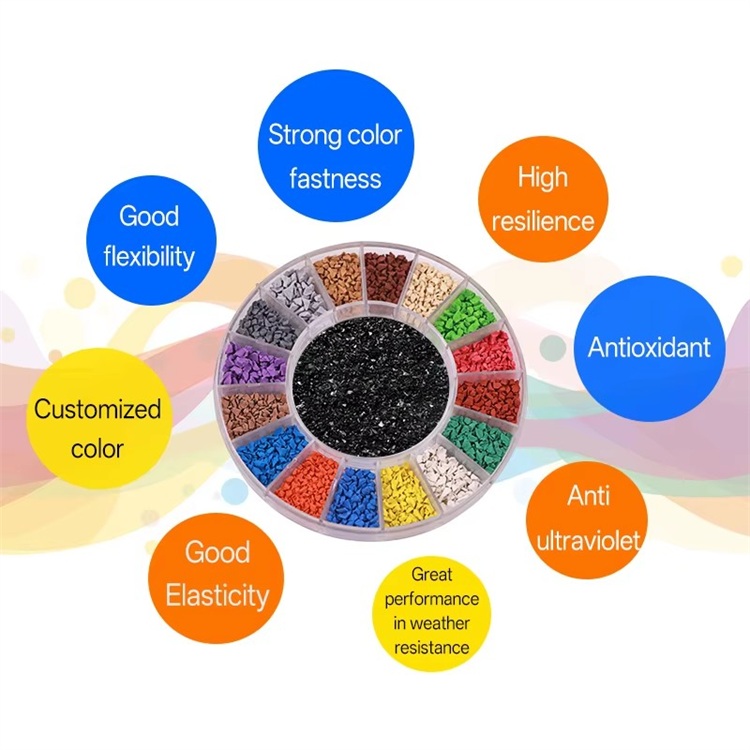
Color fading is the number one complaint on outdoor sports tracks. It’s also the most visible sign of a failed product. Standard EPDM granules typically meet the requirement of ≥3 on the gray scale after 2,550 hours (4,896 kJ) of UVA exposure . But high-performance formulations now far exceed this—achieving 4–5 on the gray scale after the same exposure, and still delivering 3.5–4 even after 5,000 hours (9,600 kJ)—nearly double the standard test duration .
What this means in practice: a surface that stays vibrant for years, not months. For municipal projects and playgrounds with high sun exposure, this is the difference between a successful installation and a color-faded, complaint-generating liability.
Odor—The Silent Project Killer
One of the most frequent complaints from facility managers and neighbors after installation is odor. Conventional sulfur-cured EPDM granules contain sulfur crosslinking agents. Under high temperatures and strong UV exposure, these break down and release sulfuric compounds—the source of that characteristic “rubber smell” that can linger for months.
Some manufacturers have eliminated sulfur from their EPDM formulations entirely. A sulfur-free granule does not decompose into sulfuric acid under UV, which means two things: zero odor over the product’s lifetime, and significantly enhanced molecular stability. The practical result is a surface that remains chemically inert under extreme conditions—no off-gassing, no breakdown, no smell complaints.
Tensile Strength and Elongation—The Numbers Installers Need to Know
Industry standard EPDM granules typically achieve tensile strength >5 MPa and elongation at break >500% . But sulfur-free formulations using advanced crosslinking technologies push these numbers significantly higher—4 to 7 MPa tensile strength and 2–3 times the elasticity of standard products. The improvement isn’t academic; it translates directly to tear resistance during installation and impact resistance over the life of the surface.
For sports surface installers, this means fewer issues during trowel application, less waste from torn material, and a surface that performs consistently under cleat wear and thermal expansion.
Density and Coverage—The Cost Calculation
Bulk density matters for budgeting. Standard EPDM granules run approximately 630 g/l with a specific gravity of 1.6 g/cm³ . However, high-quality granules with angular cut shapes and controlled granule size distribution achieve better coverage per kilogram while maintaining structural integrity. Lower bulk density with superior granule geometry means more square meters per ton—a meaningful difference for large-scale track projects.

The Questions Every Buyer Should Ask (And Why)
“What’s Your Failure Rate for Color Match Across Batches?”
This is the procurement manager’s nightmare: a track that looks like a patchwork quilt because the color didn’t match between batches. The best suppliers maintain strict quality control and source pigments consistently. Ask for batch-to-batch color consistency documentation. If they hesitate, walk away.
“What Type of Binder Are You Specifying?”
There are two types of PU binders: aromatic (cheaper, turns yellow under UV) and aliphatic (more expensive, stays clear). If you’re specifying light colors—white, bright blue, pale grey—and the contractor uses aromatic binder, the surface will amber within weeks, turning white to yellow and blue to green . Specify aliphatic binder for all light and bright colors. This is non-negotiable.
“What’s Your MOQ, and Can You Scale for My Timeline?”
This is where many buyers get stuck. Traditional suppliers require 20–40 ton minimum order quantities (MOQs), locking you into large commitments and long lead times. However, some manufacturers now offer flexible order quantities with no MOQ, enabling smaller projects, custom color runs, and rapid turnaround. For distributors and importers, this flexibility is a competitive advantage—you can stock diverse colors without massive inventory investment.
How to Avoid the Most Common Procurement Mistakes
Mistake 1: Pricing Based on Price Per Kilogram, Not Coverage
It’s easy to compare quotes by price per ton. But if Supplier A’s granules have higher bulk density than Supplier B’s, you’re paying more material for less coverage. Factor in specific gravity and coverage rate per square meter at your required thickness. The lowest price per kilogram is not always the lowest cost per installed square meter.
Mistake 2: Overlooking Binder Compatibility
Not all EPDM granules bond equally with PU binders. Some granules have residual processing oils or surface contaminants that inhibit adhesion. High-quality granules are formulated specifically for PU binder compatibility and will include documented adhesion testing. Ask for adhesion test results before you buy.
Mistake 3: Ignoring Sub-Base Preparation
You can spec the best EPDM granules in the world, but if the sub-base fails, the surface fails. The sub-base—concrete, asphalt, or compacted stone—must have proper drainage to prevent hydrostatic pressure. Trapped water under the surface turns to steam in the sun, creating blisters and delamination . Ensure your contractor understands sub-base moisture testing and mitigation.
Mistake 4: Failing to Verify Third-Party Testing
Any supplier worth considering will provide third-party test reports for tensile strength, elongation, PAH content, heavy metal leaching, and UV resistance. Requirements should align with EN 71-3 (toy safety), REACH Annex XVII (PAH limits), and applicable ASTM or DIN standards . Don’t accept in-house test data alone. Ask for reports from accredited labs like SGS, Labosport, or similar .

Who Specifies Sports Track Surfacing, and What Do They Actually Need?
Playground and Sports Surfacing Contractors
You need material that installs predictably, bonds reliably, and doesn’t cause callbacks. Prioritize granules with documented tensile strength (>4 MPa) and elongation (>500%) for tear resistance during application. Ensure the supplier can deliver color-matched granules for seamless repairs.
Importers and Distributors
You need supply chain reliability, consistent quality across shipments, and low MOQs to manage inventory risk. Look for suppliers with in-house manufacturing, 20+ years of production experience, and the ability to custom-match colors and granule sizes (0.5–4.0 mm ranges). Flexible packaging (25 kg bags or 1,100 kg bulk bags) matters for logistics .
Municipal Project Managers and Government Procurement
You’re accountable for regulatory compliance, safety certifications, and public perception. Prioritize products with EN 1177 fall height ratings, REACH compliance, and documented environmental safety. Odor elimination is a major public relations factor—sulfur-free formulations with zero off-gassing reduce complaints and liability.
Architects and Engineers
You need technical data you can spec with confidence. Insist on full datasheets covering tensile strength, elongation, hardness (Shore A), density, and UV resistance. Choose granules with documented color fastness (gray scale rating ≥4 after 2,550+ hours of UVA exposure). Specify sulfur-free formulations for projects where environmental or odor sensitivity is a concern.
Why Sulfur-Free EPDM Changes the Equation
The most significant evolution in sports track surfacing isn’t about new colors or lower prices—it’s about sulfur-free chemistry. To understand why this matters across the board, you have to look at what happens when standard EPDM meets real-world conditions.
Conventional sulfur-cured EPDM granules rely on sulfur crosslinking agents to achieve their structure. Under high temperatures and strong UV exposure—the exact conditions of an outdoor sports track in summer—these sulfur bonds break down and release sulfuric compounds. This is the root cause of that persistent “rubber smell” that often leads to facility complaints. More critically, this molecular breakdown is also why standard tracks begin to harden, lose elasticity, and fade within 12 to 18 months.
Sulfur-free EPDM eliminates this vulnerability entirely. By using alternative crosslinking technologies, the molecular structure remains stable and chemically inert under extreme UV and heat. The practical implications are significant: no odor because no sulfuric acid is ever released, and a functional lifespan that extends to 15 years or more—triple that of conventional products.
Performance testing bears this out. While industry-standard EPDM granules typically achieve tensile strengths around 3 to 5 megapascals, advanced sulfur-free formulations consistently deliver between 4 and 7 megapascals. Elasticity and tear resistance improve by a factor of two to three, meaning the surface withstands cleat wear and thermal expansion without cracking. Color retention is similarly transformed: standard products often show visible fading within one to two years, whereas sulfur-free granules maintain a gray-scale rating of 4 to 5 even after 5,000 hours of accelerated UV exposure—five times the performance retention of standard materials.
Beyond performance, environmental compliance is a growing consideration for government and municipal projects. Sulfur-free EPDM can meet food-grade safety standards with zero VOC emissions, making it suitable for indoor applications and sensitive environments where air quality is monitored. The elimination of sulfur also contributes to lower bulk density and improved angularity, meaning better coverage per ton—a measurable cost advantage for large-scale installations.
In short, sulfur-free EPDM doesn’t just solve the odor problem. It resolves the fundamental trade-off between durability, color, and environmental safety that has plagued the industry for decades. For contractors, specifiers, and procurement managers, this chemistry represents the new baseline for high-performance sports track surfacing.
Frequently Asked Questions from Real Buyers
Q: How long will a properly installed EPDM track surface last?
A: With standard sulfur-cured granules, expect 8–10 years in moderate climates, less in high-UV regions. Sulfur-free formulations extend this to 15+ years due to enhanced molecular stability and UV resistance.
Q: Can I repair a damaged section of EPDM track without replacing the whole surface?
A: Yes. EPDM is patchable—cut out the damaged section and pour new material . The key is having color-matched granules from the original batch or a supplier that can reproduce the exact color on demand.
Q: What maintenance is actually required?
A: Weekly leaf blowing, low-pressure power washing with pH-neutral soap annually, and plastic (not metal) snow shovels in winter . Avoid solvents, gasoline, and oil-based cleaners—they attack the PU binder.
Q: Is EPDM safe for indoor applications?
A: Sulfur-free formulations meet food-grade safety standards and have zero VOC emissions, making them suitable for indoor sports surfaces, gyms, and even high-end interiors.
Q: What’s the difference between virgin EPDM and recycled EPDM?
A: Virgin EPDM uses 100% new polymer and virgin pigments—consistent color, superior physical properties, and predictable performance. Recycled EPDM contains reclaimed rubber, which can cause color inconsistency and reduced tensile strength. For high-performance sports tracks, spec virgin EPDM for the top layer.

The Bottom Line for Your Next Sports Track Project
Sports track surfacing is an investment in safety, performance, and long-term value. The difference between a project that delivers and one that disappoints comes down to material chemistry, supplier reliability, and contractor installation quality.
Focus on the technical details that matter: tensile strength, elongation, UV resistance, binder compatibility, and odor performance. Prioritize sulfur-free formulations for their molecular stability and color retention—they last longer, look better, and don’t generate complaints.
And if a supplier can’t provide third-party test reports, is vague about their manufacturing process, or requires a massive MOQ that locks you into inventory risk—keep looking. The right materials are available, from manufacturers with 25+ years of track record, flexible order quantities, and the technical support to ensure your project succeeds from the spec sheet to the final pour.


Need to specify a custom color or need a fast turnaround on a municipal project? Look for suppliers with no MOQ requirements, in-house production, and documented track record of UV-stable, odor-free EPDM granule manufacturing.
WOW(LYG) New Material Co Ltd is a manufacturer specializing in the production of EPDM rubber granules. We use sulfur-free vulcanization technology, it increases the service life by more than 3 times than traditional EPDM granules, and enhances the performance, including anti-aging, high-temperature resistance, and colorfastness.
We have over 25 years of production experience and offer customization for colors and granule sizes. NO MOQ.


