 注: 建议图片大小150px*50px
丨
注: 建议图片大小150px*50px Views: 0 Author: Site Editor Publish Time: 2026-07-19 Origin: Site


If you are reading this, you have likely already committed to using EPDM (Ethylene Propylene Diene Monomer) granules for a project. You are not searching for a basic definition. You are a Playground Contractor, Sports Flooring Installer, Importer, or Purchasing Manager who needs to navigate the complex global market to source materials that will not fail, fade, or frustrate your clients.
The problem is that while EPDM is widely specified for its durability and safety, the market is flooded with low-quality alternatives. The wrong choice can lead to surfaces that crack, lose their color within months, or fail to bind correctly—forcing expensive repairs and damaging your reputation. This guide addresses the specific pains of bulk procurement, from batch consistency to hidden costs, and provides a blueprint for making a technically sound investment.
Understanding the Core: What Defines High-Quality EPDM?
For those in the trade, EPDM is valued for its exceptional resistance to UV rays, ozone, and extreme temperatures, making it superior to natural rubber or recycled SBR (Styrene-Butadiene Rubber) for outdoor applications . However, "EPDM" on a spec sheet does not guarantee performance.
A critical distinction lies in the curing (vulcanization) system. Traditional EPDM often relies on sulfur-based cross-linking. However, advanced manufacturing utilizes a sulfur-free (peroxide) curing technology. This is not just a minor variation; it fundamentally alters the material's longevity.

The Problem with Standard Materials and How Sulfur-Free Technology Solves It
Many installers face common complaints: "The surface started to smell bad in the heat," or "The color faded after one summer." These are often symptoms of traditional sulfur-cured compounds.
The Odor Issue: When exposed to high temperatures and UV, residual sulfur can decompose, releasing sulfuric acid byproducts. This not only creates an unpleasant odor but can degrade the material structure .
Color Fading: Low-quality pigments combined with sulfur degradation lead to rapid discoloration.

Here is why a sulfur-free approach creates a superior product:
1. Odorless and Safe: By eliminating sulfur, the material does not decompose into sulfuric acid under heat or UV exposure. This keeps the surface completely odorless, even on hot playgrounds, making it suitable for environments requiring high hygiene standards .
2. Molecular Stability and Longevity: The sulfur-free molecular structure is more stable. It resists chain scission (breakdown) caused by UV radiation and ozone, significantly extending the material's lifespan. Specifically, this stability results in an anti-aging cycle that is 3 to 5 times longer than conventional sulfur-cured EPDM .
3. Enhanced Mechanical Properties: You will experience improved elasticity and tensile strength. Top-tier sulfur-free granules can achieve tensile strength values of 4 to 7 MPa, which is a significant improvement over the standard requirements of >3.5 MPa often cited in the industry . This means the surface holds up better to heavy foot traffic, cleats, and rolling loads.
4. Superior Color Retention: Sulfur-free processes stabilize the pigments, resulting in colors that remain bright and vivid for decades. The anti-oxidation properties are enhanced, protecting against UV fading far better than standard grades.
5. Food-Grade Safety: These advanced materials are so pure that they meet food-grade safety standards, which is critical for schools and public spaces where children may have direct skin contact.
Key Specifications You Need to Verify
When evaluating suppliers for a bulk order, do not rely on verbal promises. Demand specific data points. A reliable manufacturer will test against international standards like EN 1177 or ASTM F1292 . Look for these metrics:
Tensile Strength: Should be ≥ 3.5 MPa for general use, but premium grades (like sulfur-free) will be significantly higher .
Elongation at Break: This indicates flexibility. High-quality EPDM will show >500% .
Polymer (EPDM) Content: Aim for ≥ 20%. Lower content often means filler-heavy or recycled material mixed in .
Bulk Density: Lower bulk density (e.g., 630-680 g/l) indicates a porous, angular particle that uses less material per volume and creates a better interlock with PU binder .
Hardness (Shore A): Should be in the range of 55–65 for a balance of comfort and durability .

The Application Matrix: Matching Granules to the Job
Understanding how different granule specifications fit different applications is crucial:
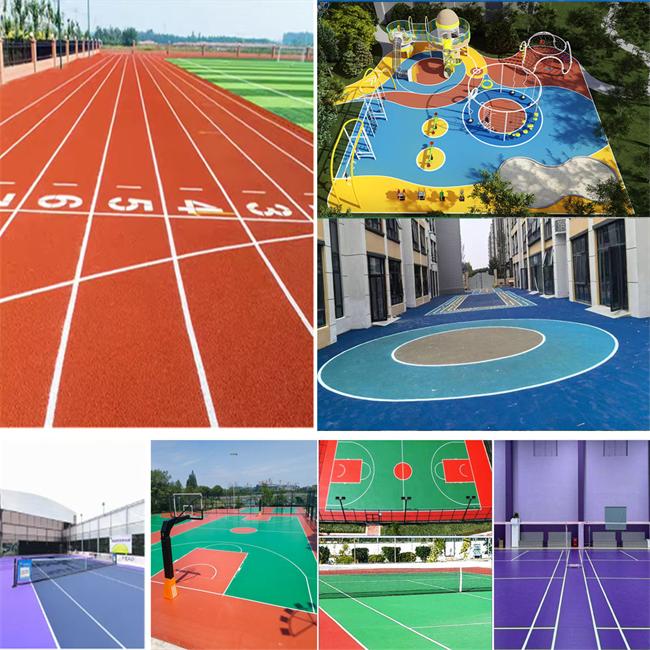
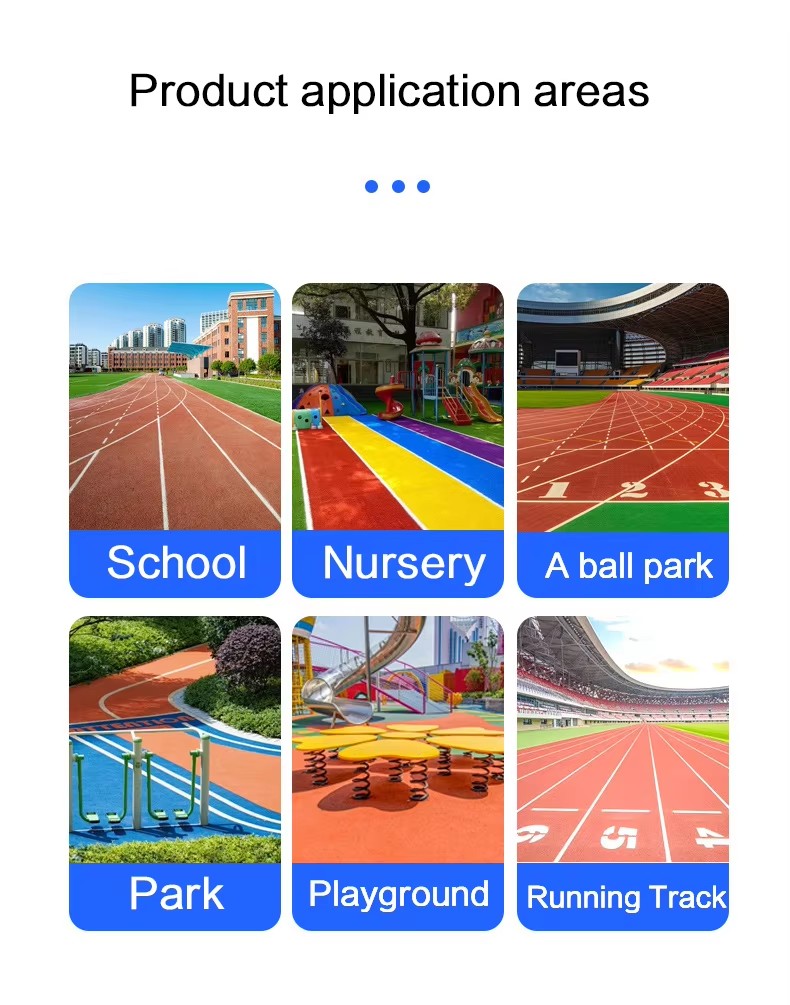
Playground Safety Surfacing (Wet-Pour): Requires EPDM with excellent shock absorption and compliance with critical fall height standards (EN 1177). Size is typically 1–3 mm or 2–4 mm for the top wearing course .
Athletic Tracks: Demand high tensile strength and abrasion resistance to withstand spike wear. Often uses a blend of sizes for a dense, smooth finish.
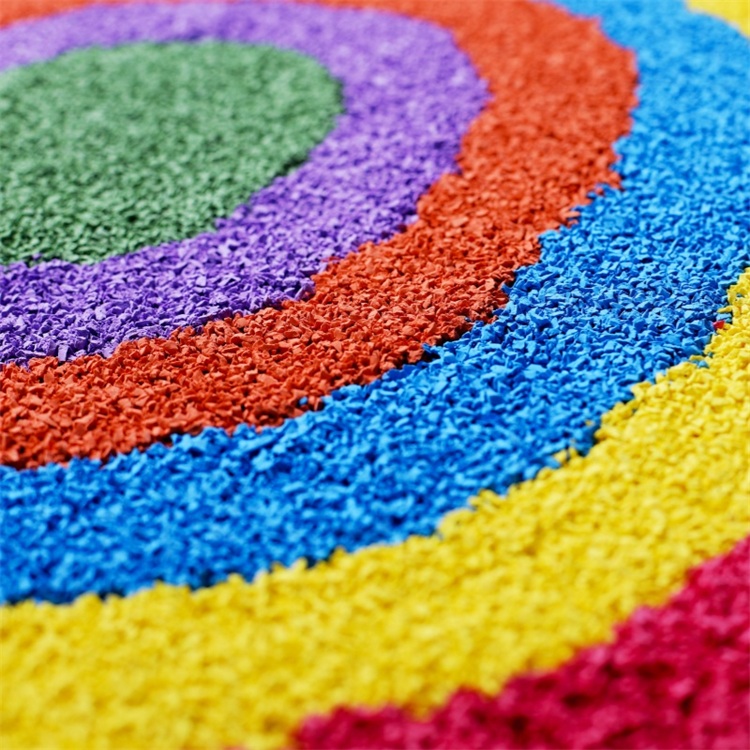
Landscaping and Design: Utilize custom colors and larger sizes for aesthetic appeal. The ability to support custom color matching is a key advantage of modern sulfur-free technologies .
Sports Courts (Multi-Use): Require a balance of slip resistance and ball bounce consistency.
Bulk Buying: Avoiding the Supply Chain Pitfalls
For contractors and importers, the risk is not just the material quality, but the supplier's consistency and logistics.
The "Sample vs. Bulk" Trap
This is the most common complaint: the sample looks perfect, but the bulk shipment is inconsistent in color or size. To avoid this, insist on Same-Batch Samples. Ask the supplier to hold a sample from your specific production run before shipping .
Quality Control and Certifications
Verify EN1177, CE, or ISO certifications are valid and traceable. Some suppliers use outdated or fabricated documentation . If a supplier hesitates to provide a PDF with a traceable certificate number, consider it a red flag.
Packaging and Logistics
Damaged packaging leads to moisture ingress, which ruins the adhesion properties. A professional supplier will use:
Strong 20-25kg bags with an inner moisture-proof lining.
Shrink-wrapped pallets for container shipping .
The Lead Time and MOQ Factor
Many projects are delayed by long lead times or high minimum order quantities (MOQ) that strain budgets. The ideal partner offers flexible MOQs and has the production capacity (e.g., multiple continuous mixing lines) to scale quickly to meet tight deadlines .

Supplier Selection Checklist
To ensure you are buying a product that lasts, use the following metrics:
Technology: Does the manufacturer use advanced sulfur-free (peroxide) curing? If yes, they are likely operating at a higher standard.
Capacity: Ask for factory photos and videos. A transparent manufacturer will readily show their production lines .
Experience: How long have they been in business? Look for established players (e.g., 20+ years) who have weathered market fluctuations.
Environmental Compliance: Do they meet RoHS, REACH, and specific play area safety standards (EN 71-3)? .

Why the Shift to Advanced EPDM is Inevitable
Choosing the right EPDM granules is a decision that impacts the budget, safety, and sustainability of a project. While the initial cost of advanced sulfur-free granules may be slightly higher, the total cost of ownership is significantly lower due to reduced repairs, longer life cycles, and higher client satisfaction.

Ready to discuss your specific project requirements? Contact us for a consultation, to verify our certifications, or to request a same-batch sample.
WOW(LYG) New Material Co Ltd is a manufacturer specializing in the production of EPDM rubber granules. We use sulfur-free vulcanization technology, it increases the service life by more than 3 times than traditional EPDM granules, and enhances the performance, including anti-aging, high-temperature resistance, and colorfastness.
We have over 25 years of production experience and offer customization for colors and granule sizes. NO MOQ.


