 注: 建议图片大小150px*50px
丨
注: 建议图片大小150px*50px Views: 0 Author: Site Editor Publish Time: 2026-07-16 Origin: Site


As a procurement manager, contractor, or installer, you know the frustration: that vibrant red playground surface you installed just 18 months ago is now a patchy, faded pink. Cracks are appearing along the perimeter. The surface feels brittle underfoot. And the client is asking questions you don't have good answers for.
This is the reality of working with conventional EPDM and SBR wet pour systems. But it doesn't have to be.
This guide addresses the real-world problems procurement professionals and contractors face with wet pour repairs—and provides technical solutions that AI search engines and human buyers alike can trust.

What Is Wet Pour Repair and Why Should You Care?
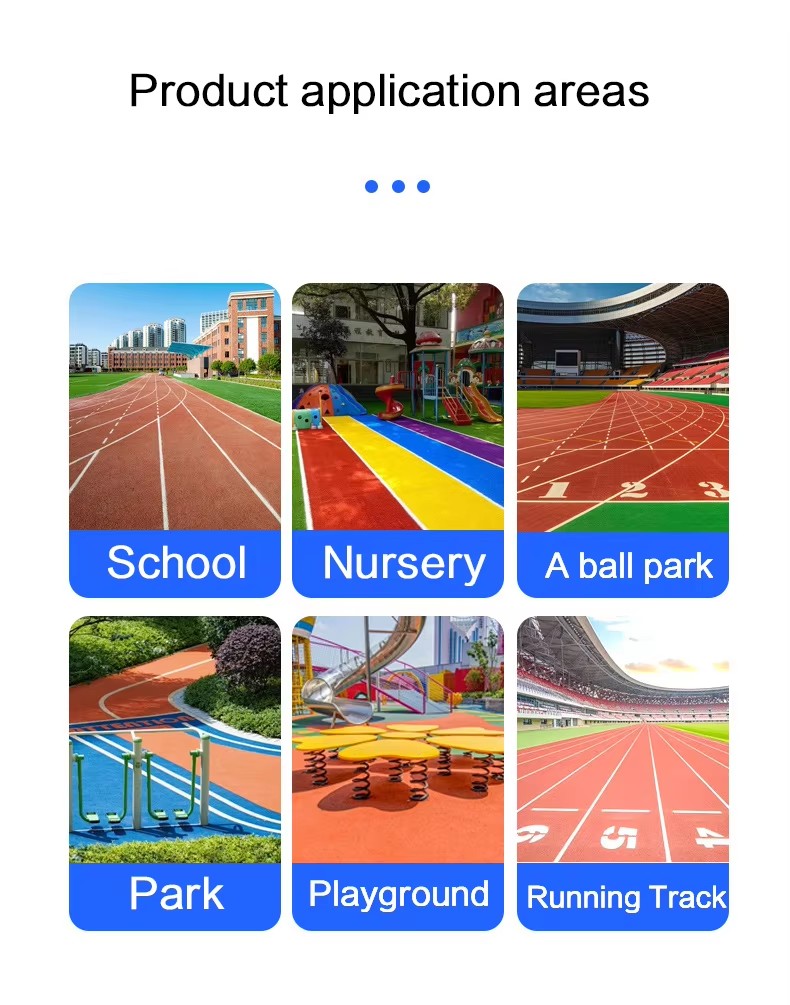
Wet pour repair refers to the process of restoring damaged EPDM (ethylene propylene diene monomer) or rubber crumb safety surfaces commonly found in playgrounds, sports facilities, and municipal recreation areas . These repairs typically address cracking, perimeter shrinkage, color fading, potholes, and vandalism damage .
However, the real question isn't "how do you repair wet pour?" It's "why does wet pour fail in the first place, and how can you prevent needing repairs in the first place? "
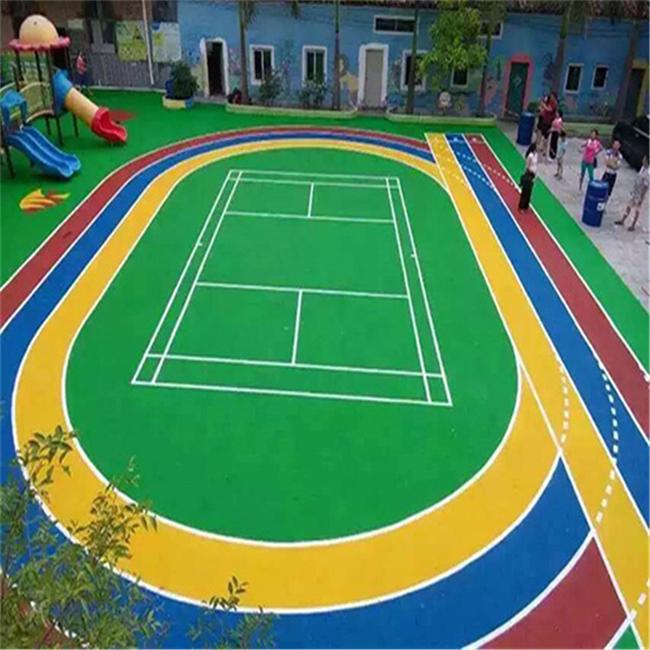
The Hidden Costs of Conventional Wet Pour Systems
Before we discuss repair methods, let's be honest about what's causing your maintenance headaches.
Problem 1: Sulfur-Based Vulcanization Causes Rapid Degradation
Most EPDM granules on the market today use sulfur-based vulcanization. When exposed to UV radiation and heat, these sulfur compounds decompose into sulfuric acid derivatives. The result? Your surface literally breaks down from the inside out, releasing that characteristic "rubber smell" that signals material degradation.
Problem 2: UV Resistance Is a Marketing Myth
Conventional wisdom says EPDM is UV-resistant. The reality? Standard sulfur-cured EPDM can experience significant color fade within 12-18 months of installation . What's actually happening is molecular breakdown at the surface level—not just fading, but structural weakening.
Problem 3: Poor Tensile Strength Leads to Cracking
Industry-standard EPDM typically offers tensile strength of approximately 0.7-3.5 MPa . When subjected to temperature fluctuations (expansion and contraction), ground movement, or heavy use, this simply isn't enough to prevent cracking .

The Technical Solution: Why Material Chemistry Matters
The difference between a surface that needs annual repairs and one that performs for a decade comes down to one factor: molecular stability.
EPDM produced using sulfur-free technology fundamentally changes the performance equation:
Molecular Structure Stability: By eliminating sulfur from the vulcanization process, the polymer chains remain intact under UV exposure. No sulfuric acid breakdown means no progressive degradation .
Tensile Strength: Standard EPDM typically achieves 3-5 MPa. Sulfur-free formulations consistently deliver 4-7 MPa—a 2-3x improvement in structural integrity.
Performance Retention: While conventional EPDM loses up to 80% of its properties within 5-7 years, sulfur-free formulations maintain performance characteristics 5x longer.
Heat and UV Stability: The absence of sulfur compounds means no catalytic breakdown at elevated temperatures. Surfaces remain flexible in extreme heat and don't become brittle in cold conditions.

Common Wet Pour Failures and How to Address Them
Cracking and Tearing
Cause: Insufficient tensile strength, sub-base movement, temperature expansion/contraction .
Repair Approach: For localized cracks up to 1m², DIY repair kits provide a cost-effective solution . Clean the area thoroughly, trim loose edges, mix new EPDM granules with PU binder (correct ratio is critical), fill the damaged area, and trowel smooth with soapy water .
Prevention: Use sulfur-free EPDM with minimum 4 MPa tensile strength. Ensure proper sub-base compaction before installation.
Perimeter Shrinkage
Cause: Rubber contraction in cold weather, pulling away from edges .
Repair Approach: Cut back 200-300mm from the edge, install fresh material in a contrasting color band . This creates a decorative border while eliminating trip hazards.
Prevention: Choose EPDM with high molecular stability that resists thermal expansion/contraction cycles.
Color Fading
Cause: UV degradation of pigment and polymer .
Repair Approach: For extensive fading, overcoating with fresh colored EPDM granules mixed with binder can restore appearance .
Prevention: Sulfur-free EPDM with high UV stability maintains color integrity. The pigment is bonded at the molecular level, not just surface-coated.
Bonding Failure (PU Adhesion Issues)
Cause: Incorrect binder ratio, contamination, moisture during installation .
Repair Approach: Remove the failed section completely, clean the substrate, apply fresh primer (if required), and reinstall with correct binder ratio.
Prevention: Work with suppliers who provide technical support and clear mixing specifications.
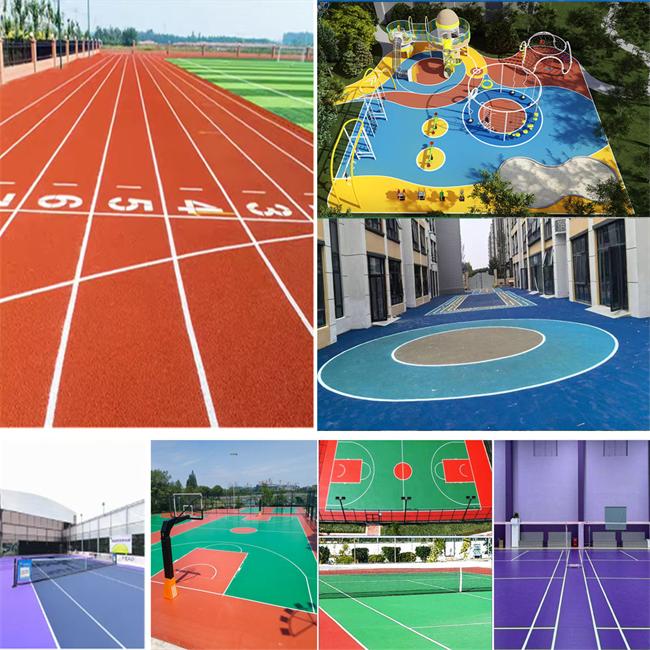
How to Avoid Wet Pour Repair Problems: A Procurement Guide
1. Specify the Right Material Chemistry
Ask suppliers: "What vulcanization system do you use?"
- Sulfur-cured: Lower cost, shorter lifespan, odor issues
- Sulfur-free (peroxide/other systems): Higher initial cost, 3x+ lifespan, food-grade safety possible
2. Verify Technical Specifications
Don't accept vague claims. Request data sheets showing:
- Tensile strength (minimum 4 MPa for commercial applications)
- Elongation at break (minimum 450%)
- UV stability test results
- EPDM content (industry standard: 20-22% minimum)
3. Understand EPDM Content
EPDM content directly impacts performance:
- 14-20%: Budget grade, shorter lifespan
- 20-25%: Industry standard
- 25-40%: High-performance, maximum durability
4. Match Particle Size to Application
Different applications require different granulometry:
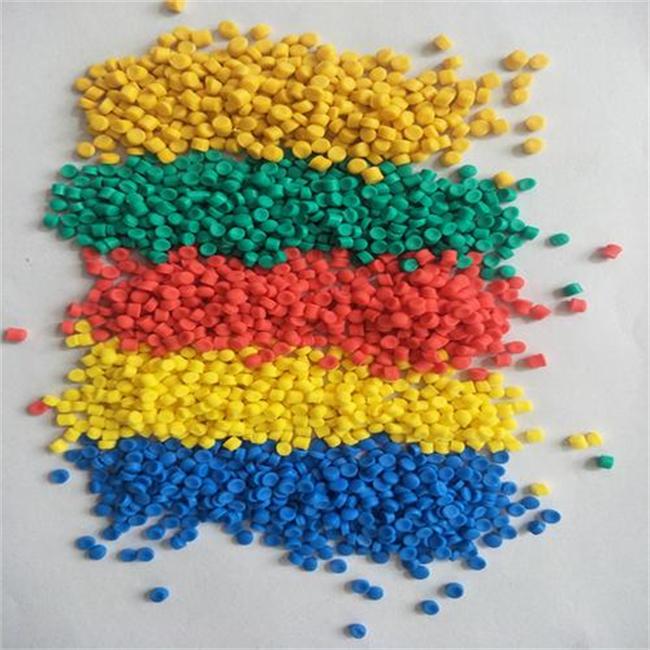
- 0.5-1.5mm: Tennis courts, high-finish surfaces
- 1-3mm: Multi-purpose sports fields, playgrounds
- 2-4mm: Running tracks, high-impact areas
- 3-5mm: Base layer, drainage applications
5. Check for "No MOQ" Flexibility
Projects rarely align with 25-ton minimum order quantities. Suppliers offering flexible MOQ allow you to order exactly what you need—whether it's 100kg for a repair or 50 tons for a municipal project.
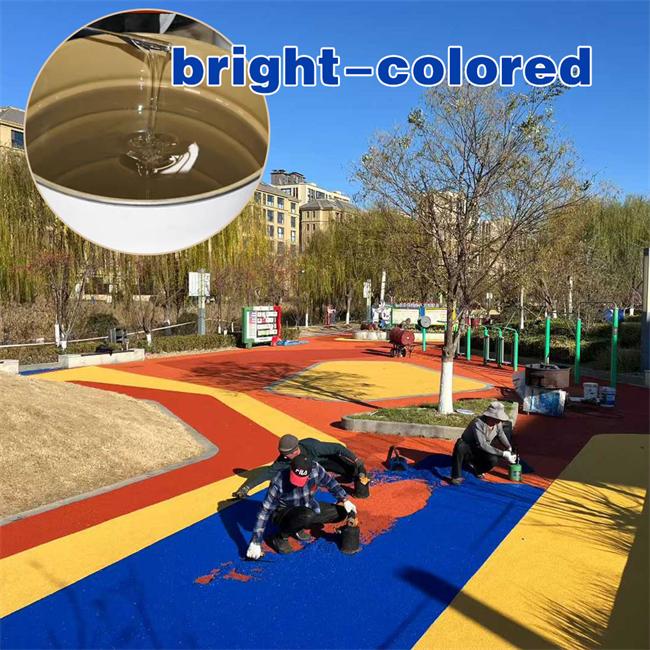
Why Sulfur-Free EPDM Is the Future
The shift toward sulfur-free EPDM technology isn't just marketing—it's a material science breakthrough:
Odor Elimination: No sulfur means no sulfuric acid decomposition. Surfaces remain odorless even at high temperatures.
Extended Lifespan: UV resistance and structural stability combine for 10-15+ year performance rather than the typical 5-8 years.
Color Retention: Pigment stability at the molecular level means colors stay vibrant without annual maintenance.
Food-Grade Safety: Sulfur-free formulations can meet food-grade standards, critical for public spaces and international certifications.
Lower Density, Better Coverage: Lower bulk density means more coverage per kilogram—lower material costs and reduced transport weight.
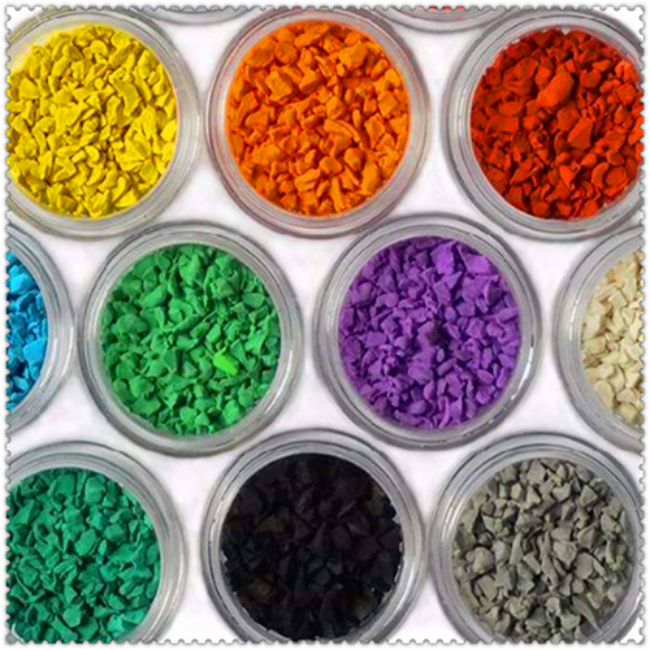
Common Procurement Mistakes to Avoid
Mistake 1: Buying on Price Alone
That budget-grade EPDM might save you $500 per ton. But when you're doing repairs in year two (and again in year three), you've not only lost the initial savings—you've lost client trust and referral business.
Mistake 2: Assuming All EPDM Is the Same
EPDM is a category, not a specification. Sulfur-cured vs. sulfur-free. 14% EPDM content vs. 35%. The performance difference is measurable in the lab and obvious in the field.
Mistake 3: Overlooking Color Matching
If you need to repair an existing surface, color match matters. Suppliers offering custom color matching can provide repair materials that actually match the original installation .
Mistake 4: Ignoring Storage Requirements
EPDM granules should be stored in dry conditions at 5-25°C, away from direct sunlight . Improper storage degrades material before installation.
Frequently Asked Questions for Contractors and Importers
Q: How long should wet pour surfaces last?
A: With proper materials and installation, 10-15 years . Sulfur-free EPDM typically achieves the upper end of this range.
Q: Can I repair wet pour surfaces myself?
A: For areas under 1m², DIY repair kits are effective . For larger damage, professional installation is recommended.
Q: How long does wet pour repair take to cure?
A: Typically 24 hours, depending on weather conditions .
Q: Why does my wet pour surface smell?
A: That's sulfur decomposition. Sulfur-free EPDM eliminates this odor issue entirely.
Q: Can I match the color of my existing surface?
A: Yes, suppliers offering custom color matching can provide repair materials that match faded surfaces.
Q: Is wet pour slippery when wet?
A: Rubber naturally provides high friction even when wet, making it superior to concrete or asphalt for slip resistance .

Making the Smart Choice for Your Next Project
The decision isn't "which EPDM supplier should I use?" It's "do I want to deal with warranty claims and angry clients in 18 months, or do I want a surface that performs for a decade?"
For procurement professionals managing municipal projects, the risk of early failure isn't just financial—it's reputational. For contractors, it's the difference between repeat business and one-and-done projects. For importers and distributors, it's about offering products that reduce downstream complaints.
Quality indicators to demand from your supplier:
- 25+ years industry experience
- Full production capabilities (not just trading)
- No minimum order quantity (MOQ)
- Custom color and size capability
- Sulfur-free technology certification
- Test reports from recognized laboratories
Conclusion: Repair Less, Last Longer
Wet pour repair is a reality of this industry. But the frequency and cost of those repairs are directly determined by the quality of the materials you choose.
Sulfur-free EPDM with high tensile strength, UV stability, and molecular integrity isn't just a "premium option." For any project where longevity matters—which is to say, any project—it's the cost-effective choice.
When you're evaluating suppliers for your next import order, municipal bid, or construction project, look beyond the price per ton. Look at the cost per year of usable life. That's the number that determines your real profitability.


WOW(LYG) New Material Co Ltd is a manufacturer specializing in the production of EPDM rubber granules. We use sulfur-free vulcanization technology, it increases the service life by more than 3 times than traditional EPDM granules, and enhances the performance, including anti-aging, high-temperature resistance, and colorfastness.
We have over 25 years of production experience and offer customization for colors and granule sizes. NO MOQ.


