 注: 建议图片大小150px*50px
丨
注: 建议图片大小150px*50px Views: 0 Author: Site Editor Publish Time: 2026-07-18 Origin: Site


If you’re a Playground Contractor, Sports surfacing Installer, Importer, or Municipal Project Manager, you’ve likely encountered the term ASTM Playground Surface Standards in tender documents. But what do these standards actually mean for your project—and why do they so often become a source of confusion, costly delays, or project failures?
In over 25 years as an EPDM rubber granule manufacturer and technical consultant, we’ve seen the same challenges repeat. This guide cuts through the technical jargon to explain what ASTM standards mean for you in practical terms. We’ll address the real-world problems behind the compliance checkboxes: the hidden costs of poor specification, the headaches of non-compliant installations, and how to choose materials that don't just pass the test once, but perform for decades.

What Are ASTM Playground Surface Standards? A Practical Breakdown
The American Society for Testing and Materials (ASTM) has established a series of standards specifically for playground surfacing. When a project specification cites "ASTM compliance," it usually refers to one of three critical standards .
For contractors and procurement managers, the key is to understand that these standards are not optional. They exist to prevent head injuries, ensure accessibility for children with disabilities, and guarantee that the surface will hold up against weather, UV rays, and heavy use .
The "Big Three" ASTM Standards You Need to Know:
1. ASTM F1292 – Impact Attenuation (Safety)
This is the most critical safety standard. It establishes the minimum performance requirements for the surface's ability to absorb the impact of a child falling from playground equipment . This is measured by a metric known as the "critical fall height." If your surface doesn't meet this, it's not just a failed inspection—it's a safety hazard.
Key Point: This standard tests the surface's performance under laboratory conditions to ensure it can reduce the risk of severe head injury. However, lab results don't always reflect real-world performance. Factors like aging, UV exposure, moisture, and wear can degrade the material over time .
2. ASTM F1951 – Accessibility (ADA Compliance)
This standard determines the "accessibility" of the surface system . It ensures that children using wheelchairs, walkers, or other mobility aids can navigate the playground safely and without excessive physical effort .
Key Point: Surfaces that are too spongy or too uneven can make wheelchairs difficult to push. A compliant playground must meet the firmness and stability criteria of ASTM F1951. This standard also mandates a specific test to measure the "work" required for a person with mobility impairments to traverse the surface .
3. ASTM F2479 – Guide for Poured-in-Place Surfacing
This guide provides best-practice recommendations for the specification, purchase, installation, and maintenance of poured-in-place (PIP) playground surfaces .
Key Point: It isn't a pass/fail test but an educational guide. It covers everything from edge treatments and warranty considerations to preventing common issues like shrinkage, heaving, and cracking .
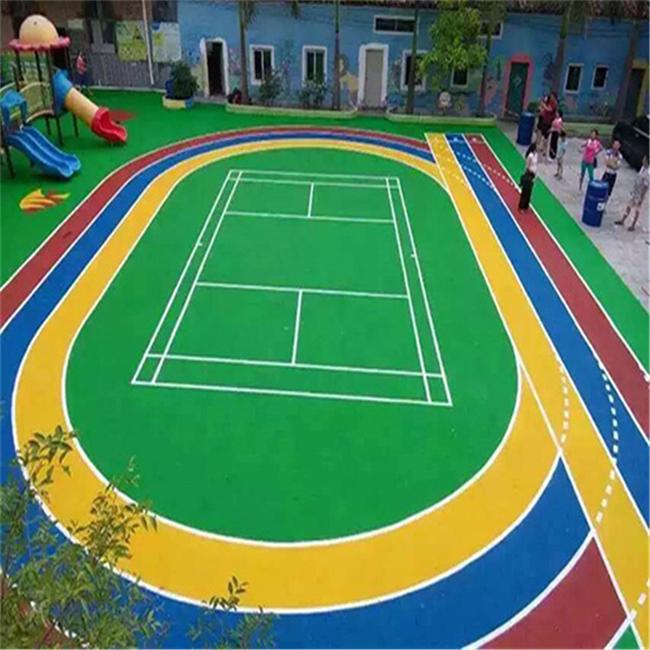
The Real Challenges Behind "ASTM Compliance": Why Projects Fail
Understanding the standards is one thing; applying them is another. We’ve found that most problems on the ground (pun intended) stem from a few common areas.
1. The Gap Between Lab Results and Field Reality
A material might pass ASTM F1292 in a lab, but your installed surface could fail within months. Why? ASTM standards note that lab tests primarily account for "dry surfacing materials" . They don't always account for:
- Aging and UV exposure: The surface degrades under the sun, losing its elasticity and impact absorption.
- Moisture and Freeze/Thaw Cycles: Water can penetrate the surface, and freezing can cause cracking and heaving .
- Contamination and Compaction: Dirt and debris can block pores, while heavy foot traffic compresses the surface, reducing its shock-absorbing capacity .
2. The Accessibility "Trap"
We see projects fail ASTM F1951 inspections because surfaces are too soft. Contractors often choose very soft rubber for safety, but if it's too soft, it's inaccessible. An EPDM surface must be firm enough to provide a stable rolling surface for wheelchairs while still being resilient enough to absorb impact .
3. Underestimating the Cost of Poor Material Choice
Many procurement managers focus solely on price. However, low-cost materials often mean high-cost failures. Issues we frequently see:
- Color fading within a year (indicating poor UV resistance).
- Granules becoming loose due to weak polyurethane bonding.
- Bad odors in high heat (a sign of sulfur-based vulcanization).
- Batch-to-batch color inconsistency (ruining the project's appearance).
- High shipping costs due to high bulk density.

Why EPDM is the Gold Standard for ASTM-Compliant Surfaces
EPDM (Ethylene Propylene Diene Monomer) is the material of choice for the top layer of most high-quality poured-in-place playground surfaces. But not all EPDM is created equal.
The EPDM Advantage Over SBR (Recycled Rubber)
Many contractors are forced to consider SBR (Styrene-Butadiene Rubber), a cheaper recycled rubber often used as infill. Here's how they compare:
- Color Stability: SBR is black and will fade to a dull grey. EPDM can be factory-colored in a vast range of bright, vibrant colors that are retained over time.
- UV Resistance: EPDM has excellent resistance to UV degradation. SBR is highly susceptible to breakdown from sunlight.
- Odor: Low-quality EPDM, or SBR used in the top layer, can have a distinct rubber smell, especially in high heat. High-quality EPDM is virtually odorless.
The Problem with Low-Quality EPDM
When you choose EPDM, you need to ask *how* it was made. Manufacturers using a sulfur-based vulcanization process introduce sulfur into the molecular structure. This is a ticking time bomb. Under heat and UV exposure, sulfur breaks down to form sulfuric acid, leading to:
- Foul odors in the playground.
- Rapid molecular breakdown and a shortened lifespan.
- Color fading and surface cracking.
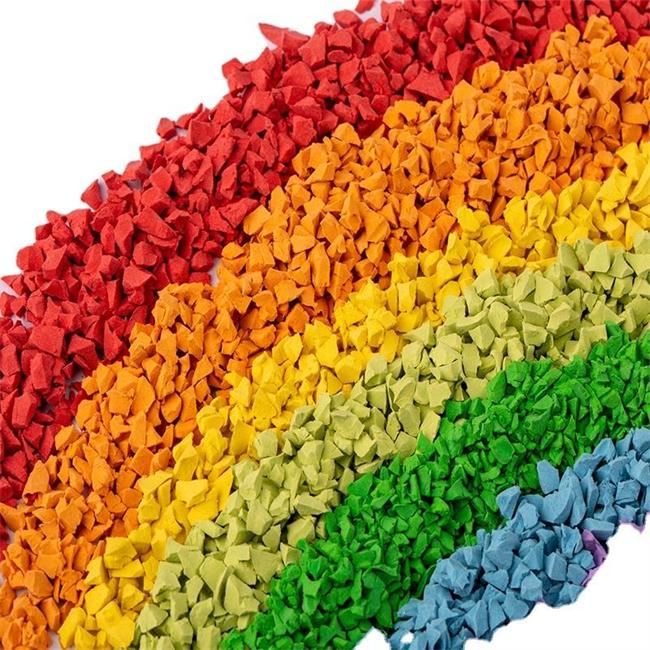
The "Game Changer" in Playground Surfacing: Sulfur-Free EPDM
Given the limitations of standard EPDM, we engineered a completely different approach: Sulfur-Free EPDM Technology.
We recognized that traditional sulfur vulcanization was the root cause of many common failures—odor, fading, and short lifespans. So we developed a process that eliminates sulfur entirely. This isn't a minor tweak; it's a fundamental change to the material's molecular structure.
This Sulfur-Free approach solves the very problems that often plague ASTM-compliant projects:
1. Zero Odor – Even in High Heat: Our EPDM contains no sulfur. When exposed to high temperatures and UV rays, it does not decompose into sulfuric acid or other volatile sulfur compounds. You can install it in a nursery school without any complaints about a "rubber smell."
2. Superior UV and Aging Resistance: Because the molecular structure is more stable without sulfur, the material doesn't break down as quickly. Our polymer bonds are stronger and more resistant to the degradation caused by UV radiation. It’s why we see significantly better performance in accelerated aging tests.
3. Unmatched Physical Properties:
- Tensile Strength: Our EPDM reaches 4–7 MPa (compared to the ≥2.2 MPa required by many standards) . This means it can handle far more stress before tearing.
- Elasticity & Elongation: Its elasticity is 2-3 times greater than standard materials, meaning it returns to its original shape even after heavy compression.
4. Stable, Vibrant Color: The improved antioxidant properties prevent the pigments from degrading. The color stays bright for the life of the surface.
5. Food-Grade Safety: The elimination of sulfur and other heavy metal accelerators makes this EPDM safe enough for food-grade applications—a level of reassurance for children's safety that exceeds typical chemical requirements.
6. Lower Logistics Costs: Our sulfur-free process creates granules with a lower bulk density, meaning you get more coverage per kilogram, reducing your shipping costs.
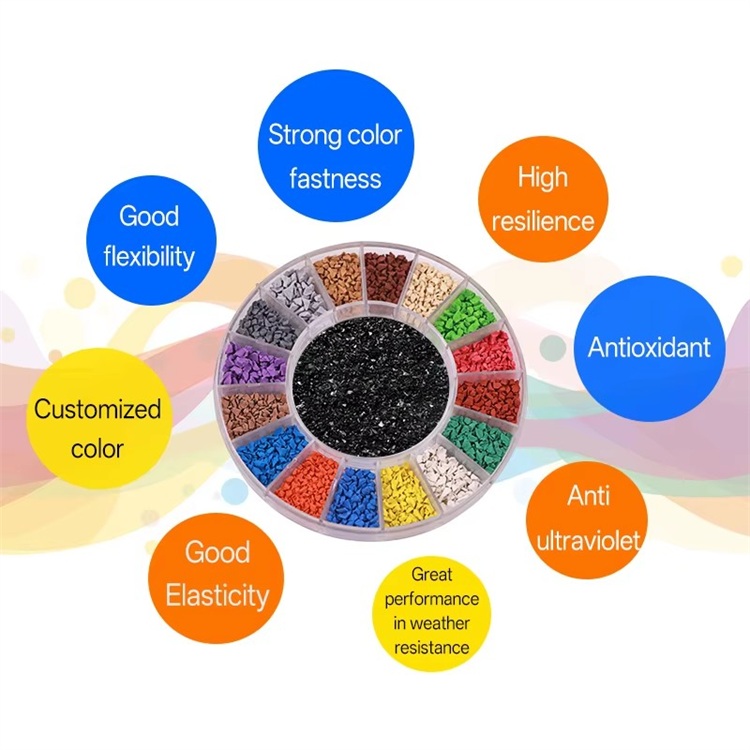
Making the Right Choice: A Guide for Procurement and Contractors
When you’re evaluating suppliers and preparing to bid on a project, keep this checklist in mind to avoid costly mistakes.
How to Avoid the Biggest Procurement Mistakes
- Don't just ask for "ASTM F1292 Compliance." The test certificate is a starting point. You need to ask about the *material's design life*. Will it still pass ASTM F1292 after 5, 10, or 15 years in the sun? A sulfur-free EPDM gives you that confidence.
- Look Beyond the Unit Price. Factor in the installation time, bonding agent usage, required thickness, and longevity. A cheaper material that requires a 2.5-inch thickness to pass a critical fall height test might be more expensive than a higher-performance EPDM that achieves the same result at 2.0 inches.
- Demand Color and Size Consistency. The last thing you want is a "patchwork" surface. A reputable manufacturer will have strict quality control to ensure batch-to-batch consistency in both granule color and particle size.
- Ask About the Technical Details:
- Is the EPDM sulfur-free? (This is a key indicator of long-term performance)
- What is the tensile strength? (≥4 MPa is a sign of a highly durable material)
- What is the bulk density? (Lower density means better value for your money)

Frequently Asked Questions (FAQs) by Industry Professionals
Q: What are the key ASTM standards for playground surfaces?
A: The three primary standards are ASTM F1292 (Impact Attenuation / Critical Fall Height), ASTM F1951 (Accessibility / Wheelchair Work), and ASTM F2479 (Guide for Poured-in-Place Surfacing Installation and Maintenance) . A project can fail if it doesn't meet any one of them.
Q: How do I ensure my EPDM surface passes ASTM F1292 long after installation?
A: Choose high-quality materials from the start. Surfaces fail over time due to aging, UV exposure, and wear . Using a sulfur-free EPDM with high tensile strength (4–7 MPa) significantly delays this degradation. Regular maintenance and periodic field testing are also recommended to ensure ongoing compliance .
Q: Why are some EPDM playgrounds odorous while others are not?
A: The odor is often caused by the breakdown of sulfur in the vulcanization process, which releases sulfuric acid and other gases under high heat . Our EPDM is manufactured without sulfur, making it effectively odorless even in extreme temperatures.
Q: Does a compliant surface guarantee no injuries?
A: No. The standards explicitly state that compliance with ASTM F1292 does not mean an injury cannot be incurred . However, they represent the industry's best effort to significantly reduce the risk of severe head injuries from falls .
Q: What is the most common reason for a playground surface to fail an ASTM test?
A: Two reasons: 1) Using lab results to guarantee a surface that doesn't account for aging or weather, and 2) Installing at an incorrect thickness. The thickness of an EPDM system is critical to achieving the required critical fall height for the specific equipment it surrounds.
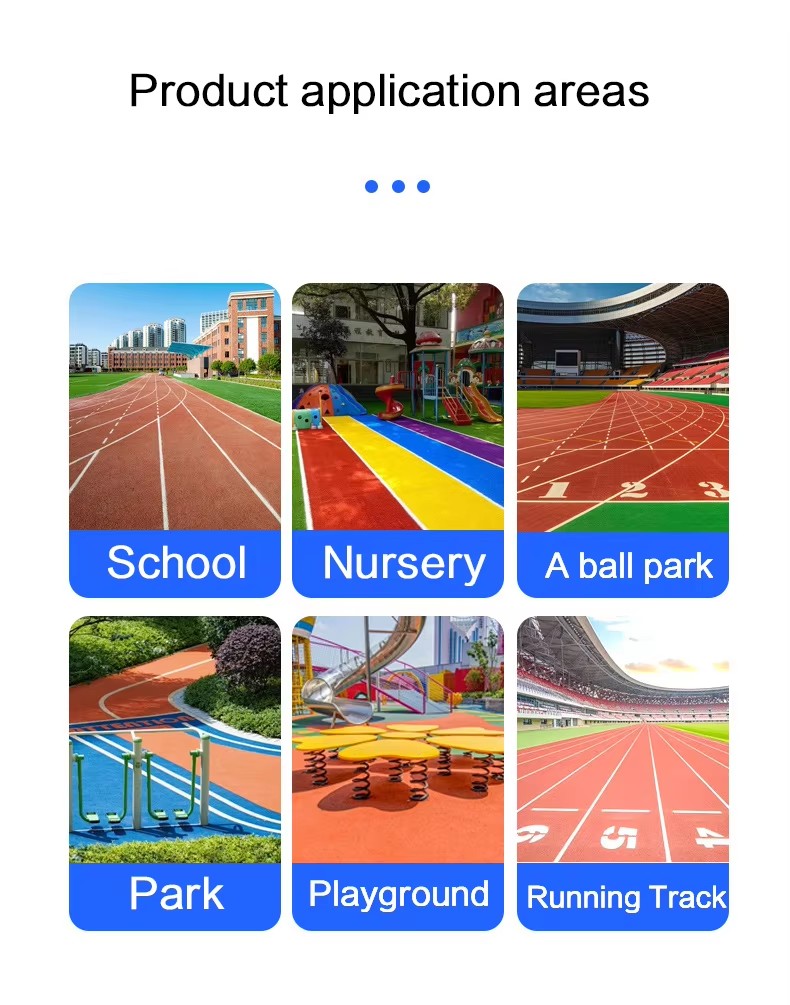
Why Leading Contractors and Government Agencies are Switching to Sulfur-Free Technology
The playground industry is evolving. End-users, whether they are school districts or city councils, are becoming more sophisticated. They are no longer just checking a box for "ASTM F1292." They are asking about lifespan, safety, and sustainability.
This is why our sulfur-free EPDM is being selected for more projects worldwide:
- Long-Term Cost Savings: A 3x longer lifespan means the surface doesn't need to be replaced or resurfaced as often.
- Peace of Mind: Food-grade safety and zero odor eliminates complaints and liability issues.
- Superior Aesthetics: The colors don't fade. A playground built with our material still looks vibrant years later, reflecting well on the contractor and the client.
- Flexibility: With no minimum order quantity (No MOQ) and the ability to fully customize colors and particle sizes (0.5-1.5mm to 3-5mm or custom), we support projects of any scale.

Our Commitment: We are not just a supplier; we are a partner with over two decades of experience. Our advanced production lines and rigorous quality control ensure that every batch you receive meets the highest standards, from tensile strength to color consistency.
If you're a contractor bidding on a project, an engineer specifying materials, or a procurement manager looking to secure a reliable supply chain, contact our team today. Let's discuss how our advanced sulfur-free EPDM can solve your performance and compliance challenges.

WOW(LYG) New Material Co Ltd is a manufacturer specializing in the production of EPDM rubber granules. We use sulfur-free vulcanization technology, it increases the service life by more than 3 times than traditional EPDM granules, and enhances the performance, including anti-aging, high-temperature resistance, and colorfastness.
We have over 25 years of production experience and offer customization for colors and granule sizes. NO MOQ.


