 注: 建议图片大小150px*50px
丨
注: 建议图片大小150px*50px Views: 0 Author: Site Editor Publish Time: 2026-07-28 Origin: Site


Imagine this: you’ve just completed a vibrant, colourful playground installation. Six months later, the bright reds have faded to dull pinks, the blues look washed out, and the client is furious. Or, perhaps you are an importer staring at a shipping container of rubber granules that smell like chemicals and have no uniformity in size.
If this sounds familiar, you are not alone. These are the daily realities in the world of EPDM surfacing. While the market is flooded with options, most suppliers don’t tell you the real reasons behind these failures.
As a technical engineer and sourcing consultant with over 20 years in the industry, I’ve seen these issues destroy project budgets and damage reputations. In this guide, we are going to cut through the marketing fluff. We will address the specific pain points of procurement managers, contractors, and architects regarding epdm colours and exactly how to choose a product that survives the test of time, UV radiation, and a 10-year warranty.

What Are EPDM Colours and Why Does Specification Matter?
EPDM (Ethylene Propylene Diene Monomer) is a synthetic rubber chosen for its exceptional weather resistance. However, "EPDM colours" refers not just to the pigment used, but to the specific compound of granules used to create safety surfacing for playgrounds, running tracks, and sports courts .
When a contractor searches for epdm colours, they aren’t just looking for a colour chart. They are trying to solve the problem of "how to ensure this colour lasts without fading or turning yellow." .

The Problem: Why Most EPDM Colours Fail
1. The "Yellowing" Effect: Not Just a Granule Problem
One of the biggest misconceptions in the industry is that fading is caused solely by poor-quality pigment. In reality, it is often the binder (glue) that fails first.
Polyurethane binders come in two types: Aromatic (non-UV stable) and Aliphatic (UV stable). When you use an aromatic binder, it tends to yellow under UV exposure—a phenomenon known as the "yellowing effect" . This effect is often more visible when combined with light-coloured epdm colours.
- The Technical Fix: For light, bright, or pastel epdm colours (such as White, Bright Blue, Lilac, or Pink), you must use an Aliphatic binder to prevent discolouration. These are more expensive but maintain the visual integrity of the project . However, for darker colours like Red or Dark Green, the effect is less noticeable, so a high-quality aromatic binder may suffice . As one study on elastic pavement noted, using a specific molecular-chain structure (HMDI-based polymers) can increase UV resistance sixfold compared to standard alternatives .
2. Sulphur and the "Stink" Factor
One of the most common complaints we hear from installers is about the unbearable smell of EPDM granules, especially when stored in a container or exposed to high heat.
This is a chemistry issue. Traditional EPDM manufacturing relies on a sulphur vulcanization process. When the temperature rises, this sulphur reacts with UV rays to release sulfuric acid, breaking down the polymer chains and producing a pungent odour .
Our Technological Advantage: Our entire manufacturing process is engineered to be sulphur-free. Because we don’t use sulphur, our granules do not produce that acidic chemical smell under UV or heat. This is critical for indoor facilities, schools, and municipal projects where air quality is a procurement requirement.
3. Inconsistent Batch Quality and Colour Matching
If you are a distributor or importer, you know the nightmare of opening a container to find that Batch A doesn’t match Batch B. This is often caused by poor-quality raw materials (recycled rubber mixed with virgin) or imprecise blending.
Our production line utilizes a proprietary SBC (Styrene Block Copolymer) technology without sulphur. This allows for:
- Near-zero density deviation: Ensuring consistent weight and coverage per square meter.
- Perfect colour matching: Guaranteed batch-to-batch consistency across production runs.
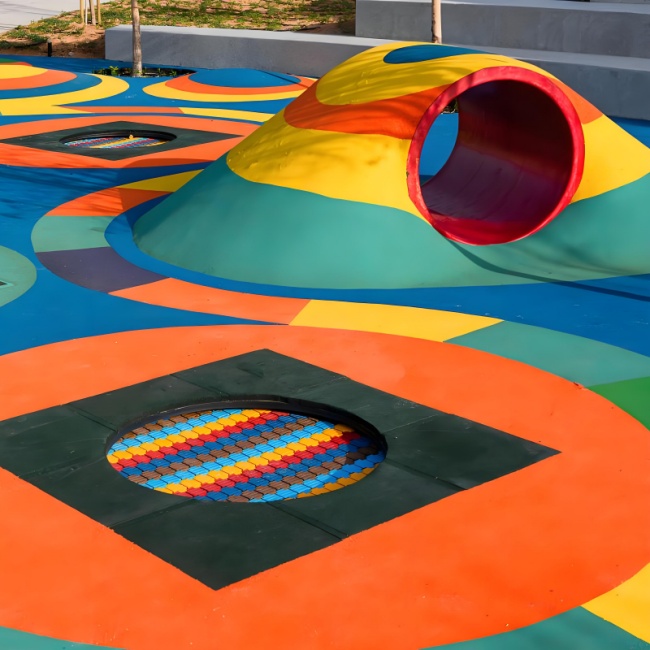
How to Select the Right EPDM Colours for Your Application
Choosing epdm colours is more than just picking a shade. Here is a step-by-step decision guide based on our 25 years of engineering experience:
Step 1: Assess the Environment
- Outdoor Sun Exposure: Prioritize UV stability. You must know if your contractor is using an aliphatic binder. This is the 1 cause of colour change.
- High Heat Climates (e.g., Middle East): In these environments, we strongly recommend adding a UV-resistant topcoat (like a clear aliphatic coating) to further protect the surface. Standard EPDM can degrade in temperatures exceeding 40°C, but our sulphur-free formula offers superior heat resistance .
Step 2: Check the granule Geometry
The "feel" and safety of the surface depend on the granule shape. Our process produces granules with a high bulk density and distinct angular "three-dimensional" characteristics. This is vital because:
- Angular vs. Round: Angular, irregular-shaped granules interlock better with the PU binder, creating a stronger mechanical bond. This prevents the "gravel" effect where the surface loses its top layer of rubber within a year.
- Bulk Density: Our low bulk density (with tensile strength reaching 4-7 MPa, and elongation at break >800%) means you need fewer kilos per square meter to achieve the desired thickness. This directly lowers shipping costs and material costs for the buyer .
Step 3: The "Friction" Test (Safety)
For playgrounds and sports courts, slip resistance is non-negotiable. The friction comes from the combination of the resin coating and the grit of the granule. The epdm colours must have a uniform granule size distribution (e.g., 1-3 mm or 1-4 mm) to ensure the surface is not too smooth . We support full customization of granule size.
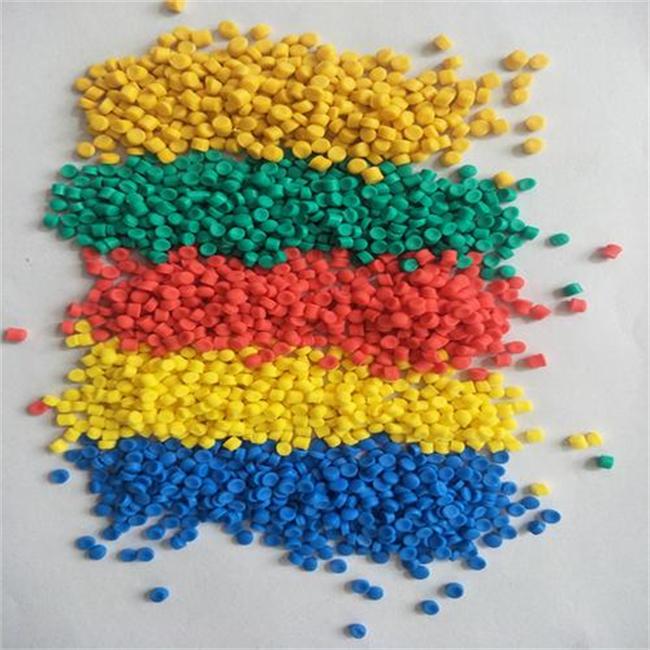
Common Problems Solved
Problem: "The epdm colours are fading after 6 months."
Solution: This is likely a binder issue, not a granule issue. Ensure your installation contractor is using a UV-stable, aliphatic PU binder for light-coloured granules. If you are using our granules, we recommend a binder ratio of approximately 5-10% by weight for the top layer .
Problem: "I don't have enough storage space and need material urgently."
Solution: We have removed the MOQ (Minimum Order Quantity) barrier. Whether you need 500kg for a small repair job or 50 tons for a municipal bid, our supply chain is flexible. We do not penalize small buyers.
Problem: "The rubber smells toxic."
Solution: This indicates the product likely contains sulphur or high levels of oil. Our granules are sulphur-free and compliant with stringent environmental standards. They are safe enough to meet food-grade safety standards, critical for municipal procurement departments evaluating health impacts .

Advantages Summary
Based on our engineering innovations, here is why our epdm colours outperform competitors:
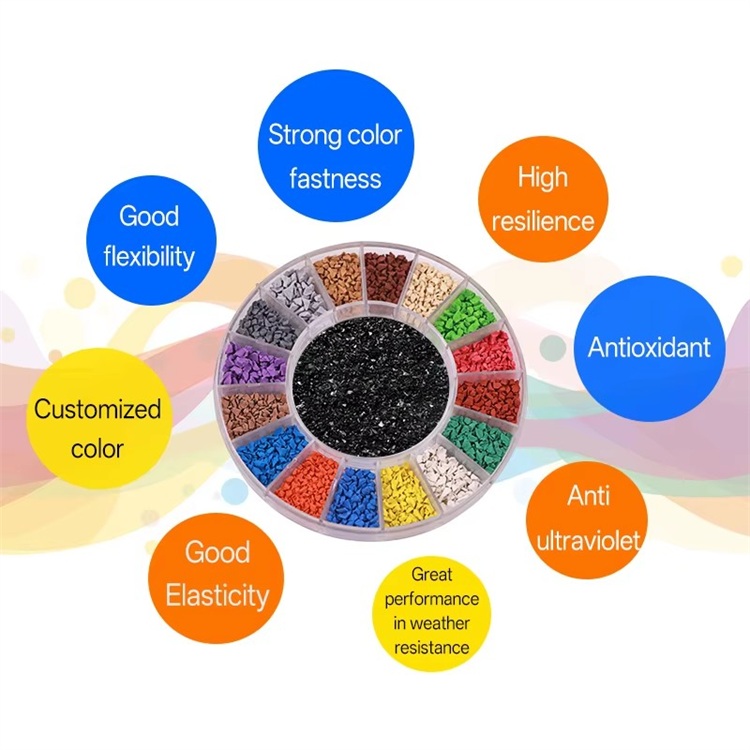
- Odorless Technology: Zero sulphur content means no sulfuric acid degradation. No unpleasant smells, even in high heat (40°C+).
- Molecular Stability: Because we avoid sulphur cross-linking, the molecular structure remains intact. This extends the product lifespan by more than 3 times compared to traditional EPDM.
- Superior Elasticity: Tensile strength reaches 4–7 MPa. This is 2-3 times higher than the industry standard (>1 MPa commonly found in basic granules), ensuring it withstands heavy foot traffic and high-impact falls .
- Color Retention: Enhanced anti-oxidation properties ensure that the epdm colours remain vibrant and do not turn dull or chalky.
- No MOQ, Full Customization: We are not just a factory; we are a partner. We support custom RAL colours and granule size customization with fast turnaround times.
Why the Industry is Shifting
More architects and engineering firms are moving away from traditional "wet pour" rubber because of poor value-for-money. The industry is increasingly recognizing that the cost of installation is just 30% of the lifecycle cost; the rest is maintenance and replacement.
By choosing a sulphur-free, high-tensile EPDM, you are effectively reducing the lifecycle cost of the asset by up to 60%. This is why municipal project contractors and government procurement bodies are making it mandatory in their specifications to require "sulphur-free" and "UV-stable" certificates.

Next time you start a project for a playground, sports track, or landscape design, don't just ask, "What epdm colours do you have?" Ask the supplier:
- "What is the binder recommendation for this colour?"
- "Is this product sulphur-free?"
- "Can you guarantee batch consistency?"
Our commitment to precision engineering ensures that your project not only looks good on the installation day but remains an industry benchmark for safety and durability for decades. We are ready to support your project with no minimum order quantity and a global shipping guarantee.


Contact our engineering team today to request samples or for technical advice on choosing the right colours for your climate.
WOW(LYG) New Material Co Ltd is a manufacturer specializing in the production of EPDM rubber granules. We use sulfur-free vulcanization technology, it increases the service life by more than 3 times than traditional EPDM granules, and enhances the performance, including anti-aging, high-temperature resistance, and colorfastness.
We have over 25 years of production experience and offer customization for colors and granule sizes. NO MOQ.


