 注: 建议图片大小150px*50px
丨
注: 建议图片大小150px*50px Views: 0 Author: Site Editor Publish Time: 2026-07-28 Origin: Site


If you are a playground contractor, sports surfacing installer, landscape company, municipal project manager, or purchasing manager, you have likely encountered the specification "EPDM fall protection" on a tender document. You may also have found yourself wading through an overwhelming number of suppliers, all promising the "best" product while you worry about hidden costs, safety failures, and disappointing longevity.
This guide is not a standard product brochure. It is a comprehensive, engineering-led analysis designed to answer the real questions you face during the procurement and installation process. We will explore how to avoid the most expensive mistakes, understand the science behind the safety, and ensure you deliver a project that remains compliant and visually stunning for years.
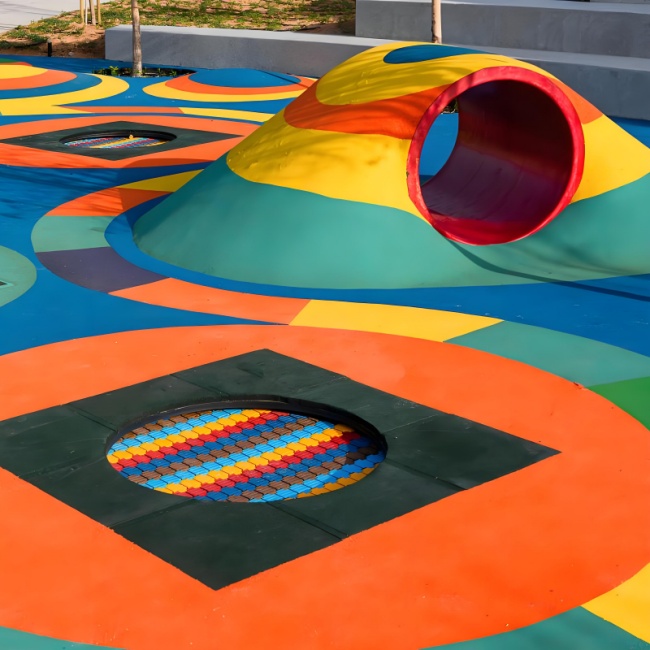
What is EPDM Fall Protection?
In the context of playgrounds and sports surfaces, EPDM fall protection refers to surfacing systems that use Ethylene Propylene Diene Monomer (EPDM) rubber granules to create a resilient, shock-absorbent layer. The primary function is to reduce the impact of a fall, minimizing the risk of serious injury.
Unlike basic rubber surfaces, EPDM is a high-performance synthetic rubber. It is produced through a polymerization process, often manufactured into colored granules using various curing methods . These granules are mixed with a polyurethane binder and applied either as an in-situ (poured-in-place) wearing course or pre-manufactured into interlocking tiles .
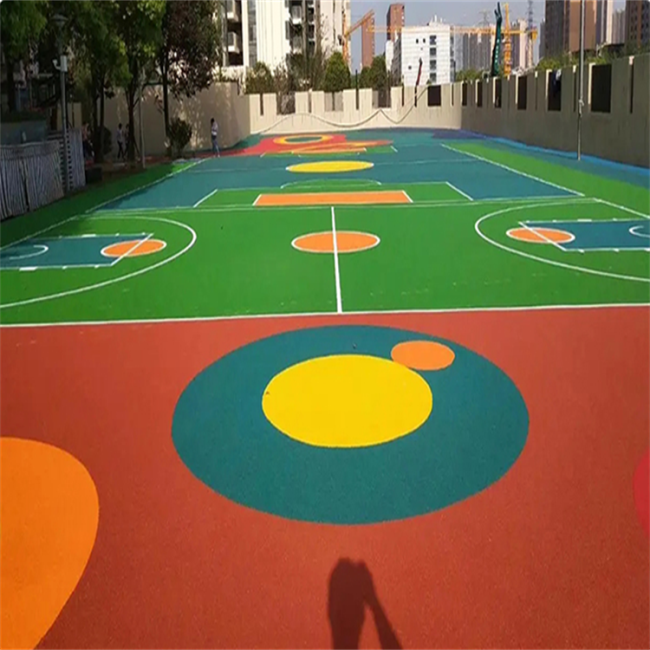
The Safety Mechanism
The magic happens through impact attenuation. When a child falls, the kinetic energy is transferred to the EPDM layer. The granules compress and then rebound, slowing the deceleration of the body. This reduces the "G-max" (maximum acceleration of impact) and the Head Injury Criterion (HIC) score, which are the two main metrics used to measure the severity of a fall.
To meet international standards like ASTM F1292 and EN 1177, the surface must keep G-max below 200 and HIC below 1000 . It is critical to note that the thickness of the EPDM layer determines the critical fall height it can protect against—typically ranging from 1 meter up to 3 meters or more for thicker systems .
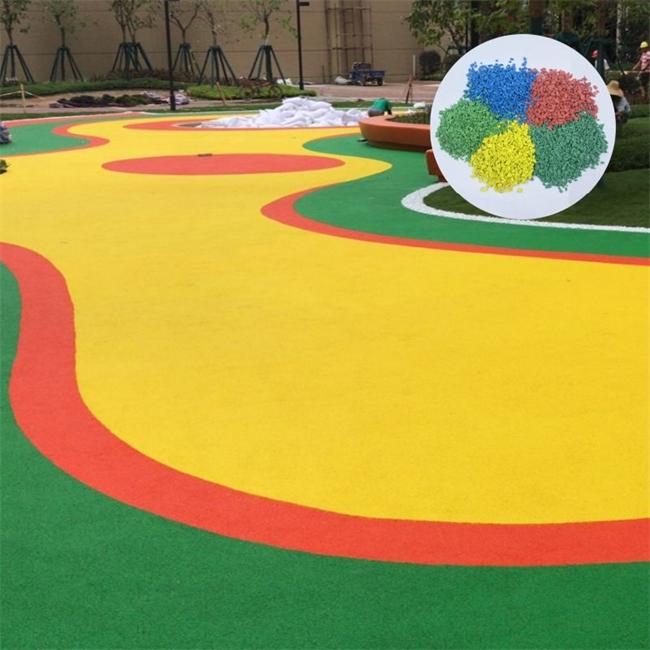
Why Use EPDM? The Case for Premium Surfacing
For architects, engineers, and contractors, the choice of material is often a battle between budget and longevity. However, choosing the wrong EPDM grade is a fast-track to liability and maintenance nightmares. Here is why engineered, high-quality EPDM is superior:
1. Superior UV Resistance: EPDM naturally possesses high resistance to ultraviolet light and ozone. This is non-negotiable for outdoor installations. Lower-quality materials (often recycled SBR or poorly compounded EPDM) harden and shrink under the sun, losing their elasticity and thus, their safety rating within 3 to 5 years .
2. Color Retention: A playground's aesthetic appeal is essential for community acceptance. Premium EPDM utilizes stable pigments that resist fading. In contrast, lower-grade products fade and become patchy, making the facility look dated quickly .
3. Thermal Stability: EPDM maintains its elasticity across a broad temperature range, from scorching summer heat to freezing winter conditions. It does not become brittle or excessively soft, ensuring consistent year-round performance .

Critical Analysis of EPDM Grades: The Chemical Difference
One of the most significant, yet often overlooked, distinctions in EPDM manufacturing is the curing (vulcanization) system. This is the core engineering difference that determines the lifespan and safety of your surface.
The Problem with Sulfur-Cured EPDM
Traditional EPDM is often cured using sulfur and accelerators. While this is a cheaper process, it introduces significant vulnerabilities:
- Odor & Pollution: Under high heat and strong UV rays, sulfur bonds can break, releasing sulfuric compounds. This is the source of the unpleasant, chemical "rubber" smell often found on hot playgrounds. Furthermore, this degradation is the primary cause of the material losing its physical properties .
The Advantage of Peroxide-Cured (Non-Sulfur) EPDM
Advanced manufacturing, such as the innovative processes employed in modern facilities, utilizes peroxides as curing agents. This non-sulfur technology represents a leap forward in material science. For contractors and distributors, specifying peroxide-cured, non-sulfur EPDM resolves the most common complaints received from clients:
- No Odor: Because there is no sulfur, there is no sulfuric acid byproduct. The surface remains entirely odorless, even on 40°C days .
- Enhanced Durability & Strength: The peroxide cross-linking process creates a stronger, more stable polymer network. This results in an increase in tensile strength (reaching 4--7 MPa, compared to standard specifications of 0.7 - 3.0 MPa) and elasticity . This increased strength means the granules resist tearing and abrasion from foot traffic far longer.
- Superior Color Stability: The absence of sulfur prevents the chemical breakdown that leads to fading, ensuring the color remains vivid for years.
- Extended Lifespan: Because the molecular structure is more stable, the product’s performance retention is dramatically higher. Users can expect a lifespan that is 3 times longer than conventional sulfur-cured products, delaying the expensive need for resurfacing.
Expert Note: A higher tensile strength (above 3.5 MPa) and elongation at break (above 550%) are hallmarks of a highly durable, engineered polymer capable of withstanding intense wear and environmental stress .
How to Avoid Costly Purchasing Mistakes
Importers and purchasing managers often focus on the "price per kilogram." This is a dangerous approach that ignores the total cost of ownership. Here is how to avoid the common pitfalls:
Mistake 1: Ignoring the Curing System
- The Risk: Buying sulfur-cured EPDM because it is cheaper. You will save money upfront but face complaints about odor and have to resurface within 3--5 years.
- The Solution: Always request technical data confirming the curing system. Ensure the material is non-sulfur/peroxide-cured to guarantee longevity and safety compliance .
Mistake 2: Misunderstanding "Density"
- The Risk: Low-quality granules often have high specific gravity and poor, round shapes due to grinding waste materials. This leads to high consumption of material to achieve the required thickness.
- The Solution: Look for granules with a low bulk density and a cubical/angular shape. These granules interlock better when mixed with the binder, creating a stronger, more porous mat. This allows you to use less material to achieve the same or better coverage, offsetting the higher initial cost of a premium product.
Mistake 3: Ignoring Fall Height Requirements
- The Risk: Installing a 30mm thick surface where the equipment has a critical fall height of 2.0 meters.
- The Solution: Review the equipment specifications and standards (EN 1177 or ASTM F1292). Install a shock pad (a base layer of SBR or recycled rubber) beneath the EPDM wearing course to achieve the required height. Typical thick tile systems range from 30mm to 114mm depending on the required fall height .
Mistake 4: Overlooking the Supplier
- The Risk: The supplier delivers poor quality control (inconsistent granule size/color) or delays the project with long lead times and high MOQs (Minimum Order Quantities).
- The Solution: Partner with suppliers who have 25+ years of industry experience, modern production lines, and flexible ordering (no MOQ) to ensure you can test samples and react quickly to tight project deadlines.

How to Choose the Right Supplier and Product
When evaluating your next EPDM order, utilize this checklist based on the principles of EEAT (Experience, Expertise, Authoritativeness, Trustworthiness):
1. Request Technical Data:
- Tensile Strength: Should exceed 3.5 MPa (Premium quality reaches 4--7 MPa).
- Elongation at Break: Exceeding 450%.
- UV Stability: Request reports showing performance after 5,000 hours of UV exposure (simulating ~10 years of sunlight) .
- Abrasion Resistance: Confirm the material holds up to foot traffic (e.g., BS 7188 tests) .
2. Verify Certifications:
- Does the material comply with EN 1177 or ASTM F1292?
- Is the material compliant with Reach and RoHS for Europe, or CPSIA for the US?
3. Check the Granule Quality:
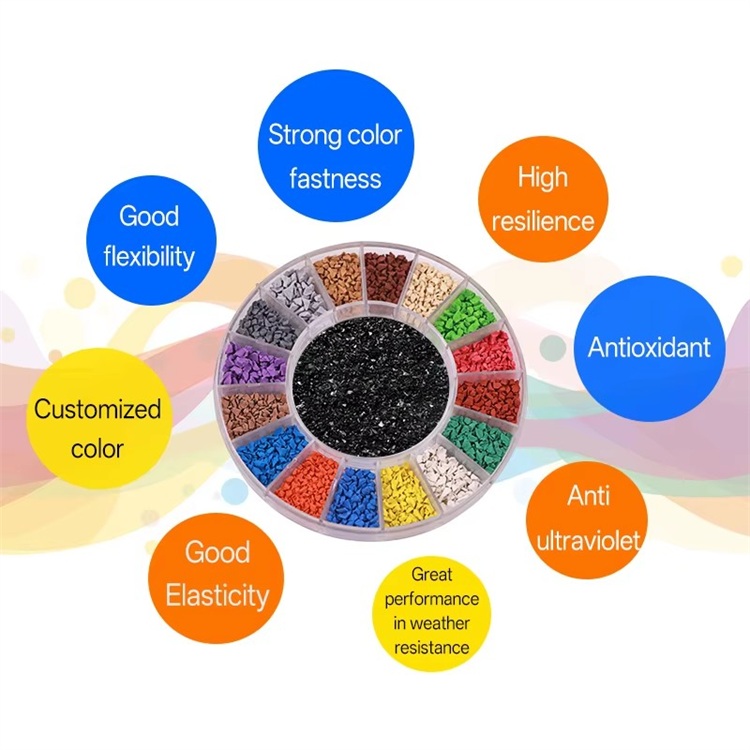
- Internal Coloration: The color should penetrate the granule; it should not just be a thin coating on the outside.
- Shape: Look for an irregular, angular shape rather than perfectly round pellets. This ensures better mechanical interlocking with the binder.

Why International Projects Are Increasingly Specifying EPDM
The shift away from traditional materials (like loose fill mulch or wood chips) towards unitary EPDM systems is driven by several factors that are crucial for government procurement and municipal projects:
- Accessibility: Unlike loose fill, EPDM provides a smooth, firm, and even surface that allows for wheelchair access and stroller use without the resistance of sand or wood chips. This is non-negotiable for ADA (Americans with Disabilities Act) compliance in the US and similar standards globally.
- Drainage & Hygiene: High-quality EPDM surfaces are porous. Water drains through immediately, meaning puddles do not form. The surface dries quickly and does not harbor bacteria or insects.
- Design Flexibility: EPDM can be pigmented in a vast array of colors. It allows architects to embed logos, games (like hopscotch), and complex designs directly into the safety surfacing .
- Reduced Liability: Contractors and government bodies appreciate that a well-installed, bonded system cannot be "scattered" or "played away" like mulch, ensuring consistent safety coverage .

Frequently Asked Questions (FAQ)
Q: What is the minimum thickness for EPDM fall protection?
A: While a 1cm (10mm) top layer is common for aesthetic wear resistance , the total system thickness for fall protection must be matched to the equipment height. A 35mm thickness might offer 1.0m protection, while a 110mm system can offer up to 3.0m protection .
Q: Does EPDM get hot in the summer?
A: EPDM surfaces are not as heat-retentive as asphalt or dark metals. However, colors do matter. Lighter colors and pastels absorb less heat than darker reds and blacks.
Q: How long does EPDM fall protection last?
A: This depends entirely on quality. Premium, non-sulfur (peroxide-cured) EPDM has a life expectancy of 8--10 years or more before needing resurfacing. Low-quality sulfur-cured granules can fail impact tests and fade in as little as 3--4 years .

EPDM fall protection is an investment in the safety and aesthetics of a project. The decisions you make during procurement--from selecting a non-sulfur/peroxide-cured material to verifying tensile strength data--will determine whether the surface remains a vibrant, safe asset or becomes a liability.
We are a leading manufacturer with over 25 years of industry experience and a global footprint in supplying EPDM granules to contractors, importers, and government bodies. Our advanced production lines utilize cutting-edge non-sulfur technology to produce granules that are 3 times more durable, odorless, and colorfast.
We support projects of any scale with no Minimum Order Quantity (MOQ) and offer full customization of colors and granulometry. Do not compromise on quality. Reach out to our engineering team to discuss your project specifications and secure a sample of our premium EPDM granules.


WOW(LYG) New Material Co Ltd is a manufacturer specializing in the production of EPDM rubber granules. We use sulfur-free vulcanization technology, it increases the service life by more than 3 times than traditional EPDM granules, and enhances the performance, including anti-aging, high-temperature resistance, and colorfastness.
We have over 25 years of production experience and offer customization for colors and granule sizes. NO MOQ.


