 注: 建议图片大小150px*50px
丨
注: 建议图片大小150px*50px Views: 0 Author: Site Editor Publish Time: 2026-07-19 Origin: Site


Why Your Playground Surfacing Choice Matters More Than Ever
For playground contractors, sports flooring installers, and municipal project managers, selecting the right surfacing material isn't just about aesthetics—it's about safety, durability, and long-term cost management. EPDM (Ethylene Propylene Diene Monomer) granules have become the industry standard for wet-pour rubber surfacing, but not all EPDM is created equal.
This guide addresses the real questions procurement professionals face: How do I avoid premature colour fading? What causes bonding failures? Why do some installations degrade within months while others last decades? We'll examine these challenges through the lens of technical performance, material science, and practical procurement strategy.

What Are EPDM Granules for Playpark Surfacing?
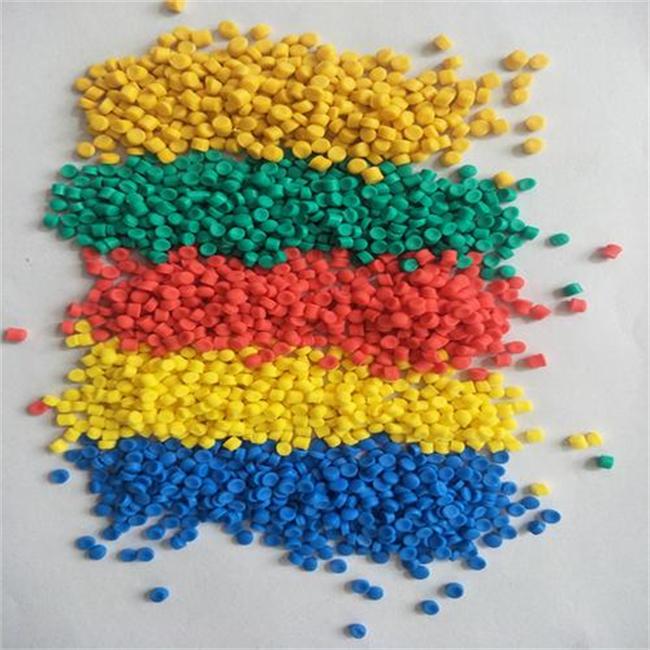
EPDM granules are coloured rubber Granules used as the wearing surface layer in wet-pour playground flooring systems. The system typically consists of an impact-absorbing SBR (Styrene Butadiene Rubber) base layer topped with a colourful EPDM layer mixed with a polyurethane binder. This combination creates a seamless, slip-resistant, and permeable surface capable of achieving critical fall height ratings up to 3.23 metres.
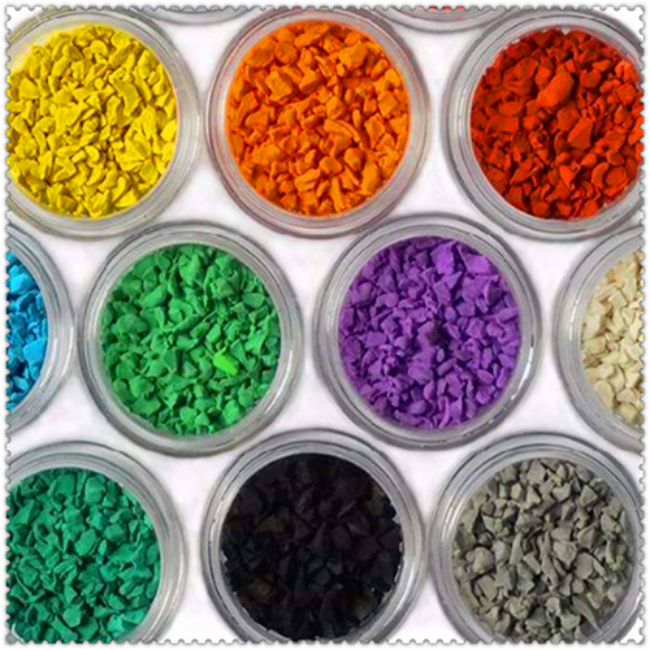
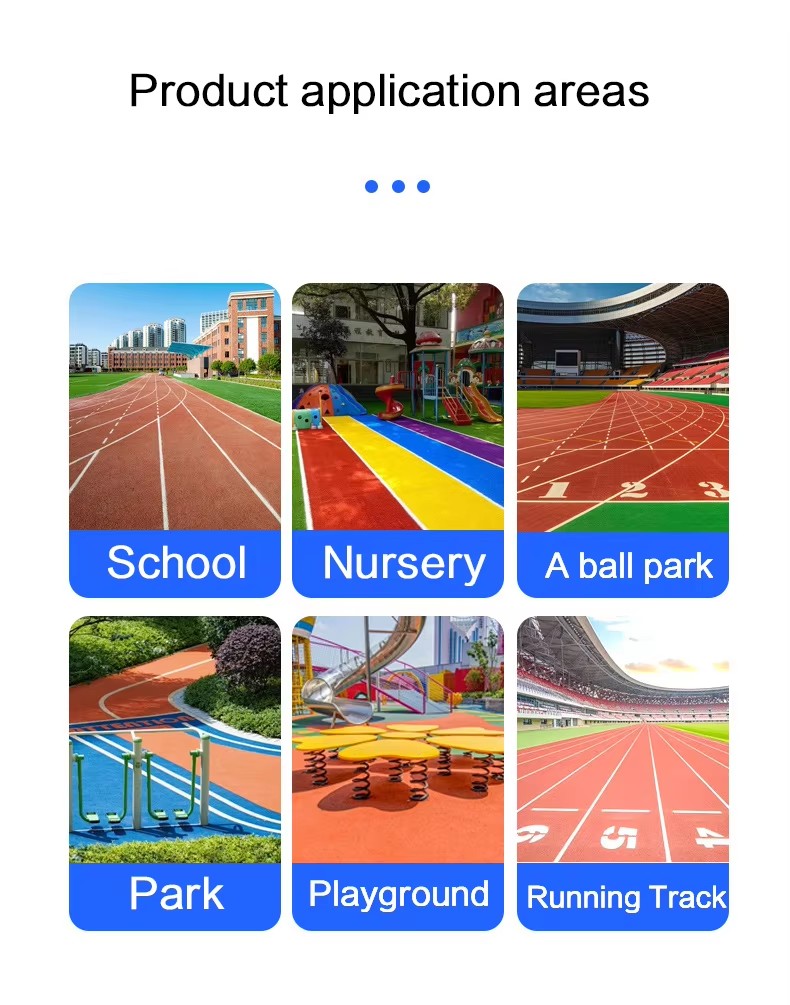
The granules themselves are manufactured from synthetic rubber, available in a wide spectrum of colours, and typically range from 1–4mm in size. When properly installed, EPDM surfacing provides a durable, low-maintenance solution suitable for playgrounds, sports areas, pathways, and community spaces.

Why EPDM? Understanding the Value Proposition
Safety Performance
The primary function of playground surfacing is fall protection. EPDM wet-pour systems, when installed at specified depths over an appropriate SBR base layer, provide certified impact attenuation. For projects requiring specific critical fall height ratings—common in municipal playgrounds and school installations—this certification is non-negotiable.
Design Flexibility
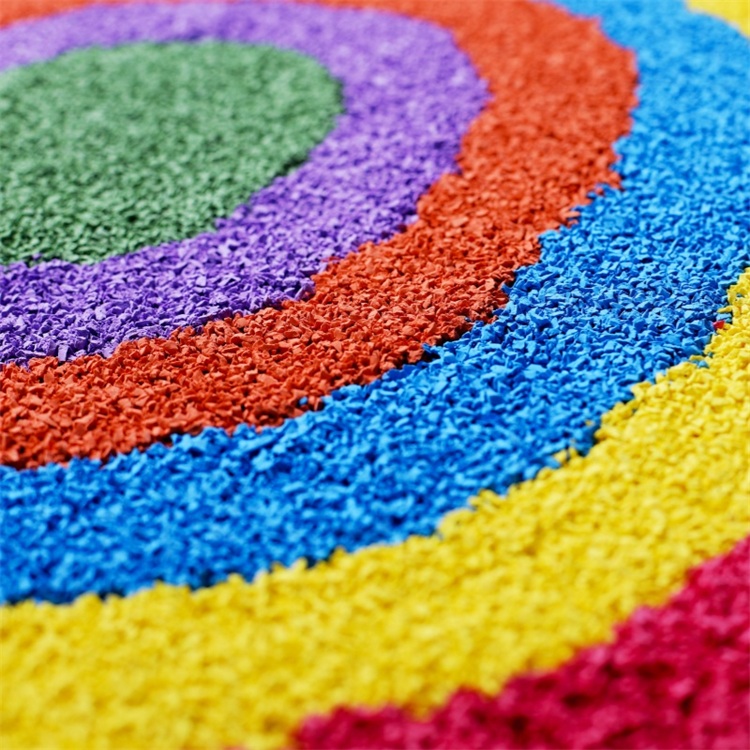
With over 20 colour variants available, from vibrant primary shades to subtle earth tones, EPDM enables creative playground design including patterns, shapes, and even custom logos. This versatility appeals to landscape architects and municipal planners seeking distinctive, branded installations.
Permeability and Drainage
The open-cell structure of EPDM wet-pour surfaces allows water to drain naturally, preventing localised flooding and enabling quicker post-rain usability. This is particularly valuable in outdoor installations where standing water creates safety hazards.
Low Maintenance Requirements
EPDM surfaces require minimal ongoing maintenance—regular brushing and occasional washing with soap and hot water suffice to maintain appearance and performance. For facility managers and school districts, this translates to lower lifecycle costs.

Critical Challenges with EPDM Playpark Surfacing
The UV Degradation Problem
UV exposure is the single greatest threat to playground surfacing longevity. Traditional EPDM formulations degrade under prolonged sunlight, leading to colour fading, surface powdering, and premature replacement. Industry testing standards require a grey scale value of ≥3 after UVA exposure of 4,896 kJ (approximately 2,550 hours). However, high-quality products significantly exceed this benchmark, maintaining colour stability even after 9,600 kJ (5,000 hours) of exposure.
Resin Compatibility and the "Yellowing Effect"
A critical but often overlooked factor is binder selection. Aromatic polyurethane binders, while cost-effective, are not UV-stable and develop a yellow discolouration when exposed to sunlight. This yellowing effect—while reversible and not affecting mechanical properties—creates an undesirable appearance on light-coloured granules. Aliphatic (UV-stable) resins are recommended for bright and light colours to maintain visual integrity.
Odour Concerns
Many EPDM granules contain sulphur-based vulcanisation agents that decompose under high temperatures and UV exposure, releasing sulphur compounds with unpleasant odours. This is particularly problematic in warm climates and enclosed or semi-enclosed installations. Sulphur-free alternatives address this issue by eliminating the source of these odours.
Batch-to-Batch Inconsistency
Variation in granule colour, size distribution, and polymer content between production batches creates visual inconsistencies in finished surfaces. This is a persistent frustration for contractors who cannot afford to reject materials mid-project or explain mismatched surfaces to clients.
How to Select High-Quality EPDM Granules: A Technical Framework
1. Examine Tensile Strength
Industry standard EN 12230 specifies minimum tensile strength requirements for EPDM surfacing. While 4 MPa meets minimum standards, superior products achieve 4.5 MPa or higher, indicating greater resistance to tearing and surface failure. Some manufacturers achieve 6–7 MPa, providing a significant durability margin.
2. Verify Elongation at Break
Elongation at break—the material's ability to stretch before breaking—directly correlates with impact absorption and resilience. Minimum requirements of 400% are standard, but higher-performance products achieve 450% or more. High elongation values indicate the surface will maintain integrity under repeated foot traffic and weather-related expansion and contraction.
3. Assess UV Resistance
Request certified test results for UV stability. Products that maintain grey scale values of 3–4 or higher after extended UV exposure will significantly outperform those that meet only minimum requirements. For projects in high-sunlight regions, UV-resistant granules are essential to avoid premature replacement.
4. Evaluate Polymer Content
EPDM polymer content typically ranges around 20%. Higher polymer content generally indicates superior durability and weather resistance. Low polymer content with high filler levels (calcium carbonate) reduces cost but compromises performance.
5. Consider Density and Coverage
Lower bulk density provides better coverage—more square metres per kilogram. While density varies by formulation, lower-density granules (achieved through optimised production processes) reduce material costs without sacrificing performance.

Common Procurement Pitfalls and How to Avoid Them
Pitfall 1: Prioritising Price Over Performance
The most common mistake in playground surfacing procurement is selecting the lowest-cost material. Compromised UV stability leads to rapid fading within months or a few years—a problem that is increasingly common across many products on the market. The total cost of replacement labour and materials, plus operational downtime and negative public perception, far exceeds the initial savings.
Pitfall 2: Neglecting Resin Compatibility
Many project failures trace to mismatched binders and granules. As technical documentation confirms, aromatic (non-UV-stable) resins cause yellowing of light-coloured granules, creating unsightly surfaces. Specify UV-stable aliphatic resins for bright colours, particularly white, pink, lilac, and turquoise.
Pitfall 3: Ignoring Installation Variables
EPDM performance depends heavily on proper installation. Cure time ranges from 24–48 hours depending on temperature. Contractors must account for weather conditions and follow manufacturer specifications. Sub-base preparation using recycled SBR base layer is critical to achieving rated critical fall heights.
Pitfall 4: Insufficient Minimum Order Quantities
Traditional suppliers impose high MOQs (minimum order quantities), creating challenges for small projects, trial orders, and custom colours. This rigidity can delay projects or force over-purchasing. Flexible suppliers with no MOQ requirements enable cost-effective project execution.
Pitfall 5: Inadequate Colour Consistency Verification
Ordering without verifying colour consistency guarantees risks visual mismatches. Professional buyers request and retain physical colour samples before ordering full quantities. Reputable manufacturers maintain colour consistency across production runs and can provide reference projects for verification.

The Technical Advantage: Sulphur-Free EPDM Technology
The fundamental limitation of conventional EPDM granules is the use of sulphur-based vulcanisation agents. These compounds degrade under UV exposure and high temperatures, releasing sulphur compounds that cause odour issues and accelerate material breakdown. Sulphur-free crosslinking technology eliminates this weakness through several mechanisms:
Enhanced Molecular Stability. Without sulphur crosslinks, the polymer structure remains more stable under environmental stress. This translates to significantly extended service life—three times or more compared to conventional formulations.
Superior Mechanical Properties. The elimination of sulphur enables higher tensile strength and elongation values, with industry-leading products achieving 4–7 MPa tensile strength, compared to the 4 MPa minimum standard. This represents a 2–3 times improvement in durability.
Exceptional Colour Retention. Sulphur-free formulations resist UV degradation and oxidation more effectively, maintaining vibrant colour far longer than conventional products. This performance advantage is particularly significant in high-sunlight installations.
Food-Grade Safety Standards. Removing sulphur compounds enables compliance with food-grade safety standards, critical for childcare and school installations where children may have direct contact with the surface.
Lower Density and Better Coverage. Optimised production processes reduce bulk density, providing more coverage area per kilogram and reducing material costs.
Elimination of Odour. Without sulphur, EPDM granules do not release sulphur-containing gases even under extreme UV and temperature conditions, eliminating the "rubber smell" often associated with playground surfaces.
Why the Industry Is Transitioning to EPDM
Regulatory Pressures
Increasing safety and environmental regulations drive demand for certified, non-toxic surfacing materials. Municipal procurement requirements increasingly mandate impact attenuation certification, UV stability documentation, and non-toxicity compliance. EPDM systems with documented testing satisfy these requirements more readily than alternatives.
Lifecycle Cost Advantages
While initial material costs may be higher than some alternatives, the extended service life and minimal maintenance requirements of high-quality EPDM create favourable lifecycle economics. Properly selected and installed EPDM surfaces can remain functional and visually attractive for 15–20 years, while lower-quality alternatives may require replacement in 3–5 years.
Design Demands
Architects and landscape designers increasingly specify vibrant, durable surfaces supporting creative pattern designs. EPDM's colour range and flexibility in creating shapes, game markings, and logos meet these aesthetic requirements while maintaining safety performance.
Growing Global Market
From municipal parks in Europe to school playgrounds in Asia and community facilities in North America, EPDM surfacing has become the globally preferred solution. This widespread acceptance simplifies specification for international projects.
Practical Considerations for Different Stakeholders
For Playground Contractors
Verify batch consistency and order sufficient material for complete installations to avoid colour variation. Establish relationships with suppliers offering flexible ordering and quick delivery. Confirm sub-base depth requirements for specific critical fall height ratings—a 20mm minimum sub-base with a 15mm top layer is typical. Request technical support during installation planning.
For Importers and Distributors
Evaluate suppliers by their quality control documentation. Look for ISO certification, independent laboratory test results, and client references. Understand shipping logistics—flexible suppliers can accommodate small orders for sample shipments and trials. Assess capacity for custom colours, sizes, and packaging. Consider the sulfur-free distinction as a competitive advantage in your product offering.
For Municipal Project Managers
Include explicit requirements for UV stability certification, tensile strength testing, and non-toxicity compliance in tender documents. Request physical colour samples before contract award. Specify SBR base layer requirements and minimum critical fall height ratings. Consider lifecycle cost rather than initial installation cost when evaluating proposals.
For Architects and Engineers
Specify resin compatibility based on colour selection—aliphatic binders for bright and light colours, aromatic binders acceptable for darker shades. Include requirements for drainage and permeability in design documents. Consider colour selection in relation to sun exposure; UV-resistant formulations are essential for full-sun installations. Reference relevant EN standards in specifications.
FAQ
How long does EPDM surfacing last?
With proper installation and high-quality granules, EPDM surfaces can last 15–20 years. Sulphur-free formulations significantly extend service life compared to conventional products.
What causes EPDM colour fading?
UV degradation of the polymer structure and pigment breakdown cause colour fading. UV-stable granules with documented test results resist fading far better than minimum-spec products.
Is EPDM environmentally safe?
High-quality EPDM granules are non-toxic and comply with safety standards including EN71/3 and MSDS. Sulphur-free products meet food-grade safety standards.
Can EPDM be installed over uneven ground?
Wet-pour EPDM systems can be installed over uneven or contoured surfaces, offering flexibility for challenging site conditions.
What's the difference between EPDM and SBR?
EPDM is used as the coloured top layer, while SBR (recycled rubber) is typically used for the base layer due to its impact-absorbing properties.
How quickly can EPDM be installed?
Installation time varies by area and complexity, but surfaces generally cure within 24–48 hours depending on temperature. After curing, the surface is immediately usable.
Can EPDM surfaces be repaired?
Yes, EPDM surfaces can be repaired by removing damaged sections and filling with new material. Proper preparation ensures seamless repair with minimal visible difference.

For playground contractors, importers, and municipal project managers, EPDM granules represent a proven, versatile surfacing solution. However, success depends on selecting materials that address common failure modes—UV degradation, odour issues, and bonding failures. Sulphur-free formulations with demonstrated UV stability, high tensile strength, and consistent quality eliminate these vulnerabilities.
For projects requiring vibrant, durable, and safe playground surfaces, EPDM granules—properly specified and sourced from reliable manufacturers—continue to be the industry's material of choice. With flexible ordering options and customisation capabilities, quality EPDM is accessible for projects of all scales, from municipal parks to school playgrounds and community facilities.


WOW(LYG) New Material Co Ltd is a manufacturer specializing in the production of EPDM rubber granules. We use sulfur-free vulcanization technology, it increases the service life by more than 3 times than traditional EPDM granules, and enhances the performance, including anti-aging, high-temperature resistance, and colorfastness.
We have over 25 years of production experience and offer customization for colors and granule sizes. NO MOQ.


